
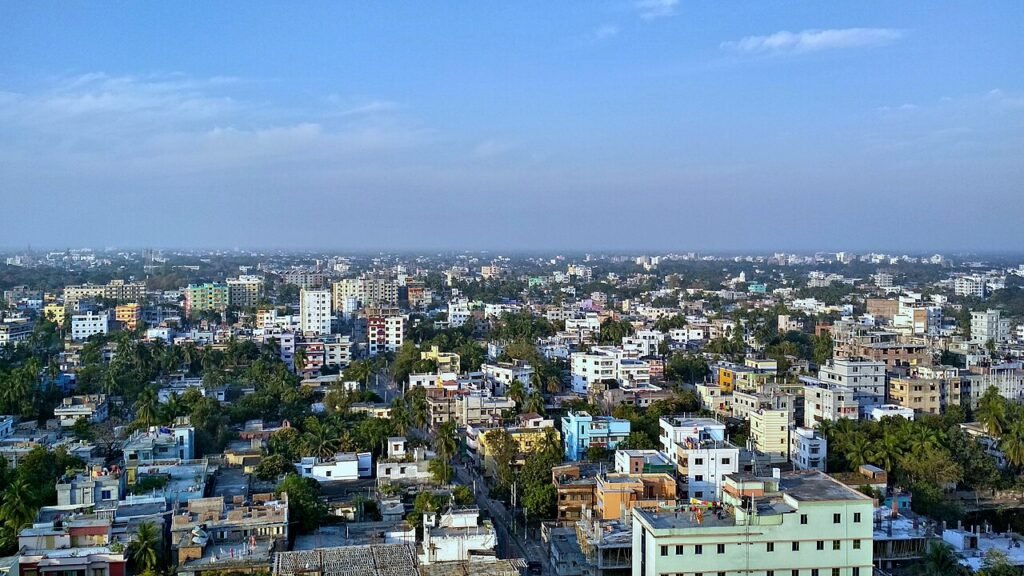
Rajshahi, Bangladesh Weekend: Silk Weavers, Mango Orchards & the Padma River Sunset (2026)
The first thing you notice is the silk — not just in the shop windows but in the very rhythm of the city. The soft clatter of handlooms drifts from open doorways as cycle rickshaws glide past mango groves heavy with fruit. The air carries the sweet perfume of ripe mangoes and the distant call to prayer from the Shah Makhdum Shrine. You’ve landed in Rajshahi, Bangladesh’s quiet, cultured heart — a city where the Padma River flows with the unhurried elegance of a place that has perfected the art of doing nothing in the most beautiful way.
Quick Facts Before You Go
- Best Months: November to February — cool, dry weather makes exploring a joy. Avoid June to August when monsoon rains and 35°C humidity can be punishing.
- Currency: Bangladeshi Taka (BDT). Approximately 110 BDT = 1 USD. Always carry small bills for rickshaws and street stalls.
- Language: Bengali (Bangla). English is spoken at hotels and major tourist sites, but learning “dhonnobad” (thank you) and “kemon achen?” (how are you?) wins instant smiles.
- Budget: 2,500–4,500 BDT per day ($23–$41) covers comfortable mid-range lodging, three meals, rickshaw rides, and entry fees. Budget travelers can manage on 1,500 BDT.
- Getting There: Fly into Shahjalal International Airport (DAC) in Dhaka, then take a 45-minute domestic flight to Rajshahi Airport (RJH) with Skyscanner. Alternatively, the overnight “Silk City Express” train from Dhaka is a beloved 7-hour journey that drops you right in the city center.
Day 1: The Silk Road & The River God’s Gift
You start the morning at the Rajshahi Silk Factory, where the air hums with the rhythmic thud of wooden handlooms that have operated since 1952. The workers, many of whom are third-generation weavers, move with the quiet precision of artisans who know their threads intimately. You’ll watch as raw silk from local cocoons is dyed in vats of deep crimson and emerald, then woven into saris that glimmer like water in the morning light. Travelers often spend an hour just watching the process — it’s hypnotic, honest, and utterly unforgettable.
- Morning (8–11am): Visit the Rajshahi Silk Factory (free entry, but a 200 BDT donation is appreciated). Watch the weaving process and browse the factory shop where a handwoven silk sari costs 3,000–8,000 BDT — a fraction of what you’d pay in Dhaka. Arrive before 9am to see the dyeing process.
- Lunch: Head to Panshi Restaurant (Station Road) and order the “Rajshahi Special Kacchi Biryani” — tender mutton layered with fragrant rice and caramelized onions, served with a side of boiled egg. 350 BDT. Locals recommend the “Mango Lassi” here even out of season — they use preserved pulp that tastes surprisingly fresh.
- Afternoon (1–5pm): First, explore the Varendra Research Museum (100 BDT entry, open 10am–5pm, closed Thursday). It’s Bangladesh’s oldest museum, founded in 1910, and houses an extraordinary collection of Hindu and Buddhist sculptures dating back to the 8th century. Then, visit the Puthia Temple Complex (free, 30 minutes by rickshaw from the city center) — a cluster of 19 terracotta temples built between 1823 and 1895 by the Zamindar family. The Shiva Temple is the standout, with a 25-meter-high tower rising above a pond that locals believe is bottomless.
- Evening: Head to the Padma River Bank near the Rajshahi Court Building around 5pm. Locals gather here to watch the sunset — the sky turns the color of ripe mangoes as fishing boats drift by. For dinner, walk to Hotel Al-Baik (Kazla Road) and order “Shorshe Ilish” (hilsa fish in mustard sauce) — 450 BDT — and watch as the evening call to prayer echoes across the water. The atmosphere is unhurried, gentle, and deeply Bengali.

Bagha Mosque, Rajshahi, Bangladesh
Day 2: Mango Capital & The Saint’s Garden
Day two begins with the unmistakable scent of ripe mangoes — Rajshahi is famous for them, and you’ll feel it the moment you step outside. The city’s mango orchards stretch for miles, and savvy visitors know that the best ones aren’t in the markets but hanging from the trees themselves. You’ll spend the morning wandering through groves where more than 40 varieties of mango grow, tasting the legendary “Himsagar” and “Langra” varieties straight from the branch, juice running down your chin. It’s the kind of breakfast you didn’t know you needed.
- Morning (7:30–10am): Visit the Bagha Mango Orchard (free, but buying a kilo of mangoes for 200–400 BDT is expected). The orchard is a 20-minute rickshaw ride from the city center. Ask the caretaker to show you the oldest tree — planted in 1899, it still produces fruit. Then, for a local breakfast, stop at Shishu Restaurant (New Market area) for “Chira Doi” (flattened rice with yogurt and jaggery) — just 50 BDT — and a cup of cha (tea) that arrives in a tiny clay cup called a bhar.
- Midday (10:30am–12:30pm): Explore the Bagha Mosque (free, 40 minutes by rickshaw from Rajshahi). Built in 1523 by Sultan Nasiruddin Nusrat Shah, this mosque is a masterpiece of terracotta ornamentation — geometric patterns and floral motifs cover every surface. Insider tip: visit at 11am when the morning crowd has left but the light is perfect for photographs. You’ll often have the place to yourself.
- Afternoon (1–4pm): Head to the Barendra Institute of Arts (free, open 2–6pm, closed Sunday). This hidden gem near the university houses a rotating collection of contemporary Bangladeshi art, much of which explores the region’s rural life and history. Then, wander the streets of Shaheb Bazaar, the old commercial district where spice merchants, silk traders, and fruit sellers have operated since the early 1900s. Stop at K.M. Spice Store for a small bag of “Panch Phoron” (Bengali five-spice mix) — 50 BDT — as a souvenir.
- Final Evening (5–8pm): Your farewell dinner deserves something special. Reserve a table at New Elegy Restaurant (Kazla Road) and order “Bhuna Khichuri” (slow-cooked rice and lentils with mutton) — 500 BDT — followed by “Shahi Tukra” (rich bread pudding with saffron and nuts) — 200 BDT. The restaurant overlooks the Padma River, and as the sun sets, you’ll watch the lights of fishing boats flicker on the dark water. It’s the kind of meal that makes you want to cancel your return ticket.

Woman in black tank top and black shorts standing on water during daytime, Rajshahi, Bangladesh
The Food You Can’t Miss
Rajshahi’s food is a love letter to simplicity and fresh ingredients. The city is famous for its mangoes — the “Himsagar” variety, known as the “king of mangoes,” is so sweet and fragrant that locals say it tastes like honey and rose water combined. During mango season (May to August), you’ll find fruit sellers on every corner, offering slices for 10–20 BDT each. But the real secret is the mango lassi at Mango King (Station Road) — a thick, creamy drink made with fresh mango pulp, yogurt, and a pinch of cardamom. 80 BDT.
For street food, head to the Shaheb Bazaar Night Market after 7pm. The highlight is “Fuchka” — crispy semolina shells filled with spiced chickpeas and tamarind water, served on a banana leaf. 50 BDT for 8 pieces. The vendor at the corner by the yellow mosque has been making them since 1982, and travelers often line up for three rounds. Also try “Chotpoti” (a tangy chickpea and potato dish) — 40 BDT — from the same stall.
For a sit-down meal, Eagle Restaurant (Kazla Road) is the locals’ favorite for “Morog Polao” (chicken biryani) — 350 BDT — a dish that layers marinated chicken with fragrant rice, caramelized onions, and a hard-boiled egg. The restaurant opened in 1965 and still uses the same family recipe. Order it with “Borhan” (a minty yogurt drink) — 40 BDT — to cut the richness.
Dessert is a serious affair here. Visit Mishti Mor (New Market) for “Chomchom” — a sweet, spongy confection made from milk solids and sugar, flavored with rose water and garnished with coconut flakes. 30 BDT each. The shop has been operating since 1948, and the current owner, Mr. Hossain, still makes every batch himself. He’ll offer you a sample with a wink and say, “One is never enough.” He’s right.
Man in white and red floral button up t-shirt standing near green trees dur…, Rajshahi, Bangladesh
Where to Stay for the Weekend
The Padma River Area (Kazla Road, near the riverbank) is your best bet for atmosphere. This is where you’ll find the city’s best sunset views and most walkable evening spots. Hotel New Rajshahi (Kazla Road, 1,200–2,000 BDT per night) offers clean, simple rooms with river-facing balconies and a rooftop restaurant that serves excellent local food. For a mid-range upgrade, Hotel Park International (Station Road, 2,500–4,000 BDT per night) has air-conditioned rooms, a decent buffet breakfast, and a location that’s walking distance to both the silk factory and the museum.
The University Area (near Rajshahi University) is quieter, greener, and favored by travelers who want to experience local student life. Hotel Shuktara (1,800–3,000 BDT per night) has spacious rooms with traditional Bengali decor and a lovely courtyard garden. The staff here are exceptionally helpful — ask for Reza, who has been recommending hidden mango orchards to guests for over a decade.
For budget travelers, Rajshahi Youth Hostel (New Market area, 500–800 BDT per night) offers clean dorm beds and private rooms. It’s basic but friendly, and the communal kitchen is a good place to swap stories with other travelers. Book via Booking.com or Airbnb for the best deals.
Before You Go: Practical Tips
- Getting Around: Cycle rickshaws are the lifeblood of the city. A typical ride within the center costs 20–40 BDT; negotiate before you get on. For longer trips (like to Bagha Mosque or Puthia), hire a “CNG” (auto-rickshaw) for 200–500 BDT round-trip, depending on distance. Trams and buses are unreliable for tourists. Consider hiring a private driver for the day (1,500–2,000 BDT) through your hotel — it saves time and hassle.
- What to Pack: Light cotton clothing (linen is ideal) for the heat; a scarf or shawl for visiting mosques (you’ll need to cover your head and shoulders); comfortable walking sandals (the streets can be dusty and uneven); and a reusable water bottle (tap water is not safe to drink, but filtered water is widely available for 10–20 BDT per liter). Insect repellent is essential in the evenings, especially near the river.
- Common Tourist Mistakes: Many visitors arrive in July or August expecting manageable heat and are overwhelmed by 35°C temperatures with 90% humidity. Plan for November to February instead. Also, don’t assume you can buy silk directly from the factory — you can, but the best pieces are often sold at small shops near the market, where families have been weaving for generations. Ask your hotel for a recommendation, or look for the “Rajshahi Silk” certification tag on the fabric.
- Money-Saving Tip: Eat where the students eat. The New Market area has dozens of small eateries where a full meal of rice, dal, and vegetable curry costs just 60–80 BDT. For example, Shahjalal Mess near the university serves a generous thali for 70 BDT that includes two vegetables, dal, and a fried egg. You’ll save roughly 300–400 BDT per meal compared to tourist-oriented restaurants, and the food is often more authentic.

