
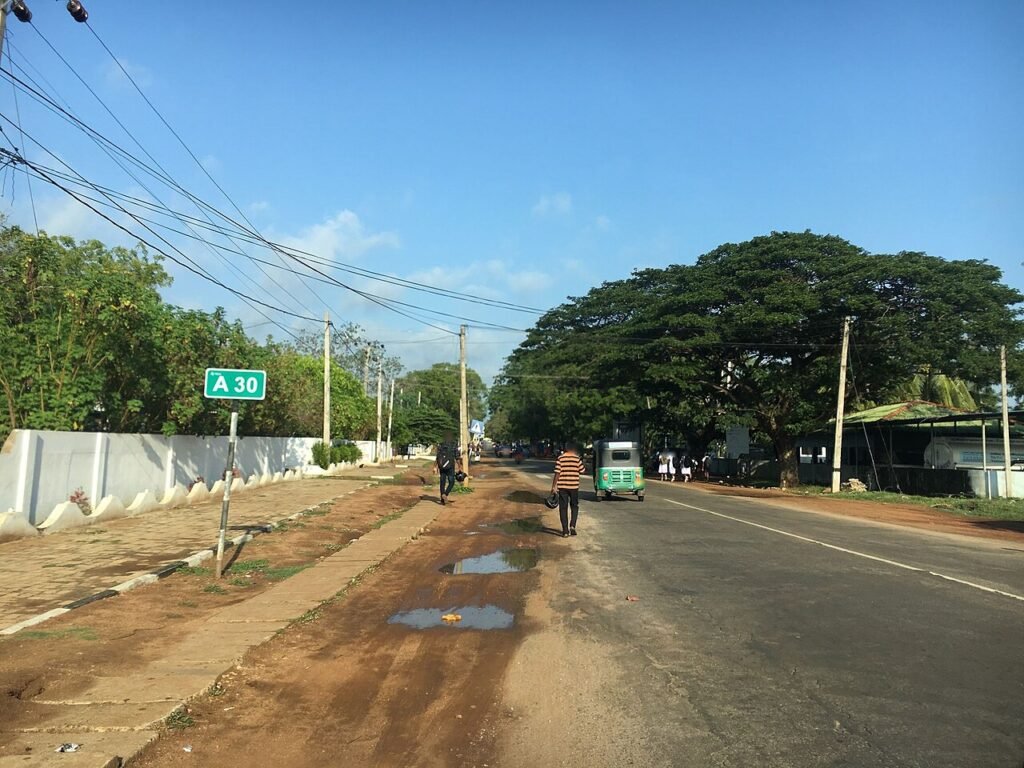
Vavuniya, Sri Lanka Weekend: Biryani, Ancient Temples & The Resilient Pulse of the North (2026)
You step off the train into the dry, powdery heat of Vavuniya’s station, and the first thing you notice, beyond the hammering midday sun, is the scent of grilled meat and spices twisting through the air – a promise of the city’s famous kebabs. For two days, this unassuming northern gateway offers you a rare blend of vibrant Tamil markets, centuries-old Islamic architecture, and a food scene that locals swear rivals the streets of Colombo. Travelers often discover that Vavuniya isn’t a polished tourist town – it’s a living, breathing cross-section of Sri Lanka’s multicultural soul, and it rewards those who come with curiosity and an empty stomach.
Quick Facts Before You Go
- Best Months: February to September – the dry season means clear skies and comfortable exploration, though even in October you’ll find fewer crowds and lush greenery after the northern monsoon.
- Currency: Sri Lankan Rupee (LKR) – roughly 300–320 LKR to 1 USD at the time of writing. Bring cash because ATMs can be spotty outside the main bank.
- Language: Tamil and Sinhala are widely spoken; English is understood in hotels and busier shops, but a few Tamil greetings will open doors and smiles.
- Budget: A comfortable weekend will cost around $35–55 per person per day, including a mid-range hotel, three local meals, transport, and a few souvenirs.
- Getting There: Nearest international airport is Bandaranaike International (CMB), Colombo – about a 5–6 hour drive or a scenic overnight train ride from Colombo Fort Station. Book flights with Skyscanner.
Day 1: The Bazaar and the Backstreets
You arrive in time to see the morning market bloom into a cacophony of colours and voices. Your best bet is to check into your hotel first – drop your bags and step straight into the rhythm of the town. Vavuniya’s heart beats along its main thoroughfare, where the smell of fresh jasmine and frying vada mixes with the hum of tuk-tuks. You’ll quickly feel the difference from Colombo: here, time moves a little slower, and people still wave to strangers.
- Morning (8–11am): Head straight to the Vavuniya Old Market (off Kandy Road, near the clock tower) – a sprawling grid of stalls selling everything from ruby-red chillies to handwoven saris. Spend an hour wandering among piles of dried fish, mountain of spices, and rows of fresh jackfruit. Most vendors are happy to let you sample. The market is free to enter, but expect to spend 200–500 LKR on small goodies like banana chips or cashews. Savvy visitors know to arrive by 8am before the heat builds and the crowds thicken.
- Lunch: At Kebab Basha (No. 87, Jaffna Road) – a legendary no-frills spot that locals recommend for its mutton kebab rolls (250 LKR each) and aromatic biryani (350 LKR). The meat is marinated overnight in a secret blend of cardamom, cloves, and local chillies, then grilled over charcoal in an open-fronted shop. You’ll eat with your hands off a banana leaf – that’s the way it’s done. Add a side of mint chutney and a tall glass of buffalo curd drizzled with palm treacle (150 LKR).
- Afternoon (1–5pm): After lunch, take a tuk-tuk (300–400 LKR) to the Muthumariamman Temple (Kandasamy Kovil Road, dedicated to the goddess Mariamman). This 19th-century Hindu temple features a towering gopuram covered in hundreds of carved deities – the detail alone will hold your attention for half an hour. Dress modestly (cover shoulders and knees) and remove shoes before entering. Then walk 10 minutes to the Jami-ul-Athar Mosque (Grand Mosque, at the junction of Jaffna and Trincomalee Roads). Built in the early 1900s, its white minarets and peaceful courtyard offer a quiet contrast to the market frenzy. Non-Muslims are welcome to enter outside prayer times (avoid 12:30–1:30pm and 5:30–6:30pm).
- Evening (from 6pm): For dinner, book a table at Hotel Arafa’s Rooftop Restaurant (88 Jaffna Road, top floor). The view over the town’s skyline as the muezzin calls evening prayer is unforgettable. Order the mutton buriyani (450 LKR) and a side of eggplant moju – a sweet-sour pickled eggplant that cuts through the richness. After dinner, stroll through the nearby Vavuniya Roundabout Park – small, but alive with families and street vendors selling fresh sugarcane juice (30–50 LKR). It’s a simple, honest slice of daily life.

Vavuniya Railway Station, Sri Lanka., Vavuniya, Sri Lanka
Day 2: Temples and Tanks
Your second day invites you to trade the market buzz for ancient serenity. Fresh from a simple breakfast of string hoppers and coconut sambol, you’ll journey a short way out of town to discover why Vavuniya has been a crossroads for travellers and pilgrims for over two millennia. Travelers often discover that the real gems lie just beyond the city limits – and this day is built for slow, reflective exploration.
- Morning (7–10am): Start early – you want to beat the day’s heat at Anuradhapura’s Ruwanweli Dagaba, a 40-minute drive south (hire a driver for the day, about 2,500 LKR). Yes, technically this is a separate city, but savvy visitors know that Vavuniya makes an excellent base for a day trip to the ancient capital. On the way, stop at Hotel Mainila in Vavuniya for a quick breakfast of pittu (steamed rice cake) with fish curry and pol sambol (180 LKR). At Anuradhapura, the dagaba is a gleaming white stupa that dates back to 140 BCE. Entry is 5,000 LKR for foreigners, but you’ll spend an hour walking clockwise around the base, feeling the stillness. Your best bet is to enter via the southern gate to avoid tour groups.
- Midday (11am–1pm): Return to Vavuniya and head to the Vavuniya Tank – the ancient man-made reservoir that once irrigated paddy fields for centuries. Locals recommend walking the northern embankment around noon because the breeze off the water keeps it bearable. Watch for kingfishers and egrets. It costs nothing to walk the 2 km path, and you’ll often see schoolchildren fishing with bamboo poles. The scene feels unchanged from a hundred years ago.
- Afternoon (1:30–4pm): Explore the Old Bazaar Street (Mannar Road). This is where the city’s Muslim community has traded for generations. Hunt for antique brass lamps, textile-embroidered shawls, and handmade incense. At Abdul’s Spice Shop (No. 44), you can buy a bag of cinnamon, cardamom, and cloves for 250 LKR. The owner, Abdul, will show you how to grind curry powder – ask nicely and he might let you taste his special house blend. Most tourists overlook this street for the larger market, but here you can bargain comfortably and find real souvenirs.
- Final Evening (from 6pm): Your farewell dinner deserves something special. Walk to New Star Biryani Hotel (47 Jaffna Road, near the clock tower) – it’s not fancy, but locals say this is the best place for kothu roti (300 LKR), chopped flatbread stir-fried with curry meat and plenty of garlic. Order a mixed kothu (chicken, mutton, and egg). The open kitchen lets you watch the chef rhythmically chop and toss the roti on a hot griddle. Pair it with a cold Elephant House ginger beer (80 LKR). After dinner, take one last walk through the market area, now illuminated by strings of warm bulbs. The air will carry the scent of roasted peanuts and coconut husks. You’ll leave Vavuniya feeling as though you’ve tasted something real.
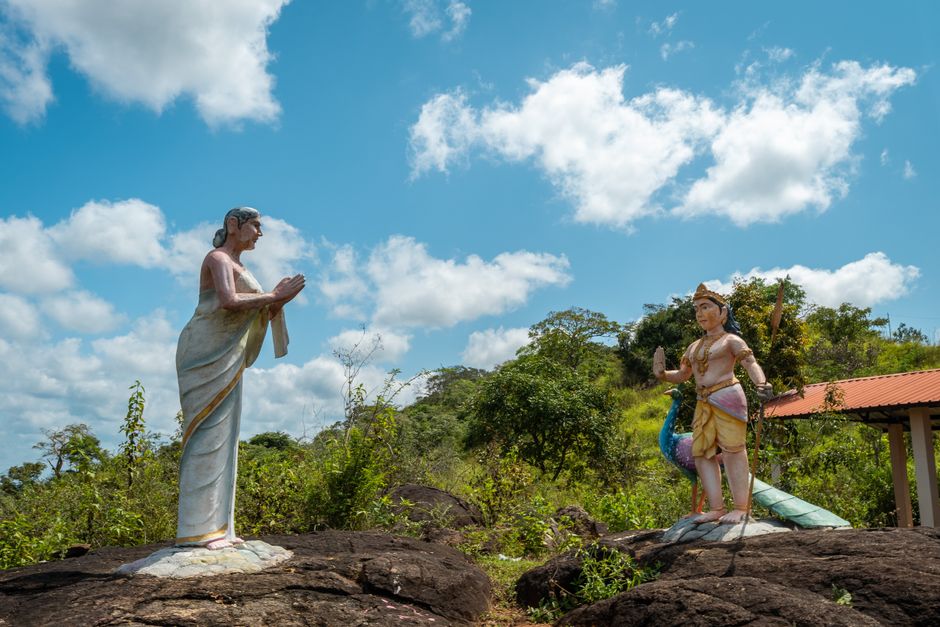
Colorful Hindu deities’ statues on rocks in Vavuniya, Vavuniya, Sri Lanka
The Food You Can’t Miss
Vavuniya’s food story is a delicious collision of Tamil, Muslim, and Sinhalese traditions, with a heavy dose of the arid north’s love for grilled meat and coconut. You’ll notice that local dishes favour bold spice – cumin, cinnamon, and dried chillies – and generous use of ghee. The street food scene, especially around the market, is where you’ll find the town’s soul. Every evening, vendors set up tiny charcoal grills on Jaffna Road, selling mutton kebab sticks (50 LKR each) that are marinated in garlic, turmeric, and a secret mix of roasted spices. The secret is to eat them hot from the grill, wrapped in a piece of old newspaper.
For a sit-down meal, Kebab Basha remains the crown jewel. Their mutton kebab roll – a thin paratha wrapped around a succulent, spiced kebab with raw onion and green chilli – is possibly the best you’ll find east of Istanbul. The price (250 LKR) is almost absurd for the quality. If you’re vegetarian, try the paneer kothu roti at New Star Biryani Hotel – the paneer is fried until golden, then shredded into the roti along with curry leaves and mustard seeds. Both restaurants are cash-only. For breakfast, don’t miss the Pillayar Theppa (Temple Tank) street stalls, where a one-eyed old man named Suresh sells idli (steamed rice cakes) smothered in sambar and fresh coconut chutney for 40 LKR a piece. Travelers often discover that the best food in Vavuniya is the kind you eat with your hands, on a plastic stool, surrounded by bustle.

Vibrant shrine amidst lush greenery in Vavuniya, Northern Province, Sri Lanka., Vavuniya, Sri Lanka
Where to Stay for the Weekend
Vavuniya doesn’t have luxury resorts – and that’s part of its charm. Your best bet for comfort and location is Hotel Arafa (88 Jaffna Road). It’s a family-run place with clean air-conditioned rooms (3,500 LKR per night double), a rooftop restaurant, and a winning central location. The staff can arrange a driver for day trips. For a quieter, more local experience, consider Vavuniya Rest House (Circular Road) – a colonial-era bungalow that was once a British government agent’s home. Its rooms are basic but spacious (2,500 LKR per night), and the garden is a shady oasis of frangipani and bougainvillea. You’ll wake to birdsong and the smell of coffee from the tiny kitchen. For budget travellers, Nila Hotel (Mannar Road) offers dorm beds for 1,000 LKR and doubles for 2,000 LKR – it’s nothing fancy, but the owner is a former tour driver who serves a solid cup of Ceylon tea.
Book your stay through Booking.com or for private rooms with local families, check Airbnb. Both platforms have limited listings in Vavuniya, but the properties that do appear tend to be guesthouses with genuine hospitality.
Before You Go: Practical Tips
- Getting Around: Tuk-tuks rule Vavuniya. Short rides within town (market to temple, for example) cost 150–300 LKR. For the Anuradhapura day trip, hire a driver at your hotel for about 2,500–3,000 LKR for the return. Buses run along the main road (e.g., from Vavuniya to Colombo, 500 LKR per person), but they can be crowded. For train lovers, the night mail to Jaffna stops at Vavuniya’s station around 2am; book a sleeper from Colombo for a memorable arrival.
- What to Pack: Light cotton clothes (long sleeves to protect from sun and mosquitoes), a hat with a wide brim, strong mosquito repellent (pyrethrin-based works best), and a reusable water bottle (you can refill at hotels). If you plan to enter mosques or temples, bring a scarf to cover your head and shoulders. Cash is essential – small denominations of 100 and 500 LKR notes.
- Common Tourist Mistakes: The biggest mistake is not allowing enough time. Many visitors try to do a day trip from Colombo and rush. Make it a weekend – Vavuniya rewards those who linger. Another error is wearing shorts or sleeveless tops into religious sites. Always carry a lightweight sarong or scarf; locals will appreciate your respect. Also, never photograph people without asking – especially at the market where vendors may grow irritable.
- Money-Saving Tip: Skip the hotel restaurant for lunch and dinner. Street kebabs and local eateries are not only cheaper but far more authentic. A meal at Kebab Basha or New Star Biryani Hotel costs 300–500 LKR per person versus 1,200+ LKR at hotel restaurants. You can save around 2,000 LKR per day by eating local – and you’ll eat better.

