
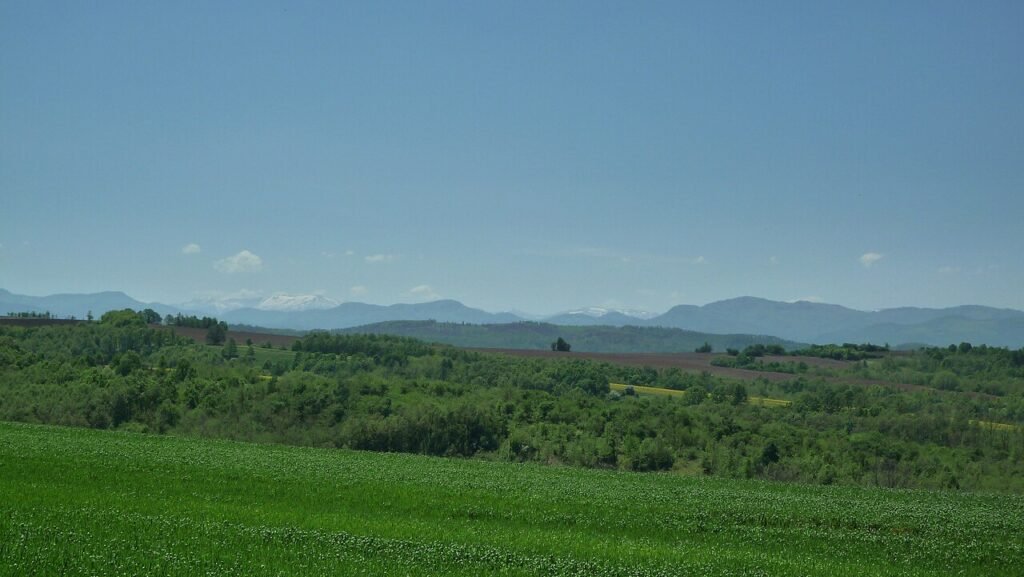
Beyond the Red Walls: Why the Balkan Mountains of Turkmenistan Captivate Every Traveler Who Ventures Here (2026)
In 1933, a Soviet geologist named Ivan Gubkin stood atop a barren ridge in the western reaches of the Turkmen SSR, staring at the Caspian Sea shimmering in the distance. He had come searching for oil, but what he found was a landscape so starkly beautiful—crimson cliffs cutting through a beige desert, ancient ruins half-buried in sand—that he wrote in his journal, “This is a place where the earth’s bones break through its skin.” That moment marked the beginning of the region’s modern boom, but the Balkan Mountains had already witnessed millennia of Silk Road caravans, Zoroastrian fire worshipers, and Turkmen tribes forging a life between sea and stone.
The Story Behind Balkan Mountains, Turkmenistan
Long before the oil derricks and Soviet apartment blocks, the Balkan Mountains were a quiet but vital corridor on the ancient Silk Road. Travelers trudging from the Caspian ports toward the heart of Central Asia would pause here to rest weary camels and trade for turquoise, wool, and dried fish from the nearby sea. By the 10th century, the city of Dehistan—known locally as Mashhad-i-Misrian—had become a bustling center of learning and commerce, its clay-brick mosques and caravanserais hosting merchants from Bukhara, Baghdad, and even China. Archaeological digs have revealed intricate glazed pottery and coins bearing the names of Seljuk sultans, proof that this remote desert outpost was once a crossroads of the world. But the Mongol invasion of the 13th century brought ruin; the canals silted up, the markets fell silent, and the city was slowly swallowed by the sand.
For centuries afterward, the region reverted to a quiet nomad’s domain, inhabited by the Yomut and Teke Turkmen tribes who herded sheep and camels across the sparse grasslands. Then, in the 1930s, the Soviets arrived with seismic survey equipment and a hunger for crude oil. They founded the city of Nebit-Dag (meaning “Oil Mountain” in Turkmen) in 1933, and later renamed it Balkanabat after independence. The discovery of the massive Nebit-Dag oil field transformed the area into an industrial hub overnight. You’ll still see remnants of that era: squat concrete worker dormitories, a dusty central square with a statue of an oil worker, and a railway line that once carried barrels to the Caspian port of Turkmenbashi. Yet, as travelers soon discover, beneath the Soviet veneer, the ancient soul of the Balkan Mountains pulses on in the form of isolated shrines, fire temples, and the enduring hospitality of the few thousand people who call this harsh landscape home.
Neighborhood by Neighborhood

Summer sunshine highlighted the myriad colors of the Black Sea and surround…, Balkan Mountains, Turkmenistan
Balkanabat: The City at the Foot of the Mountains
Your first stop will likely be Balkanabat, the provincial capital of roughly 90,000 souls. The city stretches along a flat plain just south of the Balkan Range, and its layout is a classic Soviet grid: wide boulevards, grassy medians, and clusters of five-story apartment blocks painted in faded pastels. Most of the action happens around the Central Bazaar (Merkez Bazary), a sprawling undercover market off Gurbansoltan Eje Street (formerly Lenin Street). You’ll find vendors selling everything from giant melons in August to freshly caught Caspian sturgeon, slabs of salt-encrusted sheep cheese, and handwoven haly carpets in deep reds and blues. The bazaar is also the best place to grab a quick lunch: look for the family-run stall Gülzadä Chaikhana near the northern entrance, where for 10 manat (about $3), you’ll get a bowl of sulğy (lamb and rice soup) and a stack of warm flatbread. Just east of the bazaar, the Balkanabat History Museum (open 9 a.m. to 5 p.m., closed Mondays) offers a dusty but endearing collection of Bronze Age artifacts unearthed from nearby burial mounds. The museum’s highlight is a 4th-century Sasanian silver bowl engraved with a wild boar hunt—a rare glimpse of the region’s pre-Islamic splendor. In the evenings, locals gather at Görogly Park, a shady square in the city center, where you can sip green tea from a thermos while watching children chase pigeons around a statue of the legendary Turkmen hero Görogly. The park’s small amusement rides and karaoke stage give the place a gentle, provincial charm. Most tourists overlook Balkanabat entirely, racing to the canyons or the Caspian coast, but savvy visitors know that lingering here for a day reveals a genuine slice of Turkmen urban life.
Mashhad-i-Misrian (Dehistan): The Deserted Silk Road City
Thirty kilometers northwest of Balkanabat, a gravel track leads you into a landscape of low dunes and parched salt flats. Then, rising out of the emptiness like a mirage, you’ll see the mudbrick walls of Mashhad-i-Misrian, the ancient city of Dehistan. No buses run here; you’ll need to hire a driver from Balkanabat for about 60 manat ($20) round-trip, including waiting time. The site is technically free, though the caretaker—a quiet Turkmen man named Berdimurad—may ask a small tip of 10 manat to unlock the gate. Plan to spend at least two hours exploring the sprawling ruins. The most intact structure is the Shir-Kabir Mausoleum, a 14th-century domed tomb built of fired brick, its interior adorned with faded turquoise tiles that once spelled out Quranic verses. You’ll also find the remnants of a caravanserai courtyard, where camels and merchants sought shelter. In spring, the sand around the ruins is speckled with tiny yellow wildflowers—a striking contrast to the desolation. Locals consider the site sacred; women tie pieces of cloth to a gnarled old pomegranate tree near the mausoleum as offerings for fertility or safe journeys. If you visit in the late afternoon, the low sun casts long shadows across the ruins, and you can almost hear the distant clatter of pack animals and the murmurs of traders haggling in Persian, Arabic, and Turkic.
Yangykala: The Crimson Canyon and Its Nomadic Hinterland
About 100 kilometers east of Balkanabat, the road climbs into the Balkan Range proper, and suddenly the earth opens into a vast, flaming gorge. Yangykala Canyon (the name means “fire fortress” in Turkmen) stretches for 20 kilometers along the Uzboi River, its cliffs layered in stripes of red, orange, yellow, and white—mineral deposits laid down over 20 million years. This is the region’s crown jewel, and you’ll want to devote a full day to it. The best viewpoint is at the Kyzylkaya Overlook, reached by a short scramble from the parking area. From here, the canyon drops 300 meters into a labyrinth of wind-carved spires. Bring plenty of water (at least 3 liters per person) and sturdy shoes; there are no facilities or marked trails. For an unforgettable experience, arrange a 4×4 driver in Balkanabat (around 200 manat / $65 for the day, including fuel) to take you into the canyon’s interior, where you’ll see the remains of an ancient Zoroastrian fire temple at Gyzylgaya, a cluster of stone altars still blackened by centuries of sacred flames. The few nomadic families who live in the area—herders of fat-tailed sheep—often welcome visitors to their felt oy (yurts) for a cup of camel’s milk or a bowl of çörba (soup). If you are lucky, you might be invited to stay overnight; your best bet is to ask at the Yangykala Tourist Station (a small wooden hut near the canyon entrance, run by a friendly ranger named Serdar). He can arrange a homestay for around 40 manat ($13) per person, including breakfast.
The Local Table: What Natives Actually Eat

Elegant white government building with ornate lamp posts in Ashgabat., Balkan Mountains, Turkmenistan
In the Balkan Mountains, food is a reflection of scarcity and resourcefulness. The harsh climate means fresh vegetables are a luxury; instead, you’ll find a cuisine built around preserved meats, dairy, and grains. The star ingredient is lamb—fatty, tender, and slow-cooked in underground ovens. The dish that every traveler must seek out is gaplama, a hearty casserole of layered mutton, potatoes, carrots, and onions, cooked for hours in a sealed clay pot called a bolde. You’ll find the best version at Dostluk Restaurant on Aşgabat Avenue in Balkanabat (open 11 a.m. to 10 p.m., around 25 manat per portion). The owner, Ayna, learned the recipe from her grandmother in the foothills near Yangykala, and she serves it with a tangy yogurt sauce and fresh coriander. Another staple is işdegen balyk—smoked Caspian sturgeon, caught by fishermen from the small port of Hazar. You’ll see it hanging in the bazaar, glossy and golden, with a smoky taste that pairs perfectly with a glass of çay (green tea). For breakfast, locals stop at Nurana Bread Stall in the Central Bazaar for çörek, a dense, slightly sweet flatbread baked in a tandoor, eaten with clotted cream and mulberry jam. The secret is to buy it fresh at 7 a.m., when it’s still warm from the oven. Most travelers miss this early-morning ritual—don’t.
Seasonal produce is limited but cherished. In autumn, you’ll find pomegranates and quinces from the gardens of the nearby village of Maganly, sold by farmers at the bazaar for 5 manat a kilo. Natives often simmer quinces with lamb and honey into a sweet-savory stew called behi we et, a dish that embodies the region’s resourcefulness. And if you are invited into a home, expect to be offered süzme (strained yogurt) and honeycomb—the universal gesture of Turkmen hospitality. You’ll quickly learn that eating in the Balkan Mountains is not just about sustenance; it is an act of sharing, of storytelling around a low table crowded with bowls of steaming broth and piles of rice.
Art, Music & Nightlife
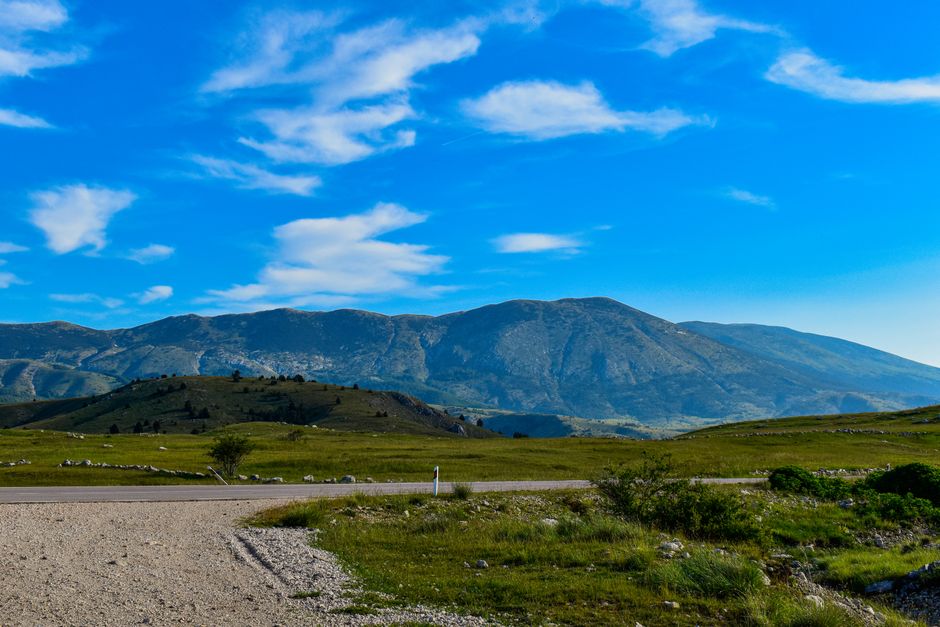
Serene landscape featuring mountains and blue sky in Bosnia and Herzegovina., Balkan Mountains, Turkmenistan
The creative heartbeat of the Balkan Mountains is felt in its folk music, specifically the dutar—a two-stringed lute played by minstrels called bagshy. These musicians travel from village to village, performing epic poems about the hero Görogly and the wanderings of the legendary lover Zohreh-Tahir. The best place to hear them is at the Balkanabat Cultural Center (Balkanabat Akmetyýet Merkezi) on Görogly Street. Every Friday and Saturday evening around 7 p.m., the center hosts a free concert lasting about two hours. You’ll sit on plush carpets in a hall that smells of wool and incense while bagshy pluck haunting melodies that echo off the tiled walls. The audience—mostly older men in embroidered telpek hats—claps softly and nods in appreciation. For a more intimate experience, ask around in the bazaar for a local wedding that might welcome outsiders. Weddings are the main social events; you’ll find them in the Balkanabat Wedding Palace on Magtymguly Street almost every weekend. Expect to be fed gaplama and clapping along to a leýlek dance (the “stork dance”) that mimics the bird’s graceful strut.
Nightlife as Western travelers know it simply doesn’

