
El Alto, Bolivia on a Budget: How to Live Like a King for $25/Day (2026)
While a single bowl of pasta in downtown San Francisco will set you back $18, a full day of extraordinary experiences in El Alto, Bolivia—including a hearty breakfast, lunch, a museum visit, and round-trip cable-car rides with panoramic views of the Andes—costs less than that. Travelers often discover that their daily spending in El Alto is roughly what they’d pay for a single drink in a Parisian café. For the price of a movie ticket in New York, you can ride the world’s highest cable-car network, explore a bustling indigenous market, and eat like a local at a family-run lunch spot.
7 Free Things to Do in El Alto, Bolivia
- Ride the Teleférico Orange Line (temporarily free on Sundays): On Sundays until noon, the Teleférico’s Orange Line from La Paz to El Alto runs free for locals and tourists. You’ll glide 4,000 meters above sea level with the snow-capped Illimani behind you. After you hop off at the final station, walk east toward the edge of the Altiplano for a vertiginous view over La Paz.
- Mercado 16 de Julio (Sunday market): Every Sunday from 6 a.m. to 2 p.m., the streets around Avenida 16 de Julio transform into the largest open-air market in the Americas. Wander through endless stalls selling everything from alpaca wool sweaters to live guinea pigs. No purchase necessary—just marvel at the chaos, colors, and the famous “cholitas” in bowler hats. Locals recommend arriving before 9 a.m. to avoid the thickest crowds.
- Cholita Wrestling at the El Alto Coliseum (watch from the street): The weekly “cholitas luchadoras” (wrestling in traditional Aymara skirts) happen every Thursday and Sunday afternoon. If you can’t afford the $3 entrance, you can peek through the gaps in the coliseum’s fence near the main gate—you’ll hear the crowd roar and catch glimpses of the flying skirts.
- Mirador de la Ceja: At the edge of the Ceja district, this viewpoint offers a jaw-dropping panorama of La Paz sinking into the canyon thousands of feet below. Bring a thermos of coca tea and sit on the low wall at sunset. You’ll see the city’s lights flicker on one by one. Travelers often say it rivals the famous “Valle de la Luna” view—for free.
- Street Art Walk on Avenida Juan Pablo II: Starting at the intersection with Avenida 6 de Marzo, you’ll find a growing collection of murals painted by local and international artists. The works celebrate Aymara culture, the city’s revolutionary history, and the “Ch’alla” festival. Plan to spend 45 minutes strolling—the best pieces are between blocks 10 and 14.
- Walk the New Market of El Alto (Mercado Nuevo): Unlike the Sunday mega-market, the Mercado Nuevo on Avenida Jorge Carrasco is open daily (except Monday). You’ll wander through colorful produce aisles, see live chickens in cages, and smell frying empanadas. It’s a living cultural exhibit. The best time is 8 a.m. when women in traditional polleras arrive with fresh quinoa and potatoes.
- Visit the Mirador El Alto (the giant sculpture complex): A 15-minute walk from the Teleférico’s red line station, you’ll reach a park with a giant metal sculpture of an indigenous man holding a torch. Climb the spiral staircase inside the sculpture for a 360-degree view of the Altiplano—completely free and open 24/7 (though bring a flashlight if going after dark).
Cheap Eats: Where Locals Actually Eat
Your taste buds—and your wallet—will be grateful for these four spots.
- Salteñería “La Paceña” (Calle 1, near Plaza del Minero): Grab two juicy salteñas (the Bolivian answer to empanadas) for just 7 bolivianos ($1). The filling is a sweet-savory mix of beef, chicken, olives, and raisins in a slightly sweet dough. Locals recommend ordering the “mixto” to get both types. Eat standing at the counter while the ladies hand-wrap fresh batches. Open 7 a.m. to 1 p.m. only.
- Almuerzo at “Doña Felipa’s” (Avenida 6 de Marzo #1230): Between 11:30 a.m. and 2:30 p.m., Doña Felipa serves a three-course set lunch for 15 bolivianos ($2.15). Expect a soup (e.g., quinoa with vegetables or fricasé de pollo), a main course (rice with llama stew or trout with potatoes), and a small dessert (rice pudding). The dining room is a converted garage with plastic chairs—but the food is authentic Aymara home cooking.
- Mercado 16 de Julio food court (inside the market, section C): After haggling for a wool scarf, head to section C where a dozen women serve lunch from bubbling pots. A generous plate of “plato paceño” (corn, cheese, broad beans, and potatoes) costs 12 bolivianos ($1.70). For 5 bolivianos more, add a grilled chorizo. The secret is the table with the green awning—the one that always has a queue.
- Anticuchos “El Charrúa” (Esquina de Avenida La Paz y Calle 3): For an evening treat, join the locals around the grill at 7 p.m. Anticuchos are skewered beef hearts marinated in aji and served with boiled potatoes and a spicy peanut sauce. Three skewers cost 15 bolivianos ($2.15). The vendor, a grinning señora named Martina, has been serving here for 22 years. Her secret? A splash of vinegar in the marinade.

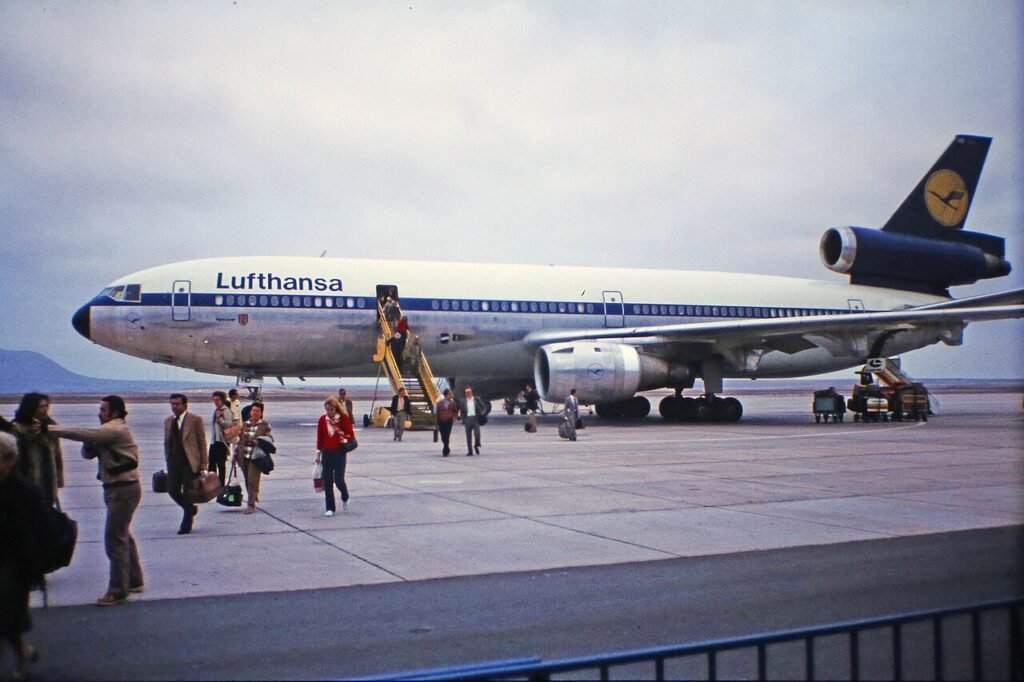
Main terminal of El Alto International Airport, La Paz, Bolivia, El Alto, Bolivia
Getting There Without Going Broke
- Cheapest Route: Fly into La Paz’s El Alto International Airport (LPB). From the US or Europe, use Skyscanner to find connections via Lima, Bogotá, or Buenos Aires. The lowest round-trip fares from Miami start at $450 (in low season). From within South America, look for buses to La Paz from Peru (e.g., Puno to La Paz, $10, 4 hours).
- Pro Tip: Book your flight to La Paz on a Tuesday or Wednesday—fares typically drop 20% compared to weekend departures. Also, if you’re already in Bolivia, take an overnight “bus cama” (sleeper bus) from Sucre ($9, 12 hours) or Cochabamba ($6, 8 hours). The company “Trans Copacabana” has modern reclining seats.
- From the Airport: El Alto International Airport is actually inside El Alto city. Your cheapest option is the local minibus “Línea 212” which passes right outside arrivals for 2 bolivianos ($0.30). It’ll drop you near the Ceja district in 15 minutes. A taxi from the airport should cost 30 bolivianos ($4.50)—agree on the price before getting in (taxi drivers often quote 50 to tourists).
Compare flights at Skyscanner

Dam within mountain range during daytime, El Alto, Bolivia
Budget Accommodation Guide
In El Alto, your sleeping-dollar goes far. The best budget areas are Ceja (the commercial heart) and near the Teleférico Red Line station (easy connection to La Paz). Avoid the far northern outskirts (Villa Ingenio) and the industrial zone near the airport—less safe and few budget options.
- Hostal El Alto (Calle 3, Ceja): Dorm beds from $5/night with shared bathroom and lukewarm showers. Free Wi-Fi in the lobby (don’t expect great speed). The rooftop has a breathtaking view of La Paz. Book via Booking.com for a small discount.
- Residencial “La Paz Inn” (Avenida 6 de Marzo #890): Private rooms from $12/night with private bathroom, hot water (reliable), and a small desk. It’s a family-run guesthouse—the señora who runs it will offer you coca tea at checkout. Check availability on Airbnb with keyword “El Alto private room.”
- Hotel Aruwiy (Calle Eloy Salmon #453): For a splurge, you can get a sleek double room with floor-to-ceiling windows, a minibar, and 24-hour room service for $25/night. The restaurant serves a decent breakfast buffet included. Book through Booking.com—they often have last-minute deals for $20.
- Couchsurfing: El Alto has a small but active Couchsurfing community. Hosts are often students or young professionals who offer a spare mattress and a free city tour. Plan to stay in the Ceja or Villa Adela neighborhoods. Request at least two weeks in advance.

A group of colorful buildings, El Alto, Bolivia
Money-Saving Tips Specific to El Alto, Bolivia
- Carry small bills and coins: Street vendors, market stalls, and minibuses rarely accept bills larger than 20 bolivianos ($2.90). Break large notes at the airport or a chola-run cambio shop. You’ll save 5–10% on small purchases because you won’t overpay due to “no change.”
- Use the Teleférico as transport, not just a tourist ride: A one-way trip on any line costs 3 bolivianos ($0.45) compared to a minibus which is 2 bolivianos ($0.30). The cable car is faster, safer, and gives you aerial views—worth the extra penny. For a day of exploring, buy a rechargeable card (tarjeta ciudadana) for 10 bolivianos and load 20 bolivianos—good for unlimited rides across the network.
- Eat “almuerzo” (set lunch) instead of dinner: The almuerzo (11:30 a.m.–2:30 p.m.) is always the cheapest meal. A full three-course lunch is 15–20 bolivianos ($2–3). Restaurants triple their prices for dinner (40–60 bolivianos for a similar meal). Your best bet is to make lunch your main meal and eat a light street snack for dinner.
- Visit the Mercado 16 de Julio on a self-guided scavenger hunt: Instead of paying for a guided market tour (which costs $15–25), download a free map from the El Alto tourism website. The market is divided into color zones: red for clothing, green for food, blue for electronics, purple for herbs and folk remedies. Follow the color-coded banners above the aisles. You’ll save $20 and get a more authentic experience.
- Negotiate everything—but respectfully: In the Ceja market and with street vendors, you can usually knock 15–20% off the first price. Say “¿Cuál es su mejor precio?” (What’s your best price?) with a smile. But don’t haggle over 1 boliviano—that’s 15 cents. Locals appreciate when you treat haggling as a friendly interaction, not a battle.
Is El Alto, Bolivia Worth It on a Budget?
Absolutely—and here’s the honest verdict. El Alto is not a polished tourist destination. You won’t find boutique coffee shops, curated museums, or English-speaking guides on every corner. The streets are rough, the altitude (4,050 meters / 13,300 feet) will make you breathless, and the city’s reputation for petty theft is not entirely unfounded—keep your phone in your front pocket and your camera around your neck.
But what you gain on a budget is priceless: a raw, unfiltered immersion into Aymara urban culture. You’ll see families selling llama fetishes for fertility rituals, hear the thunder of drums during a “Ch’alla” ceremony, and eat food that hasn’t been dumbed down for tourists. For $9.50 a day, you can experience a city that most travelers fly over—literally—on their way to the Salar de Uyuni. And if you stretch to the comfort budget of $28/day, you’ll eat local set lunches, sleep with hot water, and ride the world’s highest cable car as your daily commute. Compared to La Paz (which is 30% more expensive for the same standard of accommodation), El Alto offers a more authentic, more affordable, and equally breathtaking Bolivian adventure.

