
Where the Sea Meets the Mangroves: Caravelas, Brazil’s Hidden Coastal Soul (2026)
In December of 1503, when the Portuguese explorer Gonçalo Coelho first dropped anchor off this stretch of Bahian coastline, he found a land so thick with mangroves and coconut palms that his scribe called it simply “the place of little ships.” Those early caravels that gave the town its name—caravelas in Portuguese—never imagined that five centuries later, travelers would still come seeking the same wild Atlantic magic that first stopped them in their tracks. You’ll find that Caravelas remains remarkably untouched, a town that time didn’t forget but somehow chose to protect.
The Story Behind Caravelas, Brazil
The history of Caravelas is written not in grand monuments but in the quiet persistence of fishermen and the slow rhythm of the tides. Founded officially in 1564 as a small Jesuit settlement, the town spent its first three centuries as a sleepy port exporting brazilwood and whale oil—the latter a brutal but lucrative industry that brought whaling ships from as far as England. By the 1800s, Caravelas had become a major whaling center, and you can still spot the ruins of whale-processing stations along the coast near Ponta de Areia. The extinction of whaling in the early 20th century left the town in an economic slumber from which it only began to stir in the 1990s, when the discovery of the Abrolhos Archipelago just 40 miles offshore brought a new kind of visitor—not whalers, but conservationists and eventually eco-travelers.
A pivotal moment came in 1983 when the Brazilian government established the Parque Nacional Marinho dos Abrolhos, Brazil’s first marine national park. This decision transformed Caravelas from a forgotten outpost into the gateway to one of the most biodiverse coral reef systems in the South Atlantic. Locals will tell you that the old whaling families became the first boat captains for tourist excursions, a shift that feels almost poetic when you consider that the same waters once harvested whales now protect them. The town’s population hovers around 22,000 today, and you’ll sense a place that has learned to live lightly—not out of environmental idealism, but out of necessity and pride.
The most striking historical vestige you’ll encounter is the Igreja Matriz de São Francisco de Assis, a church built in 1605 by the Jesuits, its whitewashed walls and simple baroque altar standing as a quiet testament to the town’s colonial roots. Wander inside and you’ll find hand-carved wooden saints darkened by centuries of candle smoke, and a faded painting of Caravelas’ patron saint watching over a fleet of tiny ships. This church remains the emotional heart of the town, and during the Festa de São Francisco in early October, the entire community spills into the square for processions, music, and a sense of continuity that few modern resorts can claim.
Neighborhood by Neighborhood
Centro Histórico
Caravelas’ historic center clusters around Praça da Bandeira, a shady square where you’ll find old men playing dominoes under flamboyant trees and the gentle hum of conversation drifting from open doorways. The colonial-era pastel-colored houses here wear peeling paint like a badge of honor—faded yellows, pale blues, and soft pinks that photograph beautifully in the late afternoon light. Your best bet is to start at Rua da Matriz, where the cobblestones are worn smooth by generations of footsteps, and simply wander. Don’t miss the Casa da Cultura, a restored 18th-century building that hosts rotating exhibitions of local art and artifacts. Most tourists speed through this area on their way to the port, but seasoned travelers know that the real Caravelas reveals itself in the small moments—a baker pulling trays of pão de queijo from a wood-fired oven, a cat stretching on a windowsill, the sound of a samba rehearsal floating from an upstairs window.
Praia do Kitongo
Just fifteen minutes by foot from the center, Kitongo feels like a different world entirely. This neighborhood stretches along a wide, uncrowded beach where the Rio Caravelas meets the Atlantic, creating a brackish lagoon system that draws birds and kayakers alike. The architecture here is low-rise and functional—simple weekend houses, a handful of pousadas, and a few casual restaurants perched on stilts above the sand. Locals recommend arriving at low tide, when the exposed sandbars create natural pools perfect for wading. The vibe is utterly laid-back: you’ll see fishermen mending nets under coconut trees, children flying kites in the sea breeze, and the occasional horse and cart clattering past. The real draw, though, is the sunset—travelers often discover that Kitongo’s position, facing slightly north, paints the sky in shades of orange and violet that reflect off the lagoon with almost surreal intensity. Bring a chair or just sit on the sand; you’ll understand why so few developments have changed this place in fifty years.
Porto de Caravelas
The working port is where Caravelas sheds its sleepy coastal charm and gets down to business. Here you’ll find the real pulse of the town: the ferry terminal, the fish market, and the chaotic jumble of boats that range from tiny skiffs to the schooners that carry travelers to Abrolhos. The smell of diesel, salt, and grilled fish hangs in the air, and the noise is a constant mix of shouted negotiations, outboard motors, and seagulls. Your best move is to visit early, around 6:00 AM, when the fishing fleet returns and you can watch the catch being unloaded—snapper, grouper, and the occasional lobster hauled onto concrete slabs where women in rubber boots sort and shout prices. Grab a coffee at one of the portside kiosks (Bar do Zé is the most authentic) and watch the ferry to the island of Nova Viçosa depart. The port neighborhood isn’t pretty in the conventional sense, but it’s where you’ll feel the real economy of Caravelas at work—and where you’ll likely buy the freshest fish you’ll ever eat.
The Local Table: What Caravelenses Actually Eat
Food in Caravelas is defined by what comes from the sea and what grows in the sandy soil just inland. This is not a place for elaborate gastronomic theater—the cuisine is honest, direct, and deeply satisfying. Moqueca, the iconic Bahian fish stew, appears on every menu, but the version you’ll find here is lighter and less coconut-heavy than the one in Salvador, reflecting the local preference for letting the fresh fish speak for itself. The key ingredient is dendê (palm oil), which gives the stew its signature orange hue and earthy flavor. Locals will tell you that the best moqueca in town is served at Restaurante da Dona Nina on Rua da Praia, a family establishment where Dona Nina herself still stirs the pots at age seventy-three. Arrive before noon; by 1:00 PM, she’s often sold out.

Barra de Caravelas – Caravelas-BA, Caravelas, Brazil
The real treasure, though, is the caranguejo (mangrove crab), which locals consider the soul food of Caravelas. You’ll find it prepared in countless ways—as a paste, in a stew called casquinha de caranguejo, or simply steamed and cracked open with wooden mallets at beachside bars. The definitive spot is Bar do Seu João in the Porto neighborhood, where for around R$35 (about $7 USD) you get a plate of crabs, farofa (toasted cassava flour), and cold beer while sitting on plastic chairs under a thatched roof. The trick, as Seu João himself will tell you with a wink, is to eat with your hands and not be shy about the mess. For dessert, seek out doce de coco—a simple coconut sweet sold by women on the streets near the port, wrapped in banana leaves for about R$2 apiece. It’s the taste of Caravelas condensed into a single, perfect bite.
The Saturday morning market at Praça da Bandeira is where you’ll see the local food culture in full swing. From 6:00 AM to noon, farmers from the surrounding countryside sell mangoes, passion fruit, cassava, and the tiny, intensely sweet bananas called banana da terra. There’s a woman who fries acarajé (black-eyed pea fritters) in dendê oil right on the square, and her line is always the longest. Get there early, bring small bills, and be prepared to eat standing up while the morning heat rises and the church bells ring. This is not a meal you’ll forget.
Art, Music & Nightlife
Caravelas doesn’t try to compete with Salvador’s carnival or Rio’s nightlife—its creative energy is more intimate, more tied to the rhythms of daily life. What you’ll discover instead is a tradition of samba de roda, a circle-dance form that blends African rhythms with Portuguese lyrics and is recognized by UNESCO as an intangible cultural heritage of humanity. On most Friday nights, a group of local musicians gathers at the Associação Cultural Samba de Roda in the Centro neighborhood, and for a small donation (R$10–15), you can join the circle, clap along, and watch elderly women in white dresses sing lyrics that tell stories of fishing, love, and resistance. The energy is infectious, and travelers often find themselves staying long past when they planned to leave.
The annual Festa de São Francisco, running from October 1st to 4th, transforms the entire town into a stage. Expect processions with boats instead of floats (in honor of the town’s maritime identity), capoeira demonstrations in the square, and live bands that play into the early morning hours. For a quieter cultural fix, visit the Ateliê de Artesanato do Porto, a cooperative where local women weave baskets from buriti palm fibers and carve miniature caravels from driftwood. You’ll find no mass-produced souvenirs here—each piece tells a story, and the women are happy to explain the techniques passed down through generations. Nightlife in Caravelas is low-key: your options are essentially a few beach bars with live acoustic music (Bar do Kitongo is the best, with cold beer and covers of MPB classics) or the occasional festa at a local club like Recanto do Samba. The real nightlife, locals will tell you, is on the water—join a moonlight schooner trip that leaves the port at 10:00 PM and returns at midnight, with caipirinhas and Brazilian pop playing as you drift under a sky crowded with stars.
Practical Guide
- Getting There: Fly into Aeroporto de Caravelas (CRQ), which receives daily flights from Belo Horizonte via Azul Linhas Aéreas. Alternatively, fly into Porto Seguro (BPS) and take a 3-hour bus or rental car drive north. Book flights at Skyscanner
- Getting Around: The town center is walkable. For trips to Praia do Kitongo or the port, take a mototáxi (R$5–7 per ride) or rent a bicycle from Locações do João on Rua da Matriz for R$25 per day. Taxis are available but scarce; negotiate the price before you get in. To reach Abrolhos, book through a licensed operator at the port—expect R$180–250 per person for a full-day trip including snorkeling gear and lunch.
- Where to Stay: For atmosphere, book Pousada da Barra (kitongo neighborhood, rooms from R$150/night) for its beachfront location and hammocks on the veranda. For convenience, Hotel Caravelas in the Centro (R$120/night) offers clean, simple rooms steps from the main square. Splurge at Pousada Abrolhos (R$350/night) for air conditioning and a pool. Check availability at Booking.com
- Best Time: April through October brings drier weather, calmer seas for boat trips, and excellent visibility for snorkeling at Abrolhos. Avoid December through March, when heavy rains can cancel excursions and the humidity climbs to oppressive levels. September and October offer the bonus of the Festa de São Francisco.
- Budget: Expect to spend R$150–200 per day as a budget traveler (meals, accommodation in a simple pousada, local transport). Mid-range travelers should budget R$350–500 per day. The Abrolhos boat trip is your single biggest expense; everything else in Caravelas is notably cheaper than in Salvador or Rio.
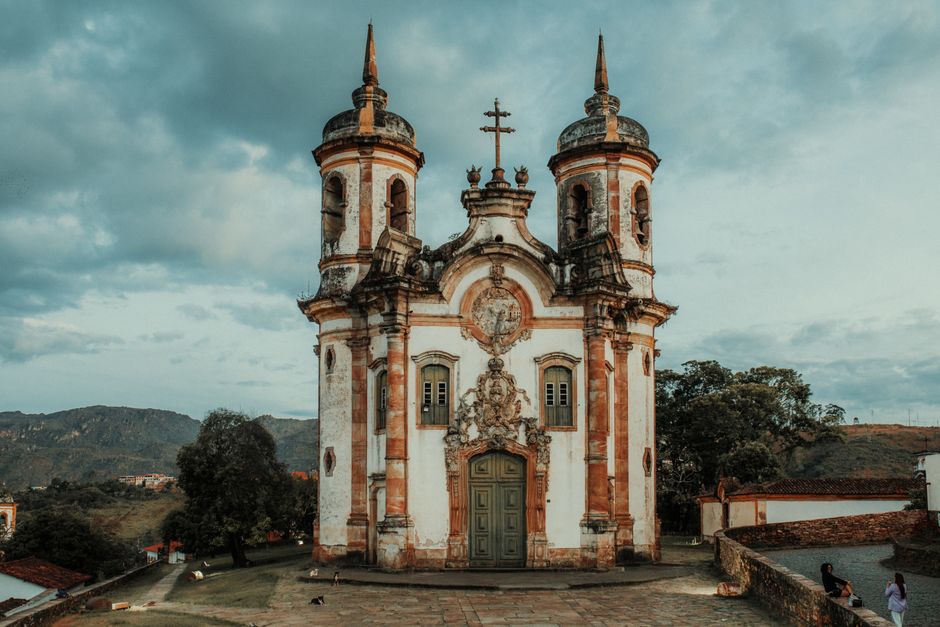
A stunning Baroque church in Ouro Preto, Caravelas, Brazil
What Surprises First-Time Visitors
The first surprise is how quiet Caravelas is. Travelers arrive expecting a typical Brazilian beach town—loud music, caipirinha stands every ten meters, vendors hawking sarongs and sunglasses. Instead, you find a place where the loudest sound at 9:00 PM is the frogs in the mangroves and the occasional dog barking. This stillness takes some adjusting to, but by your second day, you’ll feel yourself exhaling in ways you didn’t realize you needed. The Caravelenses are friendly but not pushy; they’ll offer help if you look lost but won’t try to sell you anything. It’s a quality that feels increasingly rare in tourist destinations, and one you’ll come to appreciate deeply.
The second surprise is the biodiversity just offshore. Most people think of Brazil’s coast and imagine Copacabana or the cliffs of Fernando de Noronha—they don’t expect a coral reef system that rivals the Caribbean. But the Abrolhos Archipelago, accessible only by a two-hour boat ride from Caravelas, is a world-class marine reserve where you can swim alongside sea turtles, humpback whales (July through October), and the endemic brain corals that form massive underwater formations called “chapeirões.” The water is clear, warm, and shockingly full of life. Travelers often remark that the highlight of their entire Brazil trip wasn’t Rio or the Amazon—it was floating over the reefs of Abrolhos with not another boat in sight.
The third surprise is the food—specifically, how far a little goes. You’ll sit down at a beachfront bar and order a plate of grilled fish, rice, beans, farofa, and salad, plus a cold beer, and the bill will come to less than R$40. The quality is exceptional because the fish was caught that morning, the beans were cooked with care, and the family running the place has been doing it for three generations. Caravelas reminds you that great travel experiences don’t need to cost a lot—they just need to be real. And this town, with its peeling colonial façades, its mangrove-lined waterways, and its gentle, unhurried rhythm, is as real as it gets.
Your Caravelas, Brazil Questions
Is Caravelas safe for solo travelers, especially women? Yes, Caravelas is considered one of the safest towns in Bahia for solo visitors. Violent crime is virtually unheard of here, and the biggest risk you’ll face is petty theft—keep your phone out of sight at the beach and don’t leave valuables unattended. Women traveling alone will find that locals are respectful and helpful, though you should still exercise the usual caution when walking alone at night in the port area. The town is small enough that you’ll quickly become a recognizable face, which actually works in your favor—people look out for one another here.
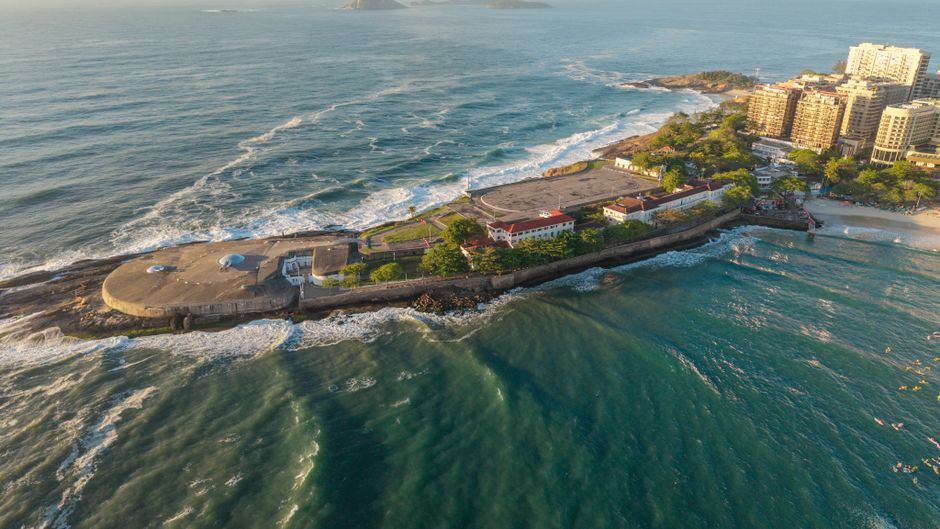
A stunning aerial view of Fort Copacabana island surrounded by the sea in R…, Caravelas, Brazil
Do I need to speak Portuguese to visit Caravelas? You will struggle without at least basic Portuguese, as very few locals speak English beyond a few tourist phrases. That said, Caravelenses are patient and creative communicators—you can get by with a phrasebook, a translation app, and plenty of smiles. Learn key phrases like “por favor” (please), “obrigado/a” (thank you), and “quanto custa?” (how much does it cost?), and you’ll find doors open easily. The language barrier actually deepens the experience: you’ll communicate through gestures, shared meals, and the universal language of pointing at fish you’d like to eat.
How many days should I plan for Caravelas, and should I combine it with other destinations? Plan for a minimum of four days: two for the town itself and two for the Abrolhos boat trip (which requires a full day at sea plus a buffer day for weather). Many travelers combine Caravelas with a visit to the nearby colonial town of Alcobaça (30 minutes south) or the beaches of Nova Viçosa (a 20-minute ferry ride). You can also continue north to Porto Seguro or west to the interior of Bahia, but the charm of Caravelas is its isolation—try not to rush. The slower you move, the more you’ll discover.

