
Swaziland’s Malolotja, Eswatini Weekend: Hiking (2026)
The air smells of pine and damp earth as you step onto the Malolotja trail at dawn—only the distant call of a crowned eagle breaks the silence. You’re here for two days, but this wilderness of 18,000 hectares will feel like a world apart. Over the weekend, you’ll summit Eswatini’s highest peak, spot zebra grazing along the Malolotja River, and sleep under a canopy of stars so thick you forget the world exists. This is not a luxury escape; it’s an immersive weekend for hikers, birders, and anyone craving raw, untouched African bush.
Quick Facts Before You Go
- Best Months: May to September (dry, cool, clear skies; wildlife gathers near water; hiking is comfortable)
- Currency: Swazi Lilangeni (SZL) – pegged 1:1 to the South African Rand. ATMs scarce in the reserve; bring cash. Exchange rate: roughly 18 SZL = 1 USD.
- Language: siSwati and English. English is widely spoken by park staff and in nearby towns.
- Budget: Expect 800–1,200 SZL per person per day (about $45–$70), including park entry, self-catering accommodation, meals, and local transport.
- Getting There: Nearest major airport is King Mswati III International Airport (SHO) near Manzini, but most travelers fly into Johannesburg O.R. Tambo (JNB) and drive 4.5 hours east. Find flights at Skyscanner.
Day 1: Summit & Sunset – The Mountain Rewards You
You start the morning with a key from the Malolotja Nature Reserve office, a fold-out map, and a nervous excitement that only a long hike delivers. The trail to Emlembe, Eswatini’s highest peak at 1,862 meters, begins gently through grassland where red hartebeest lift their heads to watch you. By late morning, you’re scrambling over quartzite outcrops, the air thinning and cooling. The view from the summit—where the border between Eswatini and South Africa is just a wire fence—stretches across the Komati River valley. Savvy visitors know to bring binoculars: the cliffs below host nesting black eagles. You descend just as the afternoon light turns the rocks golden, heading for a promised sunset at the Malolotja viewpoint.
- Morning (8-11am): Register at the reserve office (entry fee: 60 SZL per person). Hike the Emlembe Trail (about 6 km round trip, moderate to strenuous). Start by 8am to beat the midday heat. You’ll pass through open grasslands and rocky ridges; the summit is an unmarked cairn. Most tourists overlook this trail—perfect for solitude.
- Lunch: Pack your own picnic or grab a simple meal at the reserve’s small kiosk (sandwiches and cold drinks around 40 SZL). Better yet, pull up at the Malolotja River picnic site and eat vosho (maize porridge) with a canned bean stew you brought from town—local and cheap.
- Afternoon (1-5pm): Follow the guided “Waterfall Walk” (2.5 km, 45 minutes, free with entry) that leads to the Malolotja Falls, a 70-metre cascade that plunges into a deep pool. You can swim if you’re brave—the water is bracing. Next, drive to the Nkomati viewpoint (unmarked, ask at office) for a panoramic view of the river gorge. Wildlife sightings of zebra, blesbok, and wildebeest are common along the main road.
- Evening: Dinner at the reserve’s self-catering chalet kitchen (you shop in advance at Piggs Peak Spar), or drive 15 minutes to The Pub at Piggs Peak Hotel (around 150 SZL for a steak and chips). Afterwards, take a torch-lit walk to the small hide near the waterhole—listen for the rasping call of a leopard. Visitors who stay quiet are sometimes rewarded with a glimpse of a bushpig or a genet.

Southern Bald Ibis (Geronticus calvus) beside the MR1 Road South of Malolot…, Swaziland’s Malolotja, Eswatini
Day 2: River, Rock Art & Farewell to the Wild
You wake to the sharp smell of woodsmoke drifting from the campsite below. Today is gentler: a riverside wander, ancient San rock paintings, and a final meal at a place locals recommend. The Malolotja River flows clear over sandstone shelves, and if you dip your toes before breakfast, the cold is a blessing. By 9am, you’re following the river trail toward the Nkomati Stream, where boulders hold faded paintings of eland and hunter figures—a silent conversation with the past. Later, you’ll drive the short loop through the reserve one last time, hoping for a glimpse of the elusive blue crane.
- Morning: Start with breakfast at your chalet or head to Malolotja’s Tea Garden (a picnic area—you bring your own). Locals recommend the nearby Bulembu Country Lodge (10 minutes north) for a proper cooked breakfast: eggs, sausage, and pap (60 SZL). Then take the 3 km “River Trail” (easy, free) that runs alongside the Malolotja River; look for African finfoot along the banks.
- Midday: Drive to the Malolotja Rock Art Site (coordinates available at reception; free but requires a guide, tip 30 SZL). The guide, often a local siSwati elder, will show you handprints and eland paintings believed to be over 2,000 years old. Insider tip: arrive by 10am before any group from Mbabane shows up—you’ll have the site to yourselves.
- Afternoon: Explore the historic mining town of Bulembu (10 km north of the reserve). Once a booming asbestos mine, now a community tourism project. Walk the quiet streets, visit the tiny museum (donation-based), and shop for handmade candles and local honey at the Bulembu Craft Shop (opens 10am–3pm). Travelers discover that the views from the old mine office are spectacular.
- Final Evening: Your perfect farewell dinner awaits at Malolotja’s Sundowner Deck (bring your own food and drinks; reserve a table at a chalet with a view). As the sky turns violet and orange, crack open a local Sibebe lager and watch the cliffs glow. Alternatively, book a table at The Deck at Piggs Peak Hotel (try the oxtail stew, 130 SZL) where live marimba music sometimes plays on Saturdays.

Scenic aerial view of Manzini, Swaziland’s Malolotja, Eswatini
The Food You Can’t Miss
You won’t find Michelin-starred restaurants in Malolotja, but what you will discover is honest, hearty Swazi cooking that reflects the land. Travelers often fall for emasi (soured milk, like thick yogurt) eaten with umcakulo (fermented maize porridge) – a breakfast that sticks to your ribs. The best place to try it is the Spar supermarket in Piggs Peak (30 SZL for a 1L bottle), where locals buy it fresh daily. For something more substantial, “sishebo” – a rich stew of beef or goat cooked with tomatoes and onions – is a staple. The secret is the generous amount of chilli and curry leaves; you’ll find an authentic version at Mkhaya Restaurant (Main Street, Piggs Peak; a bowl with pap for 80 SZL).
Street food is minimal in this region, but the weekend market in Piggs Peak (Saturday mornings, 7am–noon) yields the best find: umkhupha – roasted mealies (corn) slathered with butter and peri-peri salt, costing just 10 SZL each. Grab one while you browse the second-hand clothing stalls and woven baskets. If you’re self-catering, the Piggs Peak Spar has a good selection of South African wines (Stellenbosch chenin blanc from 80 SZL) and braai meat for a fire. Don’t leave without tasting umncweba – dried, salted antelope meat that tastes like beef biltong but leaner; you can buy it at the Bulembu Country Lodge shop (50 SZL for 100g).
For a restaurant meal that blends local and Western, The Piggs Peak Hotel Grill serves a “Swazi Platter” (230 SZL for two) with small portions of sishebo, grilled chicken, chakalaka (spicy vegetable relish), and pap. It’s not gourmet, but it’s generous and the view from the terrace over the valley makes it memorable. Locals recommend pairing it with a Mountain Dew (a locally brewed ginger beer, non-alcoholic, from the bar).
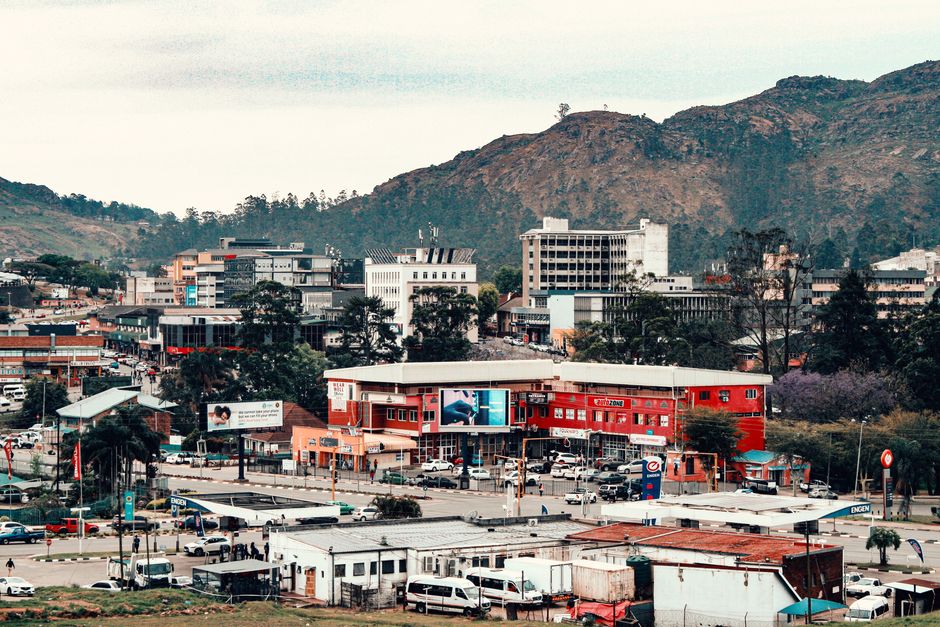
A vibrant cityscape of Mbabane, Eswatini, framed by scenic mountains., Swaziland’s Malolotja, Eswatini
Where to Stay for the Weekend
Your best bet for immersion is within the reserve itself. The Malolotja Nature Reserve Chalets are basic but comfortable self-catering units (R800/R1,200 SZL per night for a 2- or 4-sleeper). You’ll have a kitchen, fireplace, and a deck facing the river – the silence at night is absolute. Book directly via the Eswatini National Trust Commission website (call ahead; not always online). For a more social base, Piggs Peak Hotel & Casino (from 600 SZL per night) offers standard rooms with a bar and pool, but you lose the bush vibe. Many travelers prefer Bulembu Country Lodge (from 750 SZL, including breakfast) for its cozy rooms and garden restaurant. Check availability on Booking.com or Airbnb for nearby guesthouses in Bulembu or Piggs Peak – some are private homes offering en-suite rooms and meals. For a truly unique stay, book the Malolotja Bush Camp (basic tents with mattress, shared ablutions, 400 SZL per person) – you’ll hear hyena whooping through the night.
Before You Go: Practical Tips
- Getting Around: You need a car. The reserve has gravel roads but are passable with a 2WD in dry weather. A 4×4 is recommended for the more remote viewpoints and after rain. Rental from Mbabane costs around 500 SZL/day from Rentalcars.com. No public transport inside the reserve.
- What to Pack: (1) Sturdy hiking boots – the quartzite rocks are sharp and slippery. (2) A fleece or warm jacket – nights drop to 5°C in winter (June–August). (3) Binoculars – for birding (over 280 species) and scanning distant cliffs. (4) A headlamp – chalets have limited outdoor lighting, and the paths are unlit.
- Common Tourist Mistakes: (1) Underestimating the cold – visitors from tropical climates often shiver through the night. Pack a thermal top. (2) Not bringing enough cash – the reserve’s kiosk and nearby towns have no card machines; the closest ATM is in Piggs Peak (only one, often empty). Withdraw in Mbabane before you leave.
- Money-Saving Tip: Instead of buying groceries at the overpriced reserve kiosk, stop at the Boxer Superstore in Mbabane (about 30 minutes south). You can stock a weekend’s food for two for about 400 SZL – that’s half of what you’d spend at the reserve. Pack a cooler bag for fresh meat and dairy.
Published by Your Travel Guide Writer. All prices are in Swazi Lilangeni (SZL) and approximate as of 2025. Check current exchange rates before your trip.

