
Nagarhole National Park, India: Tracking the Bengal Tiger – 7 Adrenaline Hits in India’s Wild Heart (2026)
Your jeep lurches over a rutted track as the first rays of sun pierce the canopy. The air is cool and damp, carrying the scent of damp earth and wild sage. Ahead, a lone tusker emerges from the mist, its tusks gleaming. Your guide holds up a hand – quiet. To your left, a Bengal tiger pads silently through the undergrowth, its eyes fixed on something you can’t see. The engine cuts; you count your heartbeats. This is Nagarhole, and it’s about to show you what real adventure feels like.
The Main Event: Morning Jeep Safari
You’ll begin your safari at the K. T. M. (Karnataka Tourism Motor) office in the village of Hunsur, but your best bet is to book directly through the Karnataka Forest Department’s online portal or through a reputable lodge like Kabini River Lodge (Jungle Lodges & Resorts). The standard morning safari departs sharply at 6:00 AM and lasts three hours. Cost: ₹600 per person for the vehicle entry plus ₹250 per person for guide and driver (total around ₹850 per person). Difficulty level: Easy – you sit in an open gypsy, but the adrenaline makes it feel hard.
Seasoned travelers recommend the pre-booked “canter” (larger shared vehicle) for budget adventurers, but your private jeep offers a more intimate experience. What to bring: a warm jacket (mornings dip to 15°C), plenty of water, and a good camera with a 200mm+ zoom lens. Insider tip: request the “Elephant Zone” on the western sector – locals insist this is where you’ll spot leopards lounging on granite outcrops. Most tourists overlook this side, but savvy visitors know it’s where the real action happens.
Activity #1: Kabini River Boat Safari
After the dust of the jeep, you’ll welcome the gentle sway of a coracle on the Kabini River. This is your best chance to see crocodiles basking on sandbanks, otters playing, and elephants crossing the water. Operators like Kabini River Lodge run two-hour morning (7:30 AM) and evening (4:00 PM) cruises. Cost: ₹1200 per person, including life jackets and a naturalist. Difficulty: easy – you just sit and watch, but you need decent balance when stepping into the boat. Travelers often discover that the evening cruise offers the most dramatic light for photography. Locals recommend bringing a waterproof bag for your camera; splashes from a sudden monsoon shower are common in November. You’ll also spot over 200 species of birds, including the rare Malabar trogon and great Indian hornbill. Don’t forget insect repellent – mosquitoes love the river edge after sunset.
Activity #2: Night Safari with Special Permit
For pure adrenaline, nothing beats a night safari. You need a special permit from the Forest Department (book at least two weeks in advance). Cost: ₹1500 per person, plus ₹500 for a spotter. You’ll drive the same trails you saw by day, but now they belong to the night. With a high-powered spotlight, you’ll catch the red eyes of leopards hidden in tall grass, and your guide will point out civet cats, Indian fox, and the ever-present sambar deer. It’s moderate difficulty due to the cold (bring a fleece) and the eerie silence that amplifies every sound. Locals say that the best night safaris happen in December and January when the moon is thin. Most tourists stick to day trips, but those who try this say it’s the most unforgettable experience of their lives. Just remember: no flash photography – it disturbs the animals.

Baby elephant feeding on grass (2 of 2), Nagarhole National Park, India
Refuel: Where Adventurers Eat
After a morning on the trail, you’ll want proper fuel. Head to Kabini River Lodge’s Banyan Tree Restaurant for a buffet that features local Kodava cuisine – try the kudukumbu curry (pumpkin and coconut) and pandi curry (pork, if you eat meat). A meal costs around ₹400–₹500 per person. For a faster, more local meal, the Hunsur Lake View Dhaba (on the road out of the park) serves thalis at ₹150 each – vegetarians and meat-eaters alike rave about the jackfruit curry. If you’re in the mood for something lighter after a long day, Riverside Bistro near the K. T. M. checkpost offers fresh lime sodas and sandwiches for ₹200. Another gem: Green Nest Café, run by a local naturalist, where you can sip a ginger tea and swap safari stories for ₵100. Travelers often remark that the most authentic meals come from the homestays in the surrounding villages – ask your guide to recommend one.
Base Camp: Where to Stay
You need a base that puts you close to the action and understands early starts. Kabini River Lodge (Jungle Lodges & Resorts) is the classic pick – rooms overlook the river, they provide packed breakfast boxes for pre-dawn safaris, and they have a gear storage room. Double rooms from ₹3500/night. Booking.com often has last-minute deals. For a more secluded, sustainable option, Evolve Back Kabini (formerly Orange County) offers luxury tents with butler service and their own naturalists – worth the splurge at ₹10,000/night for couples who want comfort after a hard day. Budget travelers should check Waterwoods Homestay near Hunsur – clean rooms at ₹800/night, with home-cooked dinner available by request. They also have a lockable shed for your bicycle or trekking gear.

A solitary chital grazes serenely in a misty forest in Mudumalai, India., Nagarhole National Park, India
Gear & Prep Checklist
- Binoculars (8×42 or higher) – essential for spotting birds and leopards from a distance
- Neutral-coloured clothing (khaki, olive, beige) – bright colours spook wildlife and are discouraged by park rules
- Headlamp with red light mode – for night safaris; without it you’ll blind animals and miss the glow of eyes
- Sturdy walking shoes if you plan to trek – sandals won’t cut it on the steep slopes of Nagarhole Peak
- Fitness preparation: you should be able to walk 5 km on dirt paths without exhaustion for the peak trek. No special training needed for safaris
- Safety: always stay inside the vehicle or with a guide. Do not exit the vehicle for any reason – elephants and tigers are not domesticated. Carry a whistle or signal mirror for emergencies
Getting There & Around
- Flights: The closest airport is Mysore Airport (96 km away), with daily flights from Bangalore. Alternatively, fly to Bangalore International Airport (220 km). Book at Skyscanner
- Local Transport: From Mysore, you can hire a private taxi for ₹1500–₹2000 one-way to the park gate. Alternatively, take a government bus from Mysore to Hunsur (₹50, 2 hours), then an auto-rickshaw to the park entrance (₹150). Many lodges offer transfers for ₹800–₹1200 round trip
- Best Season: Peak safari conditions are from November to March. November and December offer the best chance to see tigers as the vegetation is sparse. October and April are hotter but still good. Avoid June to September (monsoon; many trails are closed)
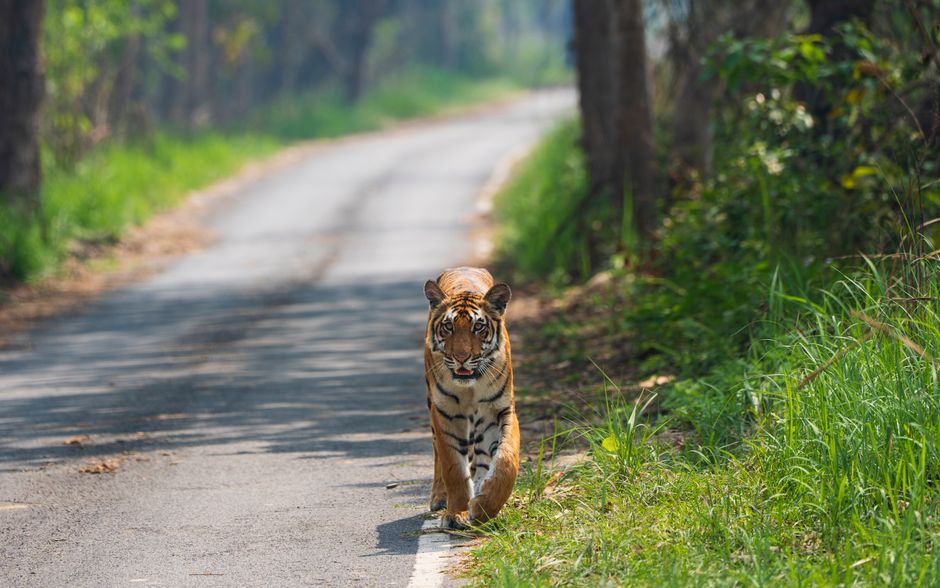
A vibrant Bengal tiger striding along a forest road, Nagarhole National Park, India
Is Nagarhole National Park, India Worth It?
If you want a wildlife experience that rivals the famous parks of central India but without the crowds, Nagarhole is absolutely worth your time. Travelers who have done both Bandhavgarh and Nagarhole often say Nagarhole offers more reliable elephant sightings and a less touristy atmosphere. The Kabini River adds a unique water dimension you won’t find in Jim Corbett or Kanha. However, if you’re primarily after tigers, you might have better luck in Tadoba or Ranthambhore (higher density). But for adventurers who crave variety – jeep, boat, night walks, treks – this place wins. Your best bet is to combine Nagarhole with a few days at the nearby Bandipur National Park for a 5-day adventure circuit. Book in advance, tip your naturalist, and you’ll leave with stories that will last a lifetime.

