
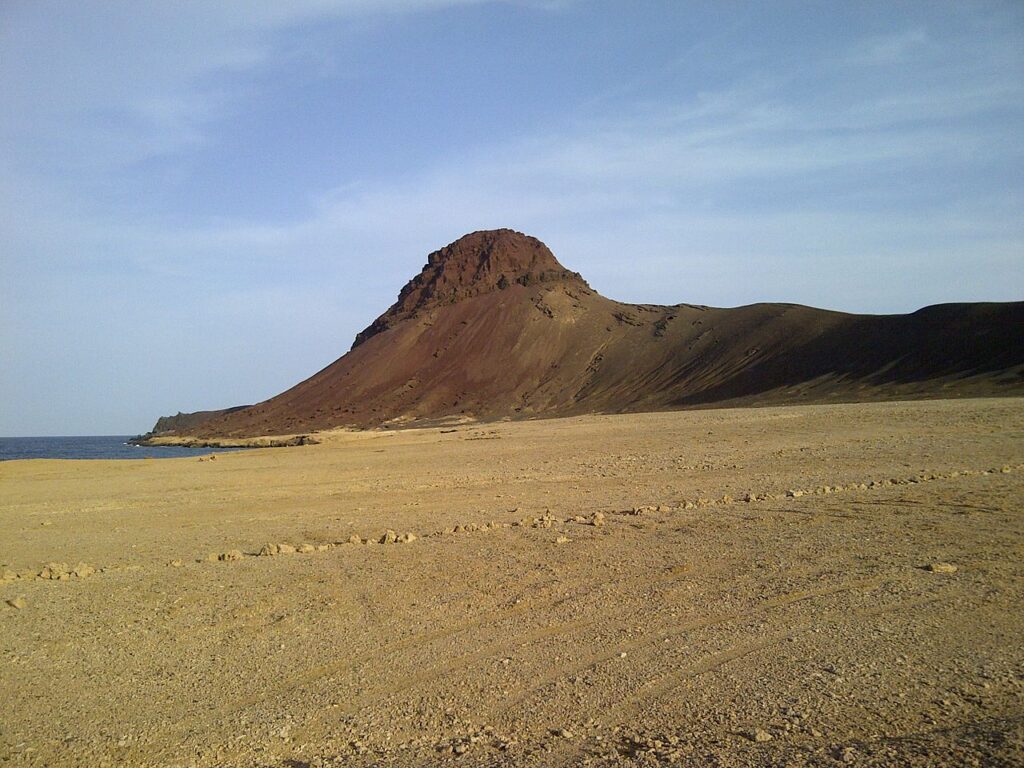
Obock, Djibouti Weekend: Markets, Mosques & The Freshest Catch off the Gulf of Tadjoura (2026)
You step off the small ferry into the late-afternoon haze, and the first thing that hits you is the air—salted and sun-baked, mixed with the faint charcoal smoke of a thousand evening grills. A fisherman unloads a gleaming silver catch onto the dock as the call to prayer unfurls from the whitewashed minaret just beyond the souk. This is Obock: unhurried, unpolished, and utterly alive with the rhythm of the coast. In 48 hours, you’ll taste it all.
Quick Facts Before You Go
- Best Months: November to February—temperatures hover at a pleasant 24–28°C, humidity drops, and the afternoon breeze off the Gulf makes exploring bearable. Avoid July–September when the khamsin wind turns the town into a furnace.
- Currency: Djiboutian Franc (DJF). As of early 2025, the rate is fixed at roughly 177 DJF to 1 USD. Euros and US dollars are accepted at some hotels, but you’ll get better rates at the few banks in town.
- Language: Somali and Afar are the local tongues; French is widely spoken in shops and government offices. English is understood at the main hotels and the port, but not in the souk—download a French phrasebook app before you arrive.
- Budget: 11,000–17,000 DJF (roughly $60–$95 USD) per day covers a good guesthouse, three meals, local transport, and a few small purchases. Budget travelers can stretch 8,000 DJF ($45 USD) by eating street food and sleeping in basic rooms.
- Getting There: Fly into Djibouti-Ambouli International Airport (JIB) on Ethiopian Airlines, Turkish Airlines, or Air France. From Djibouti City, you take a shared minibus to the port (500 DJF, 45 minutes), then the ferry to Obock (1,000 DJF, 1 hour 15 minutes). For the adventurous route, a 4×4 taxi from the capital costs 25,000 DJF and takes 3 hours via the RN-9 highway. Book flights at Skyscanner.
Day 1: The Souk, the Sea & the White Minaret
You rise early in Obock—there is no other option, because the first call to prayer at 4:45 AM is broadcast loud and clear from the town’s historic Ottoman-era mosque, and the roosters in the courtyard next door provide the percussion. By 6:30 AM, the air is already warm and the souk is coming alive. You slip on sandals, grab your camera, and step into the day.
- Morning (8–11am): Head straight to Obock’s main market, the Marché Central, which spills off Rue du Port and into a warren of narrow alleys. This is where local Afar women sell frankincense resin in lumpy cotton bags and where you’ll find fresh dates from the Tadjoura palm groves. The fish section, under a corrugated iron roof, is the highlight: grouper, snapper, and small reef fish laid out on stained wooden tables. Prices are not posted, so you haggle gently—start at half what is asked and meet midway. A kilo of snapper will cost you about 800 DJF ($4.50). Don’t leave without buying a small bundle of frankincense (300 DJF) from the woman at stall 27; she has been selling here since 1999 and will offer you a sample to burn on a charcoal disk.
- Lunch: Walk three blocks east to Chez Fatima, a canteen-style eatery on a sandy side street with no sign, just a yellow door. Locals recommend the grilled mérou (grouper) served on a platter with rice and a fiery tomato-and-chili sauce called dibis. A portion costs 1,200 DJF ($6.80). Watch Fatima herself flip fish on a grate over coals in the open kitchen. You eat with your right hand, tearing off pieces of the spongy Somali flatbread laxoox to scoop up the sauce.
- Afternoon (1–5pm): After lunch, you walk to the Ottoman-era Mosque of Sheikh Hussein, built in 1891 by the Ottomans during their brief presence in the Gulf of Tadjoura. It’s a modest whitewashed structure with a single minaret and a small courtyard where old men play checkers under a neem tree. You can enter the prayer hall if you are respectfully dressed and remove your shoes; the caretaker, Ahmed, who has been there for 31 years, will point out the original wooden beams and the 19th-century Arabic calligraphy on the mihrab. From the mosque, walk south along the seafront to the viewing point overlooking the Gulf—here, on a clear afternoon, you can see the faint silhouette of the Goda Mountains across the water. Bring water and a hat; the sun is relentless at 2 PM.
- Evening: Dinner is at Restaurant du Port, a one-story building overlooking the ferry dock where you arrived. At sunset, plastic chairs are set out on the terrace, and the smell of grilling fish fills the air. Order the whole grilled snapper (1,500 DJF) with a side of skoudehkaris—the local spiced rice that carries whispers of cardamom and cloves from nearby trade routes. A cold bottle of Djibouti-brewed St. George beer (500 DJF) is the perfect companion. By 8 PM, the ferry has departed, the port goes quiet, and you sit under strings of bare bulbs watching the first stars appear over the Gulf.
The port of Obock, Obock, Djibouti
Day 2: Salt Flats, Palms & a Farewell Feast
Day two demands an early start and a willingness to leave the coast behind. You trade the waterfront for the interior—a stark, lunar landscape that feels like another planet. The reward is Lake Assal, one of the saltiest bodies of water on earth, and a glimpse into the ancient trades that built this region.
- Morning (5:30–10am): You arrange a 4×4 taxi the night before—ask at your guesthouse and expect to pay 15,000 DJF ($85 USD) for the half-day round trip. Your driver, likely a local Afar named Mourad or Souleiman, will pick you up at dawn. The road out of Obock rises quickly into volcanic badlands: black basalt, grey gravel, and the occasional acacia tree. At 7 AM, you reach the rim of the Great Rift Valley and descend into the Lake Assal depression, 155 meters below sea level. The lake is a blinding white sheet of salt flats, broken by turquoise pools of hypersaline water. You walk onto the crust—it crunches underfoot like fresh snow. The air smells of sulfur and dry earth. Bring sunglasses and a scarf; the glare off the salt is severe. Tourists sometimes swim—you can, too—but the water is so salty that even the tiniest nick on your skin will sting fiercely. A quick dip and a rinse with bottled water is the standard ritual. Return to Obock by 10:30 AM, your shoes crusted with salt crystals.
- Midday (10:30am–12pm): Back in town, head to Café de la Plage on Rue de la Libération for a late breakfast. This is a simple kiosk with three plastic tables under a palm-frond awning. Order a plate of sambusas—triangular pastries stuffed with spiced ground goat meat (400 DJF for three)—and a tall glass of shah (sweet black tea with cardamom, 100 DJF). Travellers often discover that this is the best deal in town: the sambusas are fried to order, and the owner, Aisha, will remember your order if you return the next day. To avoid the midday sun, linger under the awning until the heat forces you toward the coast.
- Afternoon (12–4pm): Spend your last full afternoon exploring the Boulevard de la Mer—Obock’s main strip, which runs between the ferry dock and the old French colonial customs house from 1912. The buildings are faded ochre with green shutters; a few have bullet-hole scars from the 1991 civil war. At the end of the boulevard, you find the Artisanal Souk, a cluster of 12 stalls selling woven baskets, camel-leather pouches, and Afar jewelry made from amber and silver. The artisan at stall 7, Kadija, weaves palm-frond baskets on the spot—a small one costs 600 DJF ($3.40). She will show you how the Afar people have used these baskets for salt transport from Lake Assal for centuries. Buy a basket as a souvenir; it packs flat.
- Final Evening: Go out on a high note. Return to Chez Fatima for your farewell meal, but this time ask for her special—skoudehkaris aux crevettes (spiced rice with shrimp, 1,800 DJF), which is not on the menu but that Fatima will prepare if you give her a few hours’ notice. The shrimp come from the Gulf of Tadjoura, sweet and small, and she cooks them in a clay pot with garlic, chili, and coconut milk—a recipe she learned from her mother in Tadjoura. After dinner, walk back to the seafront, where local fishermen gather at 7 PM to repair their nets under a single lantern. The humidity has dropped, the breeze smells of salt and jasmine, and you sit on the low wall watching the lights of the Goda Mountains wink on across the Gulf.
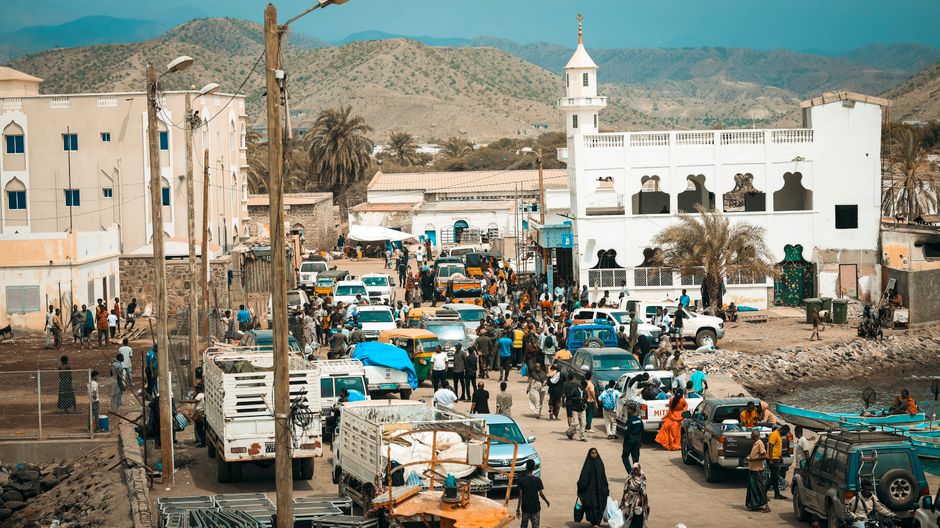
A vibrant street scene in Tadjoura, Obock, Djibouti
The Food You Can’t Miss
Eating in Obock means following your nose and trusting the matriarchs who run the open kitchens. The local cuisine is a blend of Somali, Afar, and Yemeni influences—heavy on fish, rice, flatbreads, and warm spices that arrived via dhows from the Horn of Africa. Your best bet is to leave restaurant menus behind and eat where you see the most families gathered.
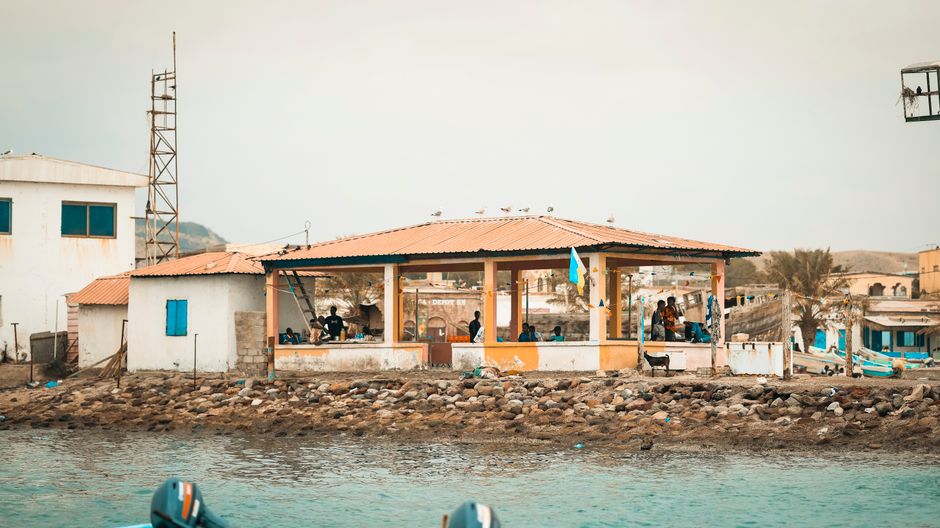
A charming seaside structure with people enjoying the view by the water in …, Obock, Djibouti
The street-food champion is the sambusa, fried to order at a dozen stalls along Rue du Port. The best are at the stand opposite the mosque, where a man named Hassan starts frying at 6 AM and sells out by noon. For a full meal, Chez Fatima is the backbone of the town’s food scene—locals recommend it universally, not because it’s trendy (it is not), but because Fatima’s cooking is consistent, generous, and rooted in the same techniques she learned from her grandmother in 1986. Savvy visitors know to call ahead and request the shrimp special on their last night; it is not on the menu and requires advance notice, but it is the single best dish in Obock.
For drinks, the local shah (cardamom tea) is served everywhere and costs 50–100 DJF. If you want something stronger, St. George beer, brewed in Djibouti City and named after the patron saint of Ethiopia, is widely available at restaurants for 400–500 DJF. The local alternative is samsa, a fermented palm-sap drink that you can find in the souk—but ask around carefully; it is technically illegal in Djibouti and carries a reputation for causing headaches.
Where to Stay for the Weekend
Hôtel Obock on Rue du Port is the most reliable choice—ten rooms on two floors, all with private bathrooms, air conditioning (essential in summer), and a small balcony overlooking the Gulf. A double room costs 8,000 DJF ($45 USD) per night. The staff speak enough English to help arrange transport and tours. Book via Booking.com.
Gîte du Golfe, a 15-minute walk east along the seafront, offers four rooms in a restored colonial house from 1925. The rooms are larger, with tile floors, high ceilings, and ceiling fans; the vibe is more home-stay than hotel. A double is 9,500 DJF ($54 USD), includes breakfast of laxoox and shah, and the owner, Marie, is the great-granddaughter of the house’s original French builder. For a more social experience, try Campement de la Plage—three rustic eco-friendly tents pitched on the sand, 1 km north of the port, with shared cold-water bathrooms. A tent costs 4,500 DJF ($25 USD) and includes dinner. Check availability on Airbnb.
Before You Go: Practical Tips
- Getting Around: The town is walkable end-to-end in 30 minutes. For Lake Assal or the Goda Mountains, hire a 4×4 from the taxi stand at the ferry dock; expect to pay 15,000–20,000 DJF for a half-day trip. Negotiate the price before departing. Shared minibuses (500 DJF per ride) connect Obock to Tadjoura and the interior villages but run irregularly. Walking is your best bet within town.
- What to Pack: A wide-brimmed hat and polarized sunglasses (the glare off the sea and salt flats is harsh); a lightweight long-sleeve shirt for sun protection and modesty in the mosque; a scarf or shawl for women to cover hair when entering the mosque; and a reusable water bottle—you will drink 2–3 liters per day. Packing a small bottle of hand sanitizer is wise because the tap water is not potable.
- Common Tourist Mistakes: The biggest misstep is not booking the Lake Assal 4×4 in advance—drivers are scarce on short notice and you may waste a morning negotiating. The second is walking in the souk without a hat between 11 AM and 3 PM; the midday sun here is brutal and the market’s narrow alleys trap the heat. Carry water with you at all times.
- <strong

