
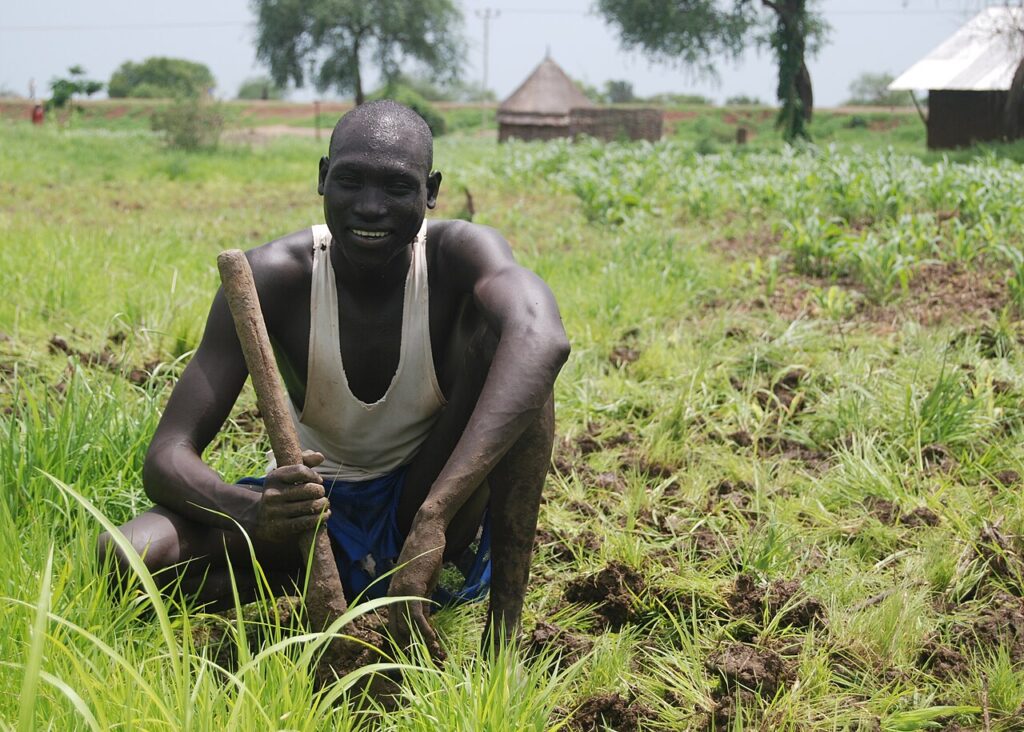
Beyond the Baro: Why Gambella’s Untamed Soul Beckons the Curious Traveler (2026)
In 1902, a British steamer named the Daisy chugged up the muddy Baro River, past the thatched huts of the Anuak people, anchoring at a remote trading post that would become Gambella. For decades after, this riverside outpost was a bustling border town where Ethiopian coffee, gold, and ivory were exchanged for British cotton and salt, all under the watchful eye of the local kingship. That history—of riverine commerce, colonial intrigue, and the resilient cultures of the Nuer and Anuak—still whispers in the rustling papyrus along the banks.
The Story Behind Gambella, Ethiopia
Gambella’s story begins long before the steamer. The Anuak people, who arrived in the region in the 16th century, established small chiefdoms along the Baro River, living in harmony with the seasonal floods. Their neighbors, the Nuer, migrated from the west in the late 19th century, and the two groups have since shaped the region’s social fabric. In 1897, Emperor Menelik II of Ethiopia annexed the area, but his control was loose—the real power remained with local chiefs. It was only after the Anglo-Ethiopian boundary commission of 1902 that Gambella village officially became a trading post, leased to Britain for 50 years as part of the Nile water agreements.
You’ll find the echoes of this colonial past in the town’s layout: a grid of dirt streets, with a few old corrugated-iron buildings from the 1920s still standing near the river. The British withdrew in 1954, but their legacy remains in the local woreda (district) boundaries. In the 1970s and 1980s, Gambella became a refuge for thousands of South Sudanese fleeing civil war, adding layers of Dinka and other cultures to the mix. Travelers often discover that this is one of Ethiopia’s most ethnically diverse corners, where you hear Anuak, Nuer, Oromo, Amharic, and Arabic spoken in the same street.
More recently, Gambella has faced challenges—land conflicts, border tensions with South Sudan, and periodic floods. Yet the town has an irrepressible vitality. The government has invested in a new university and a paved road linking the town to Addis Ababa, but Gambella’s soul remains firmly rooted in the rhythms of the Baro River and the cycles of the wet and dry seasons. Locals recommend visiting during the dry months (October to March) when the river is low and the wild landscapes are most accessible.
Neighborhood by Neighborhood
Matar: The Riverside Bazaar
Start your exploration in Matar, the oldest quarter, hugging the banks of the Baro. Here, the air smells of smoked fish, damp earth, and the sweet rot of papaya. You’ll weave through a maze of open-air stalls where Anuak women sell woven baskets and clay pots, while Nuer men barter cattle products. The main artery, Dejazmach Balcha Street, is a dust-choked thoroughfare lined with tiny kiosks selling everything from Chinese sandals to Ethiopian coffee beans. The real action happens at the river landing—a chaotic scene of dugout canoes and motorized tankwas ferrying people and goods to the South Sudanese border just 30 kilometers away. Savvy visitors head to the Baro View Terrace (a simple concrete platform near the Governor’s office) at 5 p.m. to watch the sun sink behind the papyrus reeds, turning the water the color of old bronze. The neighborhood’s architecture is a hodgepodge: some crumbling British-era warehouses with arched windows, next to new concrete houses with satellite dishes. Most tourists overlook Matar for the flashier parts of town, but it’s here you’ll feel Gambella’s pulse.
Kebele 05: The Heart of Town
About a kilometer inland, Kebele 05 (the town’s administrative and commercial hub) offers a contrasting energy. Centered on the roundabout at Churchill Avenue, you’ll find the post office, a few banks, and the main bus station—a swirling chaos of minibuses and Bajaj three-wheelers. The streets are wider, and there are more modern buildings, including the brick-faced Gambella University campus. Your best bet for a midday respite is the Café de la Paix (on the corner near the Total gas station), where you can sip a macchiato for 15 birr (less than $0.30) under a tin roof while local university students debate politics. The neighborhood feels more “Ethiopian” than Matar—the dominant language is Amharic, and injera stalls outnumber river-fish joints. At night, the roundabout glows with the blue lights of mobile-phone vendors, and the air fills with the thud of Afrobeat from open-door bars. Travelers often stay in this district for its convenience, but be warned: the noise of Bajaj horns can persist until midnight.
Pinyudo: The Quiet South
South of the main road lies Pinyudo, a sprawling residential area that feels more like a village than a suburb. Named after the local piny tree (a type of fig), this neighborhood is where many of the town’s Anuak elders live, in compounds surrounded by papaya and mango groves. You’ll notice the change immediately: the streets become sandy paths, the houses shift from concrete to mud-and-wattle with thatched roofs, and the pace slows to a languid stroll. Locals recommend visiting on Saturday mornings, when the Pinyudo Church grounds host a small market selling homemade honey wine (tej) and handwoven cloth. The highlight here is a visit to the Anuak Cultural Center (housed in a traditional tukul near the community school), where you can watch a demonstration of the pole-and-plaster building technique or listen to a krar player performing old river songs. It’s a humble place, but it offers the most intimate encounter with Gambella’s indigenous heritage. Plan to spend at least an hour here, and bring small gifts (pens, notebooks) for the children—they’ll remember your kindness.
The Local Table: What Denizens Actually Eat
Gambella’s cuisine is a revelation for travelers who think they know Ethiopian food. The staple here is not injera but kuanta—a spicy fish stew made from Nile perch and catfish caught that morning in the Baro River. You’ll find it simmering in sooty pots at every family restaurant, its deep orange color from berbere (Ethiopian spice blend) mixed with garlic, ginger, and a generous splash of niter kibbeh (spiced butter). The best version is at Beza Family Restaurant (on the corner of Matar Road, near the river landing). For 60 birr (about $1.20), you get a mound of kuanta served with a dense, steamed bread called ambasha, perfect for sopping up the gravy.
But the real ritual is Saturday at the Gambella Central Market (off Ajio Street, open dawn to dusk). Here, Anuak fishermen lay out their catch on banana leaves, and Nuer women sell chero—a porridge of sorghum and milk flavored with wild honey. Most tourists bypass this market because of the strong fish smell, but you shouldn’t. Grab a plastic stool at the Honey & Fire stall (near the northern gate), where the owner, a gregarious Anuak man named Otim, will serve you a bowl of chero with a side of fresh mango slices. The secret is to eat it with your right hand, scooping the porridge into a ball. The taste? Earthy, sweet, and surprisingly filling. Savvy visitors also buy a small bag of dried kap (river shrimp) for 10 birr—a crunchy snack that’s perfect for the road.

Covers a 370-mile road corridor from Gambela eastwards to Addis Abbaba in w…, Gambella, Ethiopia
Art, Music & Nightlife
Gambella’s creative scene is raw and resolutely local—there are no galleries or concert halls. Instead, music lives in the open air. The dominant sound is the thom, a drum made from a hollowed tree trunk and cowhide, played by Nuer men during ceremonies. You can hear it every Sunday afternoon at the Open Ground behind the Gambella Stadium, where impromptu dance circles form. Travelers are welcome to join—just follow the lead of the locals, who move with a gentle sway, arms outstretched. In the evenings, the bars in Kebele 05 come alive: Club Baro (on Churchill Avenue, open 7 p.m. to 2 a.m.) plays a mix of Ethiopian pop and South Sudanese reggae. Cover is 20 birr, and the beer (St. George) is cold. If you’re feeling adventurous, order a korefe—a local spirit distilled from honey and sorghum, served in a plastic cup for 5 birr. It tastes like a fiery sake, and it will warm you from the inside out.
For visual arts, visit the Anuak Craft Cooperative in Pinyudo (open Monday–Friday, 9 a.m.–4 p.m.). Here, women weave baskets from the doum palm using techniques passed down for generations. You’ll see patterns of zigzags and diamonds, each representing a river or a clan. A large basket costs around 250 birr ($5)—a steal for the craftsmanship, and the money goes directly to the artists. Gambella also celebrates the Anuak New Year (Ogwaga) in late August, when the river rises and the community gathers for seven days of singing, dancing, and feasting. If you can time your visit, you’ll witness a tradition older than any written history—a reminder that for the people of Gambella, life flows with the Baro.
Practical Guide
- Getting There: Fly from Addis Ababa (ADD) to Gambella (GMB) via Ethiopian Airlines. Flights depart daily at 7:00 a.m. and 1:30 p.m., cost around $100–$150 one-way, and take 1 hour. The small airport is 4 km from town. Book at Skyscanner
- Getting Around: Bajaj (three-wheeled auto-rickshaws) are the main transport—flag one down for 5–10 birr per ride. Minibuses (blue-and-white) ply the main routes for 2 birr. Walking is pleasant in the dry season, but bring a mask for dust.
- Where to Stay: Kebele 05 offers the most choices: Gambella Hotel (clean rooms, reliable Wi-Fi, 800 birr/night) or Baro River Lodge (tent-style accommodation with river views, 1,200 birr/night, including breakfast). For budget travelers, Nuer Guesthouse in Pinyudo offers shared rooms for 150 birr. Check Booking.com
- Best Time: October to March—the dry season. The river is low, roads are passable, and wildlife viewing in Gambella National Park is optimal. Avoid June to September (heavy rains and flooding).
- Budget: Budget travelers can manage on 1,500 birr ($30) per day, including food, transport, and a basic room. Mid-range: 3,000 birr ($60). Bring cash (birr) in small denominations—ATMs are unreliable.
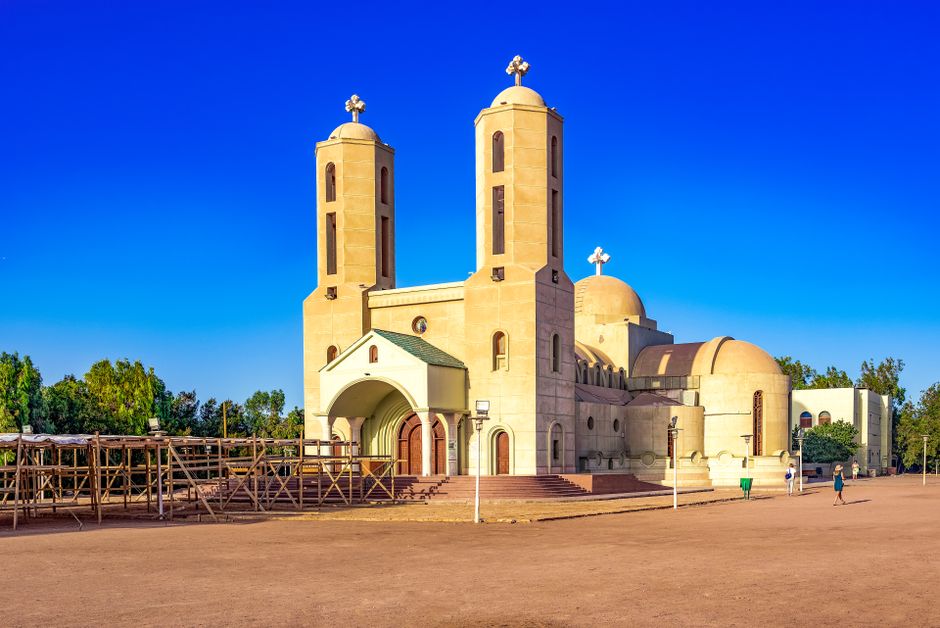
Ethiopian Orthodox church with distinct twin towers under a clear blue sky., Gambella, Ethiopia
What Surprises First-Time Visitors
The first surprise is the silence. Gambella is not a noisy African town—there’s no blaring music or constant honking. Instead, you hear the wind in the eucalyptus trees, the creak of a wooden canoe, the distant laughter of children. It unsettles some travelers, but locals revel in it. “This is what God’s place sounds like,” a Nuer elder told me once. You’ll also be struck by the casual borderlessness. People cross into South Sudan by dugout every day without passports. The river is not a barrier; it’s a highway. Savvy visitors quickly learn to greet everyone you meet with a handshake and a gentle “Mako ba?” (Anuak for “How are you?”). The warmth you receive in return will disarm you.
Another surprise is the sheer wildness. Gambella National Park, a 45-minute drive north of town, is a 5,000-square-kilometer expanse of savanna, floodplains, and acacia woodlands, home to elephants, buffalo, roan antelope, and the elusive Nile lechwe. From November to March, you can take a boat trip along the Baro for 500 birr (arranged through your hotel) and see hippos yawning, crocodiles sunning, and thousands of birds—martins, herons, and the giant kingfisher. Most tourists assume Ethiopia is all highlands; they forget that the lowlands of the west are an entirely different world. Come prepared for heat (35°C in the dry season) and mosquitoes (bring repellent). The biggest surprise? You might not want to leave.
Your Gambella, Ethiopia Questions
Is it safe to visit Gambella as a foreigner?
Yes, but with precautions. Gambella has experienced sporadic ethnic clashes and border tensions, but the town itself is generally calm and welcoming to visitors. Locals recommend avoiding travel after dark outside the main neighborhoods, and always hiring a guide for trips into the national park. Register with your embassy on arrival. The people are curious and hospitable—you’ll often be invited for tea. Trust your instincts, and you’ll find Gambella one of the safest places in Ethiopia to experience authentic rural life.
What languages are spoken, and will English help?
Anuak and Nuer are the primary languages, with Amharic as the lingua franca for official business. English is spoken at hotels and the university, but only a few people in the market will understand you. Your best strategy: learn a

A captivating view of Gondar, Gambella, Ethiopia

