
Port Mathurin, Mauritius Weekend: Rugged Shores, Creole Spice & the Art of Slow Living (2026)
You step off the small plane and the air hits you first—warm and salt-tinged, carrying the faint, sweet scent of vanilla and the rhythmic crash of waves against the reef. Welcome to Port Mathurin. The main street hums with a lazy Sunday energy even on a Thursday, and within minutes, you’ll hear the unmistakable clatter of dominoes being slammed onto a wooden table outside a waterfront café. This is Rodrigues Island, and Port Mathurin is its beating, unhurried heart.
Quick Facts Before You Go
- Best Months: May to November – the dry season brings cooler temperatures and brilliant clear skies. Avoid January to March when cyclone season can shut down the island.
- Currency: Mauritian Rupee (MUR). As of 2025, roughly 45 MUR to 1 USD, 50 MUR to 1 EUR. Bring cash—ATMs are sparse and unreliable.
- Language: Rodrigues Creole (a French-based Creole), with French widely spoken. English is understood in tourist-facing spots, but locals appreciate a friendly “Bonjour” to start.
- Budget: 2,500–4,500 MUR per day ($55–100 USD) including food, transport, and a mid-range guesthouse. You can stretch it lower if you eat street food and skip tours.
- Getting There: Fly into Sir Charles Gaetan Duval Airport (RRG) on Rodrigues Island. Direct flights from Mauritius (Sir Seewoosagur Ramgoolam International Airport) take 1 hour 30 minutes. Book early at Skyscanner
Day 1: The Market Pulse & A Sunset by the Lagoon
Your first morning in Port Mathurin begins with the sound of fishing boats chugging into the harbor and the smell of fresh bread baking at the local boulangerie. You’ll want to skip the hotel breakfast—trust this guide—because the real feast is happening at the Port Mathurin Market. Travelers often discover that Saturday is the big market day, but even on a weekday, the energy is electric. Locals recommend arriving before 8:30 a.m. to see the fishermen haul in their catch and the women setting out pyramids of chili-spiked mangoes and bright green papayas.
- Morning (8–11am): Head straight to the Port Mathurin Covered Market (Marché de Port Mathurin). It’s free to wander, and you should budget 200–400 MUR for a bag of fresh lychees, a coconut drink, and a paper cone of grilled peanuts. Watch the fish auction happening from 8:30 a.m. at the back pavilion—snapper, tuna, and octopus splayed on ice while locals haggle in Creole. Don’t miss the spice stalls: buy a small satchel of Rodrigues vanilla beans (around 150 MUR for three pods) or a jar of chili jam (100 MUR).
- Lunch: Take a five-minute walk to Le Marlin Bleu on the waterfront. This no-frills spot has been serving the island’s best octopus curry (poulpe curry) for over two decades. You’ll pay around 350 MUR for a generous plate with rice, lentils, and a side of tomato-cucumber salad. The owner, Marie-Claire, will likely come out to ask how you like it—tell her the truth, and she’ll bring you an extra ladle of sauce.
- Afternoon (1–5pm): Rent a bicycle from Rodrigues Bike Rental (450 MUR per day, located on Rue François Leguat) and pedal 15 minutes east to Anse aux Anglais. The road hugs the coast, and you’ll pass tiny fishing hamlets where children wave from doorways. The beach itself is a crescent of soft white sand with a turquoise lagoon so calm you can float for an hour without a ripple. Bring snorkel gear (rent for 200 MUR from the shop near the pier) and spot parrotfish and sergeant majors among the coral heads. For a midday break, stop at Le Four à Chaux, a small beachside shack, for a fresh pineapple juice (60 MUR) and a slice of coconut cake (40 MUR).
- Evening: Dinner at Chez Solange & Robert on Rue Saint-Paul. This family-run restaurant looks like someone’s veranda—because it is. You’ll sit among frangipani bushes while Robert grills marlin steaks over charcoal. Order the grilled fish of the day with rougaille (a Creole tomato and ginger sauce), around 400 MUR. Then walk five minutes to Le Coco Beach Bar for a rum arrangement (150 MUR) served in a hollowed-out coconut. Listen for the distant reggae drifting from a fishing boat anchored offshore—a soundtrack that feels made for this place.

The capital of Rodrigues , Port Mathurin, Mauritius
Day 2: Turtle Bay, Cave Echoes & A Farewell to Remember
Day two asks you to trade the market bustle for wilder shores. You’ll wake early, grab a thermos of coffee from your guesthouse, and head to the island’s southeast coast. Travelers often remark that Rodrigues feels like Mauritius did forty years ago—unspoiled, unhurried, and deeply connected to the land and sea. By the end of this day, you’ll understand exactly what they mean.
- Morning (7:30–11am): Hire a taxi for the day (around 1,800 MUR, negotiable) and drive 20 minutes southeast to Anse Patates. This is the best snorkeling beach on the island, and the trick is to arrive before 8:30 a.m. when the tour groups arrive. The reef here is spectacular—you’ll glide over brain corals, and if you’re lucky, spot a hawksbill turtle grazing in the seagrass. Entry is free. Bring your own snorkel gear or rent from the small kiosk (150 MUR). For breakfast, stop en route at Boulangerie de l’Est in the village of Rivière Coco for one of their legendary pain patates douces (sweet potato bread rolls, 20 MUR each).
- Midday (11am–1:30pm): Explore the Grande Montagne Nature Reserve on the road back toward Port Mathurin. Entry is 125 MUR per person. A short, steep trail (about 1.5 km round trip, takes 45 minutes) leads you through a remnant of the island’s native ebony forest. You’ll hear the distinctive call of the Rodrigues fruit bat (locally called “rousse-tte”) as they hang in the canopy above. At the summit, there’s a small museum with exhibits on the island’s ecology. The view from the top looks out over the entire southern coast—turquoise water meeting green volcanic hills. The secret is to go just before noon when the sun is behind the clouds over the lagoon, making for photographs that almost look unreal.
- Lunch: At Chez Fernand in the village of Mont Lubin (about 15 minutes from the reserve). This is where locals eat on Sundays. No menu—you get whatever Fernand caught that morning. Expect a plate of grilled jobfish with rougaille de tomates, lentils, and pumpkin gratin, served with a bowl of chili paste on the side. The cost? 320 MUR. You’ll eat on a plastic table under a mango tree, and a stray cat will rub against your ankle. It’s perfect.
- Afternoon (2:30–5pm): Visit the Cavernes de Patate, a network of limestone caves on the western side of the island. Tours run every hour, last about 40 minutes, and cost 250 MUR per person. Your guide, likely a local named Jean-Claude, will point out the stalactite formations that look like upside-down potatoes (“patates” in Creole, hence the name). He’ll also tell you the legend of the slave who hid in these caves in the 1820s after escaping a ship bound for Réunion. The story sticks with you. Afterward, ask Jean-Claude to point out the side trail leading to the viewpoint overlooking Port Mathurin Harbour—you can see the whole town from here, and it’s a stop most tourists miss.
- Final Evening: For your farewell dinner, go to Le Kayzer on Rue du Port, right on the waterfront. Book ahead (call on +230 831 0789) and request a table on the terrace. The specialty is their bouillon de poisson—a Creole fish soup with saffron, coconut milk, and chunks of local snapper, served with baguette slices (250 MUR). For mains, the roasted lamb with vanilla sauce (450 MUR) is a revelation. As the sun sets, the lights of the fishing boats bob on the water, and the air fills with the scent of grilled seafood and frangipani. End the night with a digestif of local rum—order a La Buse vieux (aged rum, 120 MUR) and toast to the island that feels like a secret you want to keep.
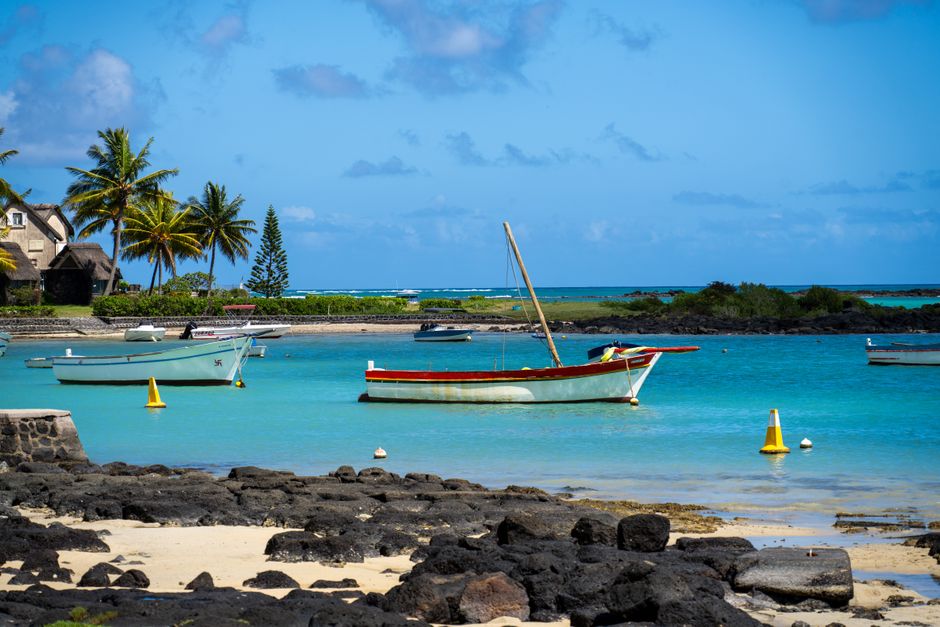
Tranquil beach view with boats, palm trees, and clear blue water in Mauritius., Port Mathurin, Mauritius
The Food You Can’t Miss
You haven’t really experienced Port Mathurin until you’ve eaten your weight in octopus. The island’s signature dish is poulpe curry—octopus simmered slowly in a coconut milk-based sauce infused with turmeric, ginger, and curry leaves. You’ll find it everywhere, from market stalls to family kitchens, but the best version is at Le Marlin Bleu (350 MUR with rice and sides). For a street-food version, look for the woman selling it from a steel pot near the bus station around 11 a.m.—she serves it in a takeaway container for 150 MUR with a wedge of lime.

Explore the serene beauty of Blue Bay Beach with clear waters and lush gree…, Port Mathurin, Mauritius
Another local obsession is gâteau piment—deep-fried lentil fritters spiked with chili and fresh coriander. You’ll find them at the covered market for 10 MUR each, sold in small paper cones. Grab a bag and eat them while walking along the pier. For dessert, seek out gâteau patate douce, a sweet potato cake baked with coconut and brown sugar, best fresh from the boulangerie (around 25 MUR).
For a splurge dinner, book Le Kayzer on the waterfront. Their five-course tasting menu (1,200 MUR) includes a seafood appetizer of smoked marlin rillettes, a creole soup, the signature vanilla-roasted lamb or grilled reef fish, and a dessert of coconut sorbet with passionfruit. The ambience is gentle and romantic—candlelit tables, a breeze off the lagoon, and the distant sound of traditional sega music from a nearby beachside bonfire. Locals recommend pairing your meal with a glass of Mamakila, a rum-based liqueur made from local fruits.
Where to Stay for the Weekend
Port Mathurin is small, so you’ll want to stay within walking distance of the harbor and the covered market. The most charming neighborhood is Rue François Leguat, a quiet street lined with colonial-era Creole houses featuring louvered shutters and wooden verandas. This is where you’ll find Le Refuge de la Source, a family-run guesthouse with three rooms decorated with hand-embroidered linens (from 1,800 MUR per night). The owners, Philippe and Monique, serve a breakfast of fresh baguettes, homemade jams, and coffee that rivals any Parisian café.
If you prefer being right on the water, book a room at Le Cocotier Beachfront Guesthouse on the harbor’s eastern edge (from 2,500 MUR per night). You’ll wake to the sound of fishing boats and the smell of the sea. Rooms are simple but clean, with private balconies overlooking the lagoon. For something more upscale, Rodrigues Sunset Hotel on the hill above town offers stunning views across the entire bay (from 4,500 MUR per night). Their infinity pool is worth the splurge on a hot afternoon. Book everything in advance—the island has only about 300 tourist beds, and weekends fill up fast.
Find your stay: Booking.com | Airbnb
Before You Go: Practical Tips
- Getting Around: Taxis are the most reliable option for day trips. Negotiate a flat rate—expect around 1,500–2,000 MUR for a half-day tour of the southern coast. Bicycle rental is 400–500 MUR per day from Rodrigues Bike Rental and is a wonderful way to explore the flatter parts of town and nearby beaches. Public buses exist but run irregularly (every 2–3 hours) and stop by 5 p.m., so they’re only useful for the most determined budget traveler.
- What to Pack: Reef-safe sunscreen (the lagoon is fragile and locals will remind you of this), a light long-sleeved shirt for sun protection and evening mosquitoes, a waterproof bag for boat trips and snorkeling, and a small power bank—electricity can be spotty, especially after rain. Also bring a sarong or scarf: women are asked to cover shoulders when entering the Catholic church near the market.
- Common Tourist Mistakes: The biggest mistake is assuming you can use credit cards everywhere. Most guesthouses, street stalls, and small restaurants are strictly cash-only. The second mistake is thinking you can “just walk” from Port Mathurin to the island’s major beaches—they’re spaced 20–40 minutes apart by vehicle, and the roads are hilly and winding. Plan transport in advance.
- Money-Saving Tip: Eat at the covered market for breakfast and lunch. A filling meal of gateaux piments, fresh fruit, and coconut water costs under 200 MUR, compared to 500 MUR at a hotel. For dinner, skip the tourist-oriented restaurants and ask your guesthouse host where they eat on their night off—you’ll discover hidden home kitchens serving the same food for half the price. You can easily save 1,500 MUR over a weekend by following this advice.

