
Beyond the White Sands: Why Berbera, Somaliland Beckons the Curious Traveler (2026)
In 1875, the British explorer Richard F. Burton arrived at Berbera’s ancient harbour and noted in his journal that the town “stinks of fish, frankincense, and antiquity.” He was not wrong. For centuries before the Suez Canal rerouted world trade, Berbera was the beating heart of the Gulf of Aden—a place where Somali merchants traded myrrh with Egyptian pharaohs, where Ottoman governors sipped coffee in coral-stone houses, and where, on a sweltering July afternoon in 1884, the British navy landed to claim the port as a coaling station. That collision of global commerce and rugged desert life still defines Berbera today.
The Story Behind Berbera, Somaliland
Berbera’s story begins long before the British arrived. Ancient Egyptian records from the reign of Pharaoh Sahure (circa 2450 BC) mention expeditions to the “Land of Punt,” and modern scholars believe Berbera was Punt’s main port. Somali merchants loaded ships with frankincense, myrrh, and gold—cargo that would perfume temples from Thebes to Rome. By the 13th century, Berbera had grown into a walled city of perhaps 10,000 souls, ruled by the Adal Sultanate. When the Portuguese explorer Vasco da Gama sailed past in 1498, he called it “Barbora” and noted the bustle of dhows loading hides.
The 19th century brought the British, who saw Berbera’s strategic value. In 1827, the East India Company signed a treaty with the elders of the Issa clan, guaranteeing safe passage for British ships. But the locals did not easily submit. In 1855, a skirmish between British sailors and Somali traders left three Englishmen dead—an incident that delayed formal colonization by nearly three decades. When the British finally declared a protectorate in 1884, they built a modest port and a single road inland. Yet Berbera never became a grand colonial capital; the British preferred Aden across the gulf. Even as the 20th century unfolded, Berbera remained a dusty, proud frontier town, where camels outnumbered cars.
That changed dramatically in 1960, when Somaliland gained independence and then merged with Italian Somalia. Berbera suddenly became a key port for the new republic. But the 1970s and ’80s brought war and chaos. Siad Barre’s regime bombed the city in 1988, and thousands fled. After 1991, Somaliland declared its own independence, and Berbera began a slow, stubborn rebirth. Today, you’ll see Chinese cranes lifting containers alongside traditional dhows, and the old walls are being restored by a new generation proud of their heritage. As one local elder told me, “We have survived Romans, Ottomans, British, and war. Berbera will always be here.”
Neighborhood by Neighborhood
Downtown Berbera (Xeebta)
Start your exploration in Xeebta, the old heart of the city. The main artery, Sheikh Madar Road, runs parallel to the shoreline, lined with two-storey coral-stone buildings that have stood for 150 years. Notice the intricate wooden balconies, many adorned with carved geometric patterns reflecting Islamic and Somali-Arabic design. At 7 a.m., merchants open their shops selling frankincense, frankincense so pure you can still see the resin’s gold flecks. The best place to experience street life is Firdous Square, where taxi drivers hawk rides to Hargeisa for 50 shillings, and children fly kites made of plastic bags. Just off the square, the Berbera Central Market (open daily 6 a.m.–5 p.m.) is a sensory overload: piles of dried fish, pyramids of cardamom pods, and the constant hum of bargaining in Somali and Arabic. Stop for a glass of spiced camel milk at the stall run by Ali Farah—he’s been serving it since 1989.
Port District (Dekada)
A five-minute walk south of Xeebta brings you to the Port District, where the industrial grit of a working harbour meets the romance of the Indian Ocean. The port itself—rebuilt in 2019 with Ethiopian investment—handles over 300,000 containers a year. But off-duty, the port workers congregate at the Tea Stalls of Saahid, a cluster of metal shacks near Gate 3. Here, you’ll drink strong, sweet tea (shah) while watching dhows being unloaded—the same dhows their ancestors sailed. One legend says the port’s breakwater was built on a foundation of old shipwrecks, and you can still see timbers poking through the sand at low tide. Savvy visitors know to walk the pier at sunset. The light turns the rusting cranes a deep orange, and the sound of the call to prayer echoes from the nearby mosque. This is Berbera’s working soul.
White Sand Beach (Cabdullahi Xaar)
Four kilometres east of the city centre, the neighbourhood of Cabdullahi Xaar offers a complete change of pace. This is where Berbera’s middle class builds weekend villas—brightly painted concrete houses with verandahs facing the ocean. The beach itself is the real draw: three kilometres of powdery white sand, almost empty even on Fridays, when families from Hargeisa drive seven hours to escape the inland heat. You’ll see men flying falcons for sport and women gathering seashells for necklaces. The water is warm and turquoise, but be aware of strong currents; locals recommend swimming only during the early morning calm (7–10 a.m.). At the far end of the beach, a small shrine marks the tomb of Sheikh Cabdullahi Xaar, a 18th-century Sufi saint. Every October, during the Hiddin festival, pilgrims come here to light incense and chant. It’s a rare glimpse of the region’s mystical tradition, far from the bustling port.
The Local Table: What Denizens Actually Eat

View from the top floor of the Esco Hotel in Berbera, Somaliland
To understand Berbera’s food, you must first understand the camel. The ship of the desert is not just transport—it is meat, milk, and status. Every morning, around 5 a.m., the camel herders from the interior arrive at the livestock market west of town. You’ll see the animals tethered in long rows, their wooden bells clanking. After the bargaining, the freshest camber meat (especially the hump) goes straight to the city’s kitchens. The signature dish is _canjeero_ (a spongy flatbread) served with _suqaar_—camel meat stir-fried with onions, tomatoes, and green chili. Look for the restaurant Deeqa, on Sheikh Madar Road, where a plate costs just $2. The owner, Hamdi, learned the recipe from her grandmother and uses only free-range camel from a single herder in the Gollis Mountains. Travelers often discover that the dish is milder than expected, more like a rich stew than a fiery curry.
Seafood is equally central. Berbera’s fishermen bring in red snapper, grouper, and lobster every afternoon. Visit the fish market at the end of Sheikh Madar Road around 4 p.m. You’ll see skiffs pulled onto the sand with their catches still flapping. Locals pick their fish directly from the boats and take it to small fryers nearby. The best is the one run by Farah and his sons: they marinate fish in lemon, garlic, and the spice blend _xawaash_ (cumin, coriander, cardamom) and deep-fry it until golden. A whole snapper costs $1.50, served with a handful of chili sauce and fresh mint leaves. Eat it right there, squatting on the sand—that’s how Berberans do it. And don’t forget to wash it down with _bun_ (coffee brewed with ginger and cardamom) from the stall next door. It’s bitter, spicy, and unforgettable.
Art, Music & Nightlife
Berbera’s creative scene hums quietly, mostly in private homes and community halls. The dominant music is _dhaanto_, a fast-paced Somali tradition of poetry and drumming that originated among the nomadic herdsmen. On Friday nights, if you’re lucky, you might stumble upon a session at the Hotel Rays, a modest two-storey inn near the port. Families gather on the rooftop, and a man with a battered oud (lute) leads a call-and-response with the crowd. The lyrics may be improvised, often mocking local politicians or praising a beautiful visitor. Travelers are always welcomed—someone will hand you a tambourine and expect you to clap along.
For something more modern, visit the Berbera Cultural Centre on Sheikh Madar Road (open Wednesday–Saturday, 10 a.m.–5 p.m.). The centre hosts rotating exhibitions of Somali photography and contemporary painting. The current show, “Portraits of Resilience,” features black-and-white shots of elderly fishing families by Hargeisa-born artist Sahra Gelle. Also look out for the annual Berbera Festival of the Arts, founded in 2017, held every June. It’s a small affair—maybe 300 people—but you’ll see spoken-word poetry, modern dance, and a children’s kite-making workshop. Nightlife, as such, is nonexistent in the Western sense. Alcohol is banned throughout Somaliland, so evenings are filled with evening walks along the beach, tea with strangers, and the distant hum of generators. It’s serene, not boring.
Practical Guide
- Getting There: Berbera Airport (BXX) receives daily flights from Hargeisa via Flydubai’s partner, Jubba Airways. Book at Skyscanner. Travelers from overseas fly into Hargeisa (HGA) and take a shared taxi (3 hours, $15) or a private car ($50).
- Getting Around: The city is walkable, but for longer trips (like Cabdullahi Xaar), use a _tuk-tuk_ (bajaj). Expect to pay $1 for a short ride, $3 to the beach. Agree the fare before you climb aboard.
- Where to Stay: In Xeebta, try the traditional Mansour House Hotel ($30/night for a basic room with fan). For comfort, the Berbera Serena Hotel ($80/night, includes breakfast) near the port offers air conditioning and sea views. Check Booking.com.
- Best Time: The ideal window is November to February, when daytime temperatures hover around 27°C (80°F) and the sea is calm. Avoid July and August – heat hits 40°C (104°F) with 90% humidity.
- Budget: Expect $15–25 per day for backpackers (street food, shared taxi, basic room) or $50–80 for mid-range (hotel restaurant, private car, occasional seafood splurges). Prices are in Somali shillings or US dollars – cash only.
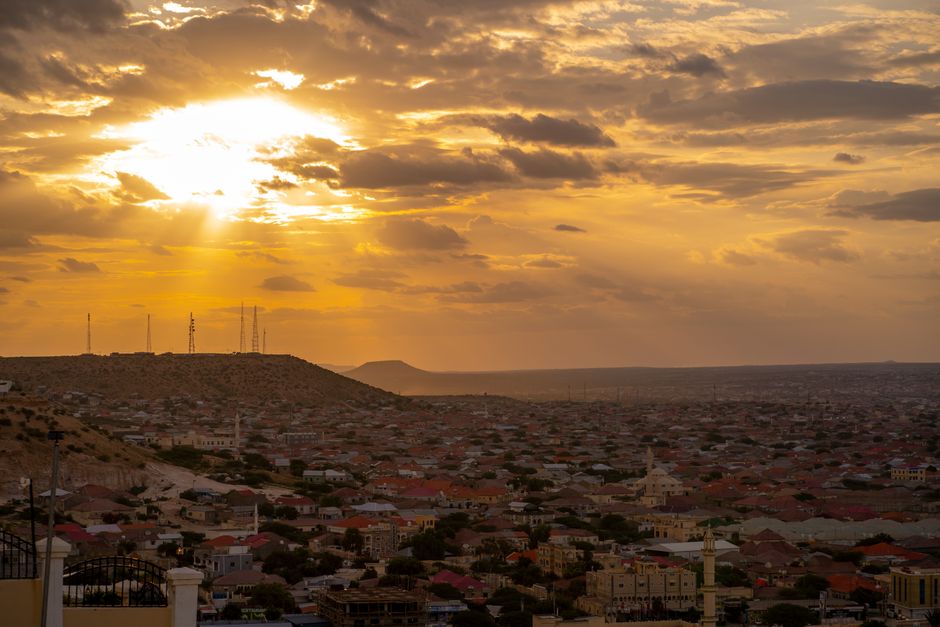
Capture of a breathtaking sunset over the cityscape of Hargeisa, Somalia., Berbera, Somaliland
What Surprises First-Time Visitors
The first surprise is the absolute quiet of the city after sunset. In most coastal towns in Africa, the night comes alive with music and hawkers. In Berbera, by 8 p.m., the streets empty. Families gather inside their compounds or on rooftops, and the only sound is the wind off the sea. It feels profound, almost meditative, and you quickly adapt. By your third evening, you’ll find yourself looking forward to a quiet walk under the stars, listening to the distant barking of camels. It rewires your sense of what a city can be.
The second surprise is the warmth of strangers. In many tourist destinations, locals treat visitors with wary politeness. In Berbera, people actively invite you to share meals. On my first morning, a man named Khaalid insisted I join him and his three sons for breakfast. They lived in a one-room house with no furniture, yet they insisted I sit on the best cushion and eat first. This generosity is not staged; it’s a deep cultural value. Travelers often find themselves overwhelmed and humbled.
The third jolt is the sheer, aching beauty of the coastline. You might expect a port city to be polluted and ugly. But Berbera’s beaches are pristine, the water a clear turquoise that rivals the Maldives. The reason is simple: few tourists come. You can walk for miles without seeing another person. The contrast of the crumbling old town, the industrial port, and these untouched beaches creates a weird, wonderful harmony. It’s not a resort—it’s a real place, and it will change how you think about travel itself.
Your Berbera, Somaliland Questions
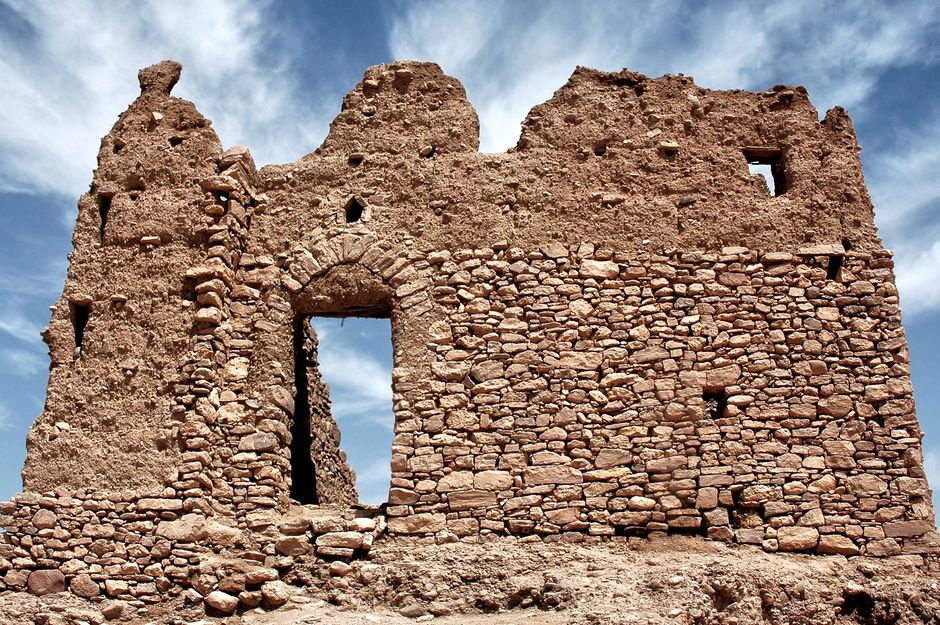
Ancient stone ruins under a bright sky in Ouarzazate, Morocco., Berbera, Somaliland
Is Berbera safe for solo travelers or women traveling alone? Yes, but with caveats. Berbera is one of the safest cities in the Horn of Africa; violent crime is almost unheard of, and locals will look out for you. That said, cultural norms matter. As a woman traveling alone, you should dress modestly—long skirts or trousers, covered shoulders, a scarf for your head when entering religious spaces. Men should avoid public displays of affection with anyone. The main risk is petty theft at the market: keep your wallet in a front pocket and your phone close. Solo travelers of any gender will be endlessly invited for tea, which is a genuine pleasure, not a scam.
What documents do I need to enter Somaliland? Somaliland is a de facto independent state; you cannot enter with a Somali visa. You must obtain a Somaliland visa in advance from their missions in Addis Ababa, Djibouti City, or London (processing takes 2–5 days, cost $50–$100). Many travelers also prefer to arrange a visa on arrival at Hargeisa Airport; the process is straightforward but requires a letter of invitation from a local tour operator. No visa is issued at Berbera Airport, so plan to fly into Hargeisa first. Have a color passport copy and passport-sized photos ready. The visa allows a 30-day stay, renewable in Hargeisa.
Can I see the rock art or archaeological sites near Berbera? Absolutely. A day trip from Berbera takes you to the Laas Geel cave paintings (55 km north, near Hargeisa), which date back 5,000 years. You’ll need a 4×4 and a guide (arrange through the Berbera Serena Hotel, about $100 for the day including driver). Closer to town lies the ruined settlement of Elayo, an ancient port with crumbling coral houses and a white minaret visible from the sea. It’s a 30-minute drive northeast; hire a tuk-tuk for $10. There, you can walk among the ruins and imagine the merchants who once loaded frankincense onto Roman ships. No entrance fee exists—just a small tip for the caretaker, who will happily tell you local legends.

