
Ghanzi, Botswana for Adventurers: Quad Biking the Kalahari Salt Pans – 7 Thrills That Redefine Desert Adventure (2026)
The wind rips across your face as you gun the throttle, the quad bike shuddering beneath you on the blinding-white surface of the Kalahari salt pan. Nothing but flat, cracked earth stretches to the horizon, heat shimmering in waves, the silence of the desert broken only by your engine and the distant call of a pale chanting goshawk. You feel impossibly small, yet utterly alive. This is Ghanzi, Botswana—the adventure capital of the Kalahari, where adrenaline meets ancient wilderness in a way that will recalibrate your very definition of “getting away from it all.” Travelers often discover that this remote outpost delivers a raw, unfiltered experience that better-known safari destinations simply cannot touch.
The Main Event: Quad Biking the Kalahari Salt Pans
Your best bet for the purest adrenaline hit in Ghanzi is a quad biking session across the vast, shimmering salt pans near the town. Operators like Kalahari Plains Quad Adventures (found at the Ghanzi Craft Centre) run guided two-hour expeditions that depart at 6:30 AM or 4:00 PM—you want the low-angle sun for the surreal light show it creates on the salt crust. The difficulty is easy to moderate: no prior quad experience is needed, but you’ll need a steady hand and a willingness to get dusty. Cost runs around 800 BWP (about $60 USD) per person, which includes helmet, briefing, and a guide who knows every crack and camber of the pan. You’ll ride across a landscape that has formed over millennia, the salt crust crunching beneath your tires, with the occasional springbok or oryx ghosting across your peripheral vision. The secret is to book the sunset slot; as the sun bleeds orange and violet across the pan, the salt reflects the sky like a liquid mirror, and you’ll find yourself alone with the desert in a way that feels almost sacred. Plan to bring a bandana for your face—the dust is fine and pervasive—and a water bottle; you’ll be parched within 20 minutes.
Activity #1: San Bushmen Guided Walking Safari
For a cultural adventure that doubles as a survival lesson, you cannot miss the San Bushmen guided walking safari. Locals recommend the experience offered by !Xoo Community Trust, located about 20 minutes north of Ghanzi town. You’ll meet your guide—often a descendant of the original Kalahari hunter-gatherers—at the trust’s visitor centre before heading into the thornveld. The walk lasts three to four hours, usually starting at 8:00 AM to beat the midday heat. Cost is 350 BWP per person ($26), which directly supports the community. Your guide will show you how to identify edible tubers, track a porcupine by its footprints, and make fire using a wooden spindle and a soft-wood base. Travelers often describe the moment they taste the bitter, water-filled root of a tsamma melon—a plant that kept the Bushmen alive for millennia—as a profound connection to the land. The terrain is sandy and dotted with acacia scrub, so wear sturdy closed-toe shoes and long trousers. The secret: ask your guide to show you the “talking stones”—quartzite rocks that the San used to communicate over long distances by tapping specific rhythms. Most tourists overlook this detail, but it adds a whole layer of anthropological richness. Book directly via the trust’s Facebook page or through Ghanzi-based Kalahari Adventures Botswana (www.kalahariadventuresbotswana.com).
Activity #2: Horseback Safari Across the Plains
If you’ve ever dreamed of thundering across the African savannah on horseback, Ghanzi delivers in style. Head to Kalahari Horse Safaris, run by the Mulder family, located 15 kilometres south of town on the A2 highway. Rides depart at 6:30 AM and 4:00 PM, lasting three hours. Cost is 1,200 BWP ($90) per person, which includes a well-trained horse suited to your experience level—beginners are matched with calm, steady mounts; seasoned riders get a horse with more spirit. You’ll ride through open acacia woodland and across seasonal pans, with zebra, wildebeest, and ostrich often sharing your path. The difficulty is moderate: you need a basic ability to trot and canter, but the horses are extremely reliable. Expect to cover about 12 kilometres—enough to feel the burn in your thighs the next day. Locals recommend the sunset ride for the best light and the highest chance of spotting predators like brown hyena or even the elusive aardwolf. Bring a water bottle, wear long trousers (the thorn scrub is unforgiving), and don’t forget sunscreen—the Kalahari sun is relentless even at 4 PM. Book at least 24 hours in advance via their website at www.kalaharihorsesafaris.com.

Ghanzi aerial view (2018), Ghanzi, Botswana
Refuel: Where Adventurers Eat
After a day of quad dust, horse sweat, or bush walking, you’ll need serious refuelling. Locals and guides consistently point to Thakadu Restaurant on the A2 highway in Ghanzi. Their house speciality is kudu steak with creamy pepper sauce (185 BWP / $14)—the meat is locally sourced, tender, and perfectly grilled. Portions are generous, and the cold St. Louis lager on tap (35 BWP) hits the spot after hours in the sun. For a lighter option, Kalahari Deli on Molepolole Road serves excellent chicken and avocado wraps (65 BWP) and fresh mango smoothies that will replenish your electrolytes fast. Savvy visitors know to grab a takeaway vetkoek (South African-style fried dough stuffed with mince) from Mama P’s Street Kitchen at the Ghanzi bus rank—only 25 BWP and the perfect pocket snack for early morning starts. If you’re celebrating a big adventure, Jack’s Grill at the Ghanzi Sun Hotel offers a three-course game dinner (springbok carpaccio, impala loin, malva pudding) for 450 BWP with wine pairing. Book ahead on weekends—the place fills up with guides and locals alike.
Base Camp: Where to Stay
Adventurers need a base that understands early starts, gear storage, and a filling breakfast before dawn. Kalahari Arms Hotel on the A2 is the go-to for practical travellers: rooms from 600 BWP ($45) per night include a solid breakfast buffet starting at 6:00 AM, secure parking for rental 4x4s, and a small bar where you can swap trail stories with guides. Ghanzi Sun Hotel (from 800 BWP / $60) offers shaded courtyard rooms with direct access to Thakadu Restaurant, plus a secure gear storage room—perfect if you’re travelling with expensive camera kit or binoculars. For a more immersive bush experience, Kalahari Highlands Lodge (from 1,200 BWP / $90) sits on a private game reserve 10 minutes from town, with tented chalets overlooking a waterhole that attracts oryx and eland at dusk. They’ll pack you a breakfast box if you’re heading out before sunrise. Book via Booking.com—filter for “Ghanzi” and look for “adventure-friendly” tags on properties that mention early breakfast options.
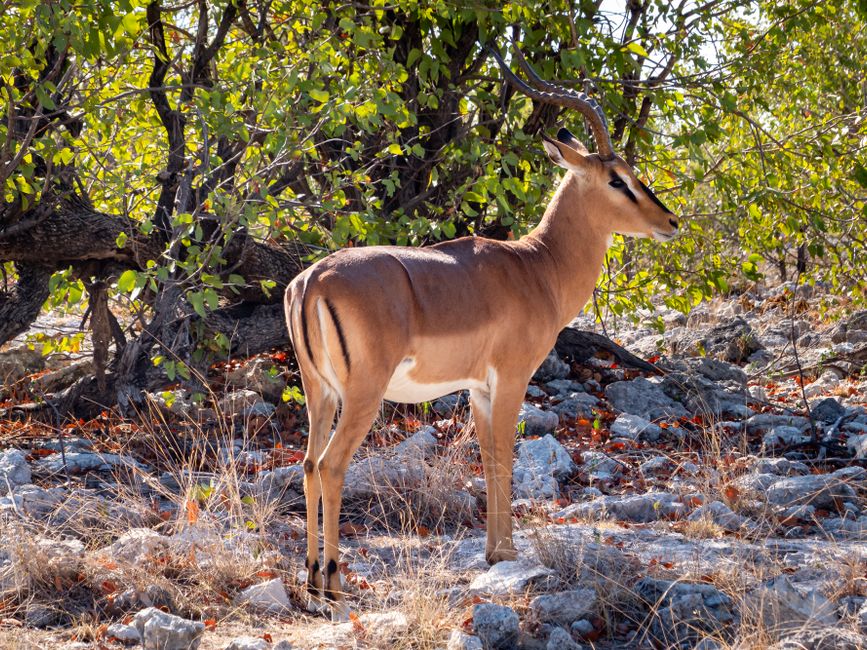
A standing impala amidst stones and trees, Ghanzi, Botswana
Gear & Prep Checklist
- Lightweight, long-sleeved shirt and trousers (sun protection, thorn protection) — the Kalahari sun is brutal, and acacia thorns will shred bare skin
- Sturdy closed-toe boots or trail shoes with ankle support — you’ll be walking on uneven, sandy terrain and possibly across salt crust that can be sharp
- High-SPF sunscreen (SPF 50 minimum) and a wide-brimmed hat — you will burn in 15 minutes without protection
- Fitness requirement: you need basic cardiovascular fitness for walking in 35°C heat; quad biking and horseback are manageable for moderate fitness levels, but the San walk involves three hours of steady paced walking on soft sand
- Safety consideration: always carry at least two litres of water per person per half-day activity; dehydration is the most common risk in the Kalahari, and cell service is sporadic
Getting There & Around
- Flights: Fly into Maun Airport (MUB) or Sir Seretse Khama International Airport in Gaborone (GBE). Both have connections through Johannesburg. From Maun, Ghanzi is a 5-hour drive (350 km) on the A3 highway. Book flights at Skyscanner.
- Local Transport: Shared minibus taxis run daily from Maun to Ghanzi (around 200 BWP, 5 hours), departing from Maun’s bus rank. For more flexibility, rent a 4×4 from Avis Maun or Budget Rent a Car—you’ll need high clearance for the unpaved roads to the salt pans and remote lodges. Uber and ride-hailing do not operate in Ghanzi.
- Best Season: April to October (Botswana’s dry winter) offers clear skies, milder daytime temperatures (25–30°C), and minimal dust in the air. Avoid January and February when summer rains can turn dirt roads into impassable mud and heat spikes over 40°C.
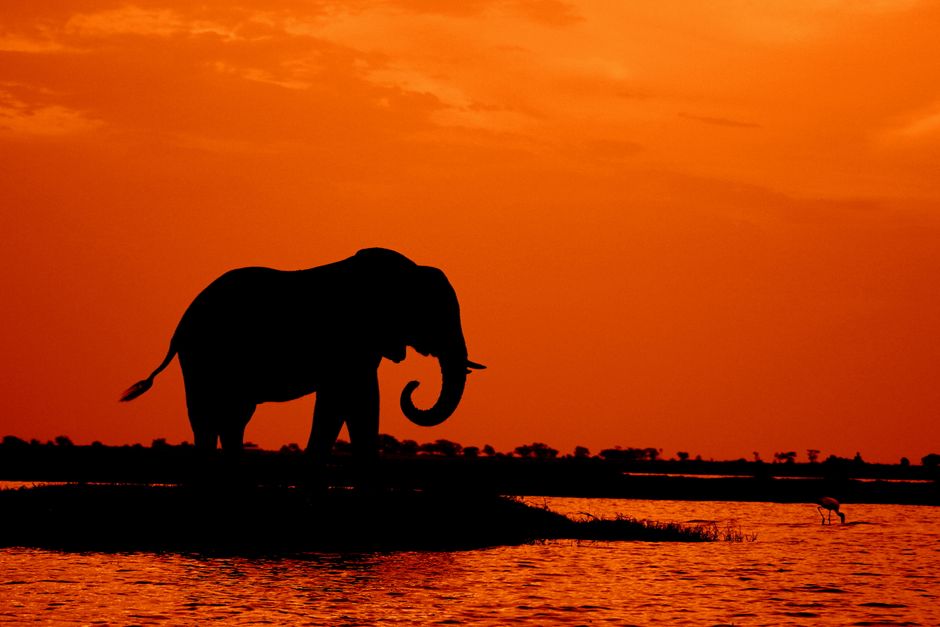
Silhouette of an elephant by a riverbank during a vibrant orange sunset in …, Ghanzi, Botswana
Is Ghanzi, Botswana Worth It?
Honestly? If you’re after the classic “Big Five” safari experience (lion, leopard, elephant, rhino, buffalo), Ghanzi is not your place. You won’t find elephants or leopards here—the Kalahari is a different beast entirely. What you will find is solitude, raw desert beauty, and authentic cultural encounters that feel decades away from the tourist-packed reserves of Chobe or the Okavango Delta. The quad biking across the salt pans is genuinely unforgettable—you’ll feel like an astronaut on a distant planet. The San Bushmen walk is the most humbling and educational half-day you can spend anywhere in southern Africa. This is for the traveller who wants to earn their sunset, who prefers dust to crowds, and who understands that the best adventure often comes without a luxury lodge. Ghanzi is worth every grit-filled moment—just come with the right expectations and a sense of humility before the desert. You’ll leave with a sunburn, a camera full of empty horizons, and a new understanding of what “remote” really means.

