
Beyond the Lake: How Awassa, Ethiopia Became the Soul of Sidama Country (2026)
In 1952, a small group of Sidama elders gathered under a giant sycamore tree near the northern shore of Lake Awassa to negotiate with Emperor Haile Selassie’s representatives. The emperor wanted to establish a new market town on their ancestral grazing grounds. After three days of deliberation, the elders agreed—on one condition: that the lake’s sacred waters would never be fenced off from the people. That agreement, honored to this day, explains why every traveler who visits Awassa finds the lake woven into the city’s daily rhythm like a heartbeat.
The Story Behind Awassa, Ethiopia
Awassa’s modern history begins in the 1950s when Haile Selassie’s government designated it as the capital of the newly formed Sidamo Province. Unlike Ethiopia’s ancient imperial cities—Axum, Lalibela, Gondar—Awassa was a blank canvas. The emperor envisioned a tidy administrative center with wide boulevards and low-rise government buildings. But the Sidama people, who had lived around the lake for centuries, infused the new city with their own customs. You’ll see this fusion everywhere: colonial-era architecture with Sidama geometric patterns painted on walls, and the unmistakable coffee ceremony aroma drifting out of concrete office buildings at ten in the morning.
The turning point came in 1991, when the Derg regime fell and Ethiopia reorganized its regions. Awassa became the capital of the Southern Nations, Nationalities, and Peoples’ Region (SNNPR), then later the capital of the newly independent Sidama Region in 2020. This political transformation injected energy and investment into the city. New hotels rose along the lakefront; the airport expanded; a university campus sprawled on the eastern hills. Yet travelers often discover that Awassa has preserved its small-town soul. The population has surged past 300,000, but the central market still feels like a village gathering, with farmers hauling bananas and coffee cherries on donkey carts alongside gleaming SUVs.
Neighborhood by Neighborhood
Addis Ketema – The Old Market Heart
Start your exploration in Addis Ketema, the original market district that grew around the 1954 agreement. The streets here are a controlled chaos of color and noise. You’ll walk along cobblestone alleys lined with corrugated iron stalls selling everything from secondhand Italian shoes to handwoven Sidama scarves called gabi. The air thickens with the smell of roasting coffee, raw fish from the lake, and the sweet perfume of false banana (enset) being shredded for bread. Don’t miss the main square where a giant fig tree shades the afternoon buna (coffee) ceremonies. Locals recommend arriving by 7am, when the fish auction begins at the edge of Addis Ketema—a furious, musical bargaining session in Sidama and Amharic that ends by 8:30. The best sidama coffee is served at Mama Askale’s stall, its entrance marked by a faded green umbrella, for just 10 birr (about 20 cents). Come hungry, because the smoked fish sellers offer samples that will ruin you for factory-made alternatives.
Tabor Hill – The Lakefront Living Quarter
Just two kilometers south, Tabor Hill rises gently from the lakeshore, offering a completely different Awassa. This is where the city’s middle class and expatriates have settled, building homes with terracotta roofs and bougainvillea-draped verandas. The main artery, Tabor Road, winds along the lake’s edge, passing the popular Lake View Hotel and a string of open-air restaurants where you can eat grilled tilapia while watching the sun sink behind the water. The atmosphere is relaxed and unhurried. Travelers often walk the entire 4-kilometer stretch from the fish market to the Tabor viewpoint at dusk. Savvy visitors know that the real gem is the Sidama Cultural Village, tucked behind the Tabor Hill Resort—a living museum where elders demonstrate traditional weaving and coffee roasting. You can join a daily coffee ceremony here at 4pm for 50 birr, and if you’re lucky, a local storyteller might recount the legend of how the Sidama people followed a white bird to this lake.
Sikela – The New Frontier
East of the lake, Sikela is the fastest-growing neighborhood in Awassa, a sprawling zone of new apartment blocks, shopping malls, and the Hawassa University campus. It lacks the old-world charm of Addis Ketema, but it pulses with youthful energy. On Friday nights, the area around the university gate transforms into a street-food bazaar where you can try kitfo (spiced raw beef) from wheeled carts, or doro wat (chicken stew) served with piles of injera. The university’s botanical garden, open to visitors for 20 birr, houses over 200 species of indigenous Sidama plants and is a peaceful morning walk. Sikela also hosts the city’s only cinema—the Hawassa Multiplex—which screens Ethiopian and international films nightly for around 100 birr. It’s not picturesque, but it’s where you’ll see modern Awassa taking shape, with its young people embracing smartphones and coffee culture in equal measure.
The Local Table: What Sidama Denizens Actually Eat
Forget the hotel buffet. The heart of Awassa’s food culture is the lake itself. Every morning at 6am, fishermen haul in tilapia and Nile perch from Lake Awassa, and by 7am the catch is being grilled, fried, or smoked in the market stalls along the shore. Locals don’t eat fish as a special occasion dish—it’s a daily staple, eaten with injera or kita (flatbread) and a side of awaze (spiced chili paste). You’ll find the best version at the family-run Lemu’s Fish House, a no-frills shack on the eastern lakefront where you choose your fish from a bucket, watch it grilled over charcoal, and eat with your hands while perched on wooden benches. A full meal with a bottle of beer costs around 200 birr ($3.50).

Ụgbọ mmiri na-akụ azụ n’Ọdọ Mmiri Hawassa, Awassa, Ethiopia
But Awassa’s culinary claim to fame is the Sidama coffee ceremony, which you cannot experience anywhere else in Ethiopia quite the same way. Unlike the more ceremonial versions in Addis Ababa, here the ceremony is interwoven with storytelling. The beans are roasted over a small charcoal stove while the host recites the lineage of the family that farmed the coffee. You’re expected to drink three cups—abol, tona, baraka—each slightly weaker, each accompanied by popcorn or roasted barley. For the most authentic experience, walk to the Sidama Buna Bet on Tabor Road at 4pm any afternoon. The owner, Mulu, has been serving coffee to locals for 22 years. She’ll insist you stay for the full hour. Take her advice.
Art, Music & Nightlife
Awassa’s creative pulse beats strongest during the annual Fichee festival, the Sidama New Year celebrated in late March or early April. For three days, the city erupts in traditional dances, drumming, and a massive parade where elders wear lion-mane headdresses and children throw flower petals. The festival grounds at the Sidama Cultural Center become a living gallery of handwoven textiles and pottery. But even outside of Fichee, you’ll find art in the city’s everyday life. The central market’s textile section is a spontaneous exhibition of Sidama weaving—women working on traditional looms to create the bright, geometric-patterned gabi and netela scarves. For contemporary work, the Hawassa Art Collective near Tabor Hill hosts monthly openings where young painters and photographers depict lake life and Sidama mythology. Ask for the series by artist Birhanu Amare—his charcoal sketches of fishermen caught in golden twilight are stunning.
Nightlife in Awassa is low-key but genuine. Your best bet is the string of lakeside bars along Tabor Road where the lights reflect on the black water and acoustic bands play traditional Sidama songs on krar (lyre) and washint (flute). Lakefront Terrace at the Haile Resort draws a mixed crowd of locals and travelers; arrive by 9pm to get a table near the water. The vibe is mellow—people talk, laugh, and sip local beer (try the St. George or Harar brands) until midnight. If you want dancing, head to Club Sidama on the southeastern edge of the city, where a DJ spins Ethiopian pop and Afrobeat until 3am on weekends. Cover is 100 birr.
Practical Guide
- Getting There: Hawassa Airport (AWA) receives daily Ethiopian Airlines flights from Addis Ababa (55 minutes, round-trip from $120). Many travelers also take the 4-hour bus from Addis Ababa’s Meskel Square terminal (300 birr). Book flights at Skyscanner
- Getting Around: Blue-and-white minibuses (25 birr per ride) cover the city; share taxis cost 50-100 birr for longer trips. Walking is best for the lakefront. Bicycle rentals available at Tabor Hill for 200 birr per day.
- Where to Stay: For lake views, book a room at Haile Resort Awassa (from $80/night). Budget travelers prefer Sidama Lodge near Addis Ketema (from $25). Check Booking.com
- Best Time: October to March (dry season, clear skies, pleasant 20-25°C). Avoid June-September (heavy rains can flood market alleys). Fichee festival in late March is peak.
- Budget: $30-50 per day covers a decent hotel, three meals, transport, and a few coffees. $70-100 for comfort.
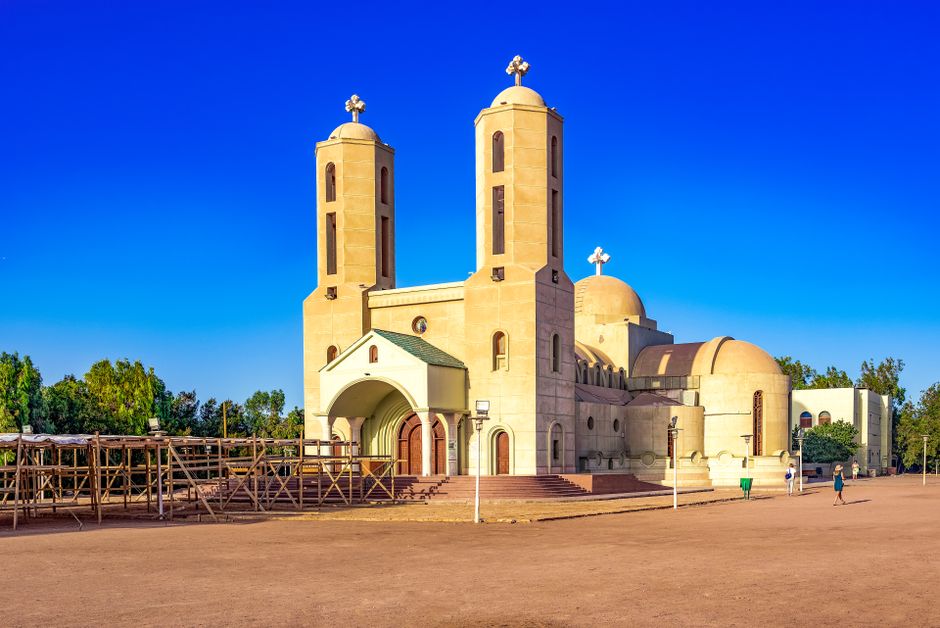
Ethiopian Orthodox church with distinct twin towers under a clear blue sky., Awassa, Ethiopia
What Surprises First-Time Visitors
Most people arrive expecting a dusty small town—what they find is a city that feels more like a resort than an administrative capital. The first surprise is the lake itself: it’s not just a backdrop but a living part of daily life. You’ll see children swimming after school, women washing clothes on the rocks, fishermen chanting as they pull nets. No one treats the water as a tourist attraction; it’s a shared resource, exactly as the elders intended in 1952. Another surprise is the friendliness. Sidama hospitality is legendary in Ethiopia, but you don’t appreciate it until a stranger offers you a cup of coffee or invites you to join a group of musicians under a tree. Say yes.
Seasoned travelers are also surprised by the cleanliness. Awassa is noticeably cleaner than many Ethiopian cities—the municipality has invested in waste collection and public toilets. You’ll find proper sidewalks along Tabor Road and a surprising number of quiet parks. And then there’s the food. Travelers often discover that the fish here is some of the best in Africa, but what catches them off guard is the Sidama habit of eating enset bread (made from false banana) with everything. It’s heavier than injera, slightly sweet, and pairs wonderfully with the smoky grilled fish. Don’t leave without trying it.
Your Awassa, Ethiopia Questions
Is it safe for solo travelers, especially women? Yes, with the usual precautions. Awassa is considered one of the safest cities in Ethiopia for solo travel. Locals are protective of visitors, and you’ll rarely feel hassled. That said, avoid walking alone on the lakefront after midnight, and keep valuables out of sight in the market. Women travelers report that the respectful, curious attention is no worse than in other Ethiopian cities. Stick to well-lit Tabor Road in the evenings and you’ll feel comfortable.

A captivating view of Gondar, Awassa, Ethiopia
How much time should I spend in Awassa? Two full days is the sweet spot. Day one: explore Addis Ketema market in the morning, fish lunch at Lemu’s, then walk the lakefront at sunset. Day two: visit the Sidama Cultural Village and coffee ceremony in the morning, take a boat ride on the lake (available at the Haile Resort dock for 500 birr per hour), and end with dinner at Lakefront Terrace. If you have a third day, hire a guide for a trek into the nearby Wondo Genet forest to see hot springs and colobus monkeys.
Can I drink the tap water? No. Bottled water is widely available (10-20 birr per liter). For the coffee ceremony, the water is typically boiled, so it’s safe. Many hotels provide filtered water stations. You can also buy a reusable bottle and fill up at the purification kiosks in Addis Ketema for 5 birr per liter. The lake water itself is not drinkable—stick to the bottled stuff.

