
Kii Mountain Range, Japan Weekend: Sacred Forests, Ancient Pilgrimages & Healing Onsens (2026)
You step off the bus into the scent of damp cedar and incense, the only sound a distant river and the crunch of gravel underfoot. By 8 a.m., the morning mist curls around the vermillion gates of an ancient shrine, and you already feel a thousand years away from the neon hum of Osaka. This is the Kii Peninsula—a place where pilgrims have walked for centuries, and where you’ll spend a weekend steeped in forest silence, hot spring steam, and mountain flavours.
Quick Facts Before You Go
- Best Months: March–May (cherry blossoms and mild hiking) and October–November (crimson leaves and crisp air). Summer is humid with leeches; winter can bring snow at higher elevations.
- Currency: Japanese Yen (JPY). Roughly ¥145 = US$1. Cash is king in rural areas—ATMs are scarce in mountain villages.
- Language: Japanese. English is rarely spoken beyond train stations and major ryokans. Download offline translation apps and learn basic phrases like arigatou gozaimasu.
- Budget: ¥15,000–25,000 per person per day for a comfortable weekend (transport, one nice meal, entry fees, shared ryokan room). Luxury ryokan stays push that to ¥40,000+.
- Getting There: Fly into Kansai International Airport (KIX), then take the JR Kuroshio Limited Express from Shin-Osaka or Tennoji to either Kii-Tanabe or Shingu (3.5–4 hours, ~¥6,000 one way). From there, local buses climb into the mountains. Book flights at Skyscanner.
Day 1: Pilgrim’s Path & Forest Silence
You start the morning at Hongu Taisha, the grand shrine that sits at the spiritual heart of the Kumano Kodo pilgrimage routes. While most tourists only snap a photo from the bus stop, savvy visitors know to walk the first kilometre of the Nakahechi trail—just enough to feel the rhythm of ancient footsteps. By lunchtime your legs are warm and your appetite is sharp.
- Morning (8–11am): Arrive at Kumano Hongu Taisha by 8:30am to see the shrine in soft morning light. Free entry. Then walk the short Dainichi-goe trail (1.5 km, 30 minutes) through towering cryptomeria trees to the old shrine site. The path is cobbled and mossy—exactly as pilgrims used it 1,000 years ago. Cost: free.
- Lunch: Walk five minutes from the shrine to Michi-no-Eki Hongu food court. Order the kumano-ji soba set (¥1,200)—buckwheat noodles in a rich broth made from local dried fish, topped with mountain vegetables (sansai) and a soft-boiled egg. Travellers often pair it with a cup of yuzu-cha (hot yuzu tea, ¥300) from the vending machine outside.
- Afternoon (1–5pm): Take the bus from Hongu to Yunomine Onsen (15 minutes, ¥350). This tiny hot spring village has been a pilgrimage stop since the 7th century. Soak your feet in the public footbath (ashiyu) at Tsuboyu (free) or, for a once-in-a-lifetime experience, hire the private bath inside the small stone hut (¥800 for 40 minutes—book ahead at the Yunomine Onsen information centre). After your soak, walk the 500-metre forest path to Kumano Hongu Taisha’s Oyunohara, the original shrine site marked by a massive torii gate. The silence here is profound.
- Evening: Check into a ryokan in Kawayu Onsen (e.g., Fujiya, ¥18,000 per person including dinner and breakfast). Dinner is a multi-course kaiseki featuring local specialties: river fish, wild mushrooms, and kumano beef cooked on a hot stone. Afterwards, wander down to the riverbank where you can dig your own hot spring foot bath in the sand (free, open 24 hours). The stars are incredibly bright this far from city lights.

Aerial photograph of the Hongu district.Tanabe Wakayama prefecture Japan, Kii Mountain Range, Japan
Day 2: Waterfalls, Temples & Mountain Flavours
Day two begins with a short bus ride south to the Nachi area, where Japan’s tallest waterfall plunges from a cliff-face beside a vermillion pagoda. The air smells of wet stone and incense from the temple incense burner. By midday, you’ll have hiked a short section of the Kumano Kodo with the waterfall roar in your ears.
- Morning (7–10am): Take the 6:50am bus from Kawayu Onsen to Nachi-no-Taki (50 minutes, ¥1,100). Arrive just before 8am to beat the crowds. Walk the 200-metre path to the waterfall viewing platform (free). Then climb the stone steps to Seigantoji Temple, a Tendai Buddhist temple that dates to the 4th century. Visitors are often moved by the pagoda framed against the cascading water—it’s one of Japan’s most photographed scenes. Cost: temple entry ¥300.
- Midday: Return to the visitor centre and walk the 800-metre stretch of the Nachi-no-Komori trail, a flat, easy path that runs alongside the Nachi River. Insiders’ tip: Most tourists head straight to the waterfall and temple, but this riverside trail (free, 30 minutes round trip) is virtually empty at 10:30am. You’ll pass tiny shrines, mossy stone statues, and a small tea house that opens only on weekends.
- Afternoon (1–4pm): Take the bus to the seaside town of Nachi-Katsuura (20 minutes, ¥500). Stroll the morning fish market—even at 2pm, you’ll see tuna auction remnants. Stop by Michi-no-Eki Nachi-Katsuura for a kumano gyōza (¥600 for 6) filled with local wild boar and vegetables. Then explore the narrow shopping street Ryujin-bashi Shotengai, where old women sell handmade konjac (yam cake, ¥400 a block) and pickled plums.
- Final Evening: For your farewell dinner, head to Restaurant Maruya (near Katsuura Station, open 5–9pm). Locals recommend the honmaguro (fresh bluefin tuna) sashimi set (¥2,500). After dinner, take a final soak at Katsuura Onsen’s public bath Yururi (adults ¥700, open until 10pm). The outdoor bath overlooks the Pacific Ocean—a perfect goodbye to the Kii Peninsula.
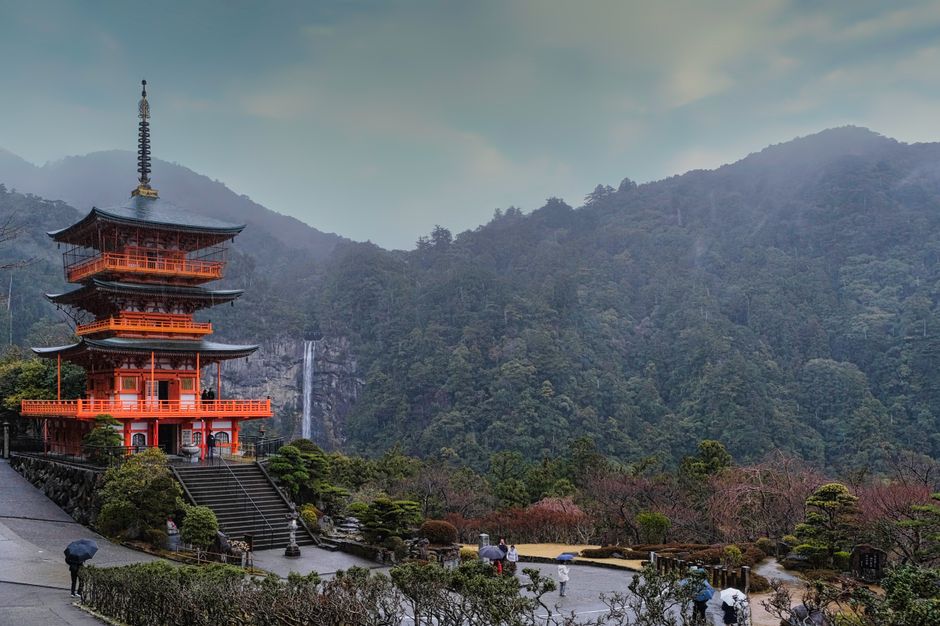
Scenic view of a Japanese pagoda with Nachi Falls in the background, Kii Mountain Range, Japan
The Food You Can’t Miss
Food in the Kii Mountains is rooted in what the land and sea provide. Travelers quickly discover that the region’s wild mountain vegetables (sansai)—bamboo shoots, fern fronds, and butterbur—are foraged in spring and often pickled or simmered in soy. You’ll find them in soba, tempura, and as sides in ryokan dinners. The most famous local meat is kumano beef: a lean, richly flavoured Wagyu from cattle raised on the cool slopes. Expect to pay about ¥3,000 for a small steak at a nice restaurant.
Street food is less common in the mountains, but you can’t miss kumano-korokke—a potato croquette stuffed with bits of local beef, sold at small bakeries near bus stops for about ¥200 each. The best I’ve tasted are from Pan-ya Kii in Hongu (open 9am–5pm, closed Wednesdays). For a full meal, the restaurant Noo no Ie in Kawayu Onsen serves a wonderful kumano-yakitori set (¥2,000) with grilled chicken and local vegetables over a charcoal fire. Wash it down with a bottle of Kumano Jizake sake (¥800 at the convenience store)—it’s slightly sweet with a clean finish, perfect after a day of hiking.
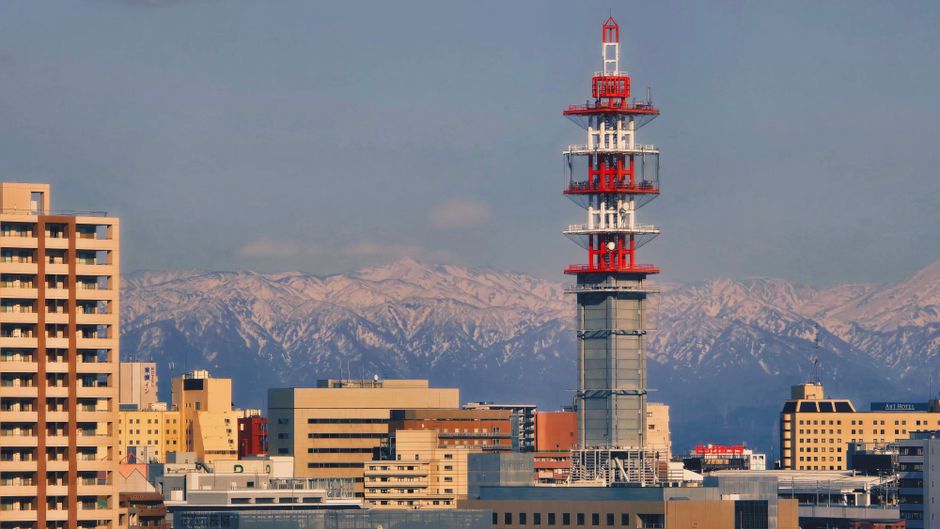
Cityscape featuring a tall communications tower against snowy mountain backdrop., Kii Mountain Range, Japan
Where to Stay for the Weekend
Your best bet is to base yourself in one of two onsen towns: Kawayu Onsen or Yunomine Onsen. Both are within 20 minutes of Kumano Hongu Taisha and offer easy access to trails and buses. Kawayu Onsen is larger, with multiple ryokans and the famous riverbank hot spring. The mid-range Fujiya (¥18,000 per person with meals) is warm and traditional. For a splurge, Yunomine Onsen’s Wakatake Honkan (¥30,000 per person) has private outdoor baths and a Michelin-starred kaiseki dinner.
If you prefer to sleep near Nachi for Day 2, the Nachi-Katsuura area has simple minshuku (guesthouses) that start at ¥10,000 per person with breakfast. Minshuku Asahi (¥12,000) offers tatami rooms and home-cooked seafood dinners. Book accommodations early—weekends fill up fast, especially in autumn foliage season. Check Booking.com or Airbnb for last-minute options.
Before You Go: Practical Tips
- Getting Around: Buses are the only public transport in the mountains. The Kumano Kodo Bus Pass (¥4,000 for 2 days, purchased at Tanabe or Hongu bus info centres) covers all routes between Hongu, Yunomine, Kawayu, and Nachi. Without it, individual rides cost ¥400–Y1,500. Taxis are rare and expensive (¥5,000+ for a 20-minute ride).
- What to Pack: Sturdy hiking shoes (trails are often muddy or uneven); a lightweight rain jacket (mountain weather changes fast); a small towel for free footbaths; and ¥10,000 in cash (most rural shops and bus fares do not accept cards).
- Common Tourist Mistakes: Many visitors underestimate walking times on Kumano Kodo trails. Even a 2-km section can take an hour on slippery, steep terrain. Also, don’t assume you can buy water at every turn—carry a refillable bottle. Most onsen provide filtered water taps.
- Money-Saving Tip: Purchase the Kumano Kodo 2-Day Bus Pass at the Kii-Tanabe station tourist office when you arrive. At ¥4,000, it pays for itself after just two long bus rides (e.g., Tanabe to Hongu is ¥1,500 one way). You also get a 10% discount at some ryokans when you show the pass.

