
Moussoro, Chad Weekend: Camel Markets, Saharan Sunsets & Sizzling Wood-Fired Goat (2026)
The late afternoon air carries the low grumble of a thousand camel bells over the market, each one chiming a different pitch against the earth. You smell wood smoke, crushed coriander, and the sweet burn of peanut oil from a dozen roadside grills. By Friday evening, Moussoro’s main square hums with traders who have crossed the Sahel to sell livestock, textiles, and stories. This is not a place you stumble upon—it’s a place you seek out when you want to feel the pulse of Chad away from any guidebook cliché.
Quick Facts Before You Go
- Best Months: November to February — the dry, relatively cool season when daytime highs hover around 32°C (90°F) and the Harmattan wind keeps the sky clear. Avoid March–June when heat and dust can be punishing.
- Currency: Central African CFA franc (XAF). As of 2025, 1 USD ≈ 600 XAF, and 1 EUR ≈ 650 XAF. Carry cash in small denominations; ATMs are nonexistent here.
- Language: French and Chadian Arabic are widely spoken. You will find almost no English, so learning basic greetings—As-salamu alaykum and Merci beaucoup—will earn you smiles and better prices.
- Budget: For a comfortable weekend (private room, three meals, transport within town) plan on 50,000–80,000 XAF per day (US$80–130). Backpackers can manage on 25,000–35,000 XAF by doubling up and eating street food.
- Getting There: Fly into N’Djamena International Airport (NDJ) — about 6 hours from Paris via Air France, or 4 hours from Addis Ababa via Ethiopian Airlines. From N’Djamena, a bush taxi or private hire (three hours, 10,000–15,000 XAF per person) takes you northeast to Moussoro. Book flights at Skyscanner.
Day 1: The Heartbeat of the Sahel
You start the morning with the muezzin’s call still echoing across the low skyline. Friday is market day in Moussoro, and the entire town seems to be moving toward the enormous livestock auction ground on the eastern edge. Plan to be there by 7 a.m., before the sun turns the dust into an oven. The scene is organized chaos: herders in long jalabiyas shout prices, camels kneel with regal patience, and goats bleat from every pen. It’s not a spectacle for tourists—it’s the real commerce that keeps this region alive.
- Morning (7–10:30 a.m.): Head straight to the Grand Marché aux Bestiaux (cattle market) on the Route de Moussoro. Entry is free, but expect to tip a local guide (2,000 XAF) who can explain the bidding system. Watch for the famous “Moussoro shake”—a handshake that seals a camel deal. Stick around for the tea stalls that brew spiced chai strong enough to wake you up for the rest of the day.
- Lunch: Walk five minutes to Chez Ali on Avenue de la République. The specialty is boignets de viande—deep-fried meat fritters served with a fiery tomato-pepper sauce—and millet porridge sweetened with baobab powder. A plate of three fritters plus porridge costs 1,500 XAF. Locals recommend washing it down with degue, a tangy yogurt drink with millet balls.
- Afternoon (11 a.m.–3 p.m.): Escape the midday heat by visiting the Grande Mosquée de Moussoro (built 1958, renovated 2002). Non-Muslims can walk around the exterior courtyard; the intricate mud-brick minaret is a masterpiece of Sahelian architecture. At 2 p.m., join the free tour at the Centre Artisanal de Moussoro (entry 1,000 XAF) where local women weave toufra wool blankets and dye indigo cloth. You can buy a small blanket for 5,000 XAF—an excellent souvenir that supports the cooperative.
- Evening (5 p.m.–onward): As the sun softens, climb the small hill behind the Hôtel Sahara Palace to watch the light turn the distant Acacia trees to silhouettes. For dinner, reserve a table at Le Dromadaire (next to the market). Their wood-fired tagine de chèvre aux pruneaux (goat tagine with prunes, 4,500 XAF) is legendary among travelers. Afterward, join locals on the rooftop terrace for sweet mint tea (500 XAF) and the buzz of the evening market below.

Chateau d’eau de Moussoro, Moussoro, Chad
Day 2: Sahara Dreams & Dusty Crafts
The second day feels slower, more introspective. You wake to the sound of donkeys hauling water and the crisp, dry air that carries the scent of sand and charcoal. By 6 a.m., the morning light paints the dunes beyond town in shades of rose and ochre. This is the day to step away from the market and explore what makes Moussoro a true Saharan gateway—not a tourist trap, but a living crossroads of pastoral and urban life.
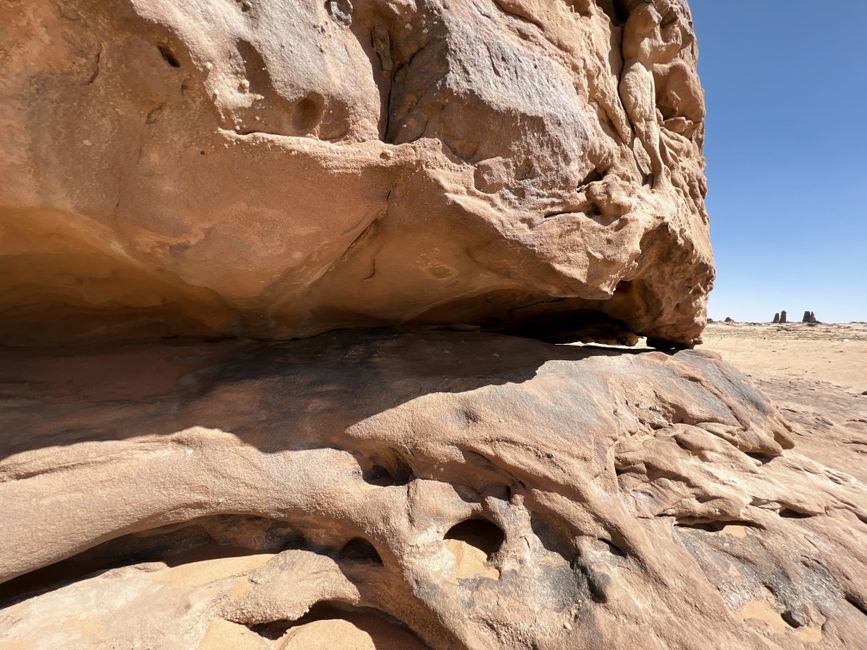
- Morning (6–9 a.m.): Take a guided stroll to the Koro Hills, a series of low sandstone bluffs about 2 km north of town. Your hotel can arrange a guide (3,000 XAF per person, including water). You’ll walk among fossilized shells and prehistoric rock art—suggesting this was once under water. Back in town, breakfast at Pâtisserie des Sables (Rue de l’Hôpital) where you must order beignets de la Sahel (honey-drizzled doughnuts, 500 XAF for three) and a bowl of chai aux épices (spiced black tea, 300 XAF).
- Midday (10 a.m.–12 p.m.): Visit the modest but excellent Musée Régional du Bahr el Gazel (entry 2,000 XAF). It holds a dusty but fascinating collection of Tuareg swords, traditional camel saddles, and photographs of the 1960s colonial era. The curator, often on site, speaks French and loves to tell the story of how Moussoro became the capital of a new region in 2008. Go early to avoid the midday heat—most tourists overlook this spot, so you’ll likely have the place to yourself.
- Afternoon (2–5 p.m.): Wander the Quartier des Tisserands (Weavers’ Quarter) near the main market. This narrow network of alleys is filled with handlooms where artisans produce the famous toufra blankets and also khanfa shawls. A high-quality shawl costs 7,000–10,000 XAF after polite bargaining. The secret is to come after 3 p.m., when the weavers have finished their afternoon prayers and are more willing to chat. One elder, Moussa, can show you how indigo dye is fermented in clay pots.
- Final Evening (6–9 p.m.): Toast your weekend with a farewell dinner at La Caravane, a restaurant run by a retired nomad named Abdoulaye. The signature dish is chèvre grillé sauce arachide (grilled goat with peanut sauce, 5,000 XAF) served with bouille (millet porridge). Sit on the woven mats in the sandy courtyard; if you’re lucky, Abdoulaye plays the kora (a traditional harp) after dinner. A truly unforgettable end to the trip.

Stunning desert scene with a rocky arch and yellow jeep under a clear blue sky., Moussoro, Chad
The Food You Can’t Miss
In Moussoro, the cuisine is a direct dialogue with the desert. You’ll find little that is refined, but everything is honest and packed with flavor. The backbone of every meal is millet, ground into porridge or formed into stiff cakes called bouille. It’s bland on its own, so it’s always paired with a spicy sauce—peanut, tomato, or the region’s love-it-or-hate-it fermented locust bean paste called soumbala.
Street food is where you’ll taste the soul of Moussoro. Every evening, from about 5 p.m. onward, the main square near the mosque fills with vendors grilling brochettes de chèvre (goat skewers, 500 XAF each) over embers. Savvy visitors buy three or four, then grab a piece of bread from the nearby baker (200 XAF) and a plastic bag of spiced chai. The combination—smoky meat, chewy bread, sweet tea—becomes a meal for under 3,000 XAF.
For a sit-down experience, Le Dromadaire remains the standout restaurant. Their couscous royal (6,000 XAF) piles semolina high with braised lamb, chickpeas, and caramelized onions. Portions are huge—plan to share. And never skip dessert: the crème de la Sahel (a light milk pudding with rosewater and pistachio, 1,000 XAF) is a simple, cooling finish. Locals recommend washing it down with jus de baobab (500 XAF), a tart, vitamin-C-packed drink you’ll see sold from plastic jugs at almost every corner.
Close-up of a textured sandstone rock formation in a bright desert landscape., Moussoro, Chad
Where to Stay for the Weekend
Accommodation in Moussoro is basic but clean. Two areas work best: the Market District for convenience and easy access to food, and the Quartier Administratif for slightly quieter streets. For a mid-range stay, Hotel Sahara Palace (Rue de l’Hôpital, doubles from 35,000 XAF/night, with fan and shared bathroom) offers a rooftop terrace, decent breakfast of bread and omelette, and a helpful staff that can arrange guides. If you’re on a budget, Auberge du Sahel (Avenue de la République, rooms from 18,000 XAF) has clean rooms with mosquito nets and a central courtyard where travelers swap stories. Note: no online booking exists; you’ll call or show up. For a more local experience, check if any Airbnb listings appear—though they’re rare. Alternatively, use Booking.com to search for N’Djamena hotels if you’d rather stay in the capital and day-trip to Moussoro, but the four-hour round drive defeats the weekend feel. My advice: stay in Moussoro itself and soak in the rhythm.
Before You Go: Practical Tips
- Getting Around: Moussoro is walkable in its compact core (the market, mosque, and main restaurants are within 1.5 km). For trips to the hills or outlying villages, hire a moto-taxi (1,000–2,000 XAF per ride) or a bush taxi for longer distances (5,000 XAF to any nearby village). Negotiate the fare before mounting.
- What to Pack: (1) Light, long-sleeved cotton shirts and trousers to protect from sun and dust while respecting modesty; (2) a dust mask or scarf to cover your nose during the harmattan; (3) a headlamp for nighttime walks (streetlights are minimal); (4) a reusable water bottle with purification tablets—tap water is not safe, and bottled water is sold everywhere (500 XAF for 1.5L).
- Common Tourist Mistakes: Many visitors dress too lightly—shorts and tank tops are considered disrespectful, especially near the mosque. Also, do not photograph people without asking; a small tip (500 XAF) usually earns permission. Finally, avoid walking alone after dark outside the central area; stick to well-lit streets near the market.
- Money-Saving Tip: Eat street food for both lunch and dinner. Two skewers of goat, a piece of bread, and a bag of tea cost less than 3,000 XAF—half the price of a restaurant meal. The quality is excellent and the experience is far more memorable. For extra savings, share a room at Auberge du Sahel with a fellow traveler; the staff won’t mind splitting the bill.

