
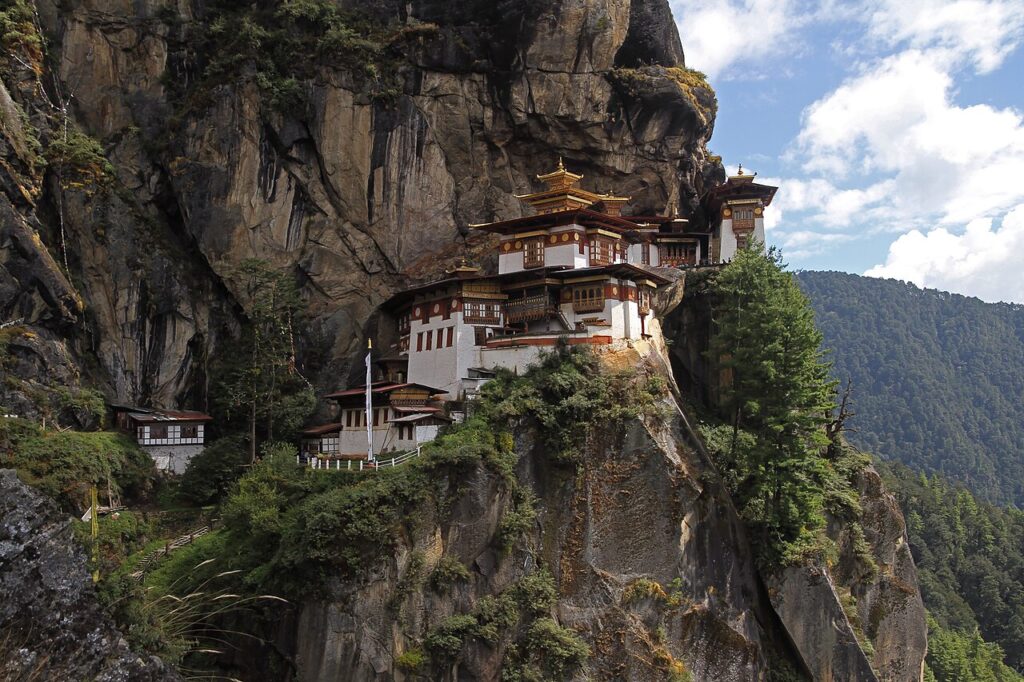
Taktshang Monastery, Bhutan: Sacred Temples, Himalayan Views & the Legendary Trek (2026)
Only 60,000 tourists visit Bhutan annually, yet fewer than half make the punishing 900-meter climb to Taktshang Monastery. What are they missing? You’ll discover a sacred cliff-hugging temple born from an 8th-century legend, where Guru Rinpoche flew on a tigress’s back to meditate in a cave. Here’s what savvy travelers discover that the rest overlook.
Why Taktshang Monastery, Bhutan Stands Out
- Historic Architecture: The main temple building, dating to 1692, clings to a granite cliff 3,120 meters above sea level—a feat of medieval engineering that still stuns visitors.
- Cultural Scene: The annual Tsechu festival in spring features masked dances honoring Guru Rinpoche, with locals in traditional gho and kira performing for hours.
- Local Specialties: Must-try ema datshi, a fiery chili-and-cheese stew that Bhutanese eat daily—you’ll find the best version at the monastery’s tiny cafeteria.
Pro Tip: Start your hike at 6:00 AM sharp from the trailhead near the Paro River. You’ll beat the midday sun, the crowds, and arrive just as the morning mist lifts—around 9:30 AM—revealing the monastery in its full glory. Locals recommend this timing to see the sun’s rays hit the golden roof first.
Map of Taktshang Monastery, Bhutan
Use these interactive maps to explore Taktshang Monastery, Bhutan and plan your route:
📍 View Taktshang Monastery, Bhutan on OpenStreetMap
🗺️ Open Taktshang Monastery, Bhutan in Google Maps
Planning Your Trip: Practical Essentials

Paro Taktsang monastery in the upper Paro valley of Bhutan, Taktshang Monastery, Bhutan
Getting There and Around
- By Air: Fly into Paro International Airport (PBH) on Drukair or Bhutan Airlines from Delhi, Kolkata, or Kathmandu. The flight over the Himalayas is a spectacle itself—book early at Skyscanner for best deals.
- By Train: There are no train services in Bhutan. Travelers typically fly or drive from the nearest Indian railhead, Hasimara (West Bengal), about 3 hours away. Reserve taxis or shared jeeps locally.
- By Car: For the hike, you’ll need a private driver as part of Bhutan’s mandatory guided tour package. The paro valley is small; your guide will bring you to the trailhead. Compare car rentals at RentalCars.com if you’re combining with Indian travel.
- Local Transport: Paro town is walkable. For longer journeys, taxis cost around Nu. 200 (about $2.50) between the town and the monastery parking lot. Your guide can arrange everything.
Best Time to Visit
| Season | Weather | Highlights |
|---|---|---|
| Summer (Jun–Aug) | 15°C–25°C, heavy rain, mist | Green valleys, fewer tourists; but trails are muddy, and views are often obscured. Low season for trekking. |
| Winter (Dec–Feb) | -5°C–10°C, clear but cold, occasional snow | Stunning winter light, empty trails. You’ll need layers and good boots. Cafes may close early. |
| Shoulder (Apr–May, Sep–Oct) | 10°C–20°C, blue skies, low humidity | Prime time: rhododendrons bloom in spring; autumn offers post-monsoon clarity. Expect moderate crowds at the monastery. |
Budgeting for Taktshang Monastery, Bhutan

White and brown concrete house on top of mountain during daytime, Taktshang Monastery, Bhutan
Note: Bhutan operates a “High Value, Low Impact” tourism policy. All foreign tourists (except Indians, Maldivians, and Bangladeshis) must book through a licensed tour operator and pay a daily tariff. As of 2025, the tariff is $200 per person per night (peak season March–May, September–November) and $150 per person per night (off-season June–August, December–February). This covers your guide, driver, accommodation, meals, and all entry fees—including the $5 entry to Taktshang Monastery. Indian passport holders pay a separate fee of Nu. 500 (about $6) per person.
| Category | Budget | Mid-range | Luxury |
|---|---|---|---|
| Accommodation | Nu. 2,000–4,000 ($25–$50) per night | Nu. 8,000–15,000 ($100–$190) | Nu. 30,000+ ($380+) – e.g., Uma by COMO Paro |
| Meals | Nu. 300–500 ($4–$6) per meal at local eateries | Nu. 800–1,500 ($10–$19) at hotel restaurants | Nu. 2,500–5,000 ($32–$63) for fine dining |
| Transport | Included in daily tariff (guide + driver) | Same – all guided tours include vehicle | Private luxury SUV included |
| Activities | Entry to monastery (Nu. 500 for Indians, free for other tourists as part of tariff) | Guided hike + cultural show (included) | Helicopter ride to trailhead (around $500) |
| Daily Total | Nu. 3,000–5,000 ($38–$63) plus tariff | Nu. 10,000–18,000 ($127–$228) plus tariff | Nu. 35,000+ ($445+) plus tariff |
Top Attractions and Must-See Sights
| Attraction | Description | Hours | Entry Fee |
|---|---|---|---|
| Taktshang Monastery (Tiger’s Nest) | The main 7-temple complex clinging to a cliff at 3,120 m. The central cave where Guru Rinpoche meditated for 3 years is a must-see. | 7:00 AM – 5:00 PM daily (last entry 4:00 PM) | Nu. 500 for Indians; included in daily tariff for others |
| Kyichu Lhakhang | One of Bhutan’s oldest temples (built 659 AD) in Paro valley, with a serene inner courtyard and a mystical orange tree bearing sacred fruit. | 8:00 AM – 5:00 PM | Free |
| Paro Rinpung Dzong | Fortress-monastery from 1644, housing monastic quarters and government offices. Its towering white walls and intricate woodwork are iconic. | 9:00 AM – 5:00 PM (closed during government hours) | Nu. 300 for foreigners, Nu. 100 for Indians |
| Drukgyel Dzong | Ruins of a 17th-century fortress that defended against Tibetan invasions. Offers panoramic views of Mount Jomolhari (7,326 m). | 24/7 outdoor access; interior closed for restoration | Free |
3-Day Itinerary: Highlights & Hidden Gems of Taktshang Monastery, Bhutan

A cliff with a building on top of it, Taktshang Monastery, Bhutan
Day 1: Approach and Ascent
- Morning: Start your hike at 6:00 AM from the lower parking lot. The 4.5 km trail gains 900 meters in elevation—plan to take 2.5–3 hours up, with rest stops at the viewpoint cafeteria (open 8:00 AM). The trail is well-maintained stone steps and dirt paths. One tip: bring trekking poles for the steep descent.
- Afternoon: Arrive at monastery by 9:30 AM. Spend an hour exploring the seven temples, the meditation cave, and the butter-lamp-lit shrines. For lunch, head to the monastery’s small cafeteria (Nu. 250 for a plate of momos and thukpa). Your guide will explain the legend of Guru Rinpoche.
- Evening: Descend by 2:00 PM (1.5 hours down). Return to Paro town for dinner at The Mountain Café (best ema datshi with red rice, around Nu. 600).
Day 2: Cultural Immersion
- Morning: Visit Kyichu Lhakhang (free entry) at 8:00 AM—one hour is enough. Then explore Paro Rinpung Dzong (entry Nu. 300). Your guide will explain its role as the seat of Paro’s administration. Look for the ancient thangkas (scroll paintings) inside.
- Afternoon: Drive 20 minutes to Drukgyel Dzong ruins (free). Photograph the mountain backdrop. Lunch at the nearby Chiwang Heritage Restaurant (try the buckwheat pancakes with honey, Nu. 400).
- Evening: Attend a traditional mask dance performance at the Paro Ugyen Pelri Palace (by appointment, included in your tour package). Dinner at Bhutan Kitchen (momo platter, Nu. 500).
Day 3: Relaxed Final Day
- Morning: Drive 30 minutes to the National Museum (Ta Dzong) perched above the dzong (entry Nu. 300). See the collection of ancient weapons, stamps, and the famous “tiger skin” displayed. The museum opens at 9:00 AM.
- Afternoon: Visit a local farmhouse in the Paro valley for a cooking class (arranged by your guide; cost Nu. 1,500 per person). Learn to make momos and suja (butter tea). Lunch is what you cook.
- Evening: Final dinner at Bukhari, the restaurant at Le Méridien Paro (fine dining, around Nu. 2,500). Try the yak steak with morel mushroom sauce.
Cultural Insights & Etiquette
- Language: Dzongkha is the official language, but English is widely spoken in tourist areas. Learn a few phrases: “Kuzu zangpo” (hello), “Kadrinche” (thank you).
- Customs: Always walk clockwise around chortens and temples. Never point your feet at a statue, altar, or person. Avoid public displays of affection.
- Tipping: Not expected but appreciated. Nu. 200–500 per day per guide is standard. For drivers, Nu. 100–200 per day.
- Dress Code: Cover your shoulders and knees inside monasteries. Remove shoes before entering temples. Bring a light jacket for the monastery—it’s often cool and damp inside.
- Business Hours: Shops are open 9:00 AM–6:00 PM, Monday–Saturday. Government offices close for lunch 1:00–2:00 PM. Most banks are open 9:00 AM–4:00 PM.
Where to Eat: The Best Bites in Taktshang Monastery, Bhutan
Bhutanese cuisine is fiery and cheese-laden. Your best bet is to try local specialties at family-run eateries and hotel restaurants. The monastery’s own cafeteria serves simple but authentic fare—don’t expect gourmet, but the setting is unmatched.
Must-Try Local Specialties
- Ema Datshi: Bhutan’s national dish—chilies cooked with yak cheese. Try it at The Mountain Café (Paro town) where they use real yak cheese instead of cow’s milk. Expect intense heat! Nu. 450.
- Momos: Steamed dumplings filled with minced yak meat or vegetables. The best versions are at the monastery’s cafeteria (Nu. 200 for 8 pieces) and at Bhutan Kitchen in Paro (Nu. 350).
- Suja (Butter Tea): A salty, buttery tea made from yak milk. Locals drink it throughout the day. You’ll find it at farmhouse visits—try it, but be warned it’s an acquired taste. Often offered free.
Restaurant Recommendations by Budget
| Type | Restaurant | Specialty | Price Range |
|---|---|---|---|
| Budget | Monastery Cafeteria (inside Taktshang complex) | Momos, thukpa (noodle soup), butter tea | Nu. 200–400 ($2.50–$5) |
| Mid-range | Bhutan Kitchen, Paro town (opposite the dzong) | Mixed momo platter, ema datshi, jasha maru |

