
Kosrae, Micronesia on a Budget: How to Live Like a King for $30/Day (2026)
While Palau charges $100 for a single day of diving and Guam’s cheapest hotel room runs $120 a night, Kosrae, Micronesia offers you the same pristine Pacific magic for a fraction of the cost. You can snorkel crystal-clear reefs, hike through emerald rainforests, and feast on fresh tuna for under $30 a day. Travelers often discover that this hidden gem—nicknamed the “Sleeping Lady” for its mountain silhouette—delivers authentic Micronesian culture and untouched nature without the tourist markup. Your wallet will thank you.
7 Free Things to Do in Kosrae, Micronesia
- Hike Mount Finkol: You’ll find the trailhead just behind the Kosrae Village Ecolodge in Utwe. The 3-hour round trip takes you through dense rainforest where you’ll spot endemic birds like the Kosrae crake. At the summit, you’re rewarded with panoramic views of the entire island and the Pacific stretching to infinity. Locals recommend starting at sunrise to beat the heat and catch the best light for photos.
- Snorkel the Blue Hole: Just off the coast of Lelu Island, this natural limestone sinkhole teems with parrotfish, triggerfish, and occasional reef sharks. You can swim directly from the shore at low tide—no boat needed. Seasoned travelers bring their own mask and snorkel because rentals cost extra; you can pack them in your carry-on.
- Explore the Lelu Island Ruins: These stone remnants of the ancient Kosrae dynasty—dating back to the 1400s—are free to wander. You’ll see raised platforms, burial mounds, and basalt walls that hint at a sophisticated pre-colonial society. Most tourists overlook this site, so you’ll often have it entirely to yourself. The local caretaker sometimes shares stories if you offer a small tip of $2.
- Visit Utwe Biosphere Reserve: UNESCO-designated and completely free, this mangrove forest and coastal ecosystem is your best bet for spotting frigatebirds, hermit crabs, and sea turtles. Walk the mile-long boardwalk that winds through the mangroves—bring insect repellent as the mosquitoes are persistent at dusk.
- Beachcomb at Tafunsak Beach: This crescent of white sand on the island’s northern coast rarely sees more than a handful of visitors. You can spend hours collecting cowrie shells, watching ghost crabs scuttle, and swimming in the gentle shallows. Pack a picnic and make a full day of it—there are no vendors, just pure peace.
- Birdwatch at the Kosrae State Park: The park protects a remnant of lowland forest where you can spot Micronesian starlings, white-tailed tropicbirds, and the endangered Kosrae flycatcher. Bring binoculars—the birds are shy but rewarding. The park is a 20-minute walk from Tofol center; follow the dirt road past the hospital.
- Visit the Kosrae Museum: Housed in a simple building near the airport, this small museum displays traditional canoes, shell tools, and WWII artifacts. Admission is free, though donations of $2-$3 are appreciated. You’ll gain insight into the island’s history, from Spanish colonization to post-independence life.
Cheap Eats: Where Locals Actually Eat
Your best bet for affordable, authentic meals is the Tofol Market, open daily from 6 AM to noon. You’ll find women selling fresh-caught tuna for $2 a pound, heaps of breadfruit, taro, and papaya for under $1 each, and warm coconut bread for 50 cents a piece. Grab a whole roasted fish wrapped in banana leaf for $3—it’s a local staple and perfectly seasoned with salt and lime. Just outside the market, a small stall run by Auntie Bertha serves a mean bowl of “Kosrae-style” soup—coconut milk, taro, and chunks of fish for $2.50. She’s been doing it for 20 years and her recipe hasn’t changed; regulars swear by it.
For lunch, head to Pacific Treasures Cafe in Tofol. This airy, family-run spot serves fish tacos with locally caught skipjack, house-made salsa, and a side of fried breadfruit for $4.50. Their lunch special—rice, grilled fish, and steamed greens—changes daily but always costs $3.75. You’ll see government workers and fishermen sharing tables here; that’s a good sign. Dinner is trickier on a budget, but The Coffee Shop in Tofol does a “local plate” (rice, fish, and vegetables) for $5.50 until 8 PM. Order the sashimi plate at $7 for a treat—it’s thick-cut and incredibly fresh, caught only hours earlier.
For something sweet, stop by Kosrae Bakery near the airport. They bake dense, slightly sweet bread made from local coconut milk and cassava flour for $1 a loaf. It keeps for days and makes an excellent hiking snack. Locals recommend pairing it with a ripe papaya from the market for a breakfast that costs under $2.

Kosrae 2015., Kosrae, Micronesia
Getting There Without Going Broke
- Cheapest Route: Fly from Guam to Kosrae (KSA) on United Airlines—the only carrier serving the island. Round-trip flights from Guam average $350-$450 if you book 3-4 months in advance. From Honolulu, it’s $600-$800. The flight is about 3 hours from Guam and includes a layover in Chuuk. Avoid traveling during Christmas and Easter when prices spike to $700+.
- Pro Tip: Use United’s MileagePlus miles to book—you can get a one-way award ticket for just 12,500 miles from Guam. Also, set a price alert on Skyscanner for KSA to catch drops. The secret is to book on a Tuesday or Wednesday, when fares tend to be lowest.
- From the Airport: Kosrae International Airport is tiny and only 2 miles from Tofol. You can walk to most accommodations in 25 minutes—just follow the main road. If you have bags, flag down a shared taxi for $3 per person versus a private taxi that costs $10. Locals also hitchhike freely; a wave and a smile will usually get you a ride from a passing pickup truck within 5 minutes.
Compare flights at Skyscanner

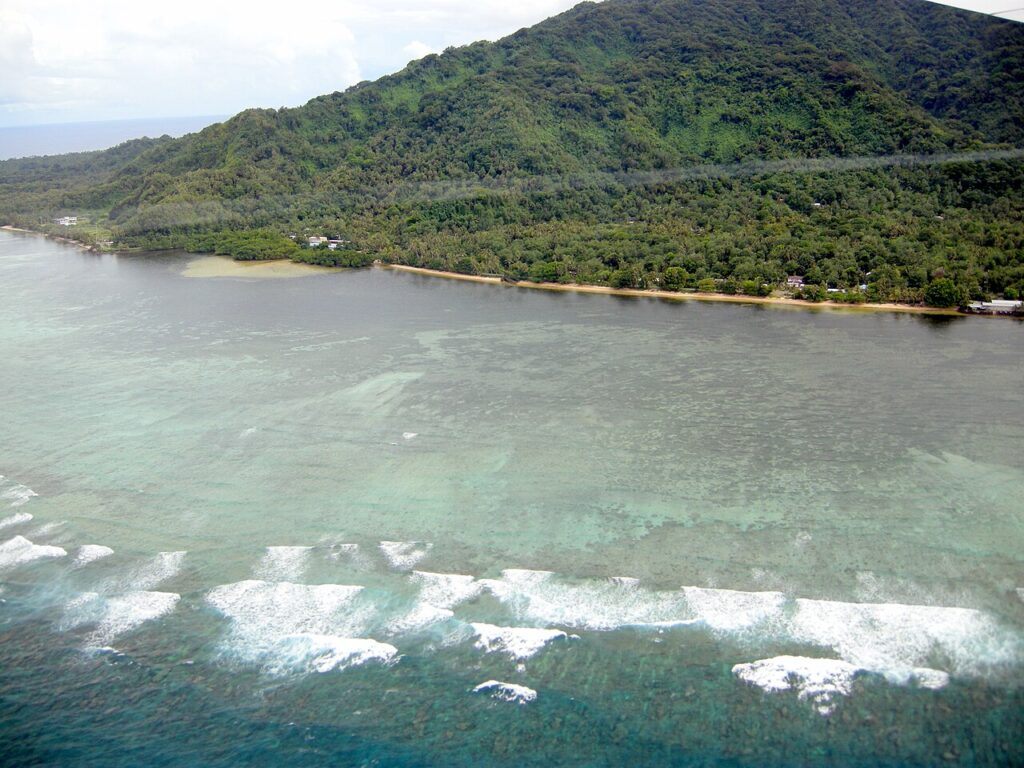
Scenic view of Mount Otemanu with lush green forest and calm ocean in front., Kosrae, Micronesia
Budget Accommodation Guide
Your best bet for budget stays is Tofol, the island’s main town. Seabreeze Guesthouse offers shared dorm rooms with fan and shared bath for $20/night—basic but clean and run by a lovely local family who can help you arrange tours. Ocean View Lodge in Tofol gives you a private room with AC for $35-$50/night; travelers praise the friendly staff and free breakfast of coffee and toast. For a touch of comfort on a budget, try Kosrae Nautilus Resort, where basic AC rooms start at $45 and you get use of a small pool and kayaks at no extra cost.
If you’re okay with a longer walk (30 minutes to town), Kosrae Village Ecolodge in Utwe offers rustic bungalows with shared bath for $50/night including breakfast. The setting—right on the mangroves—is stunning, and the owners lead free guided walks through the biosphere reserve. For true immersion, stay with a local family through word-of-mouth connections; ask at the market or airport for spare rooms, which often cost just $15/night and include home-cooked dinner.
Avoid staying near the airport—it’s isolated and has no food options after 6 PM. The cheapest area for meals and transport is central Tofol, within a 5-minute walk of the market and bus stop. Book in advance during the December to March high season when rooms fill up with divers and birdwatchers.
Find budget options at Booking.com or Airbnb (though options are limited—a handful of homestays).

Captivating monument with a starry night sky in A Coruña, Spain., Kosrae, Micronesia
Money-Saving Tips Specific to Kosrae, Micronesia
- Bring US dollars in cash: ATMs are rare—there’s only one at the Bank of Kosrae in Tofol, and it often runs out of cash on weekends. Travelers recommend bringing $200-$300 in small bills ($1s, $5s, $10s) to cover local market purchases and guesthouse payments. Cards are not accepted at most places.
- Pack a reusable water bottle: Tap water is safe to drink across Kosrae (locals drink it daily; it’s filtered directly from mountain springs). By refilling your bottle at any tap, you save $2-$3 per day on bottled water—a small but real saving that adds up to $60-$90 over a month-long stay.
- Eat with locals at the market: The Tofol Market’s communal seating area is where you’ll find the cheapest meals. A full plate of rice, fish, and greens costs $2.50 from the women who cook there every morning. Savvy visitors eat breakfast at 7 AM and lunch at noon from these stalls, skipping restaurant meals entirely.
- Walk or hitchhike instead of renting a car: A rental car on Kosrae costs $50-$70/day—more than your entire budget. The island is only 10 miles long and 6 miles wide, so you can walk across it in 3 hours. Hitchhiking is safe and common; locals are friendly and will pick you up within minutes. Just wave as a truck passes, and be ready to share a bit of conversation.
- Negotiate with guesthouse owners for multi-night stays: Most guesthouses are run by families who will discount the nightly rate by 10-15% if you book 5 or more nights. Ask directly: “If I stay a week, can you do $15/night instead of $20?” You’ll often get a yes—especially during the low season (April to November).
Note on seasons: The dry season (December-April) is busiest and most expensive. You’ll find better deals and fewer crowds in the wet season (May-November), when rain tends to come in quick afternoon showers that clear within an hour.
Is Kosrae, Micronesia Worth It on a Budget?
Honestly, yes—especially if you value authenticity over luxury. What you miss by going budget: no fancy restaurants, limited hot water in some guesthouses, and no nightlife (the island closes at 9 PM). But what you gain is immense: pristine reefs you don’t share with crowds, hikes where you encounter no one but birds, and a genuine connection to a culture that still lives by the tides and the seasons. Travelers often say they spent more on a weekend in Guam than a week in Kosrae—and they remember Kosrae.
Compared to alternatives like Pohnpei (which is more developed but pricier) or Yap (where budget options are scarce), Kosrae offers the best value for a low-cost Pacific island experience. The local people are genuinely welcoming, the environment is unspoiled, and your dollar stretches far. If you can be flexible with comfort and embrace simple living, Kosrae will reward you with memories that cost surprisingly little. So pack light, bring cash, and take the bus from the airport—you’re in for a rare adventure.

