
Preah Vihear, Cambodia for Adventurers: 7 Cliffside Trails That Put the Alps to Shame (2026)
Your boots crunch on ancient sandstone as a 500-foot drop opens to your left, the Cambodian plains shimmering in heat haze below. The wind whips across the Dângrêk Mountains at 5:47 AM, carrying the scent of wet jungle and the distant clatter of motorbikes far below. You grip the worn stone railing, heart hammering—not from fear, but from the sheer, raw thrill of standing on a precipice that has challenged every adventurer for over a thousand years.
The Main Event: Preah Vihear Temple Summit Trek
The main event at Preah Vihear isn’t just a hike—it’s a vertical pilgrimage. Start at the base of the cliff at the new ticket booth near the village of Sra Em, where you’ll pay the $10 foreigner entrance fee. From there, you have two options: hire a local motorbike taxi ($5 round trip) to shuttle you up the steep road, or earn your summit with a 2.5-kilometer hike up the ancient stone stairway. Locals recommend the hike—the stairway gains 350 meters in elevation, passes through three gopura (gateway pavilions) that date to the 11th century, and deposits you at the main temple sanctuary precisely when the morning light hits the carvings. Plan to start by 5:30 AM to beat the heat and the crowds. The difficulty is moderate-to-hard—you’ll need water (at least 2 liters), sturdy shoes with good grip, and a willingness to sweat. Insider tip: bring a headlamp for the early start, and stop at the fourth gopura to watch the sunrise paint the temple in rose-gold—most tourists zoom past in taxis and miss it entirely.
Once you reach the top, you’ll find the main temple complex stretching nearly 800 meters north-south along the cliff’s edge. The layout is as much about adrenaline as architecture—you’ll walk causeways where warriors once stood guard, peer into dry moats that held sacred water, and at the northernmost point, stand on a viewing platform that drops away into thin air. Travelers often discover that the real adventure here is the exposure; there are minimal barriers in places, and the wind can be fierce. The entire loop takes about 2–3 hours if you’re moving purposefully, but plan for 4 hours if you want to photograph, explore the side trails, and just sit with the view. The secret is the cliffside edges on the western side of the complex, where you can scramble down to small ledges that locals use for meditation—you’ll have the entire Cambodian plain to yourself.
Activity #1: Dângrêk Mountain Ridge Trekking
If the temple itself whets your appetite, the ridge trail that runs east-west along the Dângrêk escarpment is your next step. You’ll start just south of the temple compound, where a faint trail leads into the dry dipterocarp forest. Hire a guide through the community-based tourism office at Sra Em—ask for Sareth, a former ranger who knows every lizard, medicinal plant, and hidden cave for 30 kilometers. The trek costs $30 for a full day (cash only) and covers roughly 12 kilometers of ridge walking, with elevation gains and losses of about 200 meters. You’ll pass through abandoned Khmer Rouge bunkers, discover rock pools that form only in the rainy season (June to October), and emerge at a viewpoint called Veal Krous, where you can see into both Cambodia and Thailand simultaneously. Bring 3 liters of water, long pants for thorny sections, and a hat—there’s almost no shade on the ridge itself. The trail is unmarked in places, and the drop-offs are serious; do not attempt without a guide. Seasoned travelers prefer this to the temple ascent itself for the sheer, unmediated wildness of it.
Activity #2: Koh Ker Pyramid Jungle Expedition
A 90-minute drive south from Preah Vihear town takes you to Koh Ker, a former capital of the Khmer Empire that was swallowed by jungle for centuries. The centerpiece is a seven-tiered pyramid that rises 35 meters out of the forest, and you can climb it—carefully, and at your own risk, since the ancient steps are uneven and unrailed. Arrive by 7:00 AM to have the place to yourself; by 9:30, the tour buses from Siem Reap start arriving. The entrance fee is $15, which includes access to over 30 smaller temples scattered through the jungle. For the adventurous, the real draw is the off-trail exploration—hire a guide ($10 extra) to lead you through the overgrown paths to Prasat Neang Khmau, a black stone temple that locals believe is haunted by a queen’s spirit. You’ll need at least 5 hours to do Koh Ker justice, and bring a machete-accessible mindset—you’ll push through vines, step over fallen sandstone blocks, and emerge onto structures that haven’t seen a tourist in weeks. Most visitors only see the main pyramid and leave; you’ll discover the deeper, wilder secrets by following your guide into the green labyrinth.

Temple of Preah Vihear, Cambodia
Refuel: Where Adventurers Eat
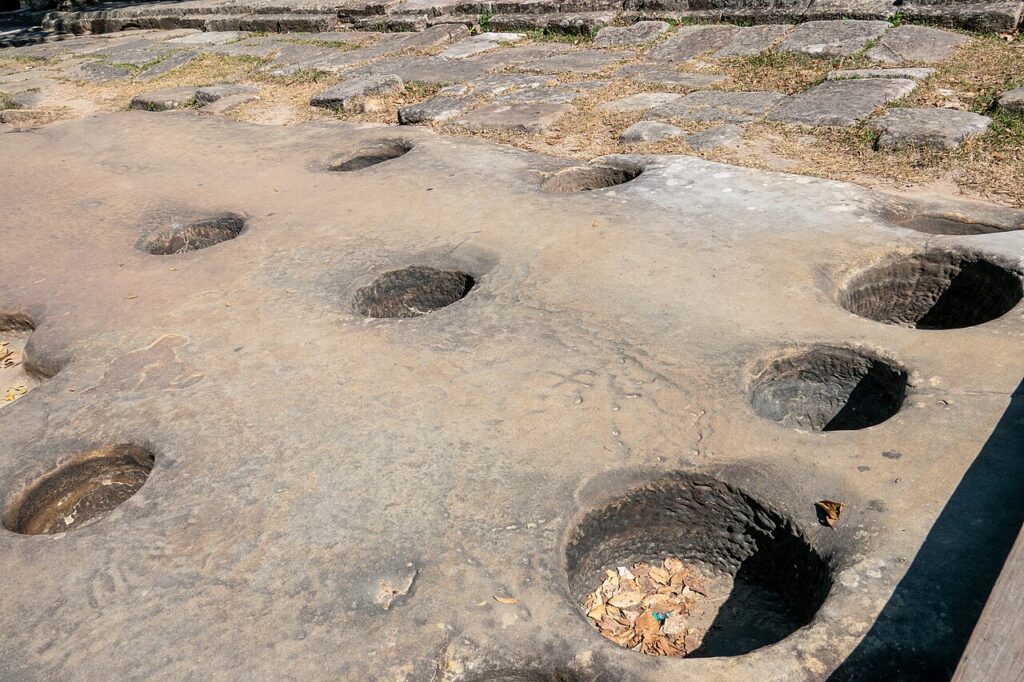
After a day of scrambling and sweating, your body needs serious fuel. **Sala Morn Restaurant** in Sra Em village is the local favorite—run by a former park ranger, it serves a massive grilled fish amok ($4) that arrives in a banana leaf with enough sticky rice to feed two. Locals recommend the fried morning glory with garlic ($1.50) and a tall glass of fresh sugarcane juice. For something faster, stop at **Phnom Pich Noodle House**, a roadside spot that does a killer kuy teav (pork bone broth noodle soup) for just $1.25—order it with extra noodles and a soft-boiled egg for maximum recovery fuel. If you’re heading back to Preah Vihear town for the night, **Sok Sambath Restaurant** is where guides gather after long treks; try the chargrilled chicken with lemongrass ($3) and the sour tamarind soup, which locals swear helps with muscle soreness. The best part? Almost everything here is cooked to order, using the temple’s original sandstone grindstones for spices—a small, delicious nod to the history you’ve been walking through all day.
Base Camp: Where to Stay
For the adventure-minded traveler, proximity to the temple and early-morning access are everything. **Mountain Guesthouse** in Sra Em, just 8 kilometers from the temple base, offers basic but clean rooms for $12–$20 a night—the family who runs it will pack you a pre-dawn breakfast basket (bananas, sticky rice, boiled eggs) and arrange a motorbike taxi for 5:00 AM departures. They also store your gear securely while you hike. **Preah Vihear Boutique Hotel** in the town center (6 kilometers further) is a step up in comfort—$35 gets you air conditioning, hot water, and a balcony that faces the escarpment. The owner, Vuthy, is a former climbing guide who can recommend routes and connect you with trusted guides. For true adventurers, **Camping on the Plateau** is an option with a special permit from the Ministry of Culture—just $15 per person for the permit, and you’ll sleep under the stars on the very edge of the mountain. You can book both the guesthouse and the boutique hotel through Booking.com, but the camping permit must be arranged in person at the site ticket office.

Green grass field under blue sky and white clouds during daytime, Preah Vihear, Cambodia
Gear & Prep Checklist
- Sturdy hiking boots with ankle support and aggressive tread—the sandstone is polished smooth by centuries of feet and can be treacherously slick, especially after rain
- Headlamp with fresh batteries—your climbs will start before dawn, and some temple interiors have no light at all
- Water bottle with a minimum 2-liter capacity—there are no water refill points along the ridge trails, and the shop at the temple top charges double
- Basic fitness requirement: you should be comfortable walking 5–8 kilometers with a pack, climbing stairs continuously for 30 minutes, and navigating uneven terrain; nothing technical, but the heat and humidity add a real cardiovascular challenge
- Safety consideration: the border region is patrolled by both Cambodian and Thai military—never step beyond marked areas, don’t photograph soldiers, and always carry your passport copy; the area is safe but politically sensitive, and a misunderstanding can derail your entire trip
Getting There & Around
- Flights: The nearest major airport is Siem Reap International Airport (REP), about 3.5 hours south by car. From there, you’ll arrange a private taxi ($50–$60) or shared minibus ($12–$15 per person) to Preah Vihear town. Book flights at Skyscanner
- Local Transport: From Preah Vihear town, your best bet is to rent a motorbike ($8–$10 per day) or hire a local driver for the day ($15–$20). The road to the temple is paved but steep—seasoned travelers prefer the motorbike for the flexibility and the views. Taxis charge $25 round trip from town to the temple.
- Best Season: November through March is optimal—humidity drops, daytime temperatures hover around 82°F (28°C), and the skies are clear. April and May get brutally hot (over 100°F/38°C on the ridge), while June to October brings rain that makes the stairs dangerously slick but also fills the waterfalls and turns the jungle lush and green.

White house on green grass field during daytime, Preah Vihear, Cambodia
Is Preah Vihear, Cambodia Worth It?
Honestly? It depends on what you’re seeking. If you want crowds, a well-marked tourist trail, and a sense of safety net, this is not the place for you—travelers who prefer manicured parks should head to Angkor Wat in Siem Reap, where everything is mapped and managed. But if you crave the raw, untamed edge of history—where you can stand on a thousand-year-old wall with nothing between you and a 150-meter drop, where the jungle is still pushing back against the stone, where you share the trail with more lizards than people—Preah Vihear is one of the most thrilling places you will ever go. The reward is the view from the summit at dawn, when the mist burns off the plains and you realize you’ve earned every step. Go before the crowds discover it. Go now.

