
Shirakawa-go, Japan Weekend: Gassho-zukuri Farmhouses (2026)
You arrive just as the morning mist lifts from the Shogawa River valley, revealing a cluster of steep thatched roofs that look like hands folded in prayer. The air smells of cedar smoke and damp earth, and the only sounds are the rustle of water through rice paddies and the distant clang of a temple bell. This is Shirakawa-go, a UNESCO World Heritage site where time seems to have stopped in the 18th century—but your weekend here will be anything but frozen.
Quick Facts Before You Go
- Best Months: January-February for the winter illuminations (book 6 months ahead), and October-November for fiery autumn colors against the thatched roofs. Avoid August for oppressive humidity.
- Currency: Japanese Yen (JPY). As of early 2025, 1 USD ≈ 150 JPY, 1 EUR ≈ 160 JPY. Bring cash—many village shops and smaller minshuku don’t take cards.
- Language: Japanese. English is minimal here—locals recommend learning “arigatou” (thank you) and “sumimasen” (excuse me). Most signage is in Japanese only.
- Budget: ¥10,000–15,000 per day on a moderate budget (including meals, transport, and activities). Plan ¥20,000+ if staying in a ryokan with dinner and breakfast included.
- Getting There: Fly into Toyama (TOY) or Nagoya (NGO) from Tokyo (1.5 hours by plane), then take the Hida Limited Express to Takayama station (2.5 hours), followed by a 50-minute Nohi Bus to Shirakawa-go. Book flights at Skyscanner
Day 1: The Village of the Thatched Roofs
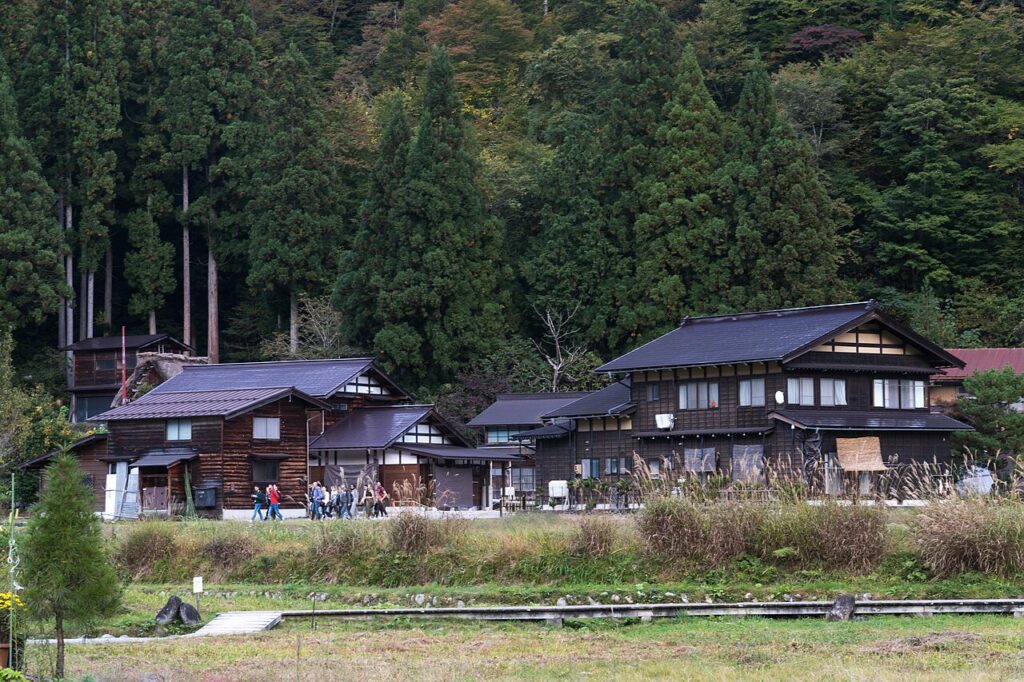
You start the morning with your camera already warm in your hands, stepping off the bus into Ogimachi, the heart of Shirakawa-go. The gassho-zukuri farmhouses—some over 200 years old—rise like silent giants from the valley floor, their steep roofs designed to shed heavy snow. Travelers often discover that the best way to absorb this place is to walk slowly, letting the village’s rhythm pull you deeper into its story, as if you’ve stumbled into a living history book.
- Morning (8-11am): Head straight to the Shiroyama Viewpoint, reached by a 15-minute uphill walk from the village center. The view of the entire Ogimachi valley, with its cluster of thatched roofs and checkered rice fields, is the image that defines Shirakawa-go. Arrive by 8am to beat the tour bus crowds—you’ll likely have the platform to yourself. Free.
- Lunch: Slip into Sobadokoro Hiranoya (Shirakawa-go, Ogimachi, 501-5627; tel: +81-5769-6-1016), a rustic spot with wooden beams and an irori hearth. You must order the Hoba Miso Soba Set (¥1,500)—soba noodles served with miso paste grilled on a magnolia leaf, a Hida region specialty. Locals recommend pairing it with a side of locally pickled vegetables.
- Afternoon (1-5pm): First, visit the Gassho-zukuri Minkaen (open-air museum) at the edge of the village (¥600 admission; open 9am-4:30pm). It houses over 25 relocated farmhouses, including a three-story structure where you can touch the massive rope-tied beams. Then, explore the Wada House (¥400; open 9am-5pm), a restored 19th-century farmer’s home with an active hearth and exhibits on sericulture—silkworm farming that once sustained life here. Most tourists miss the Kanda House next door, a smaller, quieter spot where you can see the original blackened kitchen ceiling.
- Evening: Dinner at Goyokaku Ryokan (Shirakawa-go, Ogimachi, 501-5627; tel: +81-5769-6-1406). Even if you’re not staying overnight, they serve a remarkable Hida Beef Shabu-Shabu Course (¥5,000 per person) in your private tatami room. The atmosphere is pure serenity—a low table, paper lanterns, and the faint scent of tatami. After dinner, take a moonlit walk down the village’s main path, where the farmhouses glow with soft amber light from their windows, and the silence is broken only by the croak of frogs.

Beautiful Shirakawa-go, Japan scenery
Day 2: Walking Through Time
Day two takes you beyond the postcard view. You wake to the sound of a crowing rooster and the smell of grilled fish drifting from the minshuku’s kitchen, and realize that this village doesn’t just look like a storybook—it lives and breathes as one. Savvy visitors know that the real magic lies in the details: a hidden temple garden, a farmer’s personal story, and the taste of soba that’s been made by the same family for five generations.
- Morning (7-9:30am): Join the Shirakawa-go Folk Museum (¥300; opens at 9am but you can start with a local breakfast before). First, grab a seat at Minshuku Chōkichi’s breakfast service (¥1,200; served 7:30-8:30am; book via your accommodation): a tray of grilled river fish, miso soup, tamagoyaki, and rice. Then, visit the Myozenji Temple (free; open 8am-5pm) tucked behind the main path—a small Zen temple with a mossy stone garden and a sangha who still live on site. You’ll have it almost entirely to yourself.
- Midday (10am-1pm): Climb the Ogimachi Observation Deck again, but take a different route—the trail from the back of the village (near the Wada House) offers a gentle 30-minute hike through cedar groves and past hidden shrines. At the top, you’ll likely see only a handful of other travelers. Insider tip: come just before noon, when the sun sits directly overhead—it softens shadows on the roofs for the best photos. Free. Then, eat lunch at Ajikura (Shirakawa-go, Ogimachi, 501-5627; tel: +81-5769-6-1065) and order the Five-Soba Sampler (¥1,800)—thin, thick, green-tea, yam, and sesame-topped soba served with a spicy broth. Most tourists line up at Hiranoya; locals recommend this place for its quieter courtyard seating.
- Afternoon (2-5pm): Head to the Shirakawa-go Folklore Museum (open 9am-5pm; ¥400) located in a former farmhouse near the bus stop. The museum’s highlight is the third-floor display of tools and textiles from the Edo period—you’ll find the beautifully preserved silk-weaving looms used by women who kept the village alive during harsh winters. Afterwards, explore the path along the Shogawa River behind the village, where you’ll see the original waterwheels still used to husk rice. Most visitors miss this stretch entirely, so you’ll have it quiet.
- Final Evening: Book a farewell dinner at Irori Hirakawa (Shirakawa-go, Ogimachi, 501-5628; tel: +81-5769-6-1275), a family-run restaurant with a small irori hearth. Your best bet is the Hida Beef Steak Course (¥4,500) with a side of grilled motoyu (locally-made tofu). The room seats only 12 people, so you’ll feel like a guest in someone’s home. After dinner, take one last walk to the bridge at the village’s entrance, where the river reflects the farmhouse lights, and let the stillness settle around you.

Empty pathway, Shirakawa-go, Japan
The Food You Can’t Miss
In Shirakawa-go, food is a direct link to the region’s raw beauty. Travelers often discover that the local cuisine is built around just three key ingredients: soba from the mountain water, Hida beef from the valley cattle, and vegetables harvested from the steep terraced fields. The result is a style of eating that is both simple and deeply satisfying. Start with Gohei Mochi (¥200 per stick), a street food found at stalls near the bus station—grilled rice cakes slathered in a sweet soy-miso paste and charred over binchotan charcoal. Locals recommend grabbing one from Mochikiki (open 10am-4pm; look for the red banner), then walking as you eat, letting the smoke and steam rise around you.

Brown and white house near green grass field and green trees under white sk…, Shirakawa-go, Japan
Your main restaurant target should be Sobadokoro Hiranoya for lunch on Day 1—the soba here is hand-cut daily, and the hoba miso adds a smoky depth that’s unique to this corner of Hida. If you want something more upscale, Goyokaku Ryokan serves a kaiseki-style multi-course dinner (¥8,000–12,000) that features eight distinct dishes, from sashimi to grilled river fish. The standout is the Hida Beef Carpaccio, served with a tangy soy-ponzu dressing that cuts through the fat. In between, don’t skip the Soba Manju (¥250) sold by the temple store at Myozenji—a steamed bun filled with sweet red bean paste and wrapped in a soba-flour skin, perfect for a mid-morning energy boost.
For a deeper dive, book a soba-making workshop at the Shirakawa-go Soba School (¥2,500 per person; 90 minutes; available in English with advance booking). You’ll knead, roll, and cut your own soba under the guidance of a village elder, then eat it with a broth made from local shiitake mushrooms. It’s a messy, joyful experience that connects you directly to the land. The school is located near the bus station, but spaces fill fast—email them at least two weeks ahead.
Where to Stay for the Weekend
Base yourself in Ogimachi Village itself—it’s the only place to stay within the World Heritage site, and the experience of waking up to the thatched roofs is worth every yen. For an authentic, budget-friendly stay, choose a minshuku (family-run inn) like Minshuku Chōkichi (¥10,000 per person per night, including breakfast and dinner; tel: +81-5769-6-1197). Rooms are simple tatami, but the hospitality is extraordinary—the owner’s mother often comes out to share local stories over tea. For more comfort, Goyokaku Ryokan (¥20,000 per person; book at Booking.com) offers private open-air baths (onsen) with mountain views, and a multi-course kaiseki dinner included in the price. Their indoor bath has a window looking out onto the thatched roofs—book the “Taiko-No-Yu” room for direct access.
If you prefer a quieter stay away from the village center, consider Shirakawa-go Akairo Minshuku (¥12,000 per person; book at Airbnb), a restored farmhouse with only three guest rooms, located beside a bamboo grove. The owner, a retired farmer, leads a morning tour of his rice fields and explains how the gassho-zukuri roofs are completely restored every 40 years. Note: all accommodations within the village have strict check-in times (usually 3-5pm), and most require arrival by bus—the last bus from Takayama departs at 5pm. Book your room at least three months in advance, especially for winter illuminations.
Before You Go: Practical Tips
- Getting Around: Buses are the only public transport within the village. A Shirakawa-go Village Loop Bus (¥200 per ride) runs every 30 minutes from the bus station to the observation deck and farmhouses. However, you’ll do best to walk—the village is compact and truly strollable. For the observation deck, the uphill walk takes 15 minutes; the bus takes 5 (but the queues can be 20 minutes in peak season). Alternatively, rent an electric bicycle from the Tourist Information Center (¥1,000 per hour; ¥4,000 per day) to explore the paddies at your own pace.
- What to Pack: 1) Sturdy waterproof boots—winters bring deep snow, and autumn trails get muddy. 2) A headlamp or small lantern: village streets have minimal lighting after 7pm, and you’ll want to navigate the paths safely. 3) A small umbrella that fits in your daypack—you’ll need it for sudden rain showers, especially from June to October. 4) A reusable water bottle with a filter—village tap water is safe, but the mountain streams have a distinct mineral flavor that locals recommend tasting.</li

