
Kurseong, India Weekend: Tea Gardens, Toy Trains & Himalayan Sunrises That Steal Your Breath (2026)
You wake to the whistle of the Darjeeling Himalayan Railway cutting through misty dawn air, the scent of first-flush tea leaves mingling with woodsmoke from a nearby kitchen. Your chai arrives steaming—milky, cardamom-laced—as the sun cracks the horizon over the Kanchenjunga range, painting the sky in shades of apricot and rose. This is Kurseong, and 48 hours here will rewire your sense of wonder.
Quick Facts Before You Go
- Best Months: March to May for clear skies and blooming rhododendrons; October to December for crisp mountain air and post-monsoon clarity. Avoid July–August when landslides can disrupt travel.
- Currency: Indian Rupee (INR). Roughly ₹85 to 1 USD, though rates fluctuate. ATMs are plentiful in town but carry cash for tea estate purchases.
- Language: Bengali, Nepali, and Hindi are spoken widely. English works in hotels, restaurants, and with tourist vendors—you’ll get by fine.
- Budget: ₹1,500–₹3,000 per day ($18–$36) covers comfortable accommodation, all meals, local transport, and entry fees. Budget travelers manage on ₹800–₹1,200; luxury stays push ₹4,500+.
- Getting There: Fly into Bagdogra Airport (IXB) – 2.5 hours from Kurseong by taxi (₹1,800–₹2,200). Direct flights from Delhi (2 hours) and Kolkata (1 hour). Book at Skyscanner
Day 1: The Tea Gardens & Toy Train Trail
Your weekend starts at the Kurseong Railway Station—a heritage gem from 1880 where the famous “Toy Train” chugs in at 7:15 AM sharp. You step off the train onto a platform that smells of coal smoke and wet earth, and already the world feels quieter. Travelers often arrive on the steam-hauled weekend special from New Jalpaiguri, a journey that takes four hours through 14 tunnels and forests of sal and rhododendron. From here, the hills rise steep and green around you, terraced with tea bushes that look like velvet draped over the mountains.
- Morning (8-11am): Walk from the station to the Kurseong Tea Estate (entry free; guided tour ₹300 per person). You’ll meet your guide, a fourth-generation tea planter named Sanjay, who explains how the leaves are hand-plucked, withered, rolled, and fired. The hour-long tour ends at the tasting room, where you sip a first-flush Darjeeling that tastes of sunshine and muscatel grapes. Insider tip: Go early—the mist lifts by 9:30 AM, and the views across the valley to the Singalila Ridge are unparalleled.
- Lunch: Head to Mayel Lyang Restaurant on Tenzing Norgay Road. Order the momo platter (₹250) with steamed, pan-fried, and jhol (soup) varieties, plus a bowl of thukpa (₹180)—a hearty Tibetan noodle soup that warms you from the inside out. The momos here are legendary among locals—thin-skinned, bursting with pork or vegetable filling, served with a fiery tomato chutney.
- Afternoon (1-5pm): Walk off lunch at the Netaji Subhas Chandra Bose Museum (entry ₹50, open 10am-4:30pm), housed in the building where the revolutionary leader plotted his escape to Japan in 1941. Then descend via the Kurseong Nature Trail (free, 2km loop), a mossy path that winds through magnolia and oak forests to a viewpoint called Eagle’s Crag. From here, you spot the snow-clad peaks of Kanchenjunga, Kabru, and Pandim on clear days. Locals recommend bringing binoculars—you might catch a Himalayan griffon vulture riding the thermals. Finish at the Chowk Bazaar (4-6pm best for crowds), where vendors sell handwoven shawls, wooden carvings, and the famous Kurseong cardamom—sweeter and more aromatic than the plains variety.
- Evening: Dinner at Glenburn Tea Estate’s Tuck Shop (₹800–₹1,200 per person; book ahead). The terrace overlooks the valley as the lights of Siliguri twinkle below. Order the pork ribs with burnt orange glaze and a pot of Glenburn special blend tea. Afterward, walk back through town—the night air smells of jasmine and woodsmoke, and the silence on the hill roads is so complete you can hear your own heartbeat.

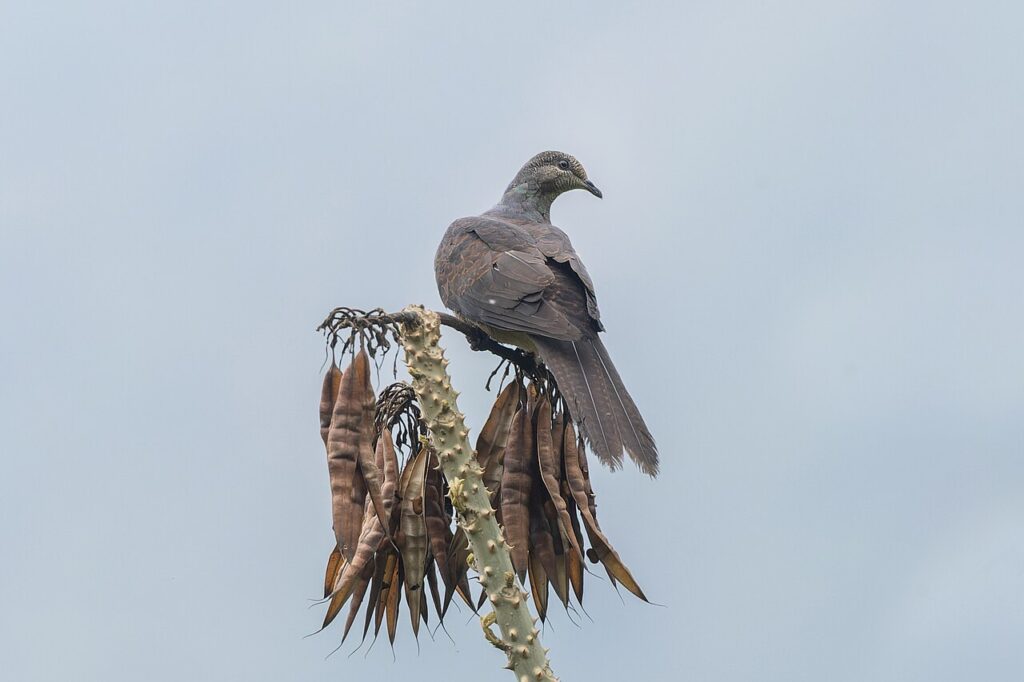
Barred Cuckoo-Dove (Macropygia unchall, Kurseong, India
Day 2: Mists, Monasteries & Market Treasures
Day two starts earlier than you expect—and you’re grateful for it. By 6 AM, the valley is a bowl of silver fog, and the only sounds are temple bells and the clatter of a chai stall opening its shutters. Travelers who sleep through these hours miss the real Kurseong: a town that emerges slowly from the mist, like a painting still wet.
- Morning (6-10am): Join locals at Monastery Viewpoint for sunrise (free; arrive by 6:15 AM). The Bhutanese Dhama Chakra Stupa sits here, its gold spire catching the first rays. After the sun clears the mountains, walk downhill to Gurudev Samaj Mandir, a quiet Hindu temple shaded by a 200-year-old banyan tree. Breakfast at Kunga’s Tibetan Bakery (₹200 for a full breakfast) on Gandhi Road. Try the shapale (deep-fried Tibetan bread stuffed with spiced meat, ₹80) and a butter tea (₹40)—salty, earthy, and surprisingly energizing.
- Midday (10am-1pm): Visit the Kurseong Hindu Monastery (entry free, donations welcome), a serene 19th-century building that houses a massive prayer hall and a library of Buddhist texts. The caretaker, a jovial monk named Tenzin, might show you the rooftop for a 360-degree view of the surrounding tea gardens. Insider tip to avoid crowds: Most tourists visit between 11am and 2pm—time your arrival for 9:30 AM and you’ll have the monastery almost to yourself.
- Afternoon (1-5pm): Explore St. Mary’s Hill, a residential neighborhood that feels frozen in time. British-era bungalows with Gothic arches and bougainvillea-draped verandas line the narrow lanes. The Kurseong Antique Emporium (open 2-6pm) sells vintage watches, colonial-era furniture, and old railway memorabilia—you can pick up a 1950s brass bell for ₹800 if you haggle. For lunch, walk to Sonam’s Kitchen (₹350 for a meal), a tiny four-table spot that serves what locals swear is the best mutton curry with rice in town—rich, dark, and slow-cooked for four hours.
- Final Evening: Spend your last Kurseong evening at Damber Singh Park, where families gather at sunset. Grab a momocha (Nepali-style steamed bun with spiced filling, ₹40) from the cart near the entrance. Then head to Junction Club (members can sign you in) for a drink on their sprawling lawn—the club dates to 1885 and retains a colonial-era charm with its polished wooden bar and ceiling fans. Order a Darjeeling tea cocktail (₹450) infused with local tea and gin, and toast your weekend as the valley darkens and the stars come out—brighter than you’ve seen in years.

Houses on green grass covered hill under blue sky during daytime, Kurseong, India
The Food You Can’t Miss
Kurseong eats like its landscape: layered, intense, and shaped by its Himalayan crossroads. Tibetan momos, Nepali dal bhat, Bengali sweets, and British-era tea traditions all converge here. Street food is the heartbeat of the town—you’ll find most of it on Tenzing Norgay Road between 4 PM and 8 PM. Must-try items include sel roti (Nepali ring-shaped rice bread, ₹20 each), served hot and crispy from a giant wok, and churpee (hard yak cheese, ₹50 a slab) that locals chew like gum during long walks.

White house nestled within a dense green forest., Kurseong, India
For serious eating, book a table at Margaret’s Deck inside the Kurseong Lodge (₹1,200 per person for a multi-course dinner). Their smoked trout with beurre blanc is plucked from local streams, and the darjeeling tea-scented crème brûlée is a revelation. For a deeper dive, join a food walk (₹1,500 per person, 3 hours) run by Kurseong Food Trails—they take you to five family-run kitchens tucked in alleyways you’d never find alone. You’ll taste ri kam (Nepali sun-dried radish pickle), kinema (fermented soybean curry), and end at a home where a grandmother makes the silkiest payesh (Bengali rice pudding) you’ll ever eat.
Tea, of course, is inescapable—and you shouldn’t try to escape it. Every tea estate in Kurseong offers tastings, but the most memorable is at Makaibari Tea Estate, where the seventh-generation owner will pour you a cup of their legendary Silver Tips Imperial—a white tea that sells for ₹2,500 per 100 grams and tastes like liquid jasmine. Even if you don’t buy, the experience—sipping on a veranda overlooking terraced fields, with the Himalayas on the horizon—is worth the 20-minute drive from town.
Where to Stay for the Weekend
Your choice of neighborhood shapes your Kurseong experience. For heritage charm, stay near the railway station in Tirpai—the oldest part of town, where colonial buildings cluster around cobbled streets. Here you’ll find Cochrane Place (₹3,500–₹5,500 per night), a restored 1850s tea planter’s bungalow with four poster beds and a garden where wild orchids grow. Guests on Booking.com rave about the homemade breakfasts—particularly the pumpkin waffles. Check availability on Booking.com.
For views, head to Eagle’s Crag area, perched on a ridge above the valley. Glenburn Tea Estate Bungalow (₹8,000–₹12,000 per night) offers three suites in a 1910s bungalow surrounded by tea gardens. Travelers often spend entire mornings on the veranda, watching clouds roll through the valley below. It’s expensive, but the experience—including guided tea walks and dinner with the estate manager—justifies every rupee. Browse similar stays on Airbnb.
For budget travelers, Chowk Bazaar area puts you in the heart of town. Hotel Simla (₹1,200–₹2,000 per night) is clean, basic, and has a rooftop restaurant where locals gather for evening chai. The rooms are small but spotless, and the location means you’re steps away from the best momo shops and the morning vegetable market. Book direct for the best rates—tourism platforms typically add 15–20% to these prices.
Before You Go: Practical Tips
- Getting Around: Kurseong is walkable—most sites are within 2–3 km of the town center. For the tea estates and Eagle’s Crag, hire a shared jeep from the taxi stand near the bus stop (₹150 per person for a round trip). Taxis to Bagdogra airport cost ₹1,800–₹2,200; negotiate before boarding. The Toy Train runs a heritage service on weekends (₹500 one-way, 4 hours to Kurseong from New Jalpaiguri)—book at IRCTC at least two weeks ahead.
- What to Pack: A waterproof windbreaker (even in summer, mountain showers appear without warning). Sturdy walking shoes—Kurseong’s streets are steep and often slick with moss. Cash in small denominations (₹10, ₹20, ₹50 notes) for tea stalls and market vendors. A good book for the Toy Train ride—the journey is beautiful but slow, with long stretches of forest punctuated by tunnels.
- Common Tourist Mistakes: Most visitors underestimate the altitude—Kurseong sits at 1,500 meters, and the air is thinner than you expect. Take the first day easy, drink plenty of water, and avoid overexerting on uphill walks. Another mistake is ignoring the weather forecast—during monsoon (June–September), landslides can close roads without warning. Always check the local forecast before starting a long walk, and carry a headlamp if you plan to be out past 5 PM.
- Money-Saving Tip: Eat at family-run dhabas (roadside eateries) rather than hotel restaurants—a full thali of dal, rice, vegetables, and pickle costs ₹120–₹180 at Ganesh Dhaba near the bus stand, compared to ₹400+ at tourist-focused spots. Also, skip the expensive “heritage” walks organized by hotels—the self-guided Kurseong Heritage Trail (downloadable map from the tourist office, free) covers the same sites: the old cemetery, St. Mary’s Church, and the British-era waterworks, all without the ₹1,000 guide fee.

