

Beyond the Rebel Lines: Why Ocotal Captures Every Traveler Who Ventures North (2026)
On the morning of July 16, 1927, a young American Marine aviator named Major Ross Rowell banked his De Havilland DH-4 over the dusty red rooftops of Ocotal and unleashed something the world had never seen: the first coordinated dive-bombing attack in military history. Below him, Sandino’s rebel forces had held the town for fifteen hours. Within forty-five minutes, five aircraft dropped over 300 pounds of explosives, scattered the insurgents, and carved Ocotal’s name into the annals of modern warfare—a brutal, fiery baptism that still echoes through the cobblestone streets today.
The Story Behind Ocotal, Nicaragua
Ocotal’s story begins long before the bombs fell. The town was founded in 1780 as a Spanish colonial outpost in the rugged, pine-covered mountains of northern Nicaragua, near the border with Honduras. Its name comes from the Nahuatl word ocotl, meaning “pine torch,” a fitting origin for a settlement that would become a beacon of rebellion and resilience. For much of the 19th century, Ocotal remained a sleepy agricultural hub, its economy built on cattle, coffee, and the tobacco that grows rich in the mineral-laced soils of the Segovias. Travelers passing through would find a frontier town of adobe walls, ox-carts, and the slow rhythm of mountain life.
The 20th century brought turbulence. In 1927, during the occupation of Nicaragua by U.S. Marines, Ocotal became the site of the Battle of Ocotal—the event that put the town on the map and cemented the legend of Augusto C. Sandino. You’ll find the story told with quiet pride by locals, who remember not the American victory but the audacity of a rebel army that dared to fight back. The old colonial church on the central square still bears bullet scars from that day, a tangible link to the past that savvy visitors seek out. “The gringos brought their flying machines,” one elderly resident told me over a cup of coffee, “but they could not take our spirit.”
Decades later, during the 1979 Sandinista Revolution, Ocotal again became a flashpoint. The mountainous terrain around the town provided cover for guerrilla fighters, and the city itself fell early to the Sandinistas, becoming a key staging ground for the final offensive that toppled the Somoza regime. You’ll notice the revolutionary murals that still adorn walls along the main avenue, their bold red-and-black figures a testament to a city that has always punched above its weight. Today, Ocotal has settled into a quieter rhythm—a market town, a border crossing, and a gateway to the wild landscapes of northern Nicaragua. The past is present here, but it does not weigh you down. Locals recommend starting your exploration at the Parque Central, where the restored bandstand hosts free concerts on Saturday evenings and the air smells of grilled meat and ripe mangoes.
Neighborhood by Neighborhood
Barrio El Calvario
Perched on a low hill just east of the center, El Calvario is where Ocotal’s colonial soul lives most vividly. You’ll find it by following the steep, cobbled streets that wind past houses painted in faded ochre, cobalt blue, and sun-bleached coral. This is the oldest part of town, and you can feel it in the thickness of the adobe walls and the coolness of the interior courtyards glimpsed through wrought-iron gates. The neighborhood’s heart is the Iglesia de El Calvario, a modest 19th-century chapel with a single bell tower that offers panoramic views of the entire valley. Travelers often discover that the best time to visit is just before sunset, when the light turns the red-tile roofs to amber and the kids kick soccer balls in the plaza below. Don’t miss the small cooperative workshop on Calle Real, where local women hand-roll cigars using tobacco grown in the nearby hills—you can buy a bundle for about 80 córdobas ($2.20 USD) and smoke them on the church steps like a true Segoviano.
Barrio Sandino
If El Calvario is Ocotal’s memory, Barrio Sandino is its muscle. Named for the revolutionary hero, this working-class neighborhood sprawls along the Carretera Panamericana as it heads north toward the Honduran border. You’ll notice a different energy here: the roar of trucks, the clatter of motorcycle taxis, the bright plastic awnings of pulperías (corner shops) selling everything from fresh tortillas to bootleg DVDs. The architecture is functional—concrete block houses with corrugated metal roofs, many still bearing faded Sandinista campaign slogans from the 1980s. But the life is vibrant. The Mercado Municipal, at the corner of Avenida Central and Calle 15 de Septiembre, is a sprawling labyrinth of stalls where you can buy ripe pitahayas for 10 córdobas, watch a butcher cleave a side of beef, or sip a glass of fresh cacao caliente while watching the chaos swirl around you. Locals recommend arriving by 7:00 AM, when the produce is freshest and the crowd is thickest. This is not a tourist zone, and you’ll be one of the few foreigners there—embrace it. The market is where you’ll taste the real Ocotal, unvarnished and unapologetic.
Barrio La Reforma
Tucked between the central park and the river that gives the town its shape, La Reforma is the residential spine of Ocotal—where teachers, shopkeepers, and young families live in quiet, tree-shaded streets. This neighborhood surprises first-time visitors with its calm. You’ll find modest single-story homes with front gardens bursting with bougainvillea, and the sound of children playing cachipún (a local hand-clapping game) echoes from open doorways. The heart of La Reforma is the Parque de la Madre, a small but lovingly maintained green space where you can sit on a bench and watch the world move at a human pace. Locals gather here in the late afternoon to gossip, eat raspados (shaved ice with syrup) from a cart, and wait for the heat to break. If you’re looking for a place to stay that feels like real life, the Hostal La Reforma (Calle Principal, about $25 USD per night) offers simple but immaculate rooms around a courtyard garden—your best bet for a base that’s close to everything but insulated from the noise.
The Local Table: What Ocotalenses Actually Eat

Iglesia de Nuestra Señora de la Asunción en Ocotal, Nicaragua.
The cuisine of Ocotal is defined by its geography. You are in the highlands of the Segovias, where corn, beans, and everything with four legs or two wings form the backbone of every meal. But what sets Ocotal apart from the rest of Nicaragua is its tobacco culture—not as food, but as flavor. Locals say the same soil that grows the finest wrapper leaves for cigars also imparts a richness to the region’s tomatoes, peppers, and squashes. You’ll taste it in the salsa segoviana, a smoky, slightly sweet sauce made from roasted chilies and tomatoes that accompanies every plate of nacatamales (the Nicaraguan answer to tamales, but bigger, richer, and wrapped in plantain leaves) sold by street vendors on weekend mornings.
Your best bet for a true Ocotal meal is Comedor Los Amigos, a family-run spot on Calle 14 de Septiembre that has served the same eight dishes for over forty years. The specialty is indio viejo, a thick, slow-cooked stew of shredded beef, corn masa, onions, and mint that tastes like the history of the Segovias in a bowl. A plate costs 60 córdobas ($1.65 USD), and you’ll eat it in a tiny, sunlit room with formica tables and a framed portrait of Sandino on the wall. The owner, Doña Carmen, will scold you if you don’t finish every grain of rice. Travelers often discover that the secret to Ocotal’s cuisine lies in its simplicity—use the best ingredients, cook them slowly, and never rush. For a truly local experience, visit the Mercado Municipal on a Sunday morning and head to the fritanga section, where women fry chicharrones (crisp pork belly) and serve them with fresh tortillas, curtido (pickled cabbage slaw), and a wedge of lime. A feast costs about 100 córdobas, and you’ll eat standing up, surrounded by the clatter of life. This is not a meal for Instagram; it is a meal for the soul.
The drink of Ocotal is chicha bruja, a fermented corn drink that locals make in their homes and sell from plastic pitchers at market stalls. It tastes like a sweet, slightly sour yogurt, and it’s consumed as both a refreshment and a token of hospitality. If you’re offered chicha, accept it. That single gesture will open doors that would otherwise remain closed.
Art, Music & Nightlife
Ocotal’s creative scene is intimate but fierce. The town’s legacy of political struggle and the rugged beauty of its surroundings have fostered a tradition of mural painting that you’ll see on walls across the city—vivid depictions of campesinos, revolutionaries, and the natural landscape. The best concentration is along Avenida Sandino, where a series of murals commissioned in 2019 for the fortieth anniversary of the revolution stretches for several blocks. The most striking is a massive portrait of a woman carrying a rifle and a baby, painted by local artist Martha Elena López, whose studio (open by appointment) you can visit at Calle 18 de Octubre, #32. Music is the true heartbeat of the city. You’ll hear it everywhere: son nica from a radio, a marimba busker in the market, or the full-throated gritos of neighborhood kids imitating their favorite reggaeton stars. For the real thing, head to El Rancho Tipico on Avenida Central on a Friday or Saturday night, where a live band plays música de la montaña—a folk style that marries Spanish guitar with indigenous rhythms. There’s no cover charge, and a bottle of local Toña costs about 35 córdobas at the bar.
Nightlife in Ocotal is not about clubs or DJs. It’s about the paseo—the evening stroll around the central park, where families, couples, and groups of friends circulate from 6:00 PM until midnight, buying raspados and elotes (grilled corn on the cob) from the vendors who set up around the perimeter. If you want a drink and a conversation, try Bar La Esquina, a dim, narrow space on Calle 15 de Septiembre that has served the same five brands of rum for thirty years. The owner, Don Julio, is a retired schoolteacher who will happily tell you the history of Ocotal—if you buy him a Flor de Caña 7-year-old (25 córdobas per shot). The only festival that matters to locals is the Feria de la Virgen de la Asunción, which runs from August 11 to 15 every year. The town erupts in processions, bullfights (no bulls are harmed), mechanic’s fair rides, and street food that stretches from the park to the highway. If you can time your visit for mid-August, you’ll see Ocotal at its most joyful.
Practical Guide
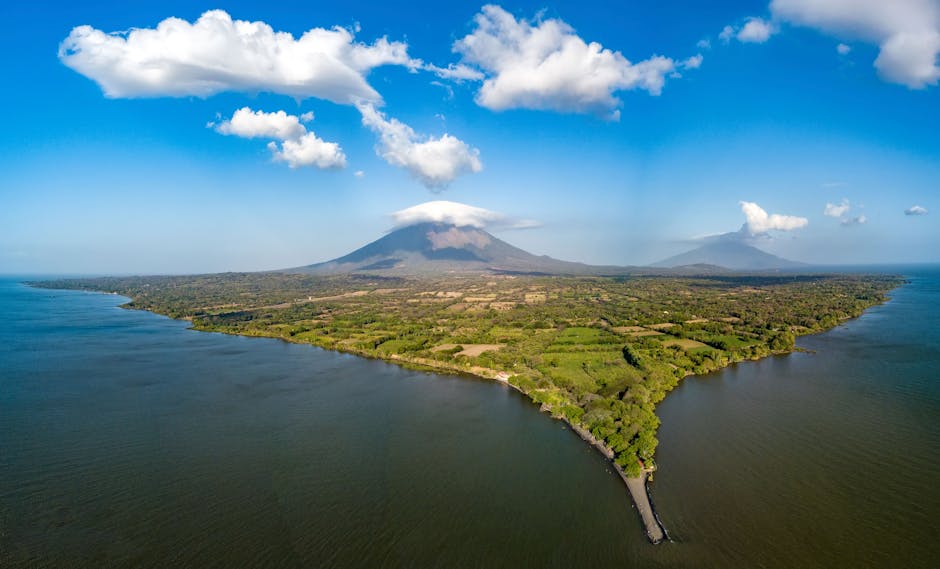
Explore the stunning aerial view of Ometepe Island and its volcanic landsca…, Ocotal, Nicaragua
- Getting There: The nearest international airport is in Managua (MGA). Flights from the U.S. connect through Miami or Houston. From Managua, you’ll take a bus or drive. Book flights at Skyscanner. The bus from Managua’s Mercado Mayoreo station takes roughly 4.5 hours and costs about 180 córdobas ($5 USD).
- Getting Around: Ocotal is walkable if your knees can handle steep hills. For longer trips, motorcycle taxis (moto-taxis) cost 15 córdobas per ride within the city. Shared taxis to the Honduran border ($1 USD per person) leave from the main bus stop every 20 minutes.
- Where to Stay: For character, choose a room in Barrio La Reforma or Barrio El Calvario. Check Booking.com for options like the Hotel Colonial ($35 USD/night for a double with breakfast) or the eco-lodge El Tobogán ($28 USD/night, 15 minutes by car outside town).
- Best Time: November through April is the dry season, with clear skies and manageable temperatures. The fair in August is spectacular but hot and crowded. October is the wettest month—avoid unless you love mud.
- Budget: A comfortable daily budget is $30 to $45 USD per person, including accommodation, three meals, a few beers, and local transport. Street food meals run $1.50–$3.00; sit-down restaurant dinners cost $6–$10.
What Surprises First-Time Visitors
The first surprise is the cold. Travelers expecting tropical Nicaragua pack shorts and tank tops, only to shiver in the mountain air that drops to 14°C (57°F) at night. Ocotal lies at 800 meters (2,625 feet) above sea level, and the dusty streets and pine trees give it a highland character that feels half a continent away from the beach resorts of San Juan del Sur. You’ll find yourself buying a cheap fleece from a market stall on your first evening—everyone does. The second surprise is the quiet. There is no constant hum of traffic, no insistent music from bars, no tourist touts. Even the central park, busy enough in the evening, falls silent by 10:00 PM. For travelers used to the relentless buzz of Managua or Granada, Ocotal offers a stillness that can feel disorienting at first, then deeply restorative.
The third, and perhaps most profound, surprise is the generosity of strangers. You are not a customer in Ocotal; you are a visitor. When you stop to ask for directions, you will be walked to your destination. When you sit down at a comedor, the owner will ask where you are from, introduce you to her children, and insist you try a dish that is not on the menu. “Here,” she will say, “you are family.” Travelers often discover that this warmth is not a performance for tourists—there are so few tourists in Ocotal that the town has not learned to commodify hospitality. It’s real. And it will change the way you think about travel.
Your Ocotal, Nicaragua Questions
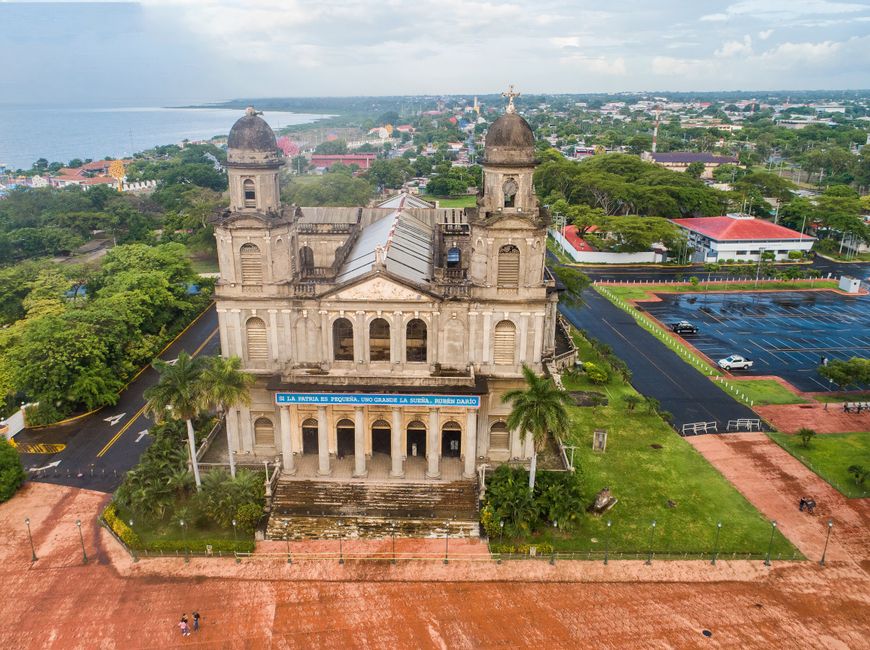
Aerial shot of the Old Cathedral of Managua, Ocotal, Nicaragua
Is it safe to cross the border from Ocotal into Honduras, and what’s the process?
Yes, and it’s straightforward. The El Guasaule border crossing lies about 12 kilometers north of Ocotal. You’ll take a direct taxi from the main bus stop (30 córdobas, 15 minutes). On the Nicaraguan side, you’ll pay a $2 exit fee (USD cash only). After a short walk across the bridge, you’ll pass through Honduran immigration, where you’ll receive a 30-day entry stamp at no cost. The entire process takes about an hour. Savvy visitors recommend crossing before 11:00 AM to avoid the midday heat and bus rush.
Can you visit the tobacco farms near Ocotal, and how do you arrange a tour?
Absolutely—it’s one of the best things you can do. The valley around Ocotal is prime tobacco-growing country, and several small farms welcome visitors. Your best bet is to contact Cooperativa de Tabaco Las Segovias (they have a small office on Calle Central

