
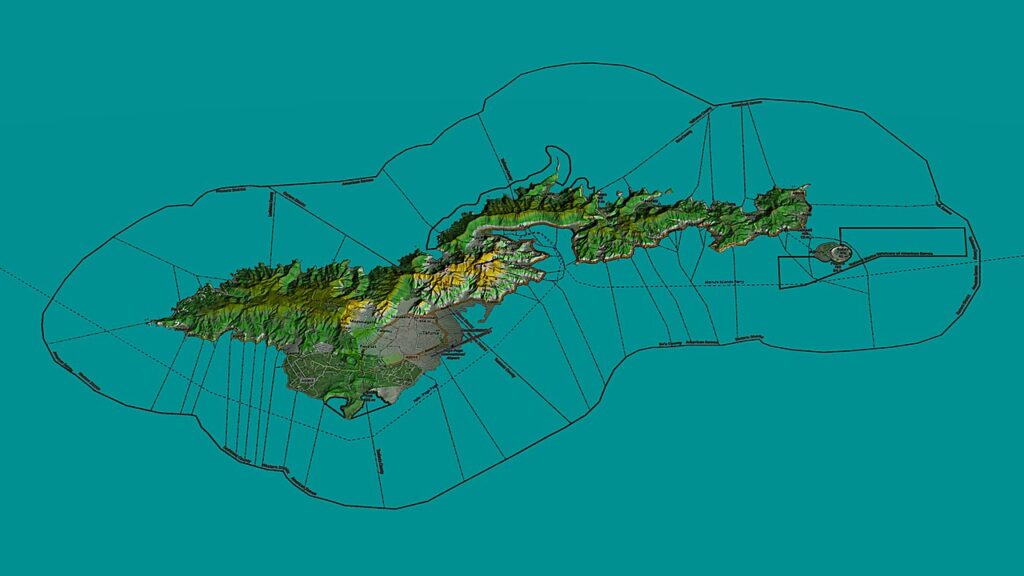
Beyond the Rainmaker’s Ghost: Why Tutuila, American Samoa Captures the Soul of the Pacific (2026)
In 1872, Commander Richard W. Meade of the US Navy sat cross-legged on the matted floor of a thatched *fale* in Pago Pago, negotiating with High Chief Mauga Manu. The chief, holding a ceremonial *’ava* cup, agreed to grant the United States exclusive use of the harbor—a decision that would quietly anchor Tutuila to the American flag for over a century. You’ll still feel that tension between ancient tradition and modern influence the moment you step off the plane.
The Story Behind Tutuila, American Samoa
Long before the first European ship—the Dutch explorer Jacob Roggeveen in 1722—sighted Tutuila’s emerald peaks, Samoan oral histories spoke of the island as the birthplace of the *tatau* (tattoo). The legend tells of two sisters, Taema and Tilafaiga, who swam from Fiji with a basket of tattooing tools, their song instructing: “Tattoo the women, but not the men.” That tradition flipped, and you’ll see the legacy in the intricate *pe’a* (male leg tattoo) still worn by high chiefs today.
American influence deepened in 1900 when the U.S. formally annexed Tutuila and the Manu’a Islands through the Deed of Cession. The Navy promptly established a coaling station in Pago Pago harbor, transforming the sleepy fishing village into a military outpost. During World War II, tens of thousands of Marines passed through, and you can still find rusting bunkers on the mountain ridges above Fagatogo. But the Samoan way—*Fa’a Samoa*—proved more durable than any gun emplacement. The village councils, the *matai* (chiefly) system, and the sacred observance of Sunday (often described as “no work, only God and family”) remain the island’s true constitutional bedrock. In 2009, a devastating tsunami struck the southern coast, killing over 30 people. Watch how the village rebuilt—not with government deadlines, but through *fa’alavelave*, the communal support system that gathers families, food, and money in times of need.
Neighborhood by Neighborhood
Pago Pago & Fagatogo: The Heartbeat
Pago Pago, the capital, hugs the deep natural harbor that made it valuable to whalers and navies. You’ll drive through its main strip—Fagatogo Road—a jumbled corridor of tin-roofed shops, government buildings, and the iconic Pago Pago McDonald’s (yes, the world’s most scenic McDonald’s, with Mount Alava looming over the drive-thru). The morning market at Fagatogo begins at dawn; you’ll smell *palusami* (taro leaves baked in coconut cream) steaming alongside fresh tuna and barracuda. Across the bridge, the Jean P. Haydon Museum occupies a former Navy hospital, where you can see a single-hulled *paopao* canoe and the original Deed of Cession. Stroll the waterfront seawall at sunset—local families toss fishing lines while kids dive off concrete steps. The air smells of salt and fritters from the Food Mart’s hot-case.
Leone: The Historic Western Village
Leone, about a twenty-minute drive west, feels like stepping into an earlier century. The largest village on the island, it centers on a white Catholic church that dates to 1854, when Marist missionaries first landed. You’ll find the old *malae* (open ceremonial ground) where village meetings still happen under shade trees. The only movie theater on Tutuila, the Theatre Leone, shows Hollywood films on Friday and Saturday nights for $5 a ticket—expect a crowd that hollers at the screen. Lined with ancient *’Ava* trees and coral walls, Leone’s streets lead to the memorial for the 2009 tsunami victims, a sobering reminder of the ocean’s power. Savvy visitors stop at the Tisa’s Barefoot Bar (a 10-minute walk from the church) for Friday evening karaoke, where locals belt out Samoan hymns and country ballads under strung lights.
Tafuna: The Modern Hub
Tafuna, on the island’s flat central plain, is Tutuila’s commercial engine. You’ll find Cost-U-Less, the island’s only big-box store, and the American Samoa Community College campus. It lacks the romance of Pago or Leone, but it’s where you’ll encounter the daily reality of Samoan life: families selling produce from roadside stands, teenagers in basketball jerseys riding scooters, and the constant roar of buses. The Tafuna Airport (Pago Pago International) borders the neighborhood. For a break from asphalt, walk the short trail to the Fatu Rock and Futi, two limestone sea arches just offshore—locals call them “the gates of heaven.” Seasoned travelers book a room at the Tradewinds Hotel here, for the air conditioning and the reliable Wi-Fi.
The Local Table: What Locals Actually Eat
You’ll quickly learn that Samoan food is not about delicate presentation; it’s about fuel for the body and the soul. The star ingredient is the *ulu* (breadfruit), roasted over coals until the skin blackens and the inside turns creamy. Then there’s *tafolu*—taro and banana pounded into a starchy paste, served with corned beef or canned fish. But the dish you must seek out is *palusami*. Taro leaves are wrapped around salted brisket, fish, or just rich coconut cream, then baked in the *umu* (earth oven) until the leaves wilt and the cream caramelizes. The result is a savory custard-like parcel that tastes of the jungle.

Amalu Bay, Tutuila island, American Samoa, Tutuila, American Samoa
Your best bet for tasting *palusami* as it should be is at the Fagatogo Market on Saturday mornings. Look for the stall run by Aiga Restaurant—a family that’s been selling meals here for over a decade. You’ll pay $5 for a plate of *palusami*, steamed taro, and grilled mahi-mahi. Alternatively, head to Sadie’s by the Sea in Utulei, a waterfront eatery where you can order *sashimi* made from tuna caught that morning. Sunday lunch is a sacred affair: most hotels offer a buffet, but the real experience is being invited to a *to’ona’i* (church feast) by a local friend. Expect mountains of *masi* (taro pudding) and *fa’ausi* (breadfruit in coconut syrup).
Art, Music & Nightlife
Tutuila’s creative pulse beats in its *tatau* studios and *siapo* (bark cloth) workshops. You’ll find master tattooist Tufuga Ula’s shop in Nua, where he hand-taps the *pe’a* using a comb of pig tusk and bamboo—a painful, hours-long ritual you can watch from a respectful distance. Nightlife is low-key: a few hotel bars like the Pago Pago Yacht Club (open Tuesday–Saturday, 5–10 PM) where locals sip *Vailima* beer and watch the harbor lights. For music, your best bet is Friday night at the Governor’s Park Bandstand in Utulei, where the police brass band, in starched white uniforms, performs Samoan anthems and American pop covers from 6 to 8 PM. If you’re visiting in July, the Flag Day festival (July 13–20) fills the island with parades, dance competitions, and the Miss American Samoa pageant—the one time you’ll see Tutuila fully awake past 9 PM.
Practical Guide
- Getting There: Fly into Pago Pago International Airport (PPG). Hawaiian Airlines has daily flights from Honolulu (5 hours, $800–$1200 round trip). Samoa Airways flies twice weekly from Apia, Samoa (30 minutes, $200). Book at Skyscanner
- Getting Around: The island has no Uber. Your options are the colorful *lele* (local bus, $1 per ride, runs roughly 6 AM–6 PM along main roads), or rental cars from Avis or Island Rentals ($60–$80/day). Be prepared for narrow winding roads with no guardrails. Most tourists rent a 4×4 to reach the outlying villages.
- Where to Stay: For a mid-range stay, the Tradewinds Hotel in Tafuna has clean rooms and a pool ($130/night). For something seafront, try Sadie’s by the Sea (doubles from $150, ask for a room facing the harbor). Budget travelers sleep at the Tisa’s Barefoot Bar campground (tent sites $15, dorm beds $30). Check Booking.com
- Best Time: May through October—the dry season, with less humidity and fewer rain showers. Avoid December to March (cyclone season). The Samoan White Sunday holiday in October fills hotels, so book ahead.
- Budget: Expect to spend $80–$120 per day including a basic hotel, bus fares, and meals at local markets. Add $60/day if renting a car. Bring cash—many smaller eateries and market stalls don’t accept credit cards.
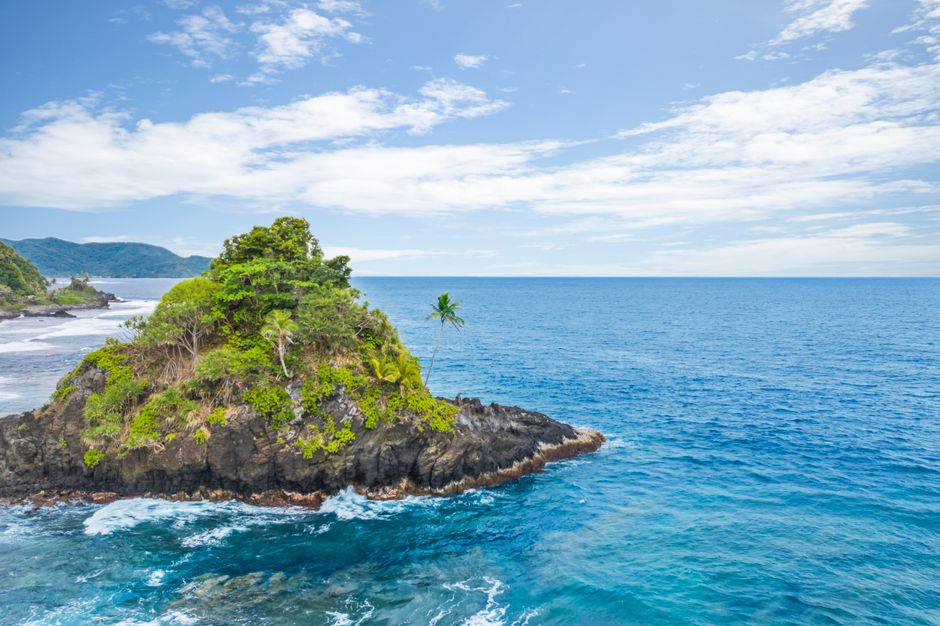
Explore the stunning Alega Beach with vibrant turquoise waters and lush gre…, Tutuila, American Samoa
What Surprises First-Time Visitors
You probably expect a tropical paradise, but the first surprise is the pace. Tutuila operates on “island time” in the truest sense: buses don’t follow timetables, shops close midday without notice, and a simple errand might take a whole morning. Locals call it *loto*, the concept of waiting without frustration. You’ll learn to embrace it, or you’ll go crazy. The second surprise is the absence of high-rise resorts or flashy nightlife. The tallest hotel is three stories. Instead, you’ll find pristine coral reefs accessible by a short swim from the shore, and hiking trails that lead to empty beaches—like the two-hour climb to Mount Alava, where you stand above the clouds and see the whole island.
Many travelers also misunderstand the role of church. Sunday here is genuinely observed. Nearly everything closes, from the supermarket to the gas station. You’ll hear hymns floating across the valley from open-sided churches, and families dressed in white walking to services. Far from a tourist inconvenience, it’s your invitation to slow down, sit on your hotel veranda, and listen to the waterfalls. The final surprise is the *fa’aaloalo* (respect) culture: you must remove your shoes before entering someone’s home, never stand while elders are seated, and always greet with a cheerful *“Talofa!”* Break these rules and you’ll be met with silence—not anger, but silent correction. Learn them, and you’ll be invited into feasts and fishing trips you’ll never forget.
Your Tutuila, American Samoa Questions
Do I need a passport to enter American Samoa as a US citizen? Yes, but it’s unusual. Even though American Samoa is a US territory, you must carry a valid US passport and proof of onward travel. The entry lasts 90 days. If you’re not a US citizen, check if you need a visa—most nationalities must get a visa waiver from the Attorney General’s office in Pago Pago before arrival. Plan to apply at least 30 days ahead.
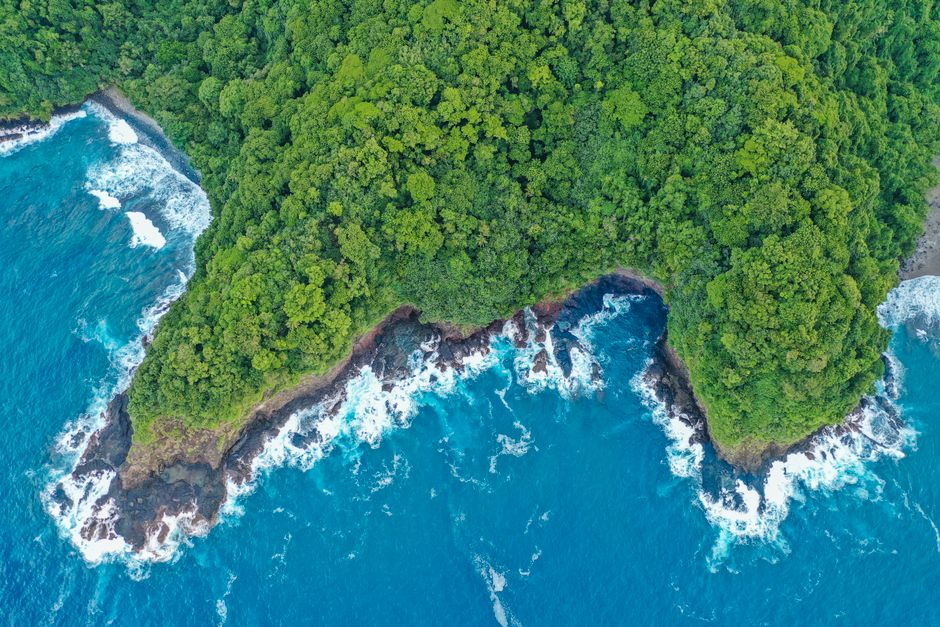
Discover the vibrant coastline of American Samoa with lush forests and turq…, Tutuila, American Samoa
Is it safe to hike and swim alone on Tutuila? Generally, yes. Violent crime is extremely rare; theft from unlocked cars is the main issue. However, ocean currents can be treacherous, especially along the south coast. You should only swim at beaches with locals present, like the protected lagoon at Ofu Beach (on the Manu’a Islands, reachable by small plane) or the sheltered cove at Alega Beach. Hiking trails are often unmarked; hire a guide from the Visitor Information Center in Pago Pago ($50 for a day hike).
What’s the best way to experience Samoan culture authentically? Skip the commercial “cultural shows” at hotels. Instead, ask your hotel to arrange a village visit, or attend a Sunday church service (Catholic at Leone or Congregational at Fagatogo). After service, you may be invited to a *to’ona’i*—accept. If you’re lucky, you’ll witness a *kava* ceremony, where the root is pounded and strained into a communal cup. The proper way to drink: clap once, receive the cup, say *“Manuia!”* (blessings), down it in one gulp, then clap three times. You’ll be welcomed like family.

