
Bumthang, Bhutan on a Budget: How to Add Just $35/Day for Unforgettable Extras (2026)
While many travelers spend over $250 per day on a Bhutan tour package, you can unlock the heart of Bumthang for a mere $35 in extra daily spending. For the price of a mediocre meal in Manhattan, you’ll explore ancient monasteries, feast on farm-fresh chili cheese, and watch the moon rise over the Jakar Dzong. Savvy visitors know the real value isn’t in the mandatory tour cost—it’s in the local experiences that cost almost nothing.
The Honest Budget Breakdown
| Expense | Bare Bones | Comfort Budget | Splurge Day |
|---|---|---|---|
| Accommodation | $0 (included in tour package) | $0 (included) | $0 (included) |
| Food | $8 – street momos & market fruit | $15 – local restaurant thalis + one beer | $30 – dinner at The Swiss Guesthouse |
| Transport | $2 – walking everywhere | $5 – short taxi to Tamshing Monastery | $15 – private taxi to Ura Valley |
| Activities | $0 – free temple grounds & hikes | $5 – entry to Jakar Dzong (camera fee extra) | $20 – guide for half-day hike to Burning Lake |
| Daily Total | $10 | $25 | $65 |
Note: All figures are additional spending beyond the mandatory daily tariff (currently $100/person/day for international tourists) and tour package. The $35/day comfort budget is realistic for savvy travelers who choose local options.
7 Free Things to Do in Bumthang, Bhutan
- Walk to Jakar Dzong at Sunset: The “Castle of the White Bird” sits on a ridge above Chamkhar town. You can wander the outer courtyards and gardens for free. Reach it via the dirt path that starts behind the main market – it’s a 20-minute uphill stroll. Arrive by 5:30 PM to watch the sun paint the ramparts gold. Locals often bring their children here to play. Travelers discover that the best photo spot is from the small chorten near the main gate.
- Explore Kurjey Lhakhang Grounds: One of Bhutan’s most sacred monasteries, where Guru Rinpoche left a body print in a cave in the 8th century. While foreigners need a ticket to enter the inner temples ($5), the sprawling grounds – with prayer flags fluttering over the courtyard – are completely free. Spend an hour walking clockwise around the complex. You’ll see pilgrims spinning the giant prayer wheels. Go early (7 AM) to avoid the tour groups.
- Hike the Tamshing Lhakhang Loop: A 2-mile trail that starts behind the Kurjey complex leads to this 15th-century monastery built by Terton Pema Lingpa. The hike takes about 45 minutes each way through pine forests and apple orchards. Along the way, you’ll pass small farmhouses where children wave. The monastery itself charges no entry fee for the outer prayer hall – just remove your shoes and leave a small donation (Nu 50 is fine). The real reward is the view of the Bumthang Valley from the temple steps.
- Visit the Bumthang Brewery (Free Tasting): Yes, you read that right. The Red Panda Brewery on the outskirts of Chamkhar offers a free 15-minute tour followed by a tasting of their wheat beer and ale. You’ll meet the German-trained Bhutanese brewmaster. Most tourists don’t know about this – ask your hotel for directions. The tour runs twice daily: 10 AM and 3 PM. Don’t forget to buy a bottle or two (Nu 80 each) to support local business.
- Wander the Weekend Market: Every Saturday morning, the main square in Chamkhar fills with vendors selling vegetables, cheese, textiles, and wooden bowls. Admission is free. Locals recommend arriving by 8 AM for the best selection of fresh yak cheese. You can sample dried chilies and apples – just ask nicely. The market runs until noon. Even if you don’t buy anything, the vibrant scene of nuns bargaining for carrots is worth the trip.
- Meditate at the Mebar Tsho (Burning Lake) Trailhead: This sacred lake, where Pema Lingpa discovered treasure scrolls in the 15th century, is a 30-minute walk from the main road. The path itself is free. You can sit by the rocky banks and meditate. You don’t need a guide to reach the lake – follow the signs from the small suspension bridge. Most travelers hire a guide ($20), but you can visit independently. The best time is late afternoon when the light filters through the rhododendrons.
- Photograph the Wangdichholing Palace Ruins: A short walk from Chamkhar town, the ruins of this 19th-century royal palace are eerily beautiful. The site is undeveloped and free. You’ll see broken walls, a central tower, and wildflowers growing through the cracks. Historians say it was the summer residence of the Wangchuck dynasty. Go at dawn for mist rising over the valley – the classic Bhutan shot that costs you nothing but an early alarm.

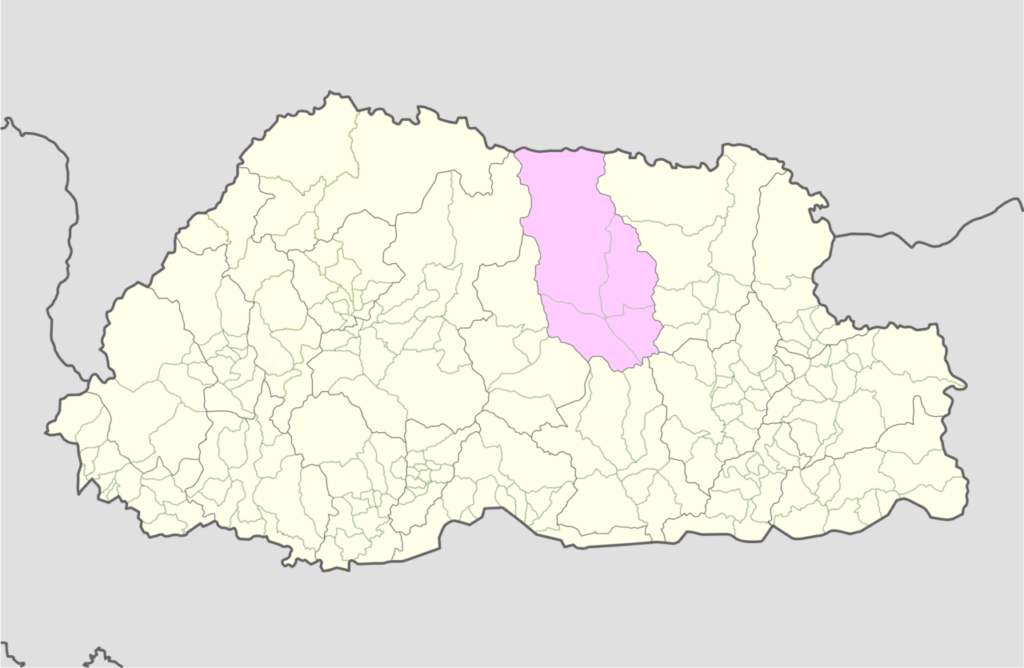
Chhoekhor Gewog within Bumthang District, Bhutan, Bumthang, Bhutan
Cheap Eats: Where Locals Actually Eat
Bumthang’s culinary scene is humble and hearty. For a true taste of the valley, skip the tourist lodges and head to these spots.
- Chamkhar Market’s Momo Stall: Just opposite the bus station, a small cart run by Aum Kinley serves steaming pork and cheese momos from 7 AM to noon. Eight momos cost Nu 50 ($0.60). Locals line up before 8 AM. Ask for the “ezay” (chili paste) on the side. The stall has no name – look for the blue umbrella. You’ll share a tin roof with bus drivers.
- Swiss Bakery & Restaurant: On the main road behind the Lodro Market, this cozy spot is run by a Bhutanese couple who trained in Thimphu. Their ema datshi (chili cheese) with rice is Nu 120 ($1.50). The secret: they use local Bumthang cheese, which is creamier than elsewhere. Try the apple crumble for Nu 80 – a rare dessert in Bhutan. Open daily 8 AM – 8 PM. Most visitors miss it because they stick to hotel buffets.
- Ugyen’s Kitchen: A three-table hole-in-the-wall down a side alley near the Jakar Dzong entrance. Ugyen Phuntsho serves only one dish: kewa datshi (potato cheese) with red rice for Nu 100 ($1.20). He cooks only when he runs out of ingredients – usually around 11:30 AM to 2:30 PM. Arrive by noon to get a portion. He also sells homemade ara (rice wine) for Nu 20 a shot. This is where local construction workers eat. Your tour guide probably won’t bring you here.
- Red Panda Brewery Restaurant: While the brewery tour is free, staying for lunch is a budget treat. Their pork rib and potato curry plate with salad is Nu 180 ($2.20). It’s the most expensive on this list, but the beer is Nu 60 ($0.75) per pint. Order the “Bumthang Ale” paired with the spicy sausage. The outdoor terrace overlooks the river. Open noon – 9 PM. Tasting flights (three small beers) are Nu 150. A great spot after the morning hike.

The famous Tiger’s Nest Monastery perched on a cliffside in Bhutan’s lush m…, Bumthang, Bhutan
Getting There Without Going Broke
- Cheapest Route: Fly into Paro International Airport (most tours include this). From Paro, you have two options to reach Bumthang: a scenic 8-hour drive via Thimphu and Pele La Pass (shared taxis cost Nu 1,200/person, about $15) or a 45-minute domestic flight with Druk Air from Paro to Bumthang’s Bathpalathang Airport. The flight costs around $120 one way on a budget tour package – but if you’re booking independently (possible with Indian passport or pre-arranged visa), flights can be as low as $80. Your cheapest route: shared taxi from Paro to Bumthang (Nu 1,200) plus overnight stay in Thimphu (Nu 500 for dorm bed). Total: ~$22.
- Pro Tip: Book your Bumthang flight on the same day as your Paro arrival – early morning flights to Bumthang (6:30 AM) are often cheaper than afternoon ones. Use Skyscanner to compare fares, but Druk Air also runs flash sales on their website. Travelers often save $40 by avoiding the Wednesday surcharge.
- From the Airport: Bathpalathang Airport is just 2 km from Chamkhar town. A taxi costs Nu 300 ($4), but you can walk the flat road in 25 minutes. Follow the main highway towards the dzong; you’ll pass apple orchards and the airport fence. Locals wave as you pass. The walk is safer than you think – very few vehicles.
Compare flights at Skyscanner and check domestic routes on Druk Air’s official site.
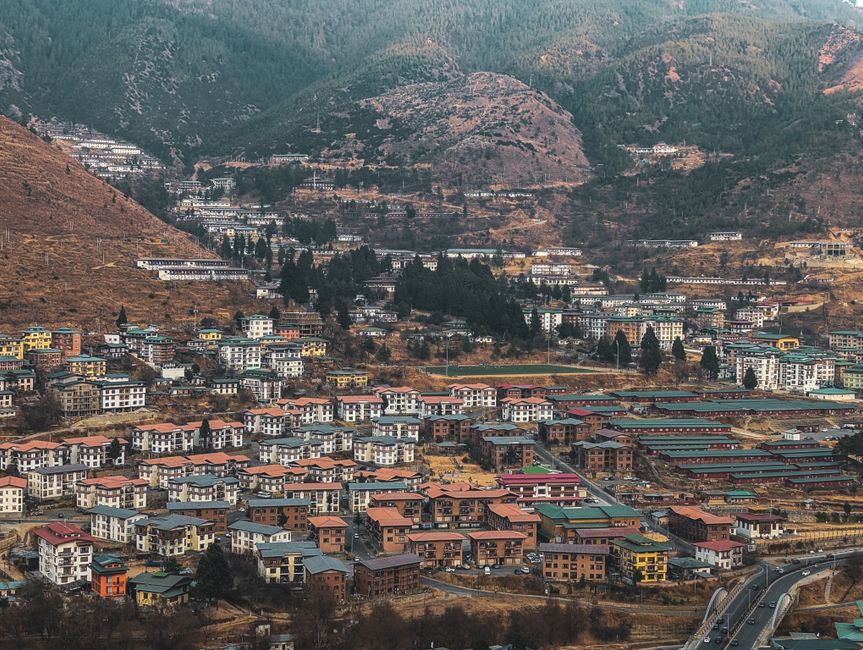
Aerial view of Thimphu city nestled in Bhutan’s mountain landscapes, Bumthang, Bhutan
Budget Accommodation Guide
- Lodro Guesthouse – A 10-room lodge above the main market. Dorm beds Nu 500 ($6), private doubles from Nu 1,200 ($15). Hot water 6-8 AM only (bring a bucket). Ask for Room 4 – it has a window overlooking the Jakar Dzong. Booking via Booking.com often saves 10%. No breakfast included, but the market stalls are 2 minutes away.
- Wangchuk Homestay – Run by a local family 1.5 km east of town. Private room with shared bathroom for Nu 800 ($10). You’ll eat dinner with the family – they serve fresh vegetables from their garden. Advance booking essential; send a message via Airbnb. The grandmother tells stories of the old kings. Wi-Fi is slow, but the mountains are fast.
- Budding Lodge – A newer option near the brewery. Singles Nu 600 ($7.50), doubles Nu 1,000 ($12). The owner, Karma, is a former trekking guide who can give you free hiking advice. Rooms are basic but clean. He’ll let you charge devices for free. Most tourists don’t know this place – it’s not listed on major booking sites. Ask your driver to call Karma (98 17 22 33). Best value in town.
Money-Saving Tips Specific to Bumthang, Bhutan
- Buy a local SIM card: Bumthang’s mobile coverage is patchy, but a B-Mobile SIM (Nu 150 for unlimited data for 7 days) will save you roaming charges. Get one at the airport or the TashiCell shop on the main road in Chamkhar. Use WhatsApp for free calls to your hotel.
- Skip the guide for temple visits: Most temples are small and self-explanatory. Instead of paying $20 for a guide, buy the “Bumthang Valley History” booklet from the Jakar Dzong souvenir shop for Nu 100 ($1.25). It covers the main sites. You’ll save $18.75 per visit.
- Eat your main meal at lunch: Lunch prices at local restaurants are 30% cheaper than dinner (which targets tourists). For example, at Swiss Bakery, the ema datshi at 1 PM costs Nu 120; at 7 PM, the same dish is Nu 180. Savvy visitors order the same item at lunch and skip dinner.
- Drink the tap water – after boiling: Don’t buy plastic bottles (Nu 30 each). Boil tap water for 5 minutes in your guesthouse kettle and fill your reusable bottle. Locals do

