
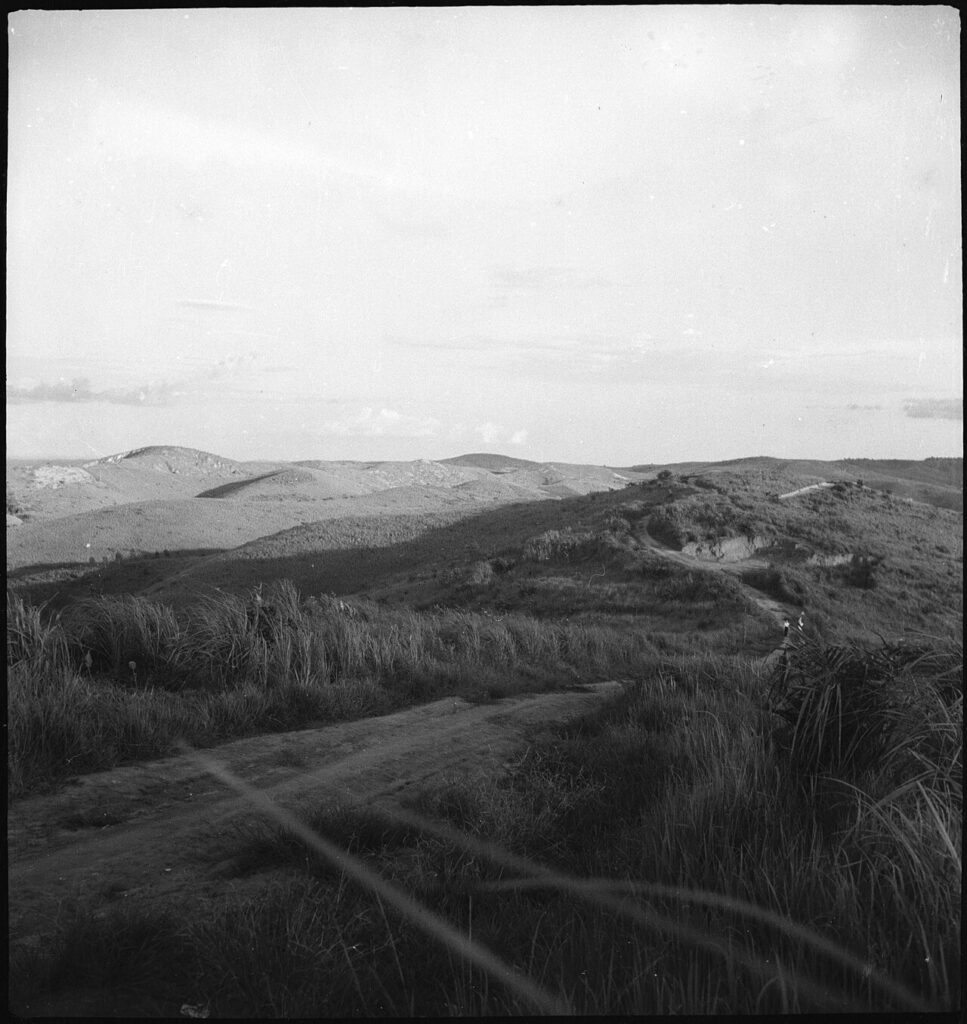
Beyond the Red Earth: How Mbanza-Kongo Awakens the Spirit of a Lost Kingdom (2026)
In 1491, when Portuguese ships first landed at the foot of this sacred hill, King Nzinga a Nkuwu walked barefoot down the red-dirt path to meet them. His capital, Mbanza-Kongo, was already a bustling city of perhaps 50,000 souls—larger than Lisbon at the time. The centuries that followed would test this kingdom with fire, enslavement, and fragmentation. But today, as you stand on this same red earth, you feel something undeniable: this is not a ruined city. This is a living, breathing testament to one of Africa’s most sophisticated civilizations.
The Story Behind Mbanza-Kongo, Angola
You need to understand the sheer scale of what the Kingdom of Kongo was. From the 14th century, this centralized state stretched across modern-day Angola, the Democratic Republic of Congo, and parts of Gabon and Congo-Brazzaville. At its heart sat Mbanza-Kongo, meaning “the king’s court.” Travelers who arrive expecting a sleepy provincial town are often stunned to learn that this was once a city of stone palaces, broad avenues, and a powerful bureaucracy that kept records in Portuguese long before many European capitals had proper postal systems.
The turning point came in 1506 with King Afonso I, a ruler who embraced Christianity as a diplomatic tool while fiercely defending Kongo sovereignty. He corresponded with Portuguese kings directly, employing scribes to draft letters in elegant Portuguese. You will find remnants of this era in the Cathedral of São Salvador, built in 1491, whose ruins still rise against the sky. The site was declared a UNESCO World Heritage Site in 2017, and locals will proudly tell you that this was the first Christian church in sub-Saharan Africa. The irony, of course, is that the same Portuguese who brought the cross also fueled the transatlantic slave trade that would eventually hollow out the kingdom. By the 17th century, Mbanza-Kongo had been sacked, abandoned, and reclaimed by jungle—only to be reborn in the 20th century as a provincial capital of independent Angola.
What makes Mbanza-Kongo different from other historical sites is that its past is not locked in a museum. You will see children playing football where kings once held court. Women sell cassava and dried fish on the same ground where Portuguese ambassadors knelt before the Manikongo (the king’s title). The kulumbimbi—the stone ruins scattered across the hill—are not roped off; they are part of daily life. This is a living history, and you will feel it in the weight of the red dust on your shoes.
Neighborhood by Neighborhood
The Historic Hilltop (Zona Histórica)
This is where your journey should begin. The historic center clings to the top of a flat-topped hill, the old royal compound. You will walk along Rua da Catedral, a narrow street lined with reconstructed colonial buildings painted in soft yellows and whites that might remind you of a Portuguese village—until you see the baobab trees. The centerpiece is the Cathedral of São Salvador, or what remains of it: a roofless nave with towering stone walls, the sky acting as its vault. Local guides (find them at the small tourism office near the cathedral for about 2,000 kwanza, roughly $4) will show you the baptismal font where King Afonso I was baptized in 1491. Plan to spend at least an hour here, especially late afternoon when the light turns the red earth to molten copper. Just below the cathedral, the Yala Nkuwu tree—the “king’s tree”—still stands. According to tradition, each new monarch was proclaimed under its branches. Travelers often discover that sitting under this gnarled giant, with the breeze rustling through its leaves, feels like stepping into the heartbeat of the kingdom itself.
Bairro Comercial (The Commercial Quarter)
Descend from the hilltop into the grid of streets that make up the modern commercial district. This is where Mbanza-Kongo’s daily pulse beats loudest. Avenida 4 de Fevereiro, the main drag, is a chaotic joy: motorbike taxis (candongueiros) weave between pedestrians, women balance trays of fresh-baked pão (Portuguese-style rolls) on their heads, and the smell of grilled fish and palm oil drifts from open-air kitchens. You will find the central market, Mercado Municipal do Zaire, at the southern edge of the avenue. Go early—by 7 a.m., the fish vendors have already sold their best catches from the Congo River. The market is a grid of covered stalls where you can buy dried manioc, powdered baobab fruit (a tangy, nutrient-rich powder locals stir into water), and colorful wax-print fabrics. Don’t miss the hardware section, where you will see hand-forged hoes and machetes that look identical to tools from the 16th century. Your best bet for lunch in this area is the small restaurant Pérola do Zaire, tucked behind the market. Ask for the muamba de galinha—chicken stewed in palm oil with okra and garlic—which costs about 1,500 kwanza ($3). You’ll eat it with funje, a stiff cassava porridge that requires skill to roll into perfect balls.
Bairro da Missão (Mission Neighborhood)
To the northwest of the historic center lies Bairro da Missão, named for the old Catholic mission station still active here. This is a quieter, greener area where mango trees overhang the dirt streets and roosters announce dawn with aggressive enthusiasm. The mission itself—Igreja da Missão—is a modest whitewashed church built in 1920 by Belgian missionaries, but the real draw is the small museum housed in the old rectory. Here you will see royal regalia from the Kingdom of Kongo: iron scepters, copper bracelets, and a reproduction of the crucifixes that Kongo kings used as symbols of authority. The museum is open Tuesday through Sunday, 9 a.m. to 4 p.m., and costs 500 kwanza ($1). The curator, Senhor Domingos, has been working here for 22 years and tells extraordinary stories—ask him about the time, in 2008, when a local farmer plowed up a 17th-century Portuguese cannon. The neighborhood is also home to several small guesthouses where you can experience local hospitality. Most visitors overlook this area, which is a shame: the late-after light through the mango trees onto the red dirt is a photographer’s dream, and the pace of life feels like it hasn’t changed in centuries.
The Local Table: What Denizens Actually Eat
Forget the hotel restaurant’s buffet of overcooked pasta. In Mbanza-Kongo, locals eat what has sustained the Kongo people for centuries: cassava, beans, plantains, fish from the Congo River, and the ubiquitous palm oil that stains everything a cheerful orange. You will find no haute cuisine here—this is food born of necessity and perfected by patience. The daily rhythm starts with a simple breakfast of sweet, strong coffee (café angolano, often mixed with condensed milk) and pão com manteiga—a bread roll with margarine. By 11 a.m., lunch calls, and you need to follow suit.

Belgisch-Kongo, Mbanza-Kongo, Angola
The dish you must seek out is muamba de ginguba, a peanut and chicken stew that is the Kongo region’s most cherished comfort food. To find the best version, walk to the small food stalls on Rua da Liberdade, just behind the main market. Look for Dona Marta’s stall—it has a blue-and-white umbrella and a perpetually smiling woman stirring a massive black pot. For 1,000 kwanza ($2), you get a generous bowl of muamba de ginguba with funje and a boiled egg. The peanuts are ground fresh daily, the chicken is free-range, and the spice level is gentle but building. Locals recommend adding a squeeze of lemon and a pinch of chili (piri-piri) from the small saucer on the table. If you visit on a Saturday, you will also find calulu, a dried fish and vegetable stew scented with basil and served with rice. The market itself is the best place to understand the cuisine—buy a bag of fresh peanuts, a piece of smoked catfish, and a stalk of sugarcane to chew as you walk. A full grocery bag of market goodies might cost you 2,500 kwanza ($5).
Art, Music & Nightlife
Mbanza-Kongo is not a club town. But its creative soul runs deep in quieter channels. The Kongo people have a rich tradition of mask-making and wood carving, best experienced at the small artisan cooperative on Rua 1 de Maio, run by Master Carver Ngola. You will see him working at his bench, chiseling hardwoods into representations of ancestors and spirits. His masks are not souvenirs; they are ritual objects, and he will explain their meanings if you show genuine interest. A small mask costs about 5,000 kwanza ($10), though the more elaborate ceremonial pieces can run $80. Cash only. Buy directly from him—it supports the tradition and ensures authenticity.
Musically, the soundtrack of Mbanza-Kongo is semba, the predecessor of samba, played on acoustic guitars, dikanza (scraped bamboo), and drums. On Friday and Saturday nights, the bar-restaurant Bar Central, on Avenida 4 de Fevereiro, hosts live semba sessions starting around 9 p.m. The cover is 500 kwanza ($1), and you will find locals of all ages dancing with a loose-hipped elegance that will make you wish you’d practiced. If you are lucky enough to visit during the Festival da Cultura Kongo (held in early August), you will witness three days of music, dance, and traditional ceremonies on the hilltop, including the dramatic reenactment of a royal coronation. This festival is the best window into the living Kongo culture, and savvy visitors book their travel for this month.
Practical Guide
- Getting There: Fly into Luanda’s Quatro de Fevereiro Airport (LAD), then connect to Mbanza-Kongo Airport via TAAG Angola Airlines. Direct flights operate three times weekly (Monday, Wednesday, Friday) and cost $120–$180 one way. The flight is 1 hour 40 minutes. Alternatively, take a bus from Luanda’s Terminal Rodoviário—the 12-hour journey costs about $25, with departures at 5 a.m. and 5 p.m. Book flights at Skyscanner
- Getting Around: Motorbike taxis (candongueiros) are the local backbone. A trip within the historic center costs 200 kwanza ($0.40); to the mission area, 300 kwanza. Negotiate before you get on. Shared blue-and-white vans (táxis de praça) ply major routes for 100 kwanza per person, but can be cramped. For day trips to surrounding villages, hire a private car through your hotel—expect $40–$60 for a half-day.
- Where to Stay: For comfort, the Hotel Kimbangu on Avenida 4 de Fevereiro offers clean, air-conditioned rooms with satellite TV at $50–$70 per night. For authenticity, try the Residencial da Missão in Bairro da Missão—basic but atmospheric, at $25 per night, with a garden full of mango trees. Check Booking.com
- Best Time: May to October is the dry season. The Kongo Festival in early August is the cultural pinnacle, but book accommodation months in advance. Avoid November to March, when the rains make the red earth treacherous and mosquitoes are abundant.
- Budget: A comfortable budget is $60–$80 per day, covering private taxi, three meals (including market fruit and street food), entry fees, and a basic guesthouse. If you eat at hotels and take guided tours, expect $100–$130 per day. Cash is king—ATM reliability varies, and most businesses don’t take cards.
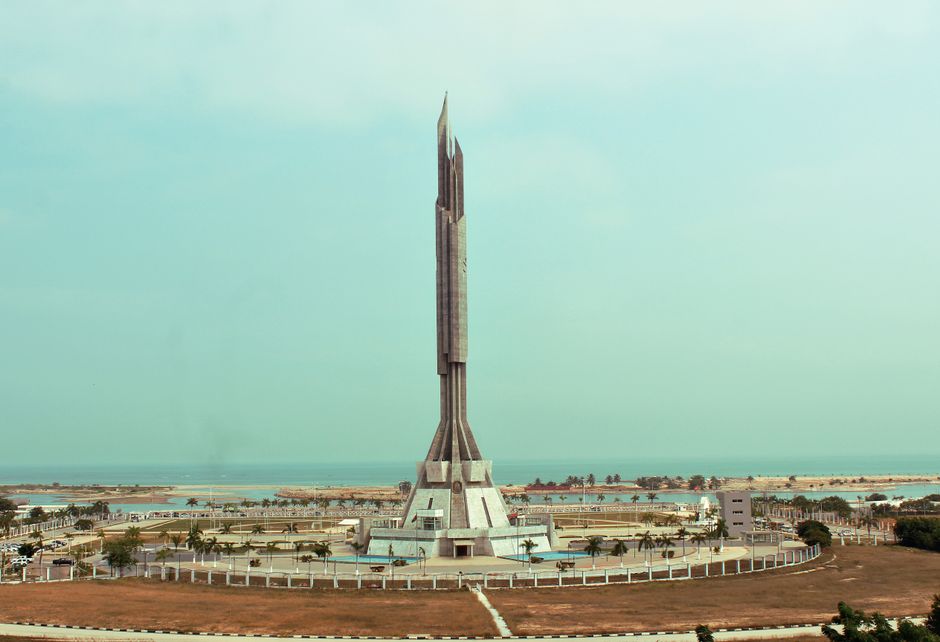
A striking view of the Mausoleum of Neto in Luanda, Mbanza-Kongo, Angola
What Surprises First-Time Visitors
You will be struck first by the color of the earth. Mbanza-Kongo sits on laterite soil that ranges from burnt sienna to deep brick red, staining everything—your shoes, the base of buildings, the feet of children playing football. In the afternoon sun, the entire city glows like it has been painted with earth’s own pigment. Travelers often remark that it feels like walking through a photograph that has been overly saturated. But the other surprise is quieter: the people. Angolans are famously warm, but in Mbanza-Kongo, the welcome is tinged with a quiet pride. Locals know their city carries the weight of a kingdom, and they want you to understand it. Expect to be stopped by elders who will offer to tell you the history for no payment—just your attention. Most tourists overlook this region entirely, heading instead to Luanda’s beaches or the Namib Desert. The misconception is that Mbanza-Kongo is a dusty backwater. In fact, it is a deeply civilized city where kings once corresponded with popes, where treaties were signed in ink and sealed with royal stamps, and where the red earth itself seems to remember every footstep.
The third surprise is the silence at night. In the neighborhoods away from Avenida 4 de Fevereiro, the lack of artificial light and traffic noise means you can hear the river frogs, the rustle of cashew trees, and sometimes distant drums from a village festival. This is not a city that tries to impress you with its nightlife. It impresses you with its presence. You will wake early—the sounds of roosters and market activity start around 5 a.m.—and you will find that the early morning, with the mist rising off the hill and the first light catching the cathedral ruins, is the most magical time of the day. This is when you feel most deeply the ancient pulse of Kongo.
Your Mbanza-Kongo, Angola Questions
Is it safe to travel to Mbanza-Kongo as a foreigner? Yes, as of 2025, Mbanza-Kongo is one of the safest cities in Angola for independent travelers. The population is small (around 150,000), and violent crime is rare. The main risks are petty theft in crowded markets and the occasional pickpocket on buses. Your best practice is to keep your phone and wallet in a front zip pocket, avoid walking alone after 10 p.m. in unlit streets, and leave your passport in the hotel safe (carry a photocopy instead). The local police station is on Avenida 4 de Fevereiro, and officers are generally helpful, though their English is limited. Portuguese is essential—learn basic phrases like “Onde fica…” (Where is…) and “Quanto custa?” (How much?). The biggest practical risk is road safety: candongueiro drivers can be reckless, so always negotiate to wear a helmet on a motorbike.

Aerial view of Lubango city with a prominent church in Huíla, Mbanza-Kongo, Angola
Can I visit the Cathedral ruins for free, and what will I see? The Cathedral of São Salvador is open to the public at any time, and there is no entrance fee—it is an open-air ruin in the public square. You will see the remains of the nave, the stone baptismal font, and the outline of the original floor. However, a small voluntary donation of 500 kwanza ($1) is appreciated if you want to enter the adjacent small museum and archaeological site, which includes excavated foundations of the old royal palace and a display of ceramic shards and iron tools. The museum is run by the local community, and your donation helps maintain the site. Go early (before 9 a.m. or after 4 p.m.) for the best light and

