
The Ultimate Zadar Guide: Sea Organ Sunsets, Roman Ruins & Adriatic Cuisine
Zadar isn’t just a destination—it’s a living symphony of stone and sea. The scent of salt and rosemary fills the air as ancient marble streets echo with the haunting melodies of the Sea Organ while the sun sets in a blaze of orange over the Adriatic. It’s where 3,000 years of history meet modern Croatian coastal charm in perfect harmony.
Why Zadar Stands Out

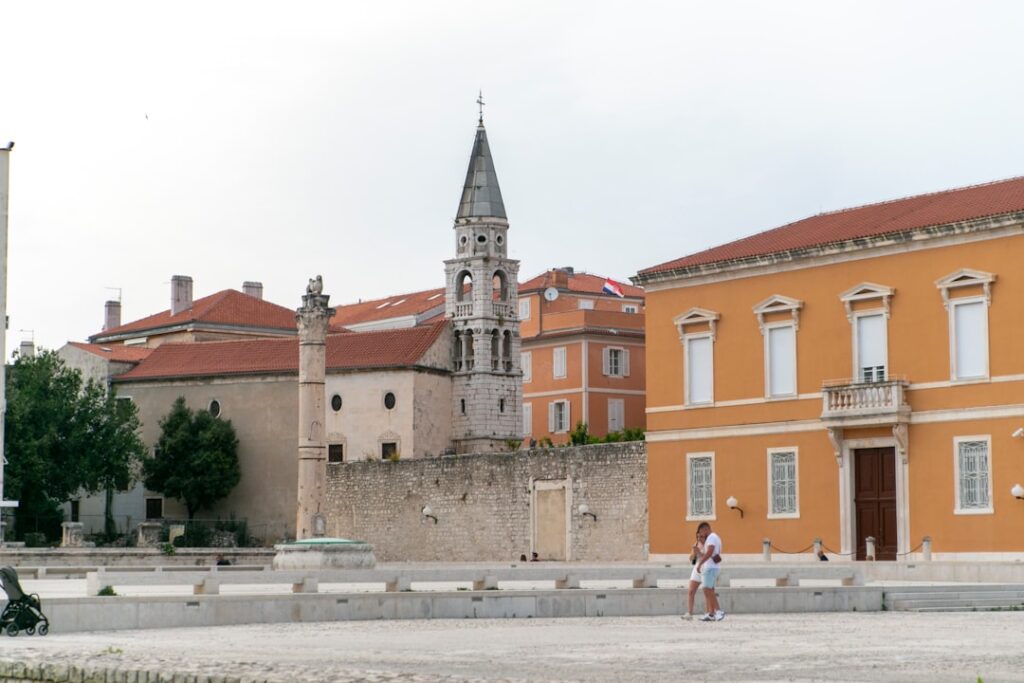
A group of people standing in front of a building, Zadar
- Historic Architecture: The 9th-century Church of St. Donatus represents the best-preserved pre-Romanesque building in Croatia with its distinctive circular design.
- Cultural Scene: The annual Zadar Summer Theatre Festival transforms ancient ruins into stunning performance venues from July through August.
- Local Specialties: Maraschino liqueur, made from Marasca cherries using a secret recipe dating to the 16th century, is Zadar’s most famous export.
Pro Tip: Visit in late September when summer crowds have dispersed but seawater remains warm (22°C), accommodation prices drop 30%, and you can experience the Zadar Wine Festival (last weekend of September).
Map of Zadar
Use these interactive maps to explore Zadar and plan your route:
📍 View Zadar on OpenStreetMap
🗺️ Open Zadar in Google Maps
Planning Your Trip: Practical Essentials
Getting There and Around
- By Air: Zadar Airport (ZAD) receives seasonal flights from major European cities via Ryanair, EasyJet, and Croatia Airlines. Airport shuttle to city center costs 30 HRK (€4) and takes 15 minutes. Book flights at Skyscanner for best deals.
- By Train: Zadar has limited rail connections; best reached by bus from Split (3 hours, 110 HRK) or Zagreb (4 hours, 150 HRK). Reserve tickets at Trainline or the national railway website.
- By Car: A1 highway connects Zadar to Zagreb (2.5 hours) and Split (1.5 hours). Parking in old town is restricted; use Lot Sv. Frane (25 HRK/hour). Compare car rentals at RentalCars.com.
- Local Transport: Zadar is highly walkable; local buses cost 13 HRK per ride. Day pass (40 HRK) available at kiosks. Check official city transport websites for passes and schedules.
Best Time to Visit
Zadar shines from May to October, with July-August offering the warmest weather but largest crowds. Shoulder seasons provide ideal conditions for exploring.
| Season | Weather | Highlights |
|---|---|---|
| Summer (Jun–Aug) | 25-30°C, sunny, low rain | Beach weather, festival season, vibrant nightlife, crowded attractions |
| Winter (Dec–Feb) | 5-12°C, rainy, fewer tourists | Quiet exploration, lower prices, Christmas market (Dec), many restaurants closed |
| Shoulder (Apr–May/Sep–Oct) | 15-22°C, pleasant, occasional rain | Ideal walking weather, fewer crowds, lower prices, perfect for photography |
Budgeting for Zadar

A couple of people walking down a sidewalk next to a body of water, Zadar
| Category | Budget | Mid-range | Luxury |
|---|---|---|---|
| Accommodation | 300-500 HRK (hostels/private rooms) | 700-1000 HRK (3-4 star hotels) | 1500+ HRK (boutique hotels/sea view) |
| Meals | 80 HRK (street food/bakery) | 150-250 HRK (restaurant meals) | 400+ HRK (fine dining with wine) |
| Transport | 40 HRK (bus day pass) | 200 HRK (daily taxi use) | 600 HRK (private driver) |
| Activities | Free (beaches, old town walk) | 150 HRK (museum entries) | 500 HRK (boat tours/experiences) |
| Daily Total | 420-670 HRK (€55-90) | 1100-1500 HRK (€145-200) | 3000+ HRK (€400+) |
Top Attractions and Must-See Sights
| Attraction | Description | Hours | Entry Fee |
|---|---|---|---|
| Sea Organ | Architectural marvel creating music through sea waves with 35 underwater pipes | 24/7Free | |
| St. Donatus Church | 9th-century circular church built on Roman forum ruins with exceptional acoustics | 9am-7pm (summer) | 20 HRK |
| Roman Forum | Largest forum on eastern Adriatic dating to 1st century BC with original columns | 24/7 (exterior) | Free (exterior) |
| Greeting to the Sun | Solar-powered light installation creating spectacular light shows after sunset | Sunset to midnight | Free |
3-Day Itinerary: Zadar’s Highlights & Hidden Gems
Day 1: Ancient Heart & Coastal Wonders
- Morning: 7:30 AM arrival at Five Wells Square to see morning light on stone. Climb the 18th-century defensive walls for panoramic views (free).
- Afternoon: 12:30 PM explore Roman Forum followed by lunch at Restaurant Foša (reservation recommended) for black risotto (120 HRK).
- Evening: 6:30 PM experience sunset at Sea Organ followed by dinner at Konoba Skoblar for peka (slow-cooked meat, 180 HRK).
Day 2: Island Hopping & Cultural Immersion
- Morning: 8:30 AM ferry to Ugljan Island (32 HRK round trip) for hiking and olive oil tasting at family farm (50 HRK).
- Afternoon: 1:30 PM return for Museum of Ancient Glass (40 HRK) and lunch at Pet Bunara for pasta with truffles (95 HRK).
- Evening: 7:00 PM attend classical music concert at St. Donatus Church (100 HRK) if available.
Day 3: Nature & Local Life
- Morning: 8:00 AM bus to Paklenica National Park (45 HRK transport, 60 HRK entry) for hiking in spectacular canyons.
- Afternoon: 2:00 PM return for market exploration at Kalelarga and lunch at Proto Food for seafood platter (160 HRK).
- Evening: 6:00 PM final sunset at Greeting to the Sun with farewell dinner at Restaurant Kornat (marinated sardines, 85 HRK).
Cultural Insights & Etiquette
- Language: Croatian is official; learn “Dobar dan” (Good day), “Hvala” (Thank you), “Koliko košta?” (How much?)
- Customs: Remove shoes when entering homes; bring small gift if invited. Dress modestly when visiting churches.
- Tipping: Round up bills or leave 10% in restaurants; not expected but appreciated in taxis.
- Dress Code: Casual but neat; swimwear only at beaches. Cover shoulders and knees for church visits.
- Business Hours: Shops 8am-8pm weekdays, close 2pm Sat; most closed Sun. Restaurants serve lunch 12-3pm, dinner 7-11pm.
Where to Eat: Zadar’s Best Bites
Zadar’s cuisine reflects its coastal position with exceptional seafood, olive oil from nearby islands, and Italian influences. Family-run konobas (taverns) offer the most authentic experiences.
Must-Try Local Specialties
- Paški sir: Hard sheep cheese from Pag island with distinctive flavor. Best at Pag Cheese tasting rooms.
- Brudet: Fisherman’s stew with multiple fish types simmered with tomatoes. Try at Konoba Skoblar.
- Maraschino: Cherry liqueur invented in Zadar in 16th century. Sample at Maraschino Experience Center.
Restaurant Recommendations by Budget
| Type | Restaurant | Specialty | Price Range |
|---|---|---|---|
| Budget | Pizzeria Tri Bunara (Old Town) | Wood-fired pizza with local ingredients | 60-90 HRK |
| Mid-range | Restaurant Foša (Foša Harbor) | Seafood risotto with harbor views | 120-200 HRK |
| Fine dining | Kornat (Riva Promenade) | Modern Dalmatian cuisine with wine pairing | 300-500 HRK |
Where to Stay
Zadar offers diverse accommodation from historic old town apartments to modern beach resorts. Book early for summer visits. Compare prices and book at Booking.com or Airbnb for apartments.
Best Neighborhoods for Accommodation
- Old Town: Historic charm, walkable to everything, can be noisy at night. Ideal for culture lovers.
- Puntamika: Residential area with beaches, 20-minute walk to center. Perfect for families.
- Borik: Resort area with hotels and private beaches. Best for relaxation seekers.

Brown concrete building near body of water during daytime, Zadar
FAQs: Your Zadar Questions Answered
1. Is Zadar safe at night?
Extremely safe. The old town remains lively until late with people enjoying evening strolls. Normal precautions apply, but violent crime is rare.
2. What currency is used and are credit cards accepted?
Croatian Kuna (HRK) is official currency (€1 ≈ 7.5 HRK). Credit cards widely accepted, but carry cash for markets and smaller establishments.
3. How do I get from the airport to the city center?
Airport shuttle bus runs for all arrivals (30 HRK, 15 minutes). Taxis cost approximately 150 HRK. Book airport transfers at GetYourGuide for convenience.
4. Do I need to speak the local language?
English is widely spoken in tourist areas. Learning basic greetings is appreciated. Younger Croatians typically speak excellent English.
5. What’s the appropriate dress code?
Casual summer wear is fine, but bring cover-ups for church visits. Evenings can be breezy—light jacket recommended. Comfortable walking shoes essential for marble streets.
Final Thoughts: Zadar Awaits
Zadar offers that rare combination of authentic Croatian culture, stunning natural beauty, and manageable size that makes for a perfect Mediterranean getaway. From the magical sounds of the Sea Organ to the taste of fresh seafood at family-run konobas, this ancient city engages all senses. Its compact historic center means you can experience 3,000 years of history on foot while enjoying modern comforts. Whether you’re watching what Alfred Hitchcock called “the world’s most beautiful sunset” or exploring Roman ruins, Zadar delivers memories that will last long after you’ve returned home.
Keywords
Zadar travel guide, Zadar attractions, things to do in Zadar, Zadar itinerary, Zadar restaurants, Zadar hotels, visit Zadar, Zadar tourism, Zadar vacation, Zadar trip planning, Croatia travel, Dalmatian coast, Sea Organ Zadar, Roman Forum Zadar
Related Guides
Explore more destinations similar to Zadar’s Hidden Sea Organ Sunsets:

