
The Ultimate Bangkok Guide: Street Food, Temples & River Life
Bangkok isn’t just a destination—it’s a sensory symphony. Golden temple spires pierce humid skies while tuk-tuks weave through traffic, their engines buzzing like angry hornets. The air carries competing scents of sizzling garlic, jasmine garlands, and diesel fumes. A city where ancient spirituality meets modern chaos in perfect harmony.
Why Bangkok Stands Out

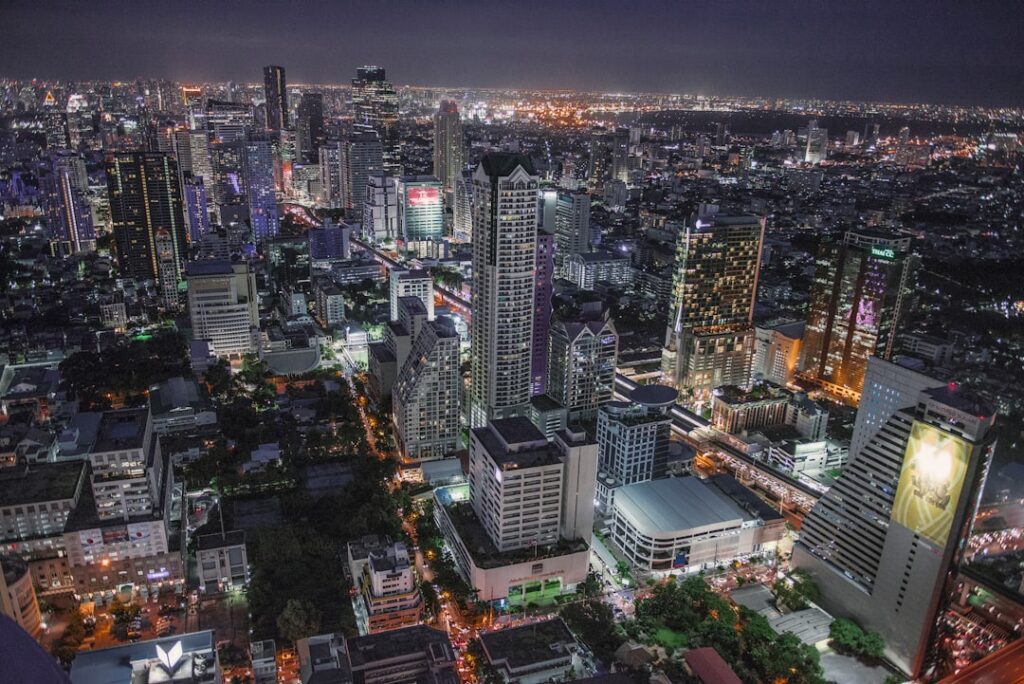
An aerial view of a city at night, Bangkok
- Historic Architecture: Wat Arun (Temple of Dawn), built 1768, features a 70-meter prang decorated with Chinese porcelain fragments that glitter in sunlight.
- Cultural Scene: Songkran Water Festival each April transforms the entire city into a massive water fight celebrating Thai New Year.
- Local Specialties: Pad Thai from Thip Samai, where they’ve perfected the wok-fried noodle dish since 1966 using secret recipe tamarind sauce.
Pro Tip: Visit temples before 8:30 AM to avoid crowds and heat—Wat Pho opens at 8:00 AM and is nearly empty then. For markets, go Wednesday-Friday when vendors are fully stocked but weekend crowds haven’t arrived.
Map of Bangkok
Use these interactive maps to explore Bangkok and plan your route:
📍 View Bangkok on OpenStreetMap
🗺️ Open Bangkok in Google Maps
Planning Your Trip: Practical Essentials
Getting There and Around
- By Air: Suvarnabhumi Airport (BKK) serves most international flights, while Don Mueang (DMK) handles budget airlines. Airport Rail Link to city center takes 30 minutes (45 THB). Book flights at Skyscanner for best deals.
- By Train: Hua Lamphong Station connects to southern Thailand and Malaysia. Overnight sleeper trains from Chiang Mai (12 hours, 900 THB). Reserve tickets at Trainline or the national railway website.
- By Car: Driving in Bangkok is not recommended due to extreme traffic. If traveling outside city, rentals start at 800 THB/day. Compare car rentals at RentalCars.com.
- Local Transport: BTS Skytrain (16-59 THB), MRT subway (16-42 THB), river boats (10-40 THB), tuk-tuks (negotiate, typically 100-200 THB short trips). Rabbit Card for BTS offers 20% discount.
Best Time to Visit
November to February offers cool, dry weather perfect for exploration. March-May brings extreme heat, while June-October sees monsoon rains that typically last 1-2 hours daily.
| Season | Weather | Highlights |
|---|---|---|
| Cool Season (Nov–Feb) | 25-32°C, low humidity, no rain | Ideal temple visiting, outdoor markets, river cruises. Peak tourist season. |
| Hot Season (Mar–May) | 30-38°C, high humidity | Songkran Festival (April 13-15), early morning activities best, air-conditioned malls provide relief. |
| Rainy Season (Jun–Oct) | 28-34°C, daily showers | Fewer crowds, lush greenery, lower prices. Rain usually brief afternoon downpours. |
Budgeting for Bangkok

Vehicles near city buildings during daytime, Bangkok
| Category | Budget | Mid-range | Luxury |
|---|---|---|---|
| Accommodation | 400-800 THB (hostels/guesthouses) | 1,500-3,500 THB (3-4 star hotels) | 5,000-15,000+ THB (5 star resorts) |
| Meals | 50-100 THB (street food) | 200-500 THB (restaurants) | 1,000-3,000 THB (fine dining) |
| Transport | 100-200 THB (public transport) | 300-600 THB (taxis/Grab) | 1,500+ THB (private car) |
| Activities | 0-500 THB (temples/markets) | 600-1,500 THB (tours/museums) | 2,000-5,000 THB (private guides) |
| Daily Total | 800-1,500 THB | 3,000-6,000 THB | 10,000-25,000 THB |
Top Attractions and Must-See Sights
| Attraction | Description | Hours | Entry Fee |
|---|---|---|---|
| Grand Palace & Wat Phra Kaew | Former royal residence housing the sacred Emerald Buddha since 1782 | 8:30 AM-3:30 PM daily | 500 THB |
| Wat Pho | Home to the 46-meter reclining Buddha and Thailand’s first massage school | 8:00 AM-6:30 PM daily | 200 THB |
| Chatuchak Weekend Market | World’s largest weekend market with 15,000 stalls across 27 sections | 9:00 AM-6:00 PM Wed-Thu (plants), 6:00 PM-midnight Fri (wholesale), 9:00 AM-6:00 PM Sat-Sun | Free entry |
| Chao Phraya River Cruise | Hop-on-hop-off boat service connecting major landmarks along the river | 6:00 AM-7:00 PM daily | 180 THB day pass |
3-Day Itinerary: Bangkok’s Highlights & Hidden Gems
Day 1: Temple Grandeur & Riverside Wonders
- Morning: 7:30 AM arrival at Wat Pho (200 THB) to see reclining Buddha before crowds. Remove shoes before entering chapel.
- Afternoon: 12:00 PM lunch at The Sixth (Sala Rattanakosin) with panoramic temple views. Try their massaman curry (420 THB).
- Evening: 6:00 PM Chao Phraya tourist boat (60 THB single trip) to Asiatique night market. Dinner at Baan Khanitha at Asiatique (800 THB average).
Day 2: Markets & Cultural Immersion
- Morning: 8:00 AM train market tour (1,500 THB including transport) includes Maeklong Railway Market where trains pass through stalls.
- Afternoon: 1:00 PM Jim Thompson House tour (200 THB), former home of American silk entrepreneur. Lunch at attached restaurant.
- Evening: 7:00 PM Muay Thai fight at Rajadamnern Stadium (1,500-2,500 THB). Pre-book ringside seats online.
Day 3: Local Life & Culinary Exploration
- Morning: BTS to Ari station (44 THB) for neighborhood exploration. Coffee at Salt bakery (120 THB).
- Afternoon: 1:00 PM cooking class at Baipai Thai Cooking School (1,800 THB) includes market tour and four dishes.
- Evening: 7:00 PM street food tour through Chinatown (1,200 THB with guide). Must try bird’s nest soup at Nai Ek Rolled Noodles.
Cultural Insights & Etiquette
- Language: Basic Thai phrases: Sawasdee (hello), Khob khun krap/ka (thank you), Mai ped (not spicy). English widely understood in tourist areas.
- Customs: Never touch someone’s head or point feet at people/Buddha images. Wai (pressing palms together) greeting shows respect.
- Tipping: Not expected but appreciated. 20-100 THB in restaurants, 50-100 THB for massage, round up taxi fares.
- Dress Code: Shoulders and knees covered in temples. Carry scarf for impromptu temple visits. Smart casual for nicer restaurants.
- Business Hours: Malls 10:00 AM-10:00 PM, temples 8:00 AM-6:00 PM, government offices 8:30 AM-4:30 PM. Banks close at 3:30 PM.
Where to Eat: Bangkok’s Best Bites
Bangkok’s food scene ranges from 30 THB street food stalls to world-class restaurants. Street food is generally safe—look for busy stalls with high turnover. Night markets offer the best variety from 6:00 PM onward.
Must-Try Local Specialties
- Pad Thai: Stir-fried rice noodles with egg, tofu, and shrimp. Best at Thip Samai (327 Maha Chai Road, open 5:00 PM-2:00 AM, 100-300 THB).
- Som Tum: Green papaya salad with chili, lime, and peanuts. Try at Som Tam Jay So (2 Phiphat Alley, 60 THB, extremely spicy).
- Mango Sticky Rice: Sweet dessert with coconut milk. Kor Panich (431-433 Tanao Road, 100 THB) uses secret family recipe.
Restaurant Recommendations by Budget
| Type | Restaurant | Specialty | Price Range |
|---|---|---|---|
| Budget | Jay Fai (327 Maha Chai Road) | Michelin-starred street food, crab omelette | 800-1,500 THB |
| Mid-range | Baan Phadthai (46-48 Soi Charoen Krung 44) | Modern Thai cuisine in restored shophouse | 300-600 THB |
| Fine dining | Le Du (399/3 Soi Suan Phlu) | Progressive Thai tasting menus, Asia’s 50 Best | 3,500-5,000 THB |
Where to Stay
Bangkok offers accommodation for every budget, from hostels to luxury riverside resorts. Sukhumvit offers convenience, Silom is business-oriented, while riverside provides classic elegance. Compare prices and book at Booking.com or Airbnb for apartments.
Best Neighborhoods for Accommodation
- Sukhumvit: Excellent BTS access, international restaurants, nightlife. Best for first-time visitors and nightlife enthusiasts. Can be noisy.
- Riverside: Classic luxury hotels, stunning views, ferry access. Ideal for romantic getaways and luxury travelers. Further from BTS.
- Silom/Sathorn: Business district with great food, access to both BTS and MRT. Perfect for business travelers and food lovers.

A busy city street filled with lots of traffic, Bangkok
FAQs: Your Bangkok Questions Answered
1. Is Bangkok safe at night?
Yes, Bangkok is generally safe at night in tourist areas. Exercise normal precautions: avoid poorly lit alleys, don’t flash valuables, and use registered taxis. Tourist police (call 1155) are helpful and English-speaking.
2. What currency is used and are credit cards accepted?
Thai Baht (THB) is the currency. Credit cards accepted at hotels, malls, and nicer restaurants. Street vendors and markets are cash-only. ATMs widely available (220 THB foreign card fee).
3. How do I get from the airport to the city center?
From Suvarnabhumi: Airport Rail Link (45 THB, 30 minutes to Phaya Thai). From Don Mueang: A1 bus (50 THB, 30 minutes to Mo Chit BTS). Taxis cost 300-500 THB including tolls and surcharge. Book airport transfers at GetYourGuide for convenience.
4. Do I need to speak the local language?
No, English is widely spoken in tourist areas. Learning basic Thai phrases is appreciated. Most signs in tourist areas are bilingual. Download Google Translate for offline use.
5. What’s the appropriate dress code?
Light, breathable clothing for humidity. Cover shoulders and knees for temple visits (carry a light scarf). Smarter attire for fine dining. Remove shoes before entering homes and some shops.
Final Thoughts: Bangkok Awaits
Bangkok delivers an unforgettable travel experience that balances ancient traditions with modern energy. From the golden splendor of royal temples to the sizzling woks of street food stalls, the city engages all senses simultaneously. Its efficient transport system, wide range of accommodations, and generally English-friendly environment make navigation surprisingly straightforward. Whether you have three days or three weeks, Bangkok rewards exploration with constant discovery—each alleyway holds new flavors, each temple reveals deeper history, and each market encounter creates lasting memories. Come for the famous attractions, but stay for the unexpected moments that make this city truly magical.
Keywords
Bangkok travel guide, Bangkok attractions, things to do in Bangkok, Bangkok itinerary, Bangkok restaurants, Bangkok hotels, visit Bangkok, Bangkok tourism, Bangkok vacation, Bangkok trip planning
Explore More Destinations
- Jozani, Tanzania on a Budget: an Ancient Forest for $35/Day (2026)
- Nsumbu, Zambia on a Budget: Wild Africa for $40/Day (2026)
- Semporna, Malaysia on a Budget: Paradise for $35/Day (2026)
- Khuzestan, Iran on a Budget: Ancient Empires for $30/Day (2026)
- Ngerulmud, Palau on a Budget: Island Majesty for $45/Day (2026)
Ready to Visit Bangkok’s Amazing Street Food?
Start planning your trip today. Compare hotels, find the best tours, and get insider tips.
Your adventure in Bangkok’s Amazing Street Food starts here →
{“@context”: “https://schema.org”, “@type”: “FAQPage”, “mainEntity”: [{“@type”: “Question”, “name”: “What is the best time to visit Bangkoku2019s Amazing Street Food?”, “acceptedAnswer”: {“@type”: “Answer”, “text”: “The best time to visit Bangkoku2019s Amazing Street Food depends on your preferences. Generally, the dry season offers the most pleasant weather for sightseeing and outdoor activities.”}}, {“@type”: “Question”, “name”: “How many days do I need in Bangkoku2019s Amazing Street Food?”, “acceptedAnswer”: {“@type”: “Answer”, “text”: “Most travelers spend 3-5 days in Bangkoku2019s Amazing Street Food to see the main attractions. A week allows for a more relaxed pace and day trips.”}}, {“@type”: “Question”, “name”: “Is Bangkoku2019s Amazing Street Food expensive to visit?”, “acceptedAnswer”: {“@type”: “Answer”, “text”: “Bangkoku2019s Amazing Street Food can be visited on various budgets. Accommodation ranges from hostels to luxury hotels, and local restaurants offer affordable dining.”}}]}
Related Guides
Explore more destinations similar to Bangkok’s Amazing Street Food:

