
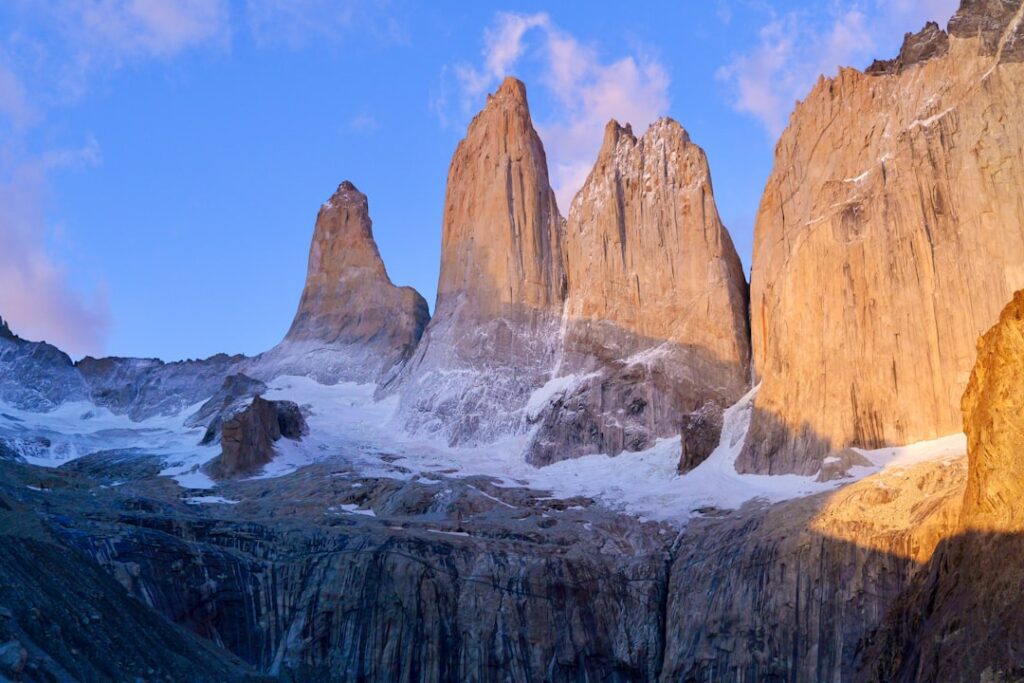
The Ultimate Patagonia Guide: Glaciers, Gauchos & Endless Horizons
Patagonia isn’t just a destination—it’s the earth’s final frontier. The crisp air carries the scent of Antarctic winds as you watch icebergs calve from glaciers with thunderous cracks into turquoise waters. This is where raw wilderness meets human resilience in the most spectacular fashion.
Why Patagonia Stands Out

A clock tower with a weather vane on top of it, Patagonia
- Historic Architecture: The 1917 Estancia Cristina ranch offers a glimpse into Patagonia’s pioneering sheep farming history amidst stunning glacial scenery.
- Cultural Scene: The Fiesta Nacional del Lúpulo in El Bolsón celebrates the region’s craft beer culture with traditional gaucho demonstrations and live folk music.
- Local Specialties: Cordero al Asado (slow-roasted Patagonian lamb) cooked over open fire for 6-8 hours, best enjoyed at family-run estancias.
Pro Tip: Visit during shoulder season (late September to early November) for optimal hiking conditions with 50% fewer crowds and accommodation prices 30% lower than peak season. Start trails before 8 AM to have iconic viewpoints like Laguna de los Tres virtually to yourself.
Map of Patagonia
Use these interactive maps to explore Patagonia and plan your route:
📍 View Patagonia on OpenStreetMap
🗺️ Open Patagonia in Google Maps
Planning Your Trip: Practical Essentials
Getting There and Around
- By Air: Fly into El Calafate (FTE) for glaciers or Punta Arenas (PUQ) for Torres del Paine. LATAM and Aerolíneas Argentinas offer connections from Buenos Aires. Transfer to town via shuttle ($15) or taxi ($25). Book flights at Skyscanner for best deals.
- By Train: No direct rail service; long-distance buses connect major cities. Reserve tickets at Trainline or the national railway website.
- By Car: Ruta 40 offers epic drives but requires 4WD for gravel sections. Rental from $50/day. Compare car rentals at RentalCars.com.
- Local Transport: Intercity buses ($20-50 per leg) are most reliable. Check official city transport websites for passes and schedules.
Best Time to Visit
Patagonia’s extreme seasons dictate travel plans—summer offers endless daylight but crowded trails, while winter brings challenging conditions but surreal frozen landscapes.
| Season | Weather | Highlights |
|---|---|---|
| Summer (Dec–Feb) | 45-65°F, long days, strong winds | All trails accessible, wildlife active, crowded (book 6+ months ahead) |
| Winter (Jun–Aug) | 20-35°F, snow-covered, limited access | Solitude, frozen waterfalls, northern lights possible, many closures |
| Shoulder (Sep–Nov/Mar–May) | 35-55°F, unpredictable but manageable | 50% fewer people, fall colors or spring blooms, best value |
Budgeting for Patagonia

A house covered in a green plant next to a window, Patagonia
| Category | Budget | Mid-range | Luxury |
|---|---|---|---|
| Accommodation | $25-40 (camping/hostels) | $80-150 (3-star hotels) | $250-500+ (luxury lodges) |
| Meals | $8-12 (supermarket picnics) | $20-35 (restaurant meals) | $60-100 (fine dining) |
| Transport | $15-25 (public buses) | $50-80 (rental car split) | $150+ (private transfers) |
| Activities | $0-30 (self-guided hikes) | $50-100 (guided tours) | $200-400 (heli tours) |
| Daily Total | $50-80 | $150-250 | $500-800+ |
Top Attractions and Must-See Sights
| Attraction | Description | Hours | Entry Fee |
|---|---|---|---|
| Perito Moreno Glacier | Active glacier advancing 2m daily with spectacular calving shows | 8 AM-6 PM | $25 (foreigners) |
| Torres del Paine W Trek | 5-day iconic trek past granite towers, turquoise lakes, and glaciers | 24/7 access | $35 park entry |
| Mount Fitz Roy | Granite spires offering world-class climbing and day hikes from El Chaltén | 24/7 access | Free |
| Penguin Colony at Punta Tombo | Largest Magellanic penguin colony with over 500,000 birds (Sep-Apr) | 8 AM-6 PM | $15 |
3-Day Itinerary: Patagonia’s Highlights & Hidden Gems
Day 1: Glacier Wonderland
- Morning: 7 AM boat tour to Perito Moreno’s north face ($80) with Hielo y Aventura—bring waterproof layers for spray from calving ice.
- Afternoon: Walk the glacier boardwalks and enjoy lamb empanadas at Moreno Bistro overlooking the glacier ($12).
- Evening: Sunset at Laguna Nimez bird sanctuary followed by dinner at La Tablita for their famous cordero al asado ($35).
Day 2: Mountain Majesty
- Morning: 6 AM bus to El Chaltén ($25, 3 hours)—hike to Laguna Capri for sunrise views of Fitz Roy with only fellow early birds.
- Afternoon: Continue to Poincenot Campground and lunch at La Cervecería with their Patagonian IPA brewed with glacial water ($8).
- Evening: Return to town for dinner at Ahonikenk—try the smoked trout with caña sauce ($28).
Day 3: Gaucho Culture
- Morning: Horseback riding with Cabalgatas Laguna Condor to hidden waterfalls ($65, 3 hours)—authentic gaucho guides share ranch stories.
- Afternoon: Visit Estancia Helsingfors for lunch—their lamb cooked cross-style over open fire is legendary ($40 including wine).
- Evening: Return to El Calafate for farewell drinks at Viva el Vino—their calafate berry sour is the perfect Patagonian goodbye ($12).
Cultural Insights & Etiquette
- Language: Spanish essential outside tourist areas—learn “che” (hey), “dale” (okay), and “buena onda” (good vibes)
- Customs: Always greet with handshake; arrive 30 minutes late to social invitations; never refuse mate when offered
- Tipping: 10% in restaurants only if service charge not included; round up taxi fares
- Dress Code: Practical outdoor gear always; smart-casual for nicer restaurants (no hiking boots)
- Business Hours: Shops close 1-4 PM for siesta; dinner starts at 9 PM earliest; many places closed Sundays
Where to Eat: Patagonia’s Best Bites
Patagonian cuisine revolves around fire-roasted meats, wild berries, and immigrant traditions—German-style chocolates, Welsh tea houses, and Italian pasta all feature alongside indigenous ingredients.
Must-Try Local Specialties
- Cordero al Asado: Whole lamb slow-roasted for 8 hours over open fire—best at Estancia Alice near El Calafate
- Centolla: King crab served cold with lemon—La Marmita in Ushuaia prepares it perfectly
- Calafate Berry: Tart wild berry used in jams, ice cream, and craft beer—try the artisanal version at Jauja in El Bolsón
Restaurant Recommendations by Budget
| Type | Restaurant | Specialty | Price Range |
|---|---|---|---|
| Budget | Pura Vida (El Chaltén) | Hearty vegetarian stews and homemade bread | $8-15 |
| Mid-range | Mi Viejo (El Calafate) | Traditional parrilla with 10 meat cuts and Malbec | $25-40 |
| Fine dining | Kaupe (Puerto Natales) | 7-course tasting menu with Patagonian ingredients | $90-120 |
Where to Stay
Accommodation ranges from wilderness camping to luxury estancias—book 6+ months ahead for peak season. Compare prices and book at Booking.com or Airbnb for apartments.
Best Neighborhoods for Accommodation
- El Calafate Centro: Walking distance to restaurants and glacier tours, can be noisy—best for first-time visitors
- El Chaltén Trailheads: Direct access to Fitz Roy hikes, limited amenities—ideal for serious hikers
- Puerto Natales Waterfront: Gateway to Torres del Paine, charming but windy—perfect for Paine explorers

A city street with people walking on the sidewalk, Patagonia
FAQs: Your Patagonia Questions Answered
1. Is Patagonia safe at night?
Extremely safe—violent crime is rare. Basic precautions apply: avoid isolated areas after dark, don’t flash expensive equipment, and keep accommodation locked. The main risks are environmental (weather, terrain).
2. What currency is used and are credit cards accepted?
Argentine pesos (ARS) and Chilean pesos (CLP)—carry both as border areas prefer local currency. Credit cards accepted in towns but not remote areas. Always carry cash—ATMs can be unreliable and charge high fees.
3. How do I get from the airport to the city center?
El Calafate airport: Official shuttle $15 or taxi $25 (30 minutes). Punta Arenas: Bus $5 or taxi $20 (20 minutes). Book airport transfers at GetYourGuide for convenience.
4. Do I need to speak the local language?
Essential basic Spanish outside tourist hotels and restaurants. Staff speak English in premium establishments, but bus drivers, shopkeepers, and locals generally don’t. Download offline translation apps.
5. What’s the appropriate dress code?
Layered technical clothing—merino wool base layers, waterproof shell, hiking boots. Smart casual (nice jeans, collared shirt) suffices for restaurants. Never wear hiking gear to dinner establishments.
Final Thoughts: Patagonia Awaits
Patagonia remains one of Earth’s last true wilderness frontiers—a place where nature dictates terms and humans adapt. The logistical challenges are real, but the rewards are unparalleled: standing before calving glaciers, watching condors soar over granite spires, and sharing mate with gauchos who’ve worked this land for generations. Come prepared for all weather, book well in advance, and embrace the unpredictable—this isn’t a destination you simply see, but one you experience with every sense. The wind, the ice, the vast emptiness will change you long after you’ve returned home.
Keywords
Patagonia travel guide, Patagonia attractions, things to do in Patagonia, Patagonia itinerary, Patagonia restaurants, Patagonia hotels, visit Patagonia, Patagonia tourism, Patagonia vacation, Patagonia trip planning
Related Guides
Explore more destinations similar to Patagonia’s Stunning Glaciers:
- Koh Kong, Cambodia’s Hidden Waterfalls, Mangroves & Untamed Wilderness (2025)
- Bucovina, Romania’s Ultimate Frescoes, Forests & Timeless Traditions (2026)
- Lake George, Uganda’s Hidden Wildlife, Waterways & Untamed Savannah (2026)
- Bering Land Bridge National Preserve, USA
{“@context”: “https://schema.org”, “@type”: “FAQPage”, “mainEntity”: [{“@type”: “Question”, “name”: “What is the best time to visit Patagoniau2019s Stunning Glaciers?”, “acceptedAnswer”: {“@type”: “Answer”, “text”: “The best time to visit Patagoniau2019s Stunning Glaciers depends on your preferences. Generally, the dry season offers the most pleasant weather for sightseeing and outdoor activities.”}}, {“@type”: “Question”, “name”: “How many days do I need in Patagoniau2019s Stunning Glaciers?”, “acceptedAnswer”: {“@type”: “Answer”, “text”: “Most travelers spend 3-5 days in Patagoniau2019s Stunning Glaciers to see the main attractions. A week allows for a more relaxed pace and day trips.”}}, {“@type”: “Question”, “name”: “Is Patagoniau2019s Stunning Glaciers expensive to visit?”, “acceptedAnswer”: {“@type”: “Answer”, “text”: “Patagoniau2019s Stunning Glaciers can be visited on various budgets. Accommodation ranges from hostels to luxury hotels, and local restaurants offer affordable dining.”}}]}

