
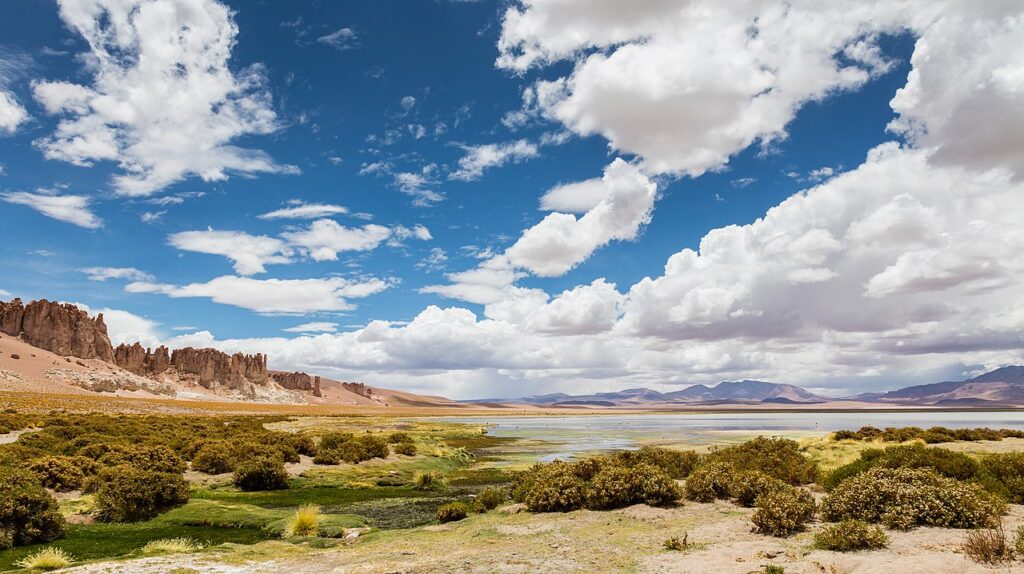
Beyond the Salt and Stars: Why the Atacama Desert Rewrites Your Soul (2026)
In 1540, Spanish conquistador Pedro de Valdivia led a small expedition across the Atacama’s lunar crust, searching for a passage to the riches of the Andes. After weeks of near-dehydration, his chroniclers noted the ground was so dry that no footprint remained, and the nights so cold that the horses’ breath froze mid-air. What they found was not gold but a landscape that defied belief—a desert that had not seen rain in decades, yet cradled civilizations far older than their own. Today, you will walk the same salt flats, your own boots leaving the first marks in a century.
The Story Behind Atacama Desert, Chile
Long before the Spanish arrived, the Atacama was home to the Chinchorro people, who, around 5050 BCE, developed the world’s oldest-known mummification techniques—predating Egypt by nearly two thousand years. You may marvel at their preserved remains in San Miguel de Azapa Museum, their black clay masks still bearing the features of those who lived beside the ocean and the desert’s edge. By the 12th century, the Atacameño (or Lickanantay) people had built a network of fortified towns like Quitor and Lasana, harnessing glacial meltwater through intricate canals that still function today—a system you can see in action when you hike above San Pedro de Atacama.
In 1879, the War of the Pacific erupted over nitrate and guano wealth, and Chile seized the Atacama from Bolivia and Peru. This single event redrew borders and ignited a boomtown era—towns like Humberstone and Chacabuco sprang up overnight, their ghostly remains now a UNESCO World Heritage site. Travelers often discover that the desert’s most profound history isn’t in museums but in the silence of abandoned mining camps, where the wind howls through rusted machinery. The real turning point, however, came in the 1950s when astronomers realized the Atacama offered the clearest skies on Earth. Today, the Atacama Large Millimeter/Submillimeter Array (ALMA) sits at 5,000 meters, a crown of radio dishes scanning the universe—and you can tour its operations, learning how starlight cuts through this impossibly dry air.
Neighborhood by Neighborhood
San Pedro de Atacama: The Dusty Heart
This is your base camp, a town of adobe walls, cobblestone streets, and the constant scent of clay and wood smoke. The main artery, Caracoles, is where travelers and locals converge at dusk—outdoor patios brimming with conversation, alpaca-wool scarves hanging from market stalls, and the Church of San Pedro (a 17th-century colonial gem built from cactus wood and adobe) casting long shadows at golden hour. You’ll find the Museo del Meteorito on Gustavo Le Paige, a small paradise for space nerds: touch a 4.5-billion-year-old piece of the solar system for $6 USD. Avoid the gringo-trail restaurants on Caracoles; instead, head one block east to Casa de Don Tomás, where a pastel de choclo (corn pie) costs $10 and tastes like your grandmother’s if your grandmother were an Indigenous chef.
Toconao: The Stone Village
Twenty minutes south, Toconao feels like a mirage—white volcanic stone houses huddled under a bell tower that rings every hour. This is where locals recommend you go for real tranquility. The Campanario de Toconao (a belfry built from local sillar stone) offers a 360-degree view of the salt flats and the Licancabur volcano. Visit the Feria Artesanal on the plaza, where Doña Maritza sells hand-painted ceramic llamas for $5. Her family has been firing clay in the same kilns since before the Spanish arrived. For lunch, squeeze into K’awiña, a five-table spot serving llama meat stew (calapurka) with quinoa—savory, earthy, and only $8. Most tourists skip Toconao, but you’ll regret rushing past its quiet, living history.
The Salt Mountain Range: Valle de la Luna and Valle de la Muerte
These aren’t neighborhoods in the traditional sense, but they shape everything about how you experience the Atacama. Valle de la Luna, a three-mile drive from San Pedro, is a geological fever dream—salt rock formations eroded into spires and craters, the colors shifting from chalk-white to burnt orange as the sun drops. You’ll pay a $5 entrance fee, but the real cost is your breath when you stand at the Great Dune and watch the Andes turn violet. Next door, Valle de la Muerte (Death Valley) offers one of the most insane sandboard descents on the planet—you can rent a board in town for $10, but bring water; the dirt here is so fine it’ll line your lungs. Travelers often discover that the best time is 4:00 PM, when the shadows carve out faces in the rock and the heat relents.
The Local Table: What Atacameños Actually Eat
Forget the quinoa bowls and avocado toast marketed to tourists. Real Atacameño food is born from scarcity—llama meat, maize, potatoes, and chañar (a desert fruit that tastes like honey and date). The backbone of every meal is cazuela de llama, a slow-simmered stew with pumpkin, corn, and a whole piece of llama shoulder. You’ll find it at El Pueblito, a family-run spot on Tocopilla street in San Pedro. The abuelita in the back grinds ají amarillo by hand, and the broth will warm you deep after a freezing dawn excursion. One dish you must seek out: humitas Atacameñas, not the sweet corn tamales of the south but savory parcels filled with chopped llama, onion, and a hint of cumin, steamed in corn husks. The best are found at the Mercado Municipal on Saturday mornings—a tiny tent run by the Condori sisters, charging $3 for two.

FCAB engines Clyde GL26C no, Atacama Desert, Chile
Drink-wise, you cannot leave without trying licor de chañar, a syrupy liqueur that locals will insist cures altitude sickness. Buy a bottle at Licorería Cielo Rojo on Calle Pedro de Valdivia—they distill it from fruit picked in the pre-cordillera. For the non-alcoholic version, agua de pepino (cucumber water with mint) is sold from carts at every corner in summer; it’s the only thing that replaces lost electrolytes when the sun hits 30°C at noon. Travelers often discover that the local table is not about complexity—it’s about reverence for what grows in a place where rain is a rumor.
Art, Music & Nightlife
The creative scene here hums at a low frequency—much like the desert itself. You’ll find contemporary art tucked into unexpected corners: Galería de Arte Puka on Calle Tocopilla showcases Atacameño painters who mix volcanic pigment with acrylic, creating landscapes that seem to shift under different lights. For music, head to Pub La Estación on Thursday nights, where a rotating group of local musicians play cumbia chilena and cueca—the national dance—on a tiny stage under string lights. It’s chaotic, joyful, and the crowd is a mix of backpackers and grandparents. The biggest cultural event is the Fiesta de la Virgen del Carmen (July 16), when every village in the Atacama processes with brass bands, dancing in the main plaza until 4 AM. You’ll find yourself pulled into a circle, learning steps you’ve never practiced.
Nightlife is low-key—no clubs, no flashing lights. Instead, many travelers sign up for a stargazing tour (operators like Space Obs run nightly, $35 per person). With zero light pollution, the Milky Way spills across the sky like spilled salt. But the most artistic moment happens after the tours: a small bar called Sol de Mayo on Caracoles turns down its lights and plays ambient Andean flutes, and couples slow-dance under a corrugated tin roof. It’s the desert’s version of a night out, and you’ll leave feeling like you’ve seen a different world.
Practical Guide
- Getting There: Fly into Calama (CJC) from Santiago via LATAM or Sky Airline (2 hours). Total flights from major US hubs (via Santiago) average $600–$900. Book at Skyscanner for best deals. From Calama, buses to San Pedro de Atacama run every 30 minutes ($10, 1.5 hours).
- Getting Around: The best way is a rental 4×4 ($50–$70/day from Wicked Campers at Calama airport)—you’ll need clearance for sandy roads. Otherwise, shared tours are the norm: full-day trips to salt flats ($40), geysers at sunrise ($60). Local buses between towns cost $2–$5. Bicycle rental in San Pedro: $15/day, but only if you’re fit—altitude will humble you.
- Where to Stay: For atmosphere, the Hotel Lickanantay in San Pedro (double rooms $80/night, adobe walls, solar-heated pool). For budget, Hostal Puritama ($25 dorm) with a courtyard garden and free tea. Check Booking.com for seasonal deals—book at least two months ahead for summer (December–February).
- Best Time: March–May and September–November—shoulder seasons offer clear skies, fewer crowds, and cooler days. December–February brings more tourists and higher prices, plus afternoon thunderstorms. June–August sees bitter nights (down to -5°C at dawn) but spectacularly transparent air for stargazing.
- Budget: Expect $60–$100 per day per person for midrange travel (private room, two meals, one activity). Budget travelers can do $40/day using hostels and market food. Splurge travelers will spend $150+ on lodges and premium tours.

A rocky mountain with a large stack of rocks on top, Atacama Desert, Chile
What Surprises First-Time Visitors
Most travelers come expecting heat—they leave packing thermal layers. The Atacama’s altitude (2,400m in San Pedro, up to 4,500m on tours) means that even at noon, the sun burns fiercely while the air stays cool. You’ll apply sunscreen and still get windburned. But the biggest surprise is the color palette: you’ve seen photos of red rocks and white salt, but in person, the desert shifts through purple, turquoise, and even pink depending on the light and minerals. The Valle de la Luna at sunset is not orange—it’s an orchestra of rose, lavender, and gold, and you’ll stand there speechless, camera forgotten.
Another shock: how alive the desert is. You’ll see vicuñas (wild relatives of llamas) running across dry riverbeds, flamingos in lagunas of neon blue, and the llareta—a plant that looks like green coral but is actually a dense cushion of moss that grows at 3,000m and takes 3,000 years to reach one meter across. Savvy visitors know to carry binoculars. And finally, silence. Real silence. When you walk three kilometers into the salt flat away from any vehicle, the only sound is your own heartbeat. It’s a noise most of you have never heard. That will surprise you more than anything.
Your Atacama Desert, Chile Questions
Is altitude sickness a real concern, and how do I handle it in the Atacama? Yes—many travelers feel the effects within hours of landing in San Pedro at 2,400 meters. Headaches, nausea, and shortness of breath are common. Your best bet is to spend your first full day at low exertion: hydrate relentlessly (aim for 3 liters of water), avoid alcohol, and consider chewing coca leaves—you’ll find them at any pharmacy for $2. If you plan to visit Tatio Geysers (4,320m), take it very slow; some travelers require oxygen canisters, which tour operators carry. The secret is to sleep low and ascend gradually. Most acclimatize within 48 hours, but if you have heart or lung conditions, consult your doctor before coming.

A large rock in a desert, Atacama Desert, Chile
Can I visit the Atacama on a strict budget, or is it expensive? It’s more expensive than other parts of Chile because everything must be trucked across hundreds of miles of desert. However, you can do it on $40/day. Stay at a hostel (dorm beds from $15), eat at markets (humitas for $3, empanadas for $2), and walk to Valle de la Luna (it’s 3 km from town—free if you walk in before sunset, no entry gate). Shared group tours are the most cost-efficient way to see outlying sights. The real expense is park entrance fees: $15–$30 per reserve. But if you skip one or two, you’ll still have a rich experience. Travelers often discover that the memories of a sunrise over the salt flats cost nothing but a pair of eyes.
Is it safe to travel alone or as a woman in the Atacama? Extremely safe. San Pedro is one of the friendliest small towns you’ll encounter—locals leave doors unlocked, and crime is virtually non-existent beyond occasional pickpocketing at markets. Solo female travelers report feeling comfortable even after dark, as long as you stick to main streets (which are well-lit by the Milky Way). For day trips, join a group tour—you’ll meet other travelers instantly. The biggest risk is not human but environmental: sunburn, dehydration, and cold. Pack a buff for dust storms, a wide-brimmed hat, and a headlamp for night walks. The desert itself is your only real hazard, and she is benevolent if you respect her.

