
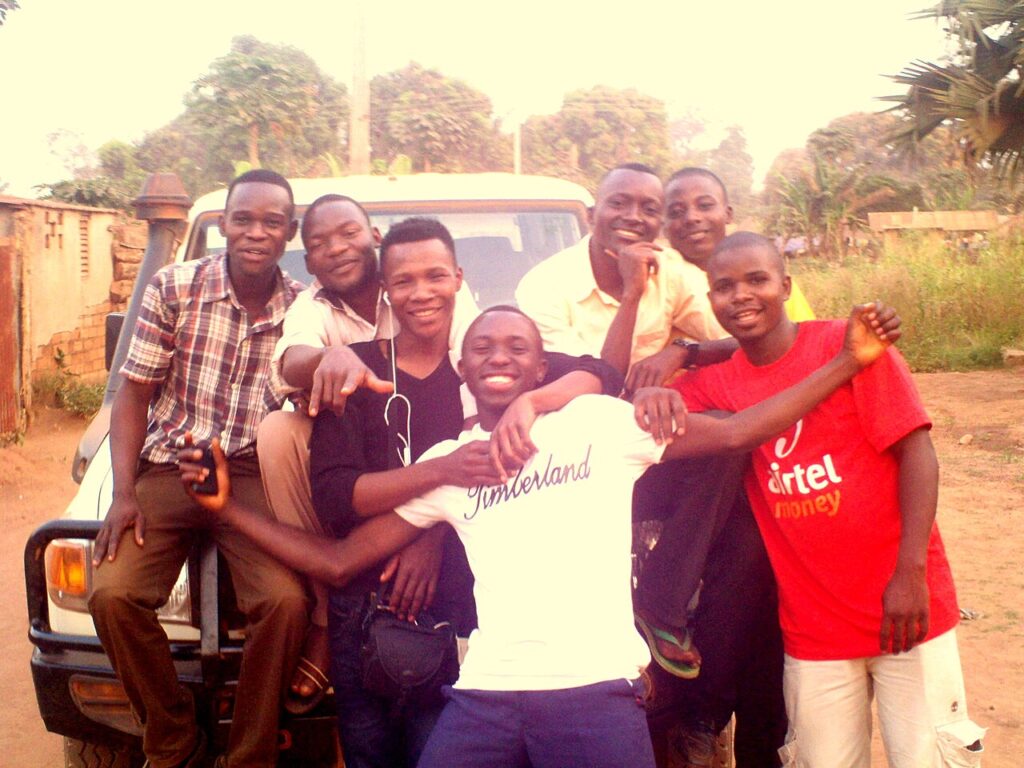
Yambio, South Sudan Weekend: Markets, Mosques & The Sweetest Honey West of the Nile (2026)
You step off the dusty plane into the thick, humid air, and the first thing that hits you is the scent of wild mangoes and woodsmoke—a perfume unique to this corner of South Sudan. By Saturday evening, you’ll be haggling for vibrant fabrics in the bustling market, your hands sticky with the region’s famous honey, as the call to prayer echoes from the central mosque. This is Yambio, a frontier town where the wild heart of Africa beats strong, and a weekend here feels like a discovery.
Quick Facts Before You Go
- Best Months: December to February (dry season). You’ll avoid the torrential rains that turn roads to rivers, and the heat is more bearable for walking.
- Currency: South Sudanese Pound (SSP). $1 USD ≈ 600 SSP (as of late 2024). Bring crisp, new US dollars—they’re widely accepted and preferred over local currency for larger purchases.
- Language: English is the official language, but you’ll hear Azande spoken widely. Most people in markets and hotels speak basic English; a few phrases in Azande (like “sayo” for hello) will earn you genuine smiles.
- Budget: $80–$120 per day (covers a good guesthouse, three meals, transport, and a few souvenirs). It’s cheaper than Juba, but don’t expect backpacker prices—logistics are costly here.
- Getting There: Fly into Yambio Airport (YBW) from Juba (1.5 hours, $200–$300 one-way). Book at Skyscanner. Flights are infrequent (twice weekly), so plan ahead.
Day 1: The Market, The Mosque & The Honey Trail
You start your Saturday morning at 7 a.m., stepping out of your guesthouse into the cool, pre-rainy-season air. The roosters are still crowing, and the distant thump of a mortar and pestle grinding cassava tells you the town is waking up. Your first stop is the central market—a chaotic symphony of color, noise, and smell. Travelers often discover that this is where the real Yambio lives, far from any government office or NGO compound.
- Morning (8–11am): Head to the Yambio Main Market (free entry, open daily 6am–6pm). You’ll weave through stalls piled high with bright indigo fabrics, heaps of groundnuts, and pyramids of wild mangoes. The real treasure here is the honey—local beekeepers sell it in recycled soda bottles for 500 SSP ($0.80) per liter. Taste it first; it’s floral and smoky, unlike anything you’ve had. Don’t miss the small livestock section where goats bleat in protest. For a guided tour, hire a local teenager (100 SSP, $0.15) who’ll show you the best spice sellers.
- Lunch: Walk to Al-Mukhtar Restaurant (on the main road, 10 minutes from market). This no-frills spot is where locals recommend you try the *ful medames* (stewed fava beans with olive oil and cumin, 600 SSP/$1) and fresh *kisra* (sorghum flatbread, 200 SSP/$0.30). The owner, Ibrahim, has been serving it since 2011, and his secret is a dash of chili and a squeeze of lime. You’ll leave full for under $2.
- Afternoon (1–5pm): First, visit the **Yambio Mosque** (free, modest dress required). Built in 1954 during the Anglo-Egyptian Condominium, its white minaret stands proud against the green hills. You can enter the courtyard, but skip prayer times (Friday noon and daily 1pm). Then, drive 20 minutes south to the **Gangura Forest Reserve** (entry 2,000 SSP/$3.50). Travelers often discover that the forest trails are empty on weekends—you’ll walk under towering mahogany trees, spot red colobus monkeys, and hear the crash of falling fruit. Hire a local guide (500 SSP/$0.80) who’ll point out medicinal plants used by the Azande people for centuries.
- Evening: Dinner at **Café de la Paix** (on the Juba Road, 7pm–10pm). This open-air spot serves grilled tilapia (3,500 SSP/$6) with *ugali* (maize porridge) and a spicy tomato salsa. The atmosphere is relaxed—you’ll hear the hum of generators and the occasional burst of laughter from a card game. Pair it with a cold *Club* beer (1,500 SSP/$2.50) from South Sudan’s only brewery. Afterward, take a slow walk back to your guesthouse; the stars here are so bright you’ll see the Milky Way.
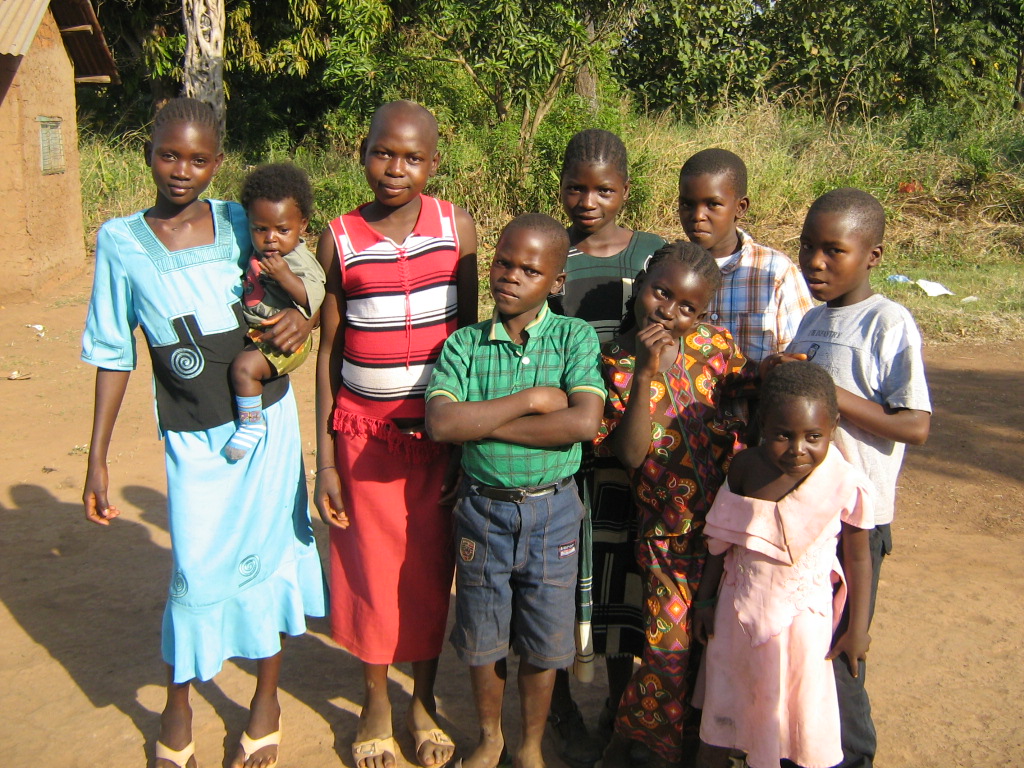
Children in en:Yambio, West Equatorial South Sudan, Yambio, South Sudan
Day 2: The Crocodile River & The Legacy of the Azande
Sunday morning dawns with a soft golden light, and you’re grateful for the quiet. Yesterday was about the bustle; today is about the history and nature that define this region. Locals recommend starting early, before the heat builds to a sticky crescendo by noon.
- Morning (7–10am): Drive 40 minutes east to the **Nzara River** (no entry fee, but a local guide costs 1,000 SSP/$1.70). This slow, brown river is where you’ll find the famous crocodiles—locals call them “the old ones.” You’ll stand on the bank as your guide points out a 12-foot Nile crocodile basking on a sandbar. It’s a humbling sight. Then, visit the **Nzara Bridge**, built in 1932 by the British, where you can see women washing clothes and children fishing with handmade nets. Bring a small offering (like a bag of salt) for the village elder—it’s a gesture of respect that travelers often discover opens doors to stories and tea.
- Midday (10am–1pm): Visit the **Yambio Cultural Museum** (entry 1,500 SSP/$2.50, open 9am–4pm). Housed in a colonial-era building with peeling blue paint, this small museum holds artifacts from the Azande kingdom: iron-tipped spears from the 19th century, ceremonial masks, and a replica of the throne of King Gbudwe, who ruled here until 1905. The curator, a retired teacher named James, will tell you the story of how the Azande resisted British colonization—a tale of cunning and bravery. Insider tip: come at 11am to avoid the school groups that arrive at noon.
- Afternoon (1–4pm): Explore the **Yambio Craft Market** (behind the main market, open until 5pm). This is where savvy visitors head for souvenirs. You’ll find handwoven baskets (2,000 SSP/$3.50), carved wooden figures (1,500 SSP/$2.50), and the famous Azande *ngbaka* drums (5,000 SSP/$8.50). Haggle politely—start at half the asking price and meet in the middle. The sellers are mostly women from the surrounding villages, and they’ll tell you the story behind each piece if you ask.
- Final Evening: Your farewell dinner should be at **The Mango Garden** (a 15-minute walk from the market, 6pm–9pm). This family-run spot is tucked behind a bougainvillea-covered wall. The specialty is *mishkaki* (grilled beef skewers marinated in ginger and garlic, 4,000 SSP/$7), served with *chapati* (flaky flatbread, 500 SSP/$0.80) and a side of *kachumbari* (fresh tomato and onion salad). The owner, Mama Grace, will bring you a complimentary cup of spiced tea (chai) as you sit under the mango trees. It’s the kind of meal that makes you wish your weekend were longer.

Explore the magnificent ancient ruins of Naqa, Yambio, South Sudan
The Food You Can’t Miss
In Yambio, food is a story of the land. Travelers often discover that the cuisine is built around what grows wild—mangoes, bananas, cassava, and the incredible honey that flows from the forests. The honey is the star: you’ll find it drizzled over fresh *mandazi* (fried dough, 200 SSP/$0.30) at street stalls near the market, or stirred into tea at breakfast. Locals recommend buying it directly from beekeepers in the forest villages—it’s cheaper (200 SSP/$0.30 per bottle) and more flavorful than anything in the market.
For a proper sit-down meal, you can’t miss **Al-Mukhtar Restaurant**, where you’ll eat *kisra* and *ful* for under $2. But the real treasure is the street food: grilled maize cobs (100 SSP/$0.15) sold by women on the roadside, roasted groundnuts (50 SSP/$0.08) from paper cones, and the occasional seller of *asida* (a dense sorghum porridge, 300 SSP/$0.50) served with a spicy okra stew. The secret is to eat where the locals eat—look for the busiest stalls with the most smoke.
Don’t leave without trying the *ngor*—a traditional Azande dish of ground cassava leaves cooked with peanut butter and dried fish (800 SSP/$1.30). You’ll find it at **Café de la Paix** on request, but you need to order it a day in advance. It’s earthy, rich, and utterly unique—a taste of the forest in every bite.
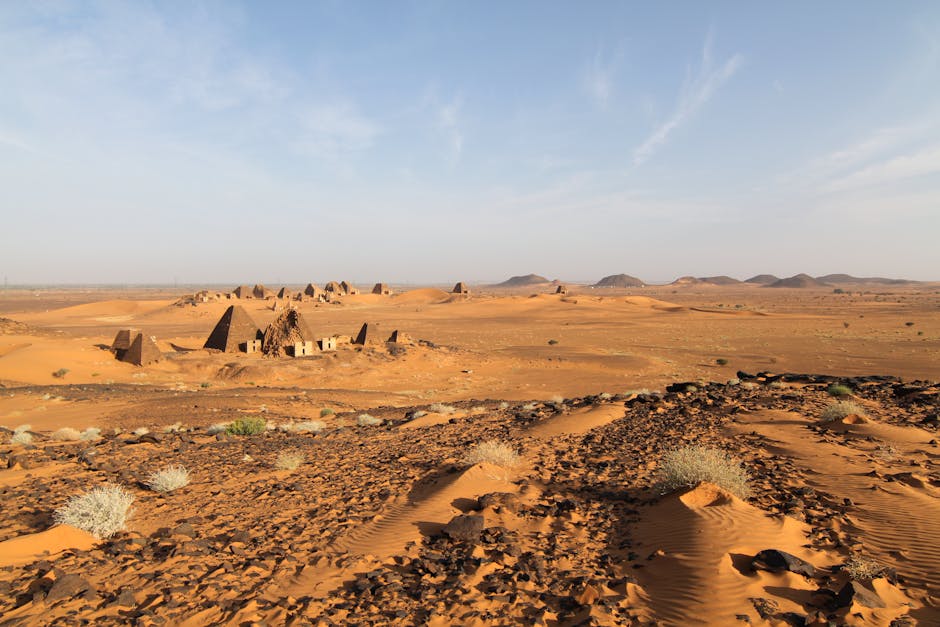
Explore the ancient pyramids of Meroë against the vast desert landscape in Sudan, Yambio, South Sudan
Where to Stay for the Weekend
For the best base, choose the **Yambio Guesthouse** (on the main road, $40–$60 per night). It’s clean, has reliable power (solar panels, but bring a backup battery), and the staff will arrange transport. Travelers often discover that the rooms facing the garden are quieter—ask for Room 4 or 5. Book via Booking.com.
If you’re on a tighter budget, **The Green Haven Lodge** (near the airport, $25–$35 per night) offers basic rooms with shared bathrooms. It’s run by a local family who’ll feed you breakfast (bread, eggs, and tea) for an extra $3. For a more authentic experience, try Airbnb—search for “Yambio homestay” to find a room in a Azande family home ($15–$20 per night). You’ll share meals and learn to cook *kisra* from scratch.
Before You Go: Practical Tips
- Getting Around: The main mode of transport is *boda-boda* (motorcycle taxis). A short ride within town costs 200–500 SSP ($0.30–$0.80). For trips to Nzara or Gangura, hire a private car from your guesthouse (2,000–3,000 SSP/$3.50–$5.00 per hour). Negotiate the price before you start. Walking is safe during daylight, but carry a small flashlight for evening strolls—streetlights are rare.
- What to Pack: 1) A lightweight, long-sleeved shirt (for sun and mosquitoes—malaria is present). 2) A reusable water bottle with a filter (tap water isn’t safe). 3) A power bank (electricity can be intermittent). 4) A small gift like pens or notebooks for children you meet—it’s a gesture that travelers often discover creates instant connections.
- Common Tourist Mistakes: 1) Photographing people without asking—always request permission first (a smile and a wave work wonders). 2) Assuming you can use credit cards—cash is king. 3) Wearing shorts or revealing clothes in the market or mosque—locals are conservative, and you’ll attract unwanted attention. 4) Underestimating the heat—plan your outdoor activities for morning and late afternoon.
- Money-Saving Tip: Exchange your dollars at the **Yambio Forex Bureau** (near the market, open 9am–5pm) rather than at the airport. You’ll get 50–100 SSP more per dollar. Also, buy your honey and crafts directly from producers in the forest villages—you’ll pay half the market price and support the local economy.
Related Guides
Explore more destinations similar to Yambio:
- Andorra la Vella, Andorra: Best Duty-Free Shopping, Pyrenean Peaks & Romanesque Charm (2026)
- Puno, Peru’s Best Floating Islands, Andean Culture & Lake Titicaca Mysteries (2025)
- Nzérékoré, Guinea: Hidden Rainforest Adventures, Traditional Culture & Authentic Markets (2025)
- Dogon Kirya, Niger: Stunning Ancient Architecture, Starry Skies & Living Traditions (2025)

