
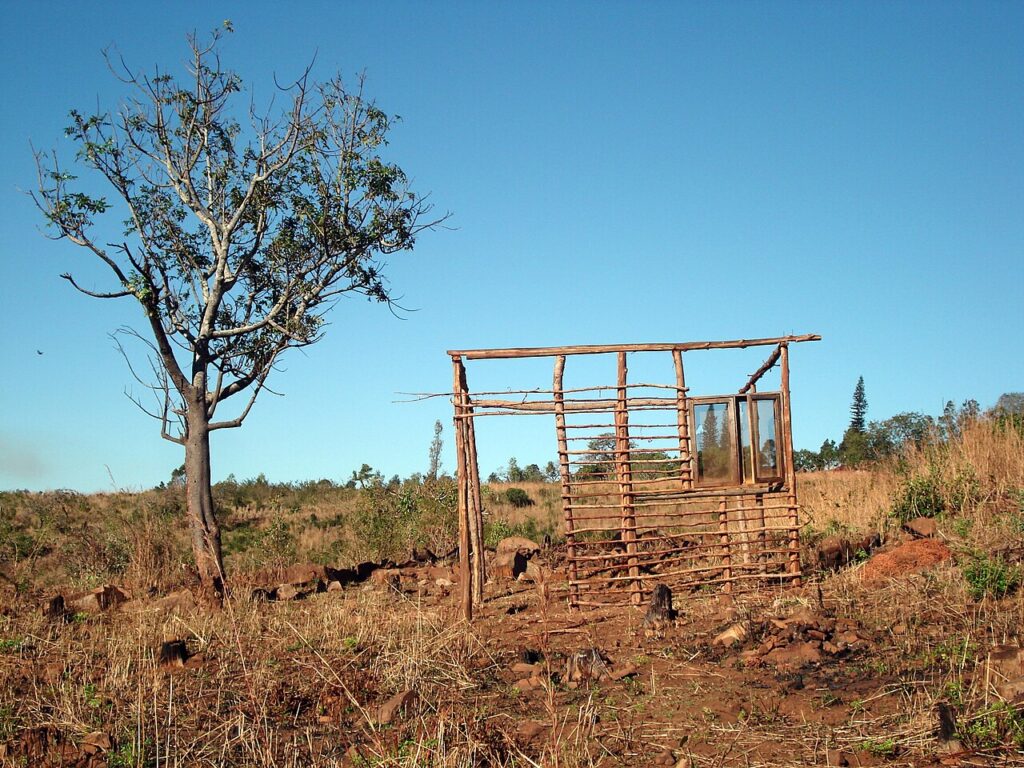
Beyond the Border Post: Why Namaacha (2026)
In 1895, a Portuguese military engineer named Joaquim José Machado stood on a high plateau just 70 kilometers from the Indian Ocean, sketching plans for a railway that would connect Lourenço Marques (now Maputo) to the Transvaal. What he didn’t realize was that this cool, misty outpost—perched at 800 meters above sea level—would become a legendary weekend retreat for colonial elites, a smuggling hub, and eventually, one of Mozambique’s most atmospheric border towns. Namaacha was born not as a destination, but as a pause.
The Story Behind Namaacha, Mozambique
Namaacha’s history is written in stone and railway ties. The town was officially founded in the late 19th century as a customs post along the Mozambique-Swaziland (now Eswatini) border, but its real identity crystallized in the 1920s and 1930s, when Portuguese settlers discovered the plateau’s cool climate—often 10°C cooler than Maputo—as a perfect escape from coastal humidity. By 1934, the colonial government had built the grand Hotel de Turismo, a whitewashed Art Deco masterpiece that became the social heart of the town. Wealthy families from Lourenço Marques would drive up the newly paved EN2 highway on Friday afternoons, their cars laden with picnic baskets and gramophones.
The town’s golden age lasted until the Mozambican War of Independence (1964–1974) and the subsequent civil war (1977–1992), during which Namaacha’s strategic border position made it a contested zone. The hotel fell into disrepair, the gardens grew wild, and the railway station—once bustling with traders—fell silent. But travelers today discover a town in quiet renaissance. The old colonial mansions, many painted in faded pastels of ochre, pink, and mint green, are being restored by returning families and new residents drawn to Namaacha’s peculiar charm. Locals recommend walking the main street, Avenida 25 de Setembro, where the ghosts of the 1930s still linger in the wrought-iron balconies and jacaranda trees.
A turning point came in 2005, when the Mozambican government designated Namaacha as a “Heritage Town,” sparking a slow but steady wave of restoration. You’ll notice the pride in how residents maintain their homes—fresh whitewash on facades, geraniums in window boxes, and the occasional vintage car parked outside a café. The border post itself, which sees a steady stream of trucks and travelers crossing into Eswatini, gives the town a frontier energy that feels more like a 19th-century trading post than a 21st-century border crossing.
Neighborhood by Neighborhood
Vila Velha (Old Town)
This is the heart of Namaacha, centered around the intersection of Avenida 25 de Setembro and Rua da Estação. You’ll find the old colonial core here: a grid of wide, tree-lined streets flanked by single-story houses with deep verandas and terracotta roof tiles. The air smells of woodsmoke, jasmine, and damp earth—a result of the frequent afternoon mists that roll in from the Lebombo Mountains. Your best bet is to start at the Praça da Independência, a small square dominated by a whitewashed church, Igreja de Nossa Senhora da Conceição, built in 1938. On Sunday mornings, you’ll hear the choir singing in both Portuguese and Xitswa, the local Bantu language. Wander down Rua do Comércio, where a handful of tiny shops sell everything from Portuguese canned sardines to Mozambican capulana fabrics. Most tourists overlook the old railway station at the end of the street—it’s now a private home, but the owner, Senhor Carlos, a retired railway worker in his 80s, will often invite you in for a cup of sweet chá preto if you knock politely.
Bairro Novo (New Neighborhood)
Head east from the old town, and you’ll enter Bairro Novo, a residential area that grew rapidly in the 1970s and 1980s as people moved to Namaacha for work at the border. The architecture here is more utilitarian—cement-block houses with corrugated iron roofs—but the streets are alive with activity. You’ll find the municipal market, Mercado Municipal de Namaacha, at the junction of Rua de Maputo and Avenida da Frente. It’s a chaotic, colorful affair, open daily from 6:00 AM to noon, where vendors heaped with mounds of fresh cassava, bananas, tomatoes, and fiery piri-piri chilies. Locals recommend arriving by 7:00 AM to catch the best produce and avoid the heat. Don’t miss the small section dedicated to crafts—women sell handwoven baskets, wooden spoons, and traditional xitende (palm-fiber mats) for around 50 to 100 meticais (about $1 to $2). The neighborhood also has a lively bar scene: try Bar do Zé, a no-frills spot on Rua da Frente where you can drink a cold 2M beer (the local lager) for 30 meticais (about 50 cents) and watch the world go by.
Zona Alta (Upper Zone)
For the best views in Namaacha, make your way up the hill to Zona Alta, the former colonial elite’s residential enclave. This is where you’ll find the grandest old villas, many set back from the road behind high walls and bougainvillea-covered gates. The star attraction is the Hotel de Turismo, at the top of Rua do Hotel. Though it’s been closed for renovations since 2018, you can still walk its overgrown grounds and imagine the glamorous parties of the 1940s. The building’s facade—a swooping Art Deco curve with a central tower—is a photographer’s dream at golden hour. Just beyond the hotel, a short trail leads to Miradouro de Namaacha, a viewpoint overlooking the valley and, on clear days, the distant peaks of the Lebombo range. Savvy visitors know to come here at sunset, when the sky turns shades of apricot and violet and the temperature drops sharply—bring a light jacket, as the wind can be brisk. The neighborhood is also home to the town’s only proper restaurant, Restaurante O Miradouro (Rua do Miradouro, open 11:00 AM to 9:00 PM), where you can eat grilled chicken with matapa (cassava leaves cooked in coconut milk) for 250 meticais (about $4).
The Local Table: What Namaachans Actually Eat
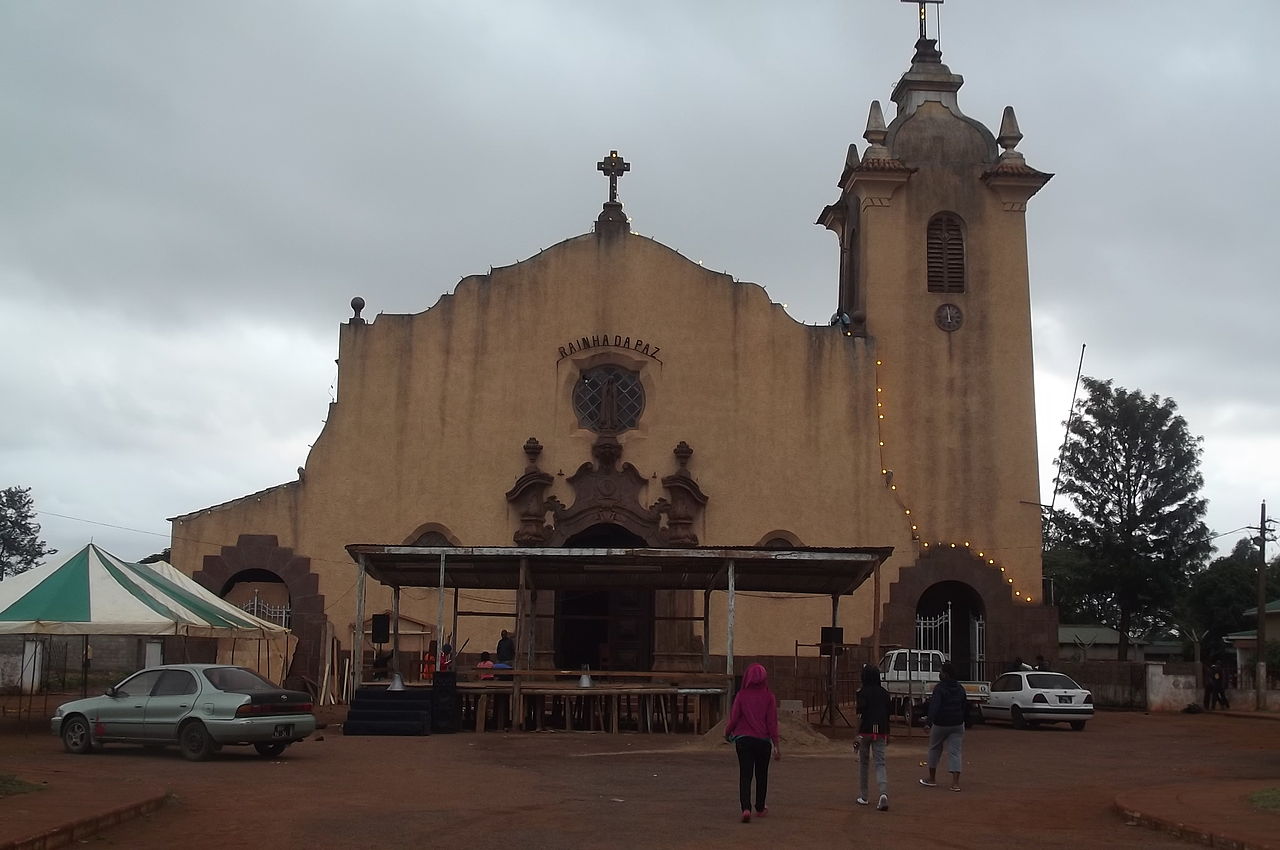
Church in Namaacha, Mozambique
Food in Namaacha is a delicious collision of Portuguese and African traditions, shaped by the town’s border location and its agricultural surroundings. You’ll find staples like xima (a stiff maize porridge, similar to polenta) served with fish or chicken, but the real star is matapa—a rich, creamy stew made from cassava leaves, coconut milk, ground peanuts, and often prawns or crab. It’s a dish that requires patience: the leaves must be pounded, then slow-cooked for hours until they break down into a silky green sauce. Locals recommend eating it at Dona Maria’s, a humble family-run eatery on Rua da Estação (no sign, just a blue door; open for lunch only, 11:00 AM to 2:00 PM). Dona Maria herself will bring you a plate of matapa with rice and a side of fried fish for 150 meticais (about $2.50).
Your best bet for exploring the food scene is the Mercado Municipal, where you can buy fresh ingredients and have them cooked on the spot. Look for the women grilling espetadas (skewers of beef or chicken) over charcoal fires—they’ll serve you a skewer with a side of piri-piri sauce and fresh bread for 50 meticais (about $1). Don’t leave without trying the local fruit: papayas, mangoes, and the tiny, intensely sweet bananas called banana ouro (“golden banana”). For a sweet treat, seek out pastéis de nata at Padaria Central (Avenida 25 de Setembro, open 7:00 AM to 6:00 PM), where the Portuguese-style custard tarts are baked fresh daily and cost just 10 meticais (about 15 cents) each.
Seasoned travelers know that Namaacha’s food culture is also shaped by its border. You’ll notice a distinct Eswatini influence in the use of ground maize and in the popularity of a fermented drink called emahewu (a sour, non-alcoholic porridge-like beverage). Try it at the market—vendors sell it in plastic cups for 5 meticais (about 8 cents). It’s an acquired taste, but locals swear by it for cooling down on hot afternoons.
Art, Music & Nightlife
Namaacha’s creative scene is small but passionate, centered around the town’s cultural center, Centro Cultural de Namaacha, located in a restored colonial house on Rua da Cultura (open Tuesday to Saturday, 9:00 AM to 5:00 PM). Here, you’ll find rotating exhibitions of local painters and sculptors, many of whom work in a style that blends traditional Mozambican motifs with Portuguese colonial influences. The center also hosts weekly music performances on Friday evenings at 6:00 PM, featuring marrabenta—Mozambique’s signature dance music, a fusion of traditional rhythms with Portuguese folk and American jazz. The most famous local musician, António “Toni” Nhacale, a 70-year-old guitarist who learned his craft in the 1960s, still plays here occasionally. If you’re lucky enough to catch him, you’ll hear songs that tell stories of Namaacha’s past—the railway, the border, the old hotel.
Nightlife in Namaacha is low-key but convivial. Your best bet is to head to Bar do Zé in Bairro Novo, where locals gather around plastic tables under string lights to drink 2M beer and play dama (a Portuguese checkers game). The bar stays open until midnight on weekends, and you’ll often hear a portable speaker playing marrabenta or kizomba (Angolan dance music). For a more refined evening, the terrace of Restaurante O Miradouro in Zona Alta is perfect for a glass of Portuguese vinho verde (green wine) while watching the lights of the valley twinkle below. The restaurant closes at 9:00 PM, so plan accordingly. If you’re in town during the last weekend of August, don’t miss the Festa da Namaacha, a three-day celebration with live music, traditional dance, and a food fair that takes over the entire old town—it’s the town’s biggest event of the year.
Practical Guide
- Getting There: Fly into Maputo International Airport (MPM). From Maputo, it’s a 1.5-hour drive (70 km) on the EN2 highway. You can also take a chapa (shared minibus) from Maputo’s Museu stop—they leave every 30 minutes from 5:00 AM to 6:00 PM. Cost: 100 meticais ($1.50). Book flights at Skyscanner
- Getting Around: Namaacha is walkable—the old town is just 1 km across. For trips to the market or Zona Alta, take a tuk-tuk (50 meticais, about $0.75). Bicycles are available for rent at the Centro Cultural for 100 meticais ($1.50) per day.
- Where to Stay: For colonial charm, book a room at Casa do Lago (Rua do Lago, from $30/night), a restored 1930s villa with a garden. For budget, try Pensão Namaacha (Rua da Estação, from $15/night). Check Booking.com
- Best Time: May to September (dry season) for clear skies and comfortable temperatures (15-25°C). Avoid December to February (rainy and humid).
- Budget: $20-30 per day for budget travelers (accommodation, meals, transport). $50-70 for mid-range (private room, restaurant meals, a few drinks).

Stunning aerial view of Maputo, Namaacha, Mozambique
What Surprises First-Time Visitors
The first surprise travelers discover about Namaacha is the climate. You’re just 70 kilometers from the Indian Ocean, yet the town feels like a mountain retreat—cool, misty, and often shrouded in cloud by mid-afternoon. Visitors from Maputo, where the humidity can be oppressive, are stunned by the need for a light sweater even in summer. This microclimate is what made Namaacha a colonial escape, and it still defines the town’s rhythm: mornings are crisp and bright, afternoons bring mist or rain, and evenings are cool and still. Plan your activities accordingly—do your exploring between 7:00 AM and noon, then settle in for a long lunch or a nap.
The second surprise is the border’s sense of quiet drama. Unlike the chaotic border crossings you might expect in Africa, Namaacha’s post is calm and orderly, with a steady stream of trucks, minibuses, and pedestrians crossing into Eswatini. You’ll see women carrying goods on their heads, children selling peanuts and oranges to waiting drivers, and the occasional herd of cattle being driven through the checkpoint. It’s a reminder that Namaacha is not just a destination but a passage—a place where journeys pause before continuing. The border itself is a fascinating place to observe for 30 minutes, especially in the early morning when the queue is longest.
Finally, first-time visitors are surprised by the town’s quiet pride. Namaacha is not a tourist hub—it’s a real, working town where people go about their daily lives. You won’t find souvenir shops or guided tours. What you’ll find instead is a community that welcomes curiosity but doesn’t perform for it. Smile, greet people in Portuguese (“Bom dia”), and you’ll be rewarded with genuine warmth. Locals recommend stopping by the town’s small library (Rua da Cultura, open Monday to Friday, 8:00 AM to 4:00 PM), where the librarian, Dona Isabel, will happily show you old photographs of Namaacha from the 1930s—a glimpse into a past that still lingers in the air.
Your Namaacha, Mozambique Questions

Aerial view of Maputo, Namaacha, Mozambique
Is Namaacha safe for solo travelers? Yes, it’s very safe—violent crime is rare, and the town’s small size means you’ll quickly become a familiar face. However, as with any border town, you should be cautious after dark, especially around the market area. Stick to well-lit streets, and if you’re walking alone, stick to Avenida 25 de Setembro, where there are still people around until 8:00 PM. The bigger risk is petty theft—keep your valuables out of sight and your bag zipped, especially in crowded areas like the market. Solo female travelers report feeling comfortable, though you may attract some attention (mostly friendly) from local men—a polite “Não, obrigado” (“No, thank you”) is usually enough.
Can I cross into Eswatini from Namaacha for a day trip? Absolutely—the border post (called “Namaacha” on the Mozambican side and “Ngwenya” on the Eswatini side) is open daily from 6:00 AM to midnight. You can cross on foot, by bicycle, or by vehicle. On the Eswatini side, you’ll find the Ngwenya Glass Factory (a famous glassblowing studio open 8:00 AM to 5:00 PM) and the historic Ngwenya Mine, one of the world’s oldest mines, dating back 43,000 years. Visas are required for most nationalities—check requirements in advance, as you’ll need to have them ready at the border. The crossing is straightforward, but allow 30-45 minutes for processing. A day trip is easily doable—just make sure you’re back in Namaacha before the border closes at midnight.
What should I pack for Namaacha? Think layers, not tropics. Even in summer (November to March), the evenings can be cool, and the mist can be damp. Pack a light sweater or fleece, a waterproof jacket (for afternoon showers), comfortable walking shoes, and a hat for sun protection during the morning hours. Don’t forget insect repellent—mosquitoes are present, especially around dusk. A reusable water bottle is essential, as tap water is not safe to drink; buy bottled water at the market or at small shops (10 meticais for 1.5 liters). And bring a sense of patience—Namaacha moves at its own pace, and that’s exactly the point.
Explore More Destinations
- Jozani, Tanzania on a Budget: an Ancient Forest for $35/Day (2026)
- Nsumbu, Zambia on a Budget: Wild Africa for $40/Day (2026)
- Semporna, Malaysia on a Budget: Paradise for $35/Day (2026)
- Khuzestan, Iran on a Budget: Ancient Empires for $30/Day (2026)
- Ngerulmud, Palau on a Budget: Island Majesty for $45/Day (2026)
Ready to Visit Beyond the Border Post?
Start planning your trip today. Compare hotels, find the best tours, and get insider tips.
Your adventure in Beyond the Border Post starts here →
Related Guides
Explore more destinations similar to Beyond the Border Post:
- Tanna’s Volcano, Vanuatu’s Best Fire, Culture & Ancient Rainforest (2026)
- Oualata, Mauritania: Best Ancient Libraries, Saharan Architecture & Living Traditions (2025)
- Plovit Divjak, Croatia: Best Waterfalls, Medieval Mystique & Mountain Serenity (2025)
- Koh Jum, Thailand: Hidden Untouched Beaches, Sea Gypsy Culture & Jungle Adventures (2025)

