
Where the Dragon Rests: Punakha’s Quiet Hold on Bhutan’s Soul (2026)
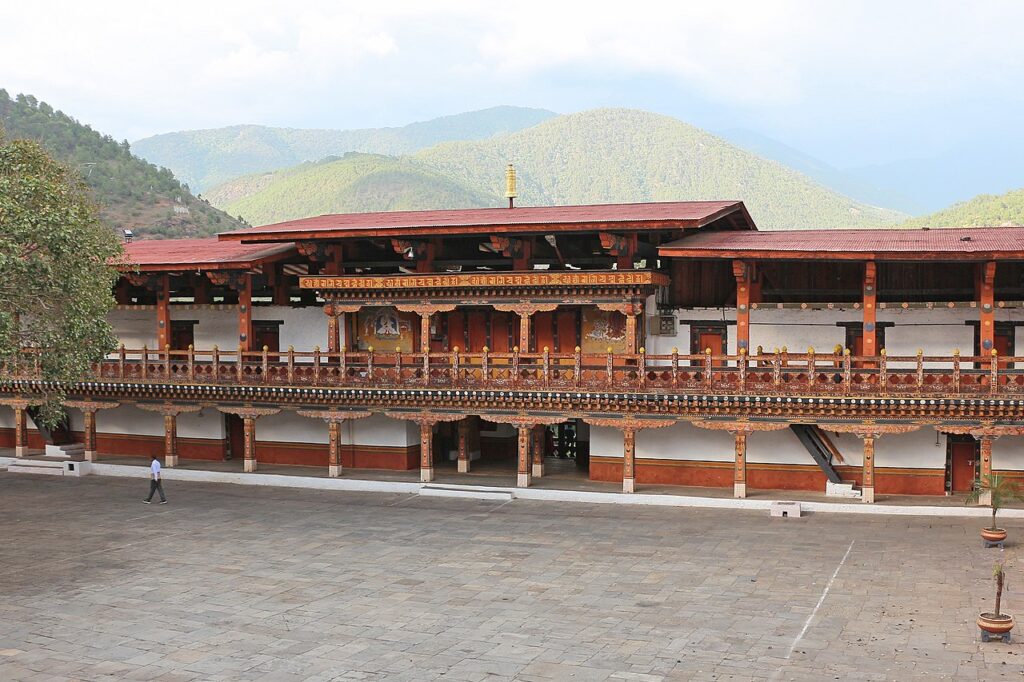
In 1637, Zhabdrung Ngawang Namgyal, the unifier of Bhutan, stood on a slender ridge where two rivers—the Pho Chhu and Mo Chhu—collide like silver serpents. He ordered the construction of a dzong so magnificent that it would become the spiritual and administrative heart of the kingdom for three centuries. Today, as you cross the cantilevered wooden bridge into Punakha Dzong, your footsteps echo the same rhythm as the monks and kings who have walked here for nearly 400 years. This is not just a fortress; it is the living pulse of Bhutan.
The Story Behind Punakha, Bhutan
Punakha’s history is woven with threads of conquest, devotion, and resilience. Before the Zhabdrung’s arrival, the valley was a patchwork of warring clans under the influence of Tibetan lamas. In 1637, after unifying the western regions, Namgyal chose this fertile valley—warmer than Paro and less remote than Bumthang—as his winter capital. The dzong he built, completed in 1638, housed the most sacred relic in Bhutan: the Rangjung Kharsapani, a self-created statue of Chenrezig (the bodhisattva of compassion) that emerged from a conch shell. Travelers often discover that this statue remains the dzong’s most revered treasure, and you’ll see locals prostrating before it with quiet intensity.
For nearly 300 years, Punakha served as the seat of Bhutan’s government, surviving fires, earthquakes, and a 1712 Tibetan invasion that saw the dzong’s walls scarred by cannonballs. In 1907, the first hereditary king of Bhutan, Ugyen Wangchuck, was crowned here in a ceremony that blended Buddhist ritual and royal pageantry. The coronation hall, with its intricate murals of the four guardian kings, still stands. You’ll notice how the dzong’s architecture mirrors Bhutan’s political evolution: the central tower (utse) represents the union of spiritual and temporal power, while the two rivers symbolize the dual forces that have shaped the nation. Locals recommend visiting between November and March, when the jacaranda trees in the courtyard bloom in violet cascades—a sight that makes even seasoned travelers pause.
Neighborhood by Neighborhood
Punakha Town (The Bazaar)
Punakha Town, often called the Bazaar, is the valley’s commercial spine—a single, dusty main street lined with corrugated-roof shops and chortens. Here, you’ll find the rhythm of daily life: women in striped *kira* skirts haggling over dried chilies, farmers selling giant pumpkins from the back of pickup trucks, and the occasional monk in maroon robes tapping on a smartphone. The architecture is utilitarian—two-story concrete buildings painted in Bhutan’s signature earth tones of ochre and white—but the energy is raw and authentic. Your best bet for a quick meal is *Zompa Restaurant*, a family-run spot on the north end where the *ema datshi* (chili cheese stew) is so fiery it will clear your sinuses. Locals gather here around 11 a.m. for *suja* (butter tea) and gossip. Don’t miss the small vegetable market near the bus stop, open daily from 6 a.m. to noon, where you can buy *datshi* (local cheese) wrapped in banana leaves. The secret is to arrive early, before the tour groups descend from Paro.
Khamsum Yulley Valley
A 20-minute drive north of the town center, the Khamsum Yulley Valley feels like stepping into a different century. This is rural Bhutan at its most serene: terraced rice paddies climb the hillsides like green staircases, and farmhouses with wooden balconies and prayer flags dot the slopes. The neighborhood’s crown jewel is the Khamsum Yulley Namgyal Chorten, a three-story temple built in 1999 to ward off evil spirits and promote peace. Unlike the bustling dzong, this chorten sees few visitors; you’ll often have it to yourself. The hike up takes about 45 minutes from the parking lot—bring water and wear sturdy shoes, as the path is steep and can be muddy after rain. At the top, the view of the Mo Chhu River snaking through the valley is worth every step. Locals recommend visiting in the late afternoon, when the light turns the rice fields gold and the only sounds are wind and distant chanting from a nearby *gompa* (monastery).
Wangdue Phodrang (The Neighbor Across the River)
Technically a separate district, Wangdue Phodrang sits just a 15-minute drive southeast of Punakha Town, but savvy visitors treat it as an extension of the valley. The neighborhood is defined by the Wangdue Phodrang Dzong, a fortress that burned down in 2012 and is now being meticulously rebuilt. The reconstruction is a fascinating process to witness: you can see artisans carving wooden beams and painting murals using traditional pigments. The town itself is a sleepy collection of shops and guesthouses, but the real draw is the *Rinchenling Monastery*, a 15th-century temple that survived the fire. Inside, you’ll find a 12-foot-tall statue of Guru Rinpoche and a collection of ancient *thangkas* (scroll paintings) that are rarely displayed. Locals recommend stopping by the *Wangdue Phodrang Market* on weekends, when farmers from surrounding villages sell handmade paper, yak butter, and the region’s famous honey. Plan to spend at least two hours here, as the dzong’s reconstruction site offers a rare glimpse into Bhutan’s living heritage.
The Local Table: What Natives Actually Eat
Punakha’s cuisine is a love letter to chili. Unlike the milder food of central Bhutan, the valley’s warmer climate yields a bounty of fiery red and green chilies that locals treat as a vegetable, not a spice. The defining dish is *ema datshi*—a molten stew of chilies, yak cheese, and tomatoes that is eaten with red rice at nearly every meal. Travelers often discover that the heat is cumulative; your first bite may seem mild, but by the third, you’ll be reaching for water. Locals recommend seeking out *Momo Corner*, a tiny stall near the dzong’s entrance, for the best *momos* (dumplings) in the valley. The pork version, spiced with ginger and Sichuan peppercorns, is a revelation. You’ll find them served with a side of *ezay* (a condiment of chilies, garlic, and cilantro) that will make your eyes water.

Punakha Dzong, Bhutan, Punakha, Bhutan
The valley’s food culture is deeply tied to its agricultural cycle. In late October, during the *Lhabab Duchen* festival, families gather to harvest rice and prepare *zow* (puffed rice) and *suja* (butter tea) for visiting monks. If you’re here in winter, look for *phaksha paa* (dried pork) hanging from farmhouse eaves, cured in the cold air and then fried with chilies. The most authentic experience is a home-cooked meal at *Farmhouse Kitchen*, a family-run guesthouse in the Khamsum Yulley Valley. For 400 ngultrum (about $5), you’ll sit on a wooden floor and eat from a communal platter while the matriarch, Aum Chimi, explains how each dish was prepared. The secret is to ask for *suja* with extra salt—it cuts the richness of the cheese dishes.
Art, Music & Nightlife
Punakha’s creative scene is subtle but deeply rooted. The valley is home to the *Punakha Tsechu*, a three-day festival held in March that features masked dances (*cham*) performed by monks in silk robes. The dances, which depict the triumph of Buddhism over evil, are accompanied by the deep, resonant rhythm of *dungchen* (long horns) and *rolmo* (cymbals). Unlike the more tourist-heavy Paro Tsechu, this one feels intimate—you’ll find yourself standing shoulder-to-shoulder with farmers and villagers who have walked for hours to attend. The best spot is near the dzong’s main courtyard, where the dances unfold under the jacaranda trees. Arrive by 8 a.m. to secure a good view; the festival runs from 9 a.m. to 5 p.m. each day.
Nightlife in Punakha is a quiet affair. There are no clubs or bars, but the *Punakha Lodge* hosts occasional folk music evenings where locals play the *dramnyen* (a six-stringed lute) and sing songs about love and loss. These sessions are informal—you might be invited to join a game of *shato* (a dice game) over a glass of *ara* (local rice wine). The wine, served warm in bamboo cups, is potent and smoky, and you’ll find it at *Chimi’s Kitchen* in the Bazaar for 50 ngultrum a glass. For a more serene evening, walk to the Mo Chhu River after dark; the dzong is lit with golden lights, and the sound of the river drowns out the world. Locals recommend bringing a flashlight, as the paths are unlit.
Practical Guide
- Getting There: Fly into Paro International Airport (PBH) from Bangkok, Delhi, or Kathmandu on Druk Air or Bhutan Airlines. From Paro, it’s a 3-hour drive to Punakha on winding mountain roads. Book at Skyscanner
- Getting Around: Taxis from Paro cost about 2,500 ngultrum ($30) one way. Within Punakha, hire a driver for the day (1,500 ngultrum) or walk between the Bazaar and the dzong. Buses are infrequent but cost 50 ngultrum to Wangdue Phodrang.
- Where to Stay: Stay in the Khamsum Yulley Valley for tranquility (try *Punakha Lodge*, from $80/night) or the Bazaar for convenience (*Hotel Punakha*, from $40/night). Check Booking.com
- Best Time: March–May (spring blooms and Punakha Tsechu) and October–November (clear skies and rice harvest). Avoid June–August, when monsoon rains can cause landslides.
- Budget: Expect to spend 3,000–5,000 ngultrum ($36–$60) per day, including meals, transport, and entry fees (dzong entry is 500 ngultrum for foreigners).

Girl in pink zip up hoodie smiling, Punakha, Bhutan
What Surprises First-Time Visitors
Most travelers arrive in Punakha expecting a quiet valley, but few anticipate the sheer *scale* of the dzong. Punakha Dzong is not just a building; it’s a small city, with six temples, a monastic school, and living quarters for 600 monks. You’ll walk through corridors lined with 400-year-old murals of the Buddha’s life, and you might stumble upon a classroom where young monks chant sutras from memory. The surprise is how alive it feels—this is not a museum but a working monastery where daily life unfolds around you. Locals often say the dzong has its own weather; on misty mornings, the towers seem to dissolve into the clouds, creating an otherworldly atmosphere.
Another revelation is the valley’s warmth. At 1,200 meters above sea level, Punakha is Bhutan’s subtropical pocket, where banana trees and bougainvillea thrive. You’ll shed your jacket by 10 a.m. and find yourself sweating in the afternoon sun—a stark contrast to the crisp air of Paro. This warmth shapes the local pace of life: shops close for a midday siesta from noon to 2 p.m., and you’ll see people napping on wooden benches under the shade of banyan trees. Travelers often discover that the best conversations happen during these quiet hours, when a shopkeeper might offer you a cup of *suja* and share stories of the valley’s past. The secret is to embrace the slowness—Punakha rewards those who linger.
Your Punakha, Bhutan Questions
Is Punakha worth visiting if I only have a few days in Bhutan? Absolutely. While Paro and Thimphu get most of the attention, Punakha offers a more intimate glimpse of Bhutanese life. You can see the dzong, hike to Khamsum Yulley, and eat a home-cooked meal in a single day—but you’ll wish you had two. The valley’s relaxed atmosphere is a perfect antidote to the tourist crowds of Paro. Plan at least one overnight stay to experience the sunset over the Mo Chhu River.

Rocky mountain photograph, Punakha, Bhutan
Do I need a guide to visit Punakha? Technically, all foreign visitors to Bhutan must book through a licensed tour operator, which includes a guide. However, within Punakha, your guide can be flexible—many travelers negotiate a day of independent exploration after the dzong tour. If you’re adventurous, you can explore the Bazaar and Khamsum Yulley on your own, but a guide adds context to the dzong’s history and can arrange a home visit with a local family. Expect to pay $40–$50 per day for a guide through your tour operator.
What should I pack for Punakha? The valley’s subtropical climate means you need layers. Mornings are cool (50°F/10°C), but afternoons can hit 80°F/27°C. Pack a light jacket, comfortable walking shoes, and a hat for sun protection. Don’t forget insect repellent—the valley has mosquitoes year-round. If you’re visiting during the monsoon (June–August), bring a waterproof jacket and quick-dry clothing. Most importantly, bring a scarf or shawl for temple visits; you’ll need to cover your shoulders and knees. Locals recommend a reusable water bottle, as tap water is not safe to drink, but you can refill at hotels and guesthouses.
Frequently Asked Questions About Where the Dragon Rests
Is Where the Dragon Rests worth visiting?
Yes, Where the Dragon Rests offers unique attractions and experiences for travelers.
How many days do I need in Where the Dragon Rests?
2-4 days is ideal for first-time visitors to Where the Dragon Rests.
What is the best time to visit Where the Dragon Rests?
Spring and fall offer the best weather for visiting Where the Dragon Rests.
{“@context”: “https://schema.org”, “@type”: “FAQPage”, “mainEntity”: [{“@type”: “Question”, “name”: “Is Where the Dragon Rests worth visiting?”, “acceptedAnswer”: {“@type”: “Answer”, “text”: “Yes, Where the Dragon Rests offers unique attractions and experiences for travelers.”}}, {“@type”: “Question”, “name”: “How many days in Where the Dragon Rests?”, “acceptedAnswer”: {“@type”: “Answer”, “text”: “2-4 days is ideal for first-time visitors to Where the Dragon Rests.”}}, {“@type”: “Question”, “name”: “Best time to visit Where the Dragon Rests?”, “acceptedAnswer”: {“@type”: “Answer”, “text”: “Spring and fall offer the best weather for visiting Where the Dragon Rests.”}}]}
Explore More Destinations
Ready to Visit Where the Dragon Rests?
Start planning your trip today. Compare hotels, find the best tours, and get insider tips.
Your adventure in Where the Dragon Rests starts here →
Related Guides
Explore more destinations similar to Where the Dragon Rests:

