
Beyond the Castle Walls: Discovering Schinnen’s Quiet Soul in Limburg’s Heartland (2026)
In the autumn of 1794, as French revolutionary troops marched through the Limburg countryside, the villagers of Schinnen gathered in the shadow of their medieval castle, unsure whether to flee or fight. They chose to stay, and that decision—to hold fast to their land and traditions—would define this tiny municipality for centuries to come. Today, you’ll find that same resilient spirit woven into the cobblestone streets and half-timbered farmhouses that dot the rolling hills of this Dutch borderland.
The Story Behind Schinnen
Schinnen’s story begins long before the French arrived. Archaeological digs have revealed Roman settlements dating to the 2nd century AD, when this patch of southern Limburg served as a crossroads for traders moving between Maastricht and Cologne. By the 12th century, the Lords of Schinnen had built a fortified castle—Kasteel Terborgh—whose remnants still stand as a silent witness to the region’s feudal past. You’ll see its influence in the village layout: a central square, a stone church, and farmhouses clustered defensively around the estate.
The real transformation came in 1815, when the Congress of Vienna carved up Europe and handed Limburg to the newly formed Kingdom of the Netherlands. Schinnen, like many border villages, found itself caught between Dutch, German, and Belgian identities. Locals still speak a distinct Limburgish dialect—a melodic blend of Dutch and German that you’ll hear in the cafés and bakeries. The 20th century brought coal mining to nearby Heerlen, and Schinnen became a quiet bedroom community for miners. When the mines closed in the 1970s, the village reinvented itself again, this time as a haven for those seeking rural tranquility just 20 minutes from Maastricht’s bustle.
What strikes you most about Schinnen is how little has changed. The same family-run butcher shops have operated for four generations. The same church bells ring at noon. And every August, the village erupts in the Schinnen Kermis, a carnival that has run continuously since 1652. Travelers often discover that this is not a place that rushes—it’s a place that remembers.
Neighborhood by Neighborhood
Schinnen-Dorp: The Historic Core
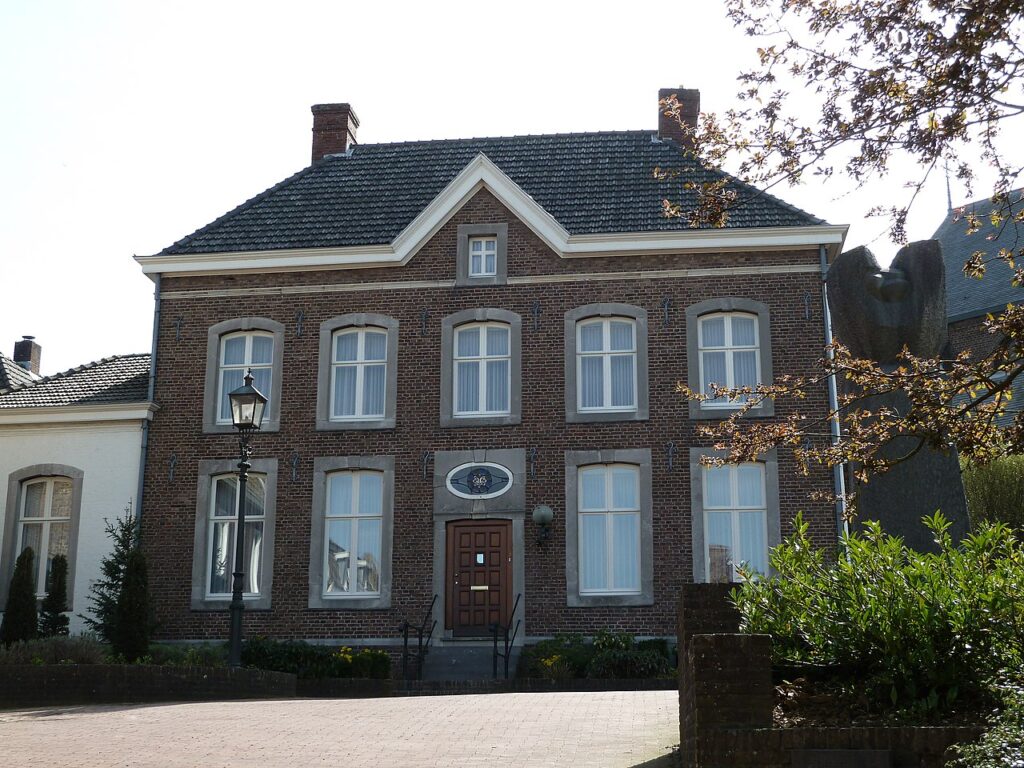
Start your exploration in Schinnen-Dorp, the original village center. You’ll find yourself on Dorpsstraat, a narrow lane lined with brick facades that date to the 18th and 19th centuries. The heart of the neighborhood is the Sint-Dionysiuskerk, a neo-Gothic church completed in 1857, whose spire rises above the surrounding farmlands. On Saturday mornings, the square in front of the church fills with a small farmers’ market where you can buy fresh Limburgse vlaai—the region’s famous fruit tart—from baker Peter van der Heijden, whose family has been baking since 1892. Wander down Kapellerweg and you’ll discover the remains of Kasteel Terborgh, now a private residence but visible from the public footpath. The castle’s moat is still intact, and in spring, the surrounding meadows explode with daffodils. Your best bet is to visit on a weekday morning when the streets are quiet and you can hear the clatter of wooden clogs from a nearby farm—a sound that feels centuries old.
Nagelbeek: The Green Oasis
Two kilometers east of the center lies Nagelbeek, a hamlet that feels more like a forest clearing than a neighborhood. This is where Schinnen reveals its rural soul. The Geleenbeek river winds through the area, and you’ll find walking trails that follow its banks through the Nagelbeekse Bossen, a 50-hectare forest of beech and oak. Locals recommend the circular route starting at the Nagelbeekmolen, a watermill that has ground grain since 1340. The mill is still operational, and you can buy stone-ground flour there on the first Sunday of each month. Nagelbeek’s architecture is pure Limburg farmhouse: whitewashed walls, thatched roofs, and massive wooden barn doors. In summer, the fields around the hamlet are carpeted with sunflowers, and cyclists often stop at the tiny chapel on Oude Baan, built in 1723 to honor a local farmer who survived a lightning strike. The secret is to come at dusk, when the setting sun paints the farmhouses gold and the only sound is a distant cowbell.
Thull: The Borderland Hamlet
Thull sits at the southern edge of Schinnen, just a stone’s throw from the German border. Its name means “customs post” in old Dutch, and you’ll feel that frontier spirit in the air. The neighborhood is a single lane—Thullerweg—lined with 17th-century half-timbered houses that lean into each other like old friends. At the end of the road stands the Thullermolen, another watermill, this one dating to 1280. It’s now a museum open every Saturday from April to October, where you can see the original grinding stones and learn how the mill powered the local economy for 700 years. What surprises most visitors is the silence. Thull has no shops, no cafés, no streetlights. At night, the darkness is absolute, and the stars are astonishing. Savvy visitors bring a flashlight and walk the lane after dinner, listening for owls in the surrounding orchards. Plan to spend an hour here—it’s small, but it’s the kind of place that stays with you.
The Local Table: What Denizens Actually Eat
Limburg’s cuisine is built on three pillars: bread, beer, and fruit. You’ll see this trinity everywhere in Schinnen. The local staple is Limburgse vlaai, a yeast-based tart filled with apricot, cherry, or rice pudding. But don’t buy it at a supermarket—head to Bakkerij van der Heijden on Dorpsstraat, where they still use the family recipe from 1892. The crust is thin and buttery, the fruit filling is tangy and not too sweet, and the top is latticed with pastry strips. A slice costs €3.50, and you’ll want two.
Moordkruis op de kruising van de Lindenweg en Eyskensweg, Schinnen, Netherlands
For savory food, locals swear by zoervleis, a sweet-and-sour beef stew that’s been simmering in Limburg kitchens for centuries. The best version in Schinnen is at Eetcafé De Oude Molen, a converted farmhouse on Nagelbeekerweg. The owner, Marieke, slow-cooks the beef for six hours with vinegar, gingerbread, and cloves. She serves it with fries and apple compote. A portion costs €14.50, and you’ll find it on the menu every Thursday through Sunday. Travelers often discover that the secret ingredient is the local beer—Brand Pilsener, brewed just 10 kilometers away in Wijlre. The brewery has been operating since 1340, making it one of the oldest in Europe. You can tour the brewery on Saturdays at 2 PM for €12.50, and you should: the tasting room offers five samples, including a dark dubbel that pairs perfectly with the stew.
The food culture here is seasonal and slow. In autumn, you’ll see locals foraging for chestnuts and mushrooms in the Nagelbeekse Bossen. In spring, the asparagus season is celebrated with white asparagus dishes at every restaurant. And every Friday morning, the weekly market on Marktplein sells fresh goat cheese from a farm in nearby Sweikhuizen, along with honey, eggs, and wild herbs. Your best bet is to arrive by 9 AM, before the cheese sells out.
Art, Music & Nightlife
Schinnen’s creative scene is intimate and deeply rooted in tradition. The village has no grand galleries or music venues, but it does have something rarer: a living folk culture. Every third weekend of August, the Schinnen Kermis transforms the Dorpsstraat into a carnival of music, dancing, and costumed processions. The tradition dates to 1652, when the local lord granted the village permission to hold an annual fair. Today, you’ll see brass bands playing Limburg folk songs, children in traditional dress, and a parade of flower-covered wagons. The highlight is the “dans om de vlag” (dance around the flag) on Sunday evening, when locals form a circle and dance the Limburgse polka until midnight. If you’re visiting in August, plan your trip around this weekend—it’s the village’s soul on display.
For year-round culture, head to the Dorpshuis Schinnen, a community center on Marktplein that hosts monthly art exhibitions, poetry readings, and classical concerts. The building itself is a 1920s schoolhouse, and the acoustics in the main hall are surprisingly good. Local artists like Henk Rijks, a painter who captures the Limburg landscape in muted watercolors, exhibit here. You’ll also find the Schinnen Muziekvereniging, a community orchestra that rehearses every Tuesday at 7:30 PM and performs at the church twice a year—in December for Christmas and in June for the summer solstice. Nightlife, as you might expect, is quiet. The only bar worth mentioning is Café ‘t Centrum on Dorpsstraat, a brown café with a wood-burning stove, a pool table, and a selection of 20 Belgian beers. It closes by 11 PM most nights. This is not a place for clubbing—it’s a place for a quiet beer and conversation with a farmer or a retired miner.
Practical Guide
- Getting There: Fly into Maastricht Aachen Airport (MST), 20 minutes away, with connections from London, Amsterdam, and Berlin. Alternatively, fly into Amsterdam Schiphol (AMS) and take the 2.5-hour train to Sittard, then a 10-minute bus to Schinnen. Book flights at Skyscanner
- Getting Around: Schinnen is best explored by bicycle. Rent one at Fietsverhuur Schinnen (Dorpsstraat 12, €15/day). Bus line 30 connects Schinnen to Sittard and Heerlen every 30 minutes (€2.50 single). Taxis from Sittard cost about €20.
- Where to Stay: For charm, book Hotel Kasteel Terborgh (€110/night), a 4-star hotel in the restored castle stables. For budget, try B&B De Oude Smidse (€75/night) on Nagelbeekerweg, a converted blacksmith’s workshop. Check Booking.com
- Best Time: May through September. May offers asparagus season and blooming orchards. August brings the Kermis. September is harvest time with mild weather and fewer tourists.
- Budget: €80-100 per day for a mid-range trip (hotel, meals, transport). Budget travelers can manage on €50-60 by staying in hostels in Sittard and cycling in.
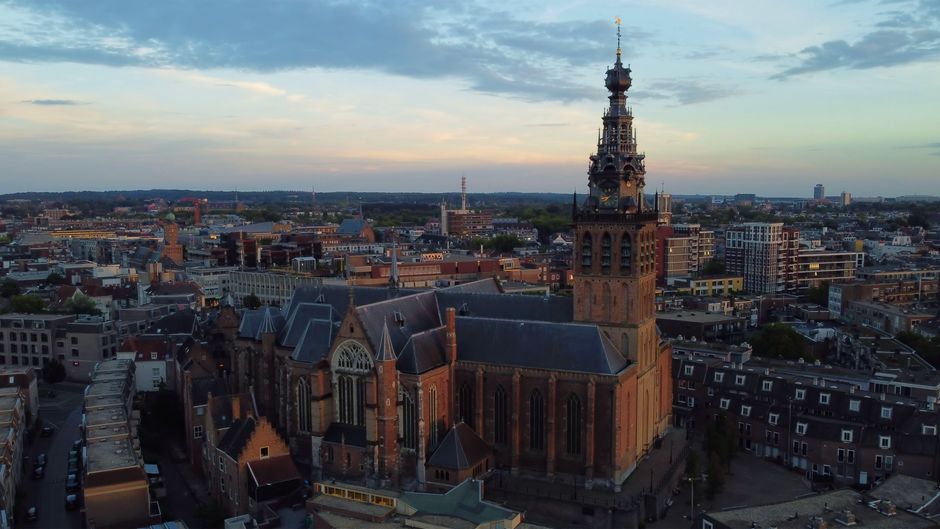
Aerial view of Saint Stephen’s Church in Nijmegen at sunset., Schinnen, Netherlands
What Surprises First-Time Visitors
The first surprise is the quiet. Schinnen has no traffic lights, no chain stores, no neon signs. You’ll hear birdsong, church bells, and the rustle of wind through cornfields. Travelers from cities often find this disorienting at first—but by the second day, they’re sleeping better than they have in years. The second surprise is the warmth of the people. Locals in Schinnen are reserved until you show interest in their village, and then they open up completely. A farmer might invite you into his barn to see his draft horses. A baker might give you a free slice of vlaai if you compliment his recipe. This is a place where hospitality is genuine, not transactional.
The third surprise is the landscape. Most visitors expect the Netherlands to be flat, but Schinnen sits in the Limburg hills, where the terrain rises and falls like a green ocean. You’ll find yourself cycling up slopes that would challenge a Tour de France rider—and the views from the top, over patchwork fields and distant church spires, are worth every pedal. The fourth surprise is the border. You can walk from Schinnen into Germany in 15 minutes, and the contrast is striking: German villages have different rooflines, different shop signs, different beer. The Dutch side feels more bohemian, more relaxed. The German side feels more orderly, more prosperous. Standing at the border, you understand why this region has always been a crossroads of cultures.
Your Schinnen Questions
Is Schinnen worth visiting if I only have a day? Absolutely, but you’ll want to focus. Start at the Sint-Dionysiuskerk at 10 AM, then walk to Kasteel Terborgh for photos. Have lunch at De Oude Molen (try the zoervleis), then cycle to Nagelbeek for a forest walk. End at the Thullermolen museum (open until 4 PM Saturdays). You’ll see the essence of the village in six hours—but you’ll wish you had more time.
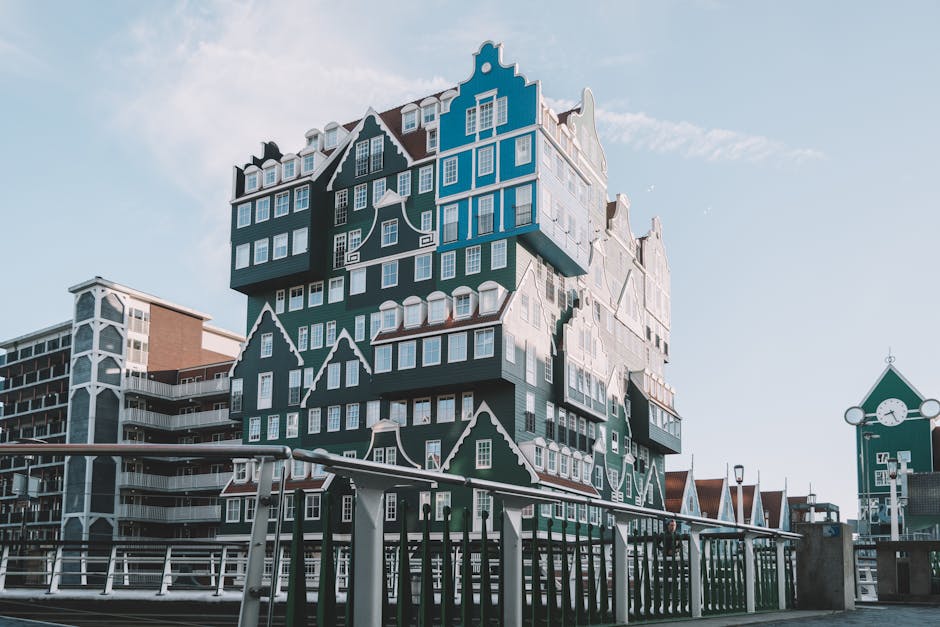
Explore the iconic Inntel Hotel Zaandam with its stunning stacked house des…, Schinnen, Netherlands
How do I get around without a car? Cycling is your best bet. The village is small, and the surrounding countryside is crisscrossed with bike paths. Rent a bike from Fietsverhuur Schinnen (€15/day) and you’ll cover all three neighborhoods easily. The bus system is reliable but infrequent—line 30 runs every 30 minutes and connects to Sittard, where you can catch trains to Maastricht (20 minutes) or Heerlen (15 minutes). Taxis are available but expensive (€20 to Sittard).
What should I buy as a souvenir? Skip the mass-produced clogs and tulip bulbs. Instead, bring home a bottle of Brand Pilsener from the brewery in Wijlre (€3.50 at the brewery shop), a bag of stone-ground flour from the Nagelbeekmolen (€4), and a slice of Limburgse vlaai from Bakkerij van der Heijden (€3.50). These are the tastes of Schinnen, and they’ll transport you back every time you open your pantry.

