
Tiger, Bhutan Weekend: Cliffside Temples (2026)
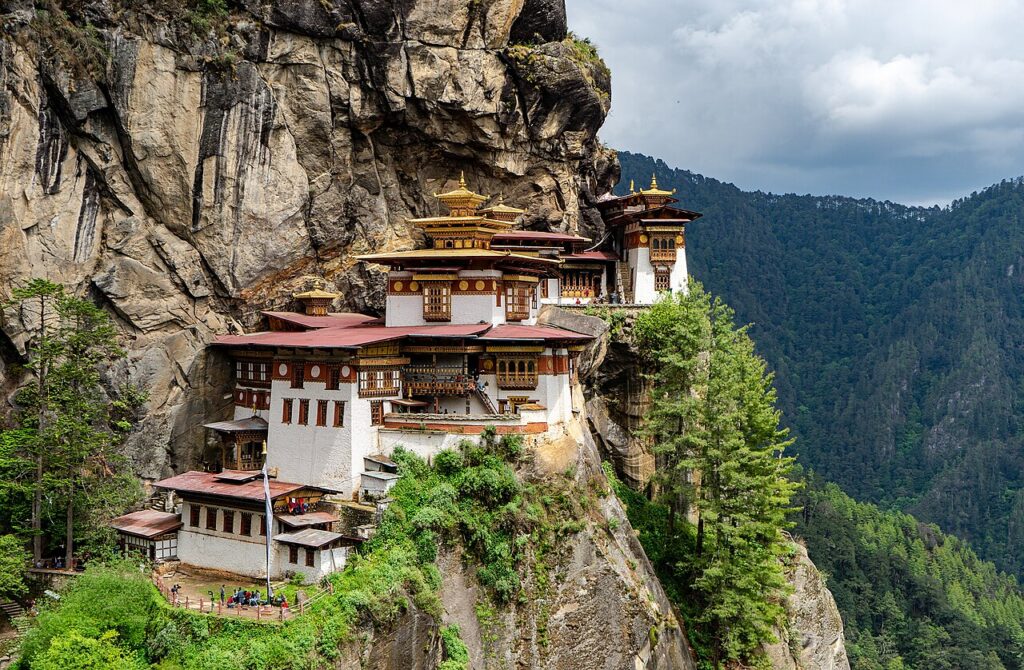
You step off the trail at dawn, the air thick with the scent of pine and burning juniper incense from a nearby shrine. Below, the Paro Valley unfurls like a green silk ribbon, and above, the Tiger’s Nest Monastery clings to a sheer cliff face, its golden roofs catching the first rays of sun. The only sound is the wind and the distant chant of monks—a 48-hour escape that feels like stepping into a living legend.
Quick Facts Before You Go
- Best Months: March to May and September to November—clear skies, moderate temperatures (15-25°C), and the rhododendrons bloom in spring, painting the hillsides in crimson and pink.
- Currency: Bhutanese Ngultrum (BTN) pegged to the Indian Rupee (1 USD ≈ 83 BTN). Indian Rupees are widely accepted, but carry small denominations.
- Language: Dzongkha is official, but English is spoken fluently in all tourist areas, hotels, and by guides.
- Budget: $200-$350 per day (includes mandatory daily tourist fee of $100-$200, accommodation, meals, and guide). Budget travelers can manage $150/day with careful planning.
- Getting There: Fly into Paro International Airport (PBH) from Bangkok, Delhi, or Kathmandu. Direct flights from Delhi take 3 hours. Book at Skyscanner
Day 1: The Pilgrim’s Ascent—Into the Clouds and Beyond
You start the morning at 6:00 AM, the air crisp and cool, as you park at the base of the trailhead near the Paro Valley. The path is lined with prayer flags fluttering in the breeze, and you can already see the monastery perched impossibly on the cliff, 3,120 meters above sea level. Locals recommend starting early to beat the heat and the crowds, and you’ll understand why as you begin the 1,200-meter ascent through pine forests and past a small waterfall.
- Morning (8-11am): Hike to Tiger’s Nest Monastery (Taktshang Palphung). The trail is 5.5 kilometers round trip, taking 3-4 hours. You’ll pass a small tea house at the halfway point—stop for a cup of butter tea (BTN 50) and catch your breath. Entry to the monastery is BTN 1,000 for foreigners, and you must leave your camera and bag at the entrance. The interior is a maze of prayer halls, murals depicting Guru Rinpoche’s life, and a cave where he meditated in the 8th century.
- Lunch: At the monastery’s cafeteria (yes, there’s one at 3,000 meters!). Order the *momos* (steamed dumplings, BTN 200) filled with yak meat and cheese, served with a fiery chili dip. The view from the terrace is worth every step.
- Afternoon (1-5pm): Descend back to the base (1 hour), then drive 10 minutes to the Paro Rinpung Dzong (fortress). Explore its intricate woodwork and courtyards for 1-2 hours (BTN 500). Next, visit the National Museum of Bhutan (Ta Dzong) in the same complex (BTN 500), where you’ll see ancient thangkas (religious paintings) and a collection of stamps. Savvy visitors know to ask the guide about the legend of the iron bridge built by Thangtong Gyalpo in the 14th century.
- Evening: Dinner at the cozy Bukhari Restaurant in Paro town. Order the *ema datshi* (chili cheese stew, BTN 350) and the *red rice* (BTN 100). The atmosphere is warm, with wooden beams and a fireplace—perfect for recounting the day’s hike. Afterwards, take a stroll through the town’s main street, where you’ll find small shops selling handwoven textiles and prayer wheels.

Photos from Bhutan during LGFC – Bhutan 2019, Tiger’s Nest Monastery, Bhutan
Day 2: The Valley’s Secrets—Monasteries, Markets & Mountain Views
Day two is slower, more reflective. You wake to the sound of monks chanting from a nearby monastery, and the valley is bathed in golden light. Today, you’ll explore the quieter corners of Paro, where travelers often discover that the real magic of Bhutan lies not in the famous sites, but in the everyday rituals—a farmer tending his fields, a child spinning a prayer wheel, the smell of incense wafting from a home shrine.
- Morning: Head to the local breakfast spot, The Coffee Culture, for a cup of Bhutanese *suja* (butter tea, BTN 80) and a plate of *kharang* (fried rice noodles, BTN 150). Locals recommend pairing it with a slice of *khapsey* (sweet fried bread, BTN 50).
- Midday: Visit the Kyichu Lhakhang, one of Bhutan’s oldest temples (built in 659 AD). It’s a 10-minute drive from Paro town (entry free, but donations of BTN 200 appreciated). The temple is small but powerful, with a 7th-century statue of Jowo Shakyamuni. Insider tip: arrive by 10:00 AM to avoid the tour groups—most visitors head to Tiger’s Nest in the morning.
- Afternoon: Explore the Paro Weekend Market (open Saturdays and Sundays) near the town center. You’ll find stalls selling dried yak cheese (BTN 100 per bag), hand-painted masks (BTN 500), and local honey (BTN 300). Don’t miss the section where farmers sell fresh vegetables—the red rice here is some of the best in Bhutan (BTN 200 per kilo).
- Final Evening: Farewell dinner at the Sonam Trophel Restaurant, a family-run spot with a garden terrace. Order the *phaksha paa* (spicy pork with radish, BTN 400) and the *jasha maru* (spicy chicken stew, BTN 350). The owner, a former monk, will likely share stories of the monastery’s history—like the legend that Guru Rinpoche flew to the cliff on the back of a tigress in the 8th century. End with a glass of *ara* (local rice wine, BTN 100) as the sun sets over the Himalayas.

Aerial view photography of village on cliff, Tiger’s Nest Monastery, Bhutan
The Food You Can’t Miss
Bhutanese cuisine is a fiery affair, built around chili peppers, cheese, and rice. You’ll discover that every meal is an adventure—locals recommend starting with *ema datshi*, the national dish of chili and yak cheese, which is surprisingly creamy despite its heat. The best version is at the Mountain Café in Paro (BTN 350), where they use fresh, locally sourced cheese and serve it with a side of red rice.

A cliff with a building on top of it, Tiger’s Nest Monastery, Bhutan
For street food, head to the Paro Night Market (open Fridays and Saturdays), where vendors sell *momos* (BTN 50 for six) and *sel roti* (sweet fried bread rings, BTN 30). The secret is to look for the stall with the longest line—usually the one run by a grandmother named Dorji, who’s been making *momos* for 40 years. Her filling is a mix of pork, ginger, and coriander, and she serves it with a dipping sauce that’s equal parts spicy and tangy.
For a sit-down meal, the Bhutan Kitchen in Paro is a must. Try the *kewa datshi* (potato and cheese stew, BTN 300) and the *hoentay* (buckwheat dumplings stuffed with turnip greens, BTN 250). The owner, a former trekking guide, will tell you that the secret to Bhutanese cooking is the use of *sichuan pepper*—it gives a numbing, floral heat that’s unlike anything else. Most tourists overlook this spice, but savvy visitors know to ask for it in their dishes.
Where to Stay for the Weekend
For a weekend break, you’ll want to stay in Paro town, where you’re close to the monastery and the valley’s best restaurants. The Zhiwa Ling Hotel (from $200/night) is a traditional Bhutanese-style lodge with carved wooden windows and a courtyard garden. It’s a 10-minute walk from the town center, and the staff can arrange your Tiger’s Nest hike. Book at Booking.com.
For a more intimate experience, the Nak-Sel Boutique Hotel & Spa (from $150/night) offers rooms with valley views and a rooftop terrace. It’s located near the river, and you’ll wake to the sound of water. The hotel also has a small spa where you can get a traditional *hot stone bath* (BTN 1,500) after your hike. Check availability at Airbnb.
Budget travelers will love the Paro Eco Lodge (from $60/night), a family-run guesthouse with simple rooms and home-cooked meals. The owner, a former monk, offers meditation sessions in the garden (free for guests). It’s a 15-minute walk from the town center, but the peace and quiet are worth it.
Before You Go: Practical Tips
- Getting Around: You’ll need a private car and driver for the weekend (BTN 2,000-3,000 per day, arranged through your hotel or guide). Taxis in Paro town cost BTN 200-300 for short trips. Most travelers book through their hotel—it’s the safest and most reliable option.
- What to Pack: (1) Sturdy hiking boots—the trail to Tiger’s Nest is steep and uneven. (2) A lightweight rain jacket—afternoon showers are common even in dry season. (3) A scarf or shawl—you’ll need to cover your shoulders when entering monasteries. (4) Sunscreen and sunglasses—the high altitude means strong UV rays.
- Common Tourist Mistakes: (1) Rushing the hike—travelers often try to climb Tiger’s Nest in under two hours and end up exhausted. Plan for 3-4 hours with breaks. (2) Taking photos inside the monastery—it’s strictly forbidden and disrespectful. You’ll have to leave your camera at the entrance, so savor the experience with your eyes.
- Money-Saving Tip: Book your trip during the shoulder season (March-April or October-November) when the daily tourist fee drops to $100 per person (down from $200 in peak season). This saves you $200 for a weekend trip—enough for a few extra meals and souvenirs.
Frequently Asked Questions About Tiger
Is Tiger worth visiting?
Yes, Tiger offers unique attractions and experiences for travelers.
How many days do I need in Tiger?
2-4 days is ideal for first-time visitors to Tiger.
What is the best time to visit Tiger?
Spring and fall offer the best weather for visiting Tiger.
{“@context”: “https://schema.org”, “@type”: “FAQPage”, “mainEntity”: [{“@type”: “Question”, “name”: “Is Tiger worth visiting?”, “acceptedAnswer”: {“@type”: “Answer”, “text”: “Yes, Tiger offers unique attractions and experiences for travelers.”}}, {“@type”: “Question”, “name”: “How many days in Tiger?”, “acceptedAnswer”: {“@type”: “Answer”, “text”: “2-4 days is ideal for first-time visitors to Tiger.”}}, {“@type”: “Question”, “name”: “Best time to visit Tiger?”, “acceptedAnswer”: {“@type”: “Answer”, “text”: “Spring and fall offer the best weather for visiting Tiger.”}}]}
Ready to Visit Tiger?
Start planning your trip today. Compare hotels, find the best tours, and get insider tips.
Your adventure in Tiger starts here →
Related Guides
Explore more destinations similar to Tiger:


Pingback: Al Hudaydah, Yemen's Stunning Coffee, Coral & Coastal Heritage (2026) - tangyOcean