
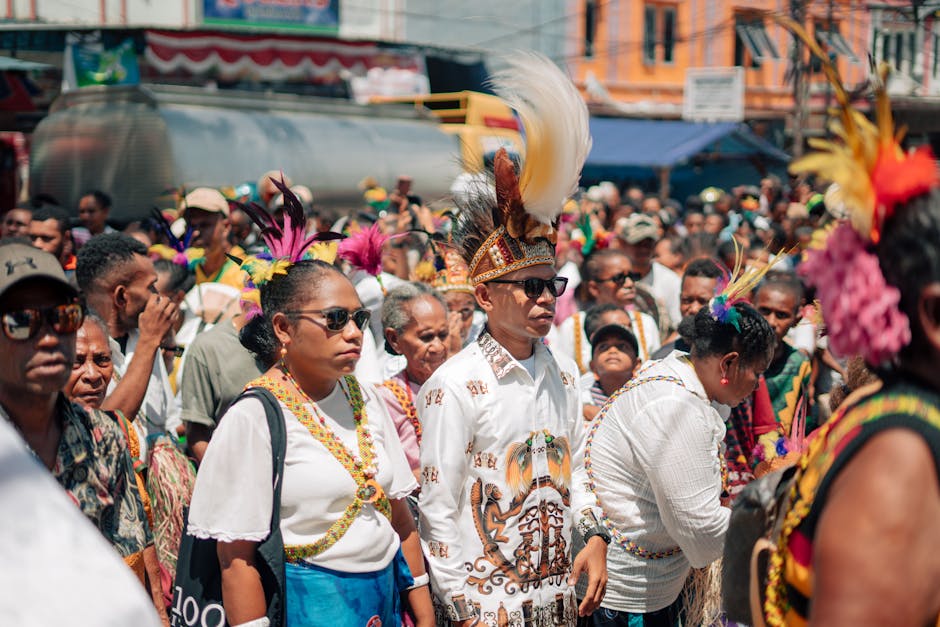
Tari, Papua New Guinea on a Budget: Cultural Majesty for $40/Day (2026)
While a single-day pass to a major cultural festival in Bali or Hawaii can easily cost $75 or more for a staged performance, the Hela Province of Papua New Guinea offers something far more profound: complete immersion into the living, breathing spectacle of the legendary Huli Wigmen at their own *sing-sings*. For the price of a modest guesthouse and a bag of sweet potatoes, you become a welcomed witness to ancient traditions. Here, the currency isn’t dollars, but respect and curiosity.
The Honest Budget Breakdown
| Expense | Bare Bones | Comfort Budget | Splurge Day |
|---|---|---|---|
| Accommodation | $15 – A basic bed in a shared room at a local guesthouse or mission stay. | $30 – A private room with a shared bathroom at a established lodge like Ambua Lodge’s budget annex. | $120+ – A full-package stay at Ambua Lodge, including meals and guided tours. |
| Food | $8 – Market veggies (kaukau/sweet potato), tinned fish, and fruit. Cook at your guesthouse if possible. | $15 – Meals at local “kai bars” (food stalls), a chicken mumu, and the occasional treat from a trade store. | $35 – All meals at a lodge restaurant, including imported goods and coffee. |
| Transport | $2 – Walking around Tari town and hitching accepted short rides with locals (always offer a small kina). | $10 – Hiring a PMV (Public Motor Vehicle) for a half-day to a nearby village or waterfall. | $50+ – Private 4WD hire with a driver/guide for the day to access remote areas. |
| Activities | $0 – Attending festival grounds, observing daily life, hiking to Tagali River lookout. | $20 – A small, respectful donation to a village for a non-festival cultural demonstration. | $100+ – A dedicated, pre-arranged guided tour to a specific sing-sing or spirit house. |
| Daily Total | $25 | $40 | $305+ |
7 Free Things to Do in Tari’s Festivals, Papua New Guinea
- Immerse Yourself in the Festival Grounds: The heart of the experience is free. During major sing-sings like the famous Tari Show (usually August), you can spend days observing the intricate preparations. Watch as Huli Wigmen painstakingly apply ochre and clay, assemble their wigs adorned with feathers and flowers, and practice their rhythmic, earth-shaking dances. The energy is palpable and costs nothing but your respectful attention.
- Hike to the Tagali River Lookout: Ask any local for directions to the path leading to a vantage point over the Tagali River valley. The 45-minute walk from Tari town offers a stunning, free panorama of the misty highlands landscape that the Huli people call home. Go in the early morning for the best light and clearest views.
- Observe Daily Life at the Tari Market: More than a place to buy food, the market is a theater of daily life. You’ll see women selling vibrant piles of produce, men discussing local affairs, and an incredible array of bilums (string bags). It’s a perfect place for respectful people-watching and understanding the local economy. Go on a Saturday morning when it’s most active.
- Learn the Stories Behind the Face Paint: Instead of paying for a formal talk, sit respectfully on the outskirts of a clan area during festival prep. Often, an elder or a younger man keen to practice English will explain the symbolism. The yellow ochre represents sacred clay, red is for war and blood, and white bird down signifies peace and the spirit world. This informal exchange is priceless.
- Photograph the Incredible Flora and Birdlife: The Highlands are a botanist’s and birdwatcher’s dream. You can spot stunning birds of paradise, like the Raggiana, in the trees near the festival grounds or on quiet walks. The gardens (fenced plots) around villages are also fascinating studies in sustainable agriculture, bursting with sugarcane, pandanus, and kaukau.
- Attend a Local Church Service: For a profound cultural fusion, attend a Sunday church service. The harmonious singing of hymns in Huli language, often accompanied by traditional drumming rhythms, is a powerful and free experience that shows the unique blend of old and new in PNG society. Dress modestly.
- Stargaze from the Highlands: With minimal light pollution, the night sky over Tari is breathtakingly clear. After the festival drums quiet down, you can lie back and see the Milky Way in stunning detail. It’s a moment of profound peace after a day of intense sensory stimulation.
Cheap Eats: Where Locals Actually Eat
Fine dining in Tari is not the point. Sustenance is hearty, simple, and based on the land. Your best bet is to eat like a local.
1. The Tari Market “Kai Bars”: Look for the smoky stalls at the market’s edge. For 5-10 PGK ($1.50-$3 USD), you can get a heaping plate of “kaukau” (sweet potato), greens, and a piece of chicken or pork cooked in a *mumu* (earth oven). The flavor is smoky and sublime. Try it at **Mary’s Kai Bar**—she’s famous for her pumpkin.
2. Trade Store Snacks: For a quick, cheap bite, pop into any trade store (like the one by the airstrip). You can get a packet of biscuits, a tin of Queenfish (a PNG staple), and a banana for under 8 PGK ($2.20). It’s perfect for a lunch on the go.
3. Guesthouse “Wantok” Meals: Many budget guesthouses, like Koroba Guest Haus, will offer to cook you a simple evening meal for 15-20 PGK ($4-$6). This is often the best value—you’ll get a generous serving of rice, local veggies, and protein, and you’re supporting the family business directly.
4. Street-Side Roast Corn & Kumu: In the late afternoon, you might find vendors selling roasted corn on the cob or “kumu” (greens) wrapped in banana leaves. For 1-2 PGK ($0.30-$0.60), it’s a tasty, authentic snack.
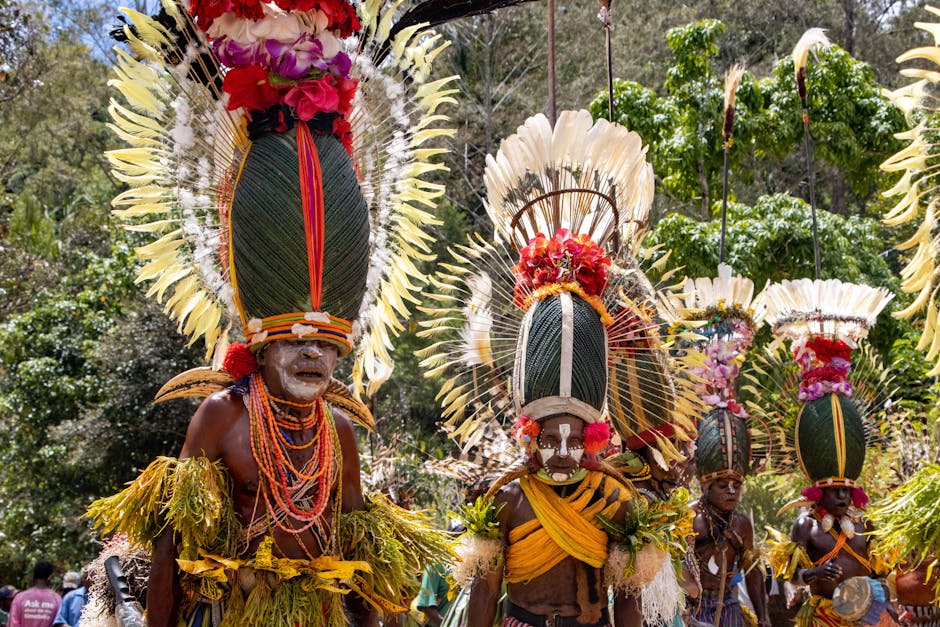
Colorful tribal dancers in traditional attire at a cultural festival in Pap…, Tari’s Festivals, Papua New Guinea
Getting There Without Going Broke
- Cheapest Route: Fly into Port Moresby (POM) from Cairns, Australia (Air Niugini or Qantas). Then, book a separate domestic flight on Air Niugini or PNG Air from POM to Tari (TIZ). Advance domestic fares can be found for 300-400 PGK ($85-$115 USD) one-way. The overland route is not recommended for budget or safety reasons.
- Pro Tip: The secret is to book your domestic Tari flight **the moment you know your international dates**. Seats on the small Dash-8 aircraft are extremely limited and prices skyrocket. Use a local PNG travel agent online; they often have access to better fares and can bundle services.
- From the Airport: Tari airstrip is essentially in town. The cheapest transfer is walking (10-15 mins to most guesthouses). A local PMV truck will charge 2-3 PGK ($0.60) for a lift. A taxi (rare) might ask for 20 PGK ($6). Confirm the price before getting in.
Compare flights at Skyscanner
Budget Accommodation Guide
Forget hostels; in Tari, budget means local guesthouses or mission stays. These are basic but safe, and your money goes directly into the community. The area around the airstrip and the main road has the most options. Safety-wise, always arrange your accommodation in advance and inform them of your flight details—they often provide airport pickup for a small fee.
Tari Guest Haus: The most well-known budget option. Basic rooms with shared bathrooms start around 50 PGK ($15) per night. It’s a traveler hub, so you can easily meet other visitors. Book directly by phone if possible.
Local Mission Stays: Churches often have simple, very cheap accommodation for travelers (around 30-40 PGK/$9-$12). It’s spartan but secure. This requires asking politely upon arrival or making contact through local tour guides in advance.
Koroba Guest Haus: A bit further out but offers a more rural, authentic experience for similar prices. They are known for their home-cooked meals.
For booking more established lodges in advance, check Booking.com. For a unique local homestay (arranged through a guide), platforms like Airbnb are starting to list a few options in PNG, but direct arrangement is still more common.

Dancers in traditional Papuan attire performing under night lights in Jayapura, Tari’s Festivals, Papua New Guinea
Money-Saving Tips Specific to Tari’s Festivals, Papua New Guinea
- Time Your Visit for the “Shoulder” of the Festival: The main Tari Show is in August, but villages practice and hold smaller sing-sings for weeks before and after. By visiting just before or after the peak dates, you avoid inflated accommodation prices and still see incredible, less-crowded cultural displays.
- Carry Small Kina Notes (5, 10, 20): Breaking large bills (like 50 or 100 Kina) is notoriously difficult in Tari. Vendors and PMV drivers often won’t have change. Having small notes saves you from overpaying or being unable to buy small items.
- Bring a Reusable Water Bottle with a Filter: Bottled water is expensive and plastic waste is a problem. A Grayl or LifeStraw bottle saves you 10-15 PGK ($3-$4) per day and is more sustainable. Most guesthouses have rainwater tanks you can safely filter from.
- Learn 5 Key Tok Pisin Phrases: “Tenkyu” (Thank you), “Plis” (Please), “Hamas?” (How much?), “Gutpela” (Good), and “Mi laik baim dispela” (I want to buy this). This shows respect, prevents overcharging, and opens doors. Locals appreciate the effort immensely.
- Pack a Power Bank: Electricity in Tari can be unreliable and is often generator-run for only a few hours in the evening. A large power bank ensures your phone/camera stays charged for days of festival photography without needing to pay for charging.
Is Tari’s Festivals, Papua New Guinea Worth It on a Budget?
Absolutely, but with clear expectations. By going budget, you miss the curated comfort, guaranteed schedules, and deep explanatory context of a luxury lodge tour. You might have to be patient, flexible with plans, and comfortable with very basic amenities. What you gain, however, is something money can’t buy: raw, unfiltered authenticity. You’re not a spectator in an auditorium; you’re a guest in a living culture. Your interactions are real, not transactional. The memory of sharing a sweet potato with a Huli elder, or the thunderous sound of a hundred men chanting as one, costs $0 but stays with you forever. For the adventurous, respectful traveler seeking the soul of a place rather than its polish, Tari on a budget offers a value that is truly priceless. Just go with an open mind, a respectful heart, and a willingness to embrace the unexpected.

Portrait of a Papua tribesman wearing traditional costume under clear blue sky., Tari’s Festivals, Papua New Guinea
Explore More Destinations
- Jozani, Tanzania on a Budget: an Ancient Forest for $35/Day (2026)
- Nsumbu, Zambia on a Budget: Wild Africa for $40/Day (2026)
- Semporna, Malaysia on a Budget: Paradise for $35/Day (2026)
- Khuzestan, Iran on a Budget: Ancient Empires for $30/Day (2026)
- Ngerulmud, Palau on a Budget: Island Majesty for $45/Day (2026)
Ready to Visit Tari?
Start planning your trip today. Compare hotels, find the best tours, and get insider tips.
Your adventure in Tari starts here →
{“@context”: “https://schema.org”, “@type”: “FAQPage”, “mainEntity”: [{“@type”: “Question”, “name”: “What is the best time to visit Tari?”, “acceptedAnswer”: {“@type”: “Answer”, “text”: “The best time to visit Tari depends on your preferences. Generally, the dry season offers the most pleasant weather for sightseeing and outdoor activities.”}}, {“@type”: “Question”, “name”: “How many days do I need in Tari?”, “acceptedAnswer”: {“@type”: “Answer”, “text”: “Most travelers spend 3-5 days in Tari to see the main attractions. A week allows for a more relaxed pace and day trips.”}}, {“@type”: “Question”, “name”: “Is Tari expensive to visit?”, “acceptedAnswer”: {“@type”: “Answer”, “text”: “Tari can be visited on various budgets. Accommodation ranges from hostels to luxury hotels, and local restaurants offer affordable dining.”}}]}
Related Guides
Explore more destinations similar to Tari:

