
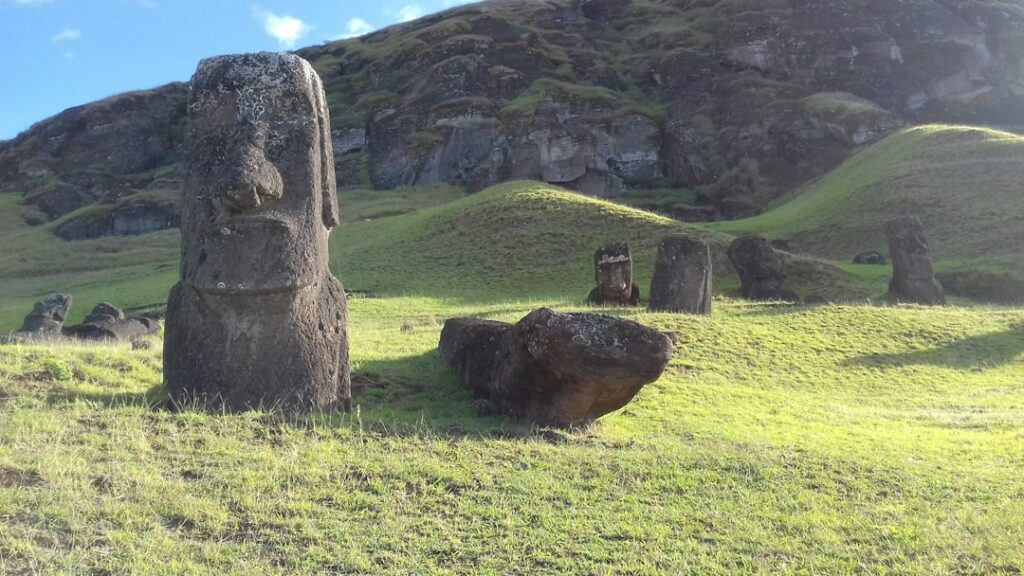
Rapa Nui, Chile on a Budget: the Moai for Under $50/Day (2026)
While a luxury safari in Tanzania can cost $800+ per day for wildlife and ancient culture, Rapa Nui (Easter Island) offers its own profound, mysterious wonders for a fraction of the price. Here, the “safari” is for monolithic Moai statues, the wildlife is wild horses on volcanic cliffs, and the culture is a living Polynesian heritage. Your biggest expense is getting here, but once you land, a deeply rewarding budget adventure is entirely possible.
7 Free Things to Do in Rapa Nui, Chile
- Watch the Sunset at Ahu Tahai: Just a 20-minute walk from Hanga Roa, this restored ceremonial platform features several Moai, including one with restored coral eyes. It’s the most accessible and popular free sunset spot. Arrive by 6:30 PM to secure a good seat on the grass. The way the fading light silhouettes the statues is pure magic.
- Explore the Caves of Ana Kai Tangata: Located south of town along the coastal path, this sea cave features ancient, albeit faded, rock paintings on its ceiling. The name’s translation (“Cave where men are eaten”) hints at darker legends. It’s a short, easy walk, and the crashing waves below are dramatic. Go in the morning for the best light on the paintings.
- Stroll the Coastal Path from Pea to Hanga Roa: This paved pathway offers stunning, uninterrupted ocean views, passing by modest *Ahu* (platforms), tidal pools, and locals fishing. You’ll often share the path with grazing horses. It’s the perfect free introduction to the island’s rugged beauty.
- Visit the Father Sebastian Englert Anthropological Museum: While there’s a small suggested donation (around 1000 CLP / $1 USD), it’s often not enforced for casual viewing. The museum houses the only original *Moai* eye ever found, made of coral and obsidian, offering a crucial key to understanding their spiritual presence.
- Hike to Terevaka, the Island’s Highest Point: The 3-4 hour round-trip hike from near Ahu Akivi is challenging but completely free. From the summit at 507 meters, you gain a 360-degree view of the entire triangular island—a perspective that truly underscores its remote isolation in the Pacific.
- People-Watch at the Hanga Roa Harbor: Watch fishermen unload the day’s catch, see artists carve wood or stone, and observe the comings and goings of daily life. The *Ahu* with a single Moai right on the harbor wall is a beautiful, free-to-access site.
- Attend a Catholic Mass at Holy Cross Church: Even non-religious travelers find this a captivating cultural experience. The service (Sundays, 10 AM) incorporates Rapa Nui language and song. The church itself is adorned with stunning wooden carvings that blend Christian iconography with Polynesian motifs.
Cheap Eats: Where Locals Actually Eat
Forget the expensive tourist traps on the main street. Your food budget goes furthest where islanders eat.
1. La Feria Municipal (Municipal Market): On Calle Tu’u Maheke, this is your budget HQ. Inside, look for “Club Sandwich” stalls (a misnomer—they serve full meals). For 4000-6000 CLP ($4-7 USD), you get a massive plate of steak, chicken, or fish with rice and salad. For breakfast, grab a fresh empanada de atún (tuna empanada) for 1500 CLP.
2. Mahina Restaurant: A humble, family-owned spot tucked away from the center. Their “Menú del Día” (daily set lunch) for 8000-10000 CLP is legendary among savvy travelers. You’ll get a hearty soup, a main like fresh ceviche or lomo a lo pobre, and a simple dessert.
3. Taverne du Pêcheur: Near the harbor, this unassuming place is the spot for cheap, incredibly fresh seafood. A heaping portion of tuna sashimi or a ceviche mixto will run you about 7000 CLP. Locals recommend coming here after 1 PM when the morning’s catch is prepared.
Self-Catering Tip: Stock up at the “Supermercado” just off the main street. Prices are high for imports, but local bread, cheese, avocados, and canned goods can form the basis of cheap breakfasts and lunches.

Gray stone formation under blue sky during daytime, Rapa Nui, Chile
Getting There Without Going Broke
- Cheapest Route: There’s only one way: flying. LATAM is the sole commercial airline. The cheapest fares are from Santiago, Chile (SCL). You can occasionally find promotional round-trip fares for as low as $400-500 USD if you book 4-6 months in advance and are flexible with dates. Flights from Tahiti are often more expensive.
- Pro Tip: Use the Chilean version of the LATAM website (latam.com) and search in Spanish. Sometimes, paying in Chilean Pesos (CLP) yields a better rate than paying in USD. Also, consider using LANPASS frequent flyer miles from credit card sign-up bonuses.
- From the Airport (Mataveri IPC): The airport is a 5-minute drive from Hanga Roa. Ignore the taxis waiting outside (3000-5000 CLP). Simply walk out the gate and turn left; within 10-15 minutes on the main road, you’ll be in the center of town with your backpack.
Compare flights at Skyscanner

Gray rock formation under white clouds and blue sky during daytime, Rapa Nui, Chile
Budget Accommodation Guide
Almost all budget lodging is in Hanga Roa. The town is small, so nowhere is a bad location. The safest and most convenient areas are near the main street, Atamu Tekena, or the quieter streets toward the cemetery and Tahai.
Hostels & Guesthouses:
– Cabañas y Camping Mihinoa: A fantastic budget choice with dorm beds (~$15 USD) and campsites. It has a killer ocean-view terrace, a shared kitchen, and is a 15-minute walk from town. The family owners are incredibly helpful.
– Hostal Tojika: Offers basic but clean private rooms with shared bathrooms for around $35-40 USD. It’s centrally located and has a lovely garden.
– Residencial Vaihu: A local favorite for no-frills, affordable private rooms. It feels more like staying with a Rapa Nui family.
For the best rates, always book directly by emailing the hostel after finding them on Booking.com to ask for a cash discount. Airbnb options are limited but sometimes offer full cabañas for groups.

A group of horses on a grassy hill by the water, Rapa Nui, Chile
Money-Saving Tips Specific to Rapa Nui, Chile
- Buy the Rapa Nui National Park Ticket Wisely: At the airport or office in town, you MUST buy a ticket (80,000 CLP / ~$90 USD as of 2023) to enter Orongo and Rano Raraku. It’s valid for 10 days. Do NOT lose it! This is your biggest single expense, so plan to visit these major sites within the validity period.
- Rent a Bicycle, Not a Car or Scooter: For $10-15 USD per day, a bike gives you freedom to reach 90% of the major sites (except the far north coast). It’s healthy, cheap, and eco-friendly. Rent from a shop in town, not your hotel, for better rates.
- Bring a Reusable Water Bottle & Snacks: Tap water is generally safe to drink in Hanga Roa. Fill up for free and avoid buying expensive bottled water. Pack trail mix and energy bars from home for long days of exploration.
- Travel in Shoulder Season (April-May or Sept-Oct): Avoid the peak crowds and prices of the summer (Jan-Feb) and the Tapati Festival (Feb). In shoulder months, you’ll find slightly cheaper accommodation and have the sites more to yourself.
- Embrace “Dedos” (Hitchhiking): It’s a common, accepted, and safe practice on the island for short distances. Locals often pick up tourists. It’s a great way to save on transport and maybe have a quick chat with a Rapa Nui family.
Is Rapa Nui, Chile Worth It on a Budget?
Absolutely, but with honest expectations. By going budget, you’ll miss the convenience of a private guide explaining every petroglyph and the luxury of gourmet dining every night. What you gain, however, is something more authentic: the slow pace of walking or cycling between sites, the self-reliance of preparing your own meals, and the serendipity of conversations with locals who offer you a lift. The island’s profound magic—the silent Moai at sunrise, the wind-swept cliffs of Orongo, the sheer fact of being on the most isolated inhabited island on Earth—is not diminished by a modest budget. It’s often enhanced. Compared to other Polynesian destinations like Bora Bora, Rapa Nui offers unparalleled historical weight and adventure for the cost. Your splurge was the flight. Once you’re there, the island’s greatest gifts—its mystery, landscape, and spirit—are priceless and available to all who make the journey.
Frequently Asked Questions About Rapa Nui
Is Rapa Nui worth visiting?
Yes, Rapa Nui offers unique attractions and experiences for travelers.
How many days do I need in Rapa Nui?
2-4 days is ideal for first-time visitors to Rapa Nui.
What is the best time to visit Rapa Nui?
Spring and fall offer the best weather for visiting Rapa Nui.
{“@context”: “https://schema.org”, “@type”: “FAQPage”, “mainEntity”: [{“@type”: “Question”, “name”: “Is Rapa Nui worth visiting?”, “acceptedAnswer”: {“@type”: “Answer”, “text”: “Yes, Rapa Nui offers unique attractions and experiences for travelers.”}}, {“@type”: “Question”, “name”: “How many days in Rapa Nui?”, “acceptedAnswer”: {“@type”: “Answer”, “text”: “2-4 days is ideal for first-time visitors to Rapa Nui.”}}, {“@type”: “Question”, “name”: “Best time to visit Rapa Nui?”, “acceptedAnswer”: {“@type”: “Answer”, “text”: “Spring and fall offer the best weather for visiting Rapa Nui.”}}]}
Ready to Visit Rapa Nui?
Start planning your trip today. Compare hotels, find the best tours, and get insider tips.
Your adventure in Rapa Nui starts here →
Related Guides
Explore more destinations similar to Rapa Nui:

