
Socotra’s Dragon’s Blood Trees, Yemen: Stunning Alien Landscapes, Ancient Resins & Untouched Beaches (2026)
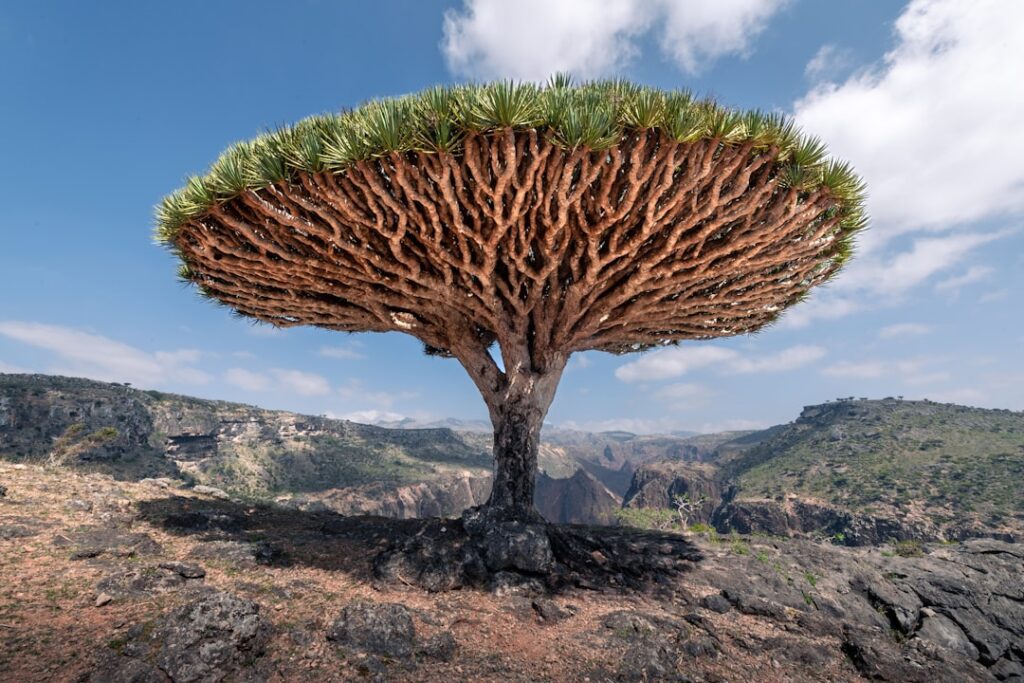
What if you could walk through a forest that looks like it belongs on another planet? On the remote Socotra Archipelago, the Dragon’s Blood Tree (Dracaena cinnabari) has been thriving for over 20 million years, its bizarre, umbrella-shaped canopy a product of isolated evolution. At dawn, the first light hits the rugged Hajhir Mountains, casting long, twisted shadows from these prehistoric giants and illuminating their namesake crimson sap. This is one of the most botanically unique places on Earth, a UNESCO World Heritage site where over a third of the plant life exists nowhere else.
Why Socotra’s Dragon’s Blood Trees, Yemen Stands Out

A group of trees in the middle of a forest, Socotra’s Dragon’s Blood Trees, Yemen
- Historic Architecture: The trees themselves are living monuments, with some specimens estimated to be over 600 years old, their dense crowns acting as natural water-harvesting systems for the island’s ecosystem.
- Cultural Scene: The ancient tradition of harvesting the valuable “dragon’s blood” resin, used for centuries as a dye, medicine, and varnish, is a cultural practice passed down through generations of Socotri people.
- Local Specialties: Savor freshly caught grilled lobster on the white-sand shores of Detwah Lagoon, a simple yet sublime meal often prepared by local fishermen.
Pro Tip: The absolute best time to visit is between October and April, avoiding the monsoon winds (Khareef) from June to September. For photography, aim for late afternoon when the low sun sets the red sap and terracotta soil ablaze with color, and you’ll have the landscapes largely to yourself as most day-trippers from the main town of Hadibu have departed.
Map of Socotra’s Dragon’s Blood Trees, Yemen
Use these interactive maps to explore Socotra’s Dragon’s Blood Trees, Yemen and plan your route:
📍 View Socotra’s Dragon’s Blood Trees, Yemen on OpenStreetMap
🗺️ Open Socotra’s Dragon’s Blood Trees, Yemen in Google Maps
Planning Your Trip: Practical Essentials
Getting There and Around
- By Air: All visitors arrive via Socotra Airport (SCT) near Hadibu. Flights typically connect through Cairo (Egypt) or Abu Dhabi (UAE) with Yemenia Airways or charter services. A mandatory government-issued permit, arranged by your local tour operator, is required for entry. Book flights at Skyscanner for best deals.
- By Train: There are no rail connections to this remote island. All travel is coordinated through pre-arranged tours.
- By Car: The only practical way to explore is by 4×4 with a local driver-guide, as roads are rough and often unpaved. Your tour package will include this. Compare car rentals at RentalCars.com for other destinations, but not for Socotra.
- Local Transport: There is no formal public transport. Travel is exclusively via the 4×4 vehicles included in your tour package, which also handles transfers from the airport.
Best Time to Visit
Socotra has a desert climate with a distinct, temperamental monsoon season. Timing your visit is crucial for accessibility and comfort.
| Season | Weather | Highlights |
|---|---|---|
| Summer (Jun–Aug) | Hot (30-40°C/86-104°F) with strong monsoon winds and rough seas. Many areas are inaccessible. | Few visitors; dramatic, windswept scenery for the adventurous. Not recommended for first trips. |
| Winter (Dec–Feb) | Pleasant and warm (22-28°C/72-82°F), cool nights. Ideal, dry conditions. | Perfect for hiking, camping, and all activities. Peak season for clear skies and calm waters. |
| Shoulder (Mar–May/Oct–Nov) | Warm (25-32°C/77-90°F), transitioning between seasons. Minimal rain. | Excellent weather, fewer tourists than mid-winter, lush greenery after any rains, ideal for photography. |
Budgeting for Socotra’s Dragon’s Blood Trees, Yemen

Cow standing beside a Socotra dragon’s blood tree in an arid, Socotra’s Dragon’s Blood Trees, Yemen
| Category | Budget | Mid-range | Luxury |
|---|---|---|---|
| Accommodation | $30-50/night (basic homestay/camping) | $80-150/night (standard eco-lodge) | $200+/night (best lodge/private camp) |
| Meals | $10-15/day (local meals with tour) | $20-30/day (mix of local & lodge food) | $50+/day (fresh seafood, premium service) |
| Transport | Included in tour package | Included in tour package | Private 4×4 & driver |
| Activities | Included guided hikes | Added boat trips, cave visits | Private guides, special excursions |
| Daily Total | $100-150/day* | $200-300/day* | $400+/day* |
*Based on an all-inclusive multi-day tour package, which is the only viable way to visit. Flights and permits are additional.
Top Attractions and Must-See Sights
| Attraction | Description | Hours | Entry Fee |
|---|---|---|---|
| Diksam Plateau | The premier location for dense forests of Dragon’s Blood Trees, with stunning views over the Wadi Dirhur canyon. | Sunrise to Sunset | Included in tour/permits |
| Detwah Lagoon | A breathtaking curved bay with bone-white sand and turquoise water, backed by limestone cliffs. | Sunrise to Sunset | Included in tour/permits |
| Hoq Cave | A vast cavern system with ancient inscriptions and stunning stalactite formations, requiring a 2-hour hike. | Morning visits recommended | ~$5 local guide fee |
| Arher Beach | A phenomenal beach where giant sand dunes meet the Indian Ocean, perfect for sunset. | Sunrise to Sunset | Included in tour/permits |
3-Day Itinerary: Socotra’s Dragon’s Blood Trees, Yemen’s Highlights & Hidden Gems
Day 1: Arrival & Highland Wonders
- Morning (7-9 AM): After landing at Socotra Airport, meet your guide and transfer to Hadibu for a brief orientation. Your adventure begins with a drive inland towards the mountains.
- Afternoon (12-3 PM): Hike across the otherworldly Diksam Plateau, surrounded by ancient Dragon’s Blood Trees. Enjoy a picnic lunch ($10-15) prepared by your guide amidst the trees. Visit the “Firmihin Forest,” one of the largest and most accessible stands.
- Evening (6-8 PM): Descend to the canyon of Wadi Dirhur for a refreshing swim in its natural freshwater pool. Set up camp nearby and dine under a blanket of stars on freshly prepared local fish and rice.
Day 2: Coastal Majesty & Cave Secrets
- Morning (7 AM): Early start for the drive to the north coast. Explore the mesmerizing Detwah Lagoon. Walk the spit of sand and snorkel in the lagoon’s calm, clear waters—your best bet for spotting colorful fish.
- Afternoon (1 PM): After a beachside lunch of grilled lobster (approx. $20), embark on a 2-hour guided hike to the entrance of Hoq Cave. With your headlamp, explore the cavern’s depths to see ancient Sabaean inscriptions and dramatic geological formations.
- Evening (6 PM): Drive to the surreal Arher Beach. Climb the massive sand dunes as the sun sets over the ocean. Camp on the beach, falling asleep to the sound of waves.
Day 3: Desert Blooms & Farewell
- Morning (8 AM): Travel to the stark, beautiful Homhil Protected Area ($5 conservation fee). Hike through a landscape of bottle trees (Adenium obesum socotranum) and endemic succulents, enjoying panoramic ocean views from the plateau.
- Afternoon (12 PM): Enjoy a final traditional Socotri lunch in a local village, perhaps trying “Mandroof” (spiced fish baked in palm leaves). Visit a small settlement to see how locals traditionally use Dragon’s Blood resin.
- Evening (5 PM): Return to Hadibu with time to purchase any last-minute souvenirs like pure resin or local honey. Transfer to Socotra Airport for your evening departure flight.
Cultural Insights & Etiquette
- Language: The native language is Socotri, but Arabic is widely understood. A simple “Shukran” (Thank you) and “Salaam Alaikum” (Peace be upon you) go a long way.
- Customs: Socotra is conservative and Islamic. Always ask permission before photographing people, especially women. Public displays of affection are frowned upon.
- Tipping: Tipping your guide and driver is customary and appreciated. A tip of $10-15 per day for the guide and $5-10 for the driver, per group, is standard for good service.
- Dress Code: Dress modestly. For both men and women, clothing should cover shoulders and knees. Lightweight, loose-fitting trousers and shirts are ideal for the climate and culture.
- Business Hours: Government hours are roughly 8 AM – 2 PM, Sunday to Thursday. Small shops may open later. Friday is the holy day, with most things closed.
Where to Eat: Socotra’s Dragon’s Blood Trees, Yemen’s Best Bites
Dining on Socotra is a simple, fresh, and communal affair. Most meals are prepared by your tour team or at small local eateries in Hadibu. The focus is on the incredible seafood and basic, hearty staples.
Must-Try Local Specialties
- Fresh Grilled Lobster & Fish: Caught daily and grilled over open fires on the beach. The ultimate Socotri experience, best enjoyed at Detwah Lagoon or Qalansiyah beach.
- Mandroof: A traditional dish of spiced fish or goat, wrapped in palm leaves and baked underground or over coals. Your guide can often arrange this for a special camp dinner.
- Socotri Honey: Famous for its unique flavor from endemic plants, it’s a prized (and expensive) souvenir. Sample it with local bread at breakfast.
Restaurant Recommendations by Budget
| Type | Restaurant | Specialty | Price Range |
|---|---|---|---|
| Budget | Local Eateries in Hadibu Market | Freshly baked bread, rice, and stewed fish or chicken. | $3-7 per meal |
| Mid-range | Tour Camp Meals | Freshly prepared grilled fish, pasta, salads, and rice dishes by your camp cook. | Included in tour |
| Fine dining | Summer Land Hotel Restaurant (Hadibu) | The closest to upscale dining on the island, with a varied menu and seafood. | $15-25 per meal |
Where to Stay
Accommodation ranges from basic homestays to comfortable eco-lodges, but camping is the most immersive and common option, allowing you to stay in remote, beautiful locations. Compare prices and book at Booking.com for lodges, but note most visits are packaged through specialized tour operators.
Best Neighborhoods for Accommodation
- Hadibu (Main Town): The administrative capital with a few simple hotels and guesthouses like Taj Socotra or Summer Land. Pros: access to shops, internet. Cons: less scenic. Best for first/last nights.
- Coastal Camping (Detwah, Arher): Pre-arranged camps with basic tents and shared facilities. Pros: unbeatable locations, stars, sounds of nature. Cons: no luxury amenities. Best for adventurers.
- Mountain Camping (Diksam/Firmihin): Campsites on the plateau amidst the Dragon’s Blood Trees. Pros: cool temperatures, surreal sunrise views. Cons: basic conditions. Best for landscape lovers.

Explore the iconic Dragon Tree in Icod de los Vinos, Socotra’s Dragon’s Blood Trees, Yemen
FAQs: Your Socotra’s Dragon’s Blood Trees, Yemen Questions Answered
1. Is Socotra’s Dragon’s Blood Trees, Yemen safe at night?
Socotra itself is considered very safe, with low crime and friendly locals. At night, your safety is managed by your tour guide. When camping, you’ll be in designated, secure areas. The main considerations are environmental: securing food from animals and being aware of your footing in the dark.
2. What currency is used and are credit cards accepted?
The Yemeni Rial (YER) is the official currency, but US Dollars in cash (clean, un-torn bills) are widely and often preferentially accepted for tour payments and souvenirs. Credit cards are virtually useless on the island. Savvy visitors know to bring all the cash they will need for the entire trip, plus a reserve.
3. How do I get from the airport to the city center?
Your pre-arranged local tour operator will handle all airport transfers as part of your package. They will meet you at arrivals with a sign. Independent transport is not available. Book full tours at GetYourGuide for other destinations, but Socotra requires specialized operators.
4. Do I need to speak the local language?
No. Your English-speaking guide will handle all communication. Learning a few Arabic greetings is a respectful gesture, but not necessary. Locals involved in tourism often know basic English phrases related to their work.
5. What’s the appropriate dress code?
Modest, loose-fitting clothing is mandatory. For hiking, wear lightweight, full-length trousers and shirts that cover your shoulders. A wide-brimmed hat, sunglasses, and a scarf (for women, useful for extra coverage) are essential. Swimwear is only appropriate at remote beaches when no locals are present.
Final Thoughts: Socotra’s Dragon’s Blood Trees, Yemen Awaits
Socotra is not a casual holiday; it’s an expedition to one of the planet’s last true frontiers. You come here not for luxury, but for the profound experience of walking among living fossils, swimming in pristine lagoons, and sleeping under galaxies unseen in the light-polluted world. It demands flexibility, respect, and a sense of adventure. The reward is a connection to a raw, ancient, and breathtakingly beautiful corner of the natural world that will redefine your idea of a landscape. Your best bet for a smooth journey is to choose
Explore More Destinations
- Jozani, Tanzania on a Budget: an Ancient Forest for $35/Day (2026)
- Nsumbu, Zambia on a Budget: Wild Africa for $40/Day (2026)
- Semporna, Malaysia on a Budget: Paradise for $35/Day (2026)
- Khuzestan, Iran on a Budget: Ancient Empires for $30/Day (2026)
- Ngerulmud, Palau on a Budget: Island Majesty for $45/Day (2026)
Ready to Visit Socotra’s Dragon’s Blood Trees?
Start planning your trip today. Compare hotels, find the best tours, and get insider tips.
Your adventure in Socotra’s Dragon’s Blood Trees starts here →
{“@context”: “https://schema.org”, “@type”: “FAQPage”, “mainEntity”: [{“@type”: “Question”, “name”: “What is the best time to visit Socotrau2019s Dragonu2019s Blood Trees?”, “acceptedAnswer”: {“@type”: “Answer”, “text”: “The best time to visit Socotrau2019s Dragonu2019s Blood Trees depends on your preferences. Generally, the dry season offers the most pleasant weather for sightseeing and outdoor activities.”}}, {“@type”: “Question”, “name”: “How many days do I need in Socotrau2019s Dragonu2019s Blood Trees?”, “acceptedAnswer”: {“@type”: “Answer”, “text”: “Most travelers spend 3-5 days in Socotrau2019s Dragonu2019s Blood Trees to see the main attractions. A week allows for a more relaxed pace and day trips.”}}, {“@type”: “Question”, “name”: “Is Socotrau2019s Dragonu2019s Blood Trees expensive to visit?”, “acceptedAnswer”: {“@type”: “Answer”, “text”: “Socotrau2019s Dragonu2019s Blood Trees can be visited on various budgets. Accommodation ranges from hostels to luxury hotels, and local restaurants offer affordable dining.”}}]}
Related Guides
Explore more destinations similar to Socotra’s Dragon’s Blood Trees:
- Yasuni National Park, Ecuador: Best Biodiversity, Indigenous Culture & Untamed Wilderness (2026)
- How to Discover Tongariro’s Most Stunning Hidden Trails
- Juanjuí, Peru’s Best Coffee, Waterfalls & Amazonian Gateway (2026)
- Gryfino, Poland’s Best Crooked Forests, Medieval Walls & Oder River Serenity (2026)

