
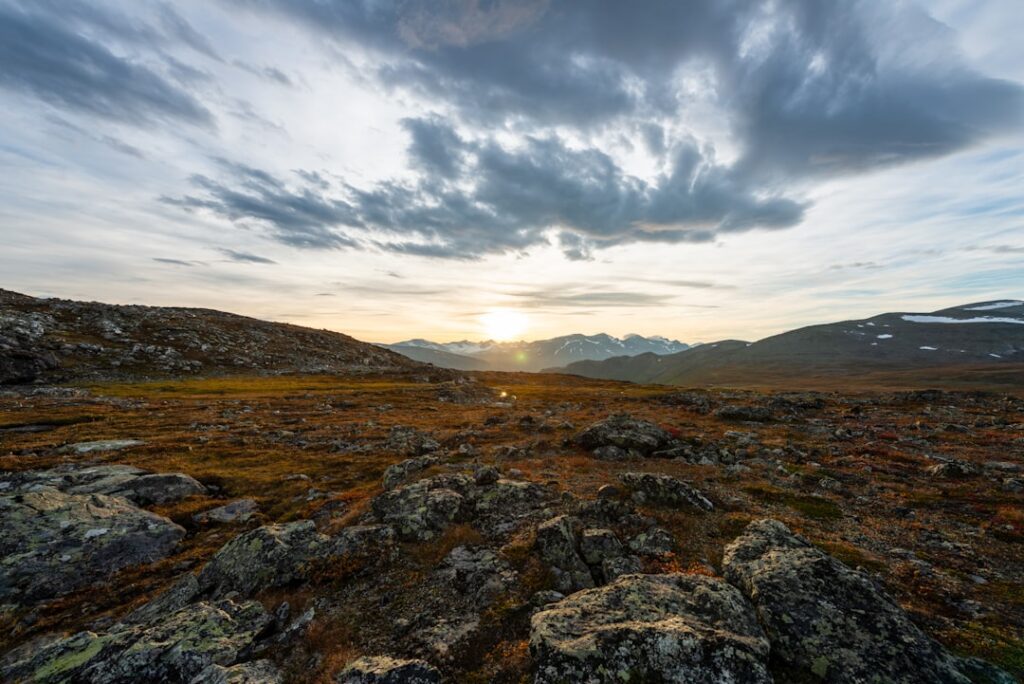
Sarek Mountains, Sweden’s Epic Wilderness, Solitude & Arctic Majesty (2026)
While thousands trek the marked trails of Abisko National Park each summer, Sarek National Park, its wilder neighbor, sees fewer than 2,000 visitors annually. This isn’t a park with trails or huts; it’s 1,970 square kilometers of raw, untamed Arctic wilderness, home to Sweden’s highest peaks and over 100 glaciers. Here, you navigate by map and compass across vast valleys where reindeer outnumber people, experiencing a profound solitude that has vanished from most of Europe.
Why Sarek Mountains, Sweden Stands Out

Scenry of mountain, Sarek Mountains, Sweden
- Historic Architecture: The traditional Sami *kåta* (goahti) huts, used for centuries by the indigenous reindeer herders, are the only “structures” you’ll find, representing a living cultural heritage in the landscape.
- Cultural Scene: The annual reindeer migrations, a centuries-old tradition of the Sami people, are not a staged event but a genuine, powerful spectacle of nature and culture intertwined.
- Local Specialties: Foraged cloudberries, the “Arctic gold,” are a must-try; their sweet-tart flavor is a prized reward for late-summer hikers.
Pro Tip: Aim for the first two weeks of September. The relentless mosquitoes are gone, the autumn colors (*ruska*) set the valleys ablaze in red and gold, and you have a real chance to witness the Northern Lights without the deep freeze of winter. Avoid July if you dislike bugs.
Map of Sarek Mountains, Sweden
Use these interactive maps to explore Sarek Mountains, Sweden and plan your route:
📍 View Sarek Mountains, Sweden on OpenStreetMap
🗺️ Open Sarek Mountains, Sweden in Google Maps
Planning Your Trip: Practical Essentials
Getting There and Around
- By Air: Fly into Kiruna Airport (KRN), served by SAS and Norwegian from Stockholm. From there, you’ll need a 1.5-hour train or bus to Gällivare or Jokkmokk, your gateway towns. Book flights at Skyscanner for best deals.
- By Train: The overnight sleeper train from Stockholm to Gällivare or Murjek is a classic Swedish journey. The 15-hour trip offers comfort and scenic views. Reserve tickets at Trainline or the national railway website.
- By Car: Driving the E45 highway north offers flexibility. Rent a car in Gällivare to reach trailheads like Kvikkjokk or Saltoluokta. Parking is usually free but unsecured. Compare car rentals at RentalCars.com.
- Local Transport: There is no public transport within Sarek. Access is by foot, ski, or helicopter taxi from Gällivare or Kvikkjokk (a 15-minute flight costing ~2500 SEK). Local buses connect gateway towns to trailheads seasonally.
Best Time to Visit
Your season defines your experience. Summer offers 24-hour daylight for long treks, winter is for expert ski-touring under the aurora, and the shoulder seasons provide magical light and fewer people for the well-prepared.
| Season | Weather | Highlights |
|---|---|---|
| Summer (Jun–Aug) | 5°C to 15°C (41°F to 59°F), unpredictable with rain, snow, and sun possible. Midnight sun in June/July. | Hiking, river crossings, wildflowers. Peak mosquito season (July). The only time for average hikers. |
| Winter (Dec–Feb) | -15°C to -30°C (5°F to -22°F), extreme cold, limited daylight. Polar night in December. | Ski-touring, Northern Lights, profound silence. For experts with polar expedition experience only. |
| Shoulder (Apr–May/Sep–Oct) | -5°C to 10°C (23°F to 50°F). April/May have spring snow; Sept has autumn colors and aurora. | Best photography light, no mosquitoes, potential for aurora. Requires serious cold-weather camping gear. |
Budgeting for Sarek Mountains, Sweden
A winter view of Stockholm’s iconic spires against a snowy cityscape, Sarek Mountains, Sweden
| Category | Budget | Mid-range | Luxury |
|---|---|---|---|
| Accommodation | Wild camping (free) / Hostel in gateway town: 300 SEK | Mountain Station cabin (pre/post trek): 800 SEK | Helicopter-in guided tour with tented camp: 5000+ SEK/day |
| Meals | Self-cooked dehydrated food: 150 SEK/day | Restaurant meal in Gällivare: 250 SEK | Fine dining at Arctic resorts (outside park): 600+ SEK |
| Transport | Bus to trailhead: 100 SEK | Taxi to trailhead: 500 SEK / Car rental: 600 SEK/day | Helicopter drop-off/pick-up: 5000 SEK one-way |
| Activities | Hiking (free) / Map purchase: 200 SEK | Guided day hike from a station: 800 SEK | Multi-day guided expedition: 10,000+ SEK |
| Daily Total | 550 SEK (~$50) | 2350 SEK (~$220) | 10,600+ SEK (~$1000) |
Top Attractions and Must-See Sights
| Attraction | Description | Hours | Entry Fee |
|---|---|---|---|
| The Rapa Valley (Rapadalen) | A breathtaking, glacier-carved delta where the Rapaätno river braids through, often called “Sweden’s most beautiful valley.” | Always open (wilderness) | Free |
| Mount Sarektjåkkå (Stortoppen) | At 2,089 meters, it’s Sarek’s highest peak, offering staggering panoramic views for experienced alpine climbers. | Accessible in stable summer weather | Free |
| Pielavalta & the Alkavare Chapel | A historic, simple wooden chapel from 1886, a poignant landmark in the vast emptiness, reachable by a long trek. | Always open (door usually unlocked) | Free |
| The Ice Giants (Glaciers like Pårte) | Massive glacial tongues like Pårteglaciären offer a close-up look at the powerful forces that shaped this landscape. | Access with extreme caution; never walk on without a guide | Free |
3-Day Itinerary: Sarek Mountains, Sweden’s Highlights & Hidden Gems
Note: This is a sample itinerary for a short, demanding trek from a common entry point. Most Sarek treks last 7-10 days.
Day 1: Entry into the Wild
- Morning (7-9 AM): Take the early boat (150 SEK, 20 mins) from Saltoluokta Mountain Station across Langas Lake. Your trek begins here, following faint paths towards the Sarek border. Your first challenge is the iconic suspension bridge over the Darfaljåkkå river.
- Afternoon (12-3 PM): Hike into the lush Staddajåkkå valley. Stop for lunch by a stream—filter your water! You’ll be wild camping tonight, so pace yourself (aim for 10-12 km).
- Evening (6-8 PM): Set up camp on durable ground, well away from water sources. Enjoy a dehydrated meal as the midnight sun casts long shadows. Check your map and GPS carefully.
Day 2: The Heart of Sarek
- Morning (8 AM): Break camp and trek towards the shoulder of Lulep Sarektjåkkå. The terrain becomes rockier. With clear weather, you’ll get your first stunning view into the inner massif of Sarek.
- Afternoon (1 PM): Descend towards the Tarra Valley. This is prime reindeer territory; move quietly and you may spot herds. Find a sheltered spot for lunch, watching for golden eagles.
- Evening (7 PM): Camp near the Tarra River. This is true wilderness—no trails, no people. The sense of solitude is immense. If in September, watch for the green glow of the aurora after dark.
Day 3: The Return Journey
- Morning (7 AM): Pack up for a long hiking day. You’ll retrace your route partially, but savvy travelers cut north via the Guohpervággi valley for varied scenery, fording small streams.
- Afternoon (12 PM): Reach the Sarek boundary marker. Have lunch at this symbolic spot before the final push back to the Darfaljåkkå bridge and the trail to Saltoluokta.
- Evening (6 PM): Catch the last boat back to Saltoluokta Mountain Station. Reward your effort with a hearty, real dinner at the station’s restaurant (around 300 SEK) and a well-earned shower.
Cultural Insights & Etiquette
- Language: Swedish is official, but Northern Sami is key locally. Learn basics: “Bures” (Hello), “Giitu” (Thank you). English is widely spoken in gateway towns.
- Customs: The land is Sami reindeer herding territory. Never disturb or chase reindeer. If you encounter a herder or a *kåta*, be respectful and keep a distance unless invited.
- Tipping: Not expected in Sweden. For exceptional guided service, a round-up or 5-10% is a generous gesture.
- Dress Code: Utilitarian and weather-appropriate. In towns, casual. In the mountains, full technical layers (base, mid, shell) and sturdy boots are non-negotiable.
- Business Hours: Shops in gateway towns typically open 10 AM-6 PM weekdays, shorter on Saturdays. Everything is closed or limited on Sundays.
Where to Eat: Sarek Mountains, Sweden’s Best Bites
Dining in Sarek means your own camp stove. The culinary experience is in gateway towns and mountain stations, focusing on hearty, local ingredients like reindeer, elk, Arctic char, and cloudberries.
Must-Try Local Specialties
- Suovas: Lightly smoked, salted reindeer meat, often dried. It’s a traditional Sami preserved food, packed with flavor and energy—ideal trail food. Find it at markets in Jokkmokk.
- Arctic Char (Röding): A delicate freshwater fish, often pan-fried or smoked. Served at mountain stations like Saltoluokta, caught from the pristine lakes.
- Cloudberry Jam & Desserts: The golden berry’s unique taste is showcased in jams, sauces, and as a topping for pancakes and ice cream. A sweet taste of the Arctic.
Restaurant Recommendations by Budget
| Type | Restaurant | Specialty | Price Range |
|---|---|---|---|
| Budget | Hernes Kök & Bar, Gällivare | Solid burgers, pizzas, and daily lunch specials for fueling up pre- or post-trek. | 100-180 SEK |
| Mid-range | Saltoluokta Mountain Station Restaurant | Classic Swedish mountain cuisine like reindeer stew and Arctic char in a historic setting. | 250-350 SEK |
| Fine dining | Hotell Gällivare’s Restaurant (in town) | Modern takes on Norrbotten ingredients, such as elk fillet with forest mushrooms. | 400-600 SEK |
Where to Stay
Inside Sarek, you camp. Accommodation is for before, after, or as a base on the periphery. Mountain Stations (*fjällstation*) are key hubs offering cabins, dorm beds, and vital services. Compare prices and book at Booking.com or Airbnb for apartments in gateway towns.
Best Neighborhoods for Accommodation
- Gällivare/Malmberget: The main transport hub with hotels, hostels, and shops. Practical for last-minute gear and food purchases. Less scenic but very functional.
- Saltoluokta Mountain Station: The classic southern gateway to Sarek. Offers cabins, dorms, sauna, shop, and restaurant. The atmosphere is pure mountain adventure.
- Kvikkjokk Mountain Station: The western gateway, smaller and quieter. Perfect for accessing the Pielavalta and Rapa Valley areas. Has a charming, remote feel.
Red brick tower with pointed roof under a clear blue sky in Jönköping, Sweden., Sarek Mountains, Sweden
FAQs: Your Sarek Mountains, Sweden Questions Answered
1. Is Sarek Mountains, Sweden safe at night?
Safety is about preparation, not crime. The wilderness poses real risks: sudden weather changes, difficult river crossings, and the remote location. Always inform someone of your route and expected return (use the Swedish Mountain Safety Council’s SÄK system). Carry a satellite communicator (e.g., Garmin inReach). There are no dangerous animals.
2. What currency is used and are credit cards accepted?
Swedish Krona (SEK) is the currency. Credit/debit cards (especially Visa/Mastercard) are accepted virtually everywhere, even at mountain stations. However, carry some cash (500-1000 SEK) for small vendors, boat fares, or emergencies where electronic systems might fail.
3. How do I get from the airport to the trailhead?
From Kiruna Airport, take the airport bus to Kiruna city (45 SEK), then the train to Gällivare (1.5 hours, ~200 SEK). From Gällivare, take a local bus or taxi to your chosen mountain station (Saltoluokta/Kvikkjokk). The entire journey takes 4-6 hours. Book airport transfers at GetYourGuide for convenience from Kiruna to Gällivare.
4. Do I need to speak the local language?
No, but it helps. English proficiency is high in Sweden. In gateway towns and stations, staff speak excellent English. Learning a few Swedish or Sami phrases is a sign of respect. Essential phrases include “Var är leden?” (Where is the trail?) and “Jag behöver hjälp” (I need help).
5. What’s the appropriate dress code?
For the mountains, follow the layered system: moisture-wicking base layer, insulating mid-layer (fleece/down), and waterproof/windproof shell. Never wear cotton. In towns, dress is casual
Explore More Destinations
- Jozani, Tanzania on a Budget: an Ancient Forest for $35/Day (2026)
- Nsumbu, Zambia on a Budget: Wild Africa for $40/Day (2026)
- Semporna, Malaysia on a Budget: Paradise for $35/Day (2026)
- Khuzestan, Iran on a Budget: Ancient Empires for $30/Day (2026)
- Ngerulmud, Palau on a Budget: Island Majesty for $45/Day (2026)
Ready to Visit Sarek Mountains?
Start planning your trip today. Compare hotels, find the best tours, and get insider tips.
Your adventure in Sarek Mountains starts here →
Related Guides
Explore more destinations similar to Sarek Mountains:
- Complete Dakhla Travel: Best 3-Day Adventure Planning Guide
- Antelope Valley, USA’s Ultimate Poppies, Pioneers & Aerospace Legends (2025)
- 7 Amazing Chile Secrets That Will Amaze You in 2025 (2025)
- Ninotsminda, Georgia: Amazing Monasteries, Mountains & Authentic Javakheti Culture (2026)
{“@context”: “https://schema.org”, “@type”: “FAQPage”, “mainEntity”: [{“@type”: “Question”, “name”: “What is the best time to visit Sarek Mountains?”, “acceptedAnswer”: {“@type”: “Answer”, “text”: “The best time to visit Sarek Mountains depends on your preferences. Generally, the dry season offers the most pleasant weather for sightseeing and outdoor activities.”}}, {“@type”: “Question”, “name”: “How many days do I need in Sarek Mountains?”, “acceptedAnswer”: {“@type”: “Answer”, “text”: “Most travelers spend 3-5 days in Sarek Mountains to see the main attractions. A week allows for a more relaxed pace and day trips.”}}, {“@type”: “Question”, “name”: “Is Sarek Mountains expensive to visit?”, “acceptedAnswer”: {“@type”: “Answer”, “text”: “Sarek Mountains can be visited on various budgets. Accommodation ranges from hostels to luxury hotels, and local restaurants offer affordable dining.”}}]}

