
Tassili n’Ajjer, Algeria: Ultimate Rock Art, Sandstone Forests & Saharan Silence (2026)
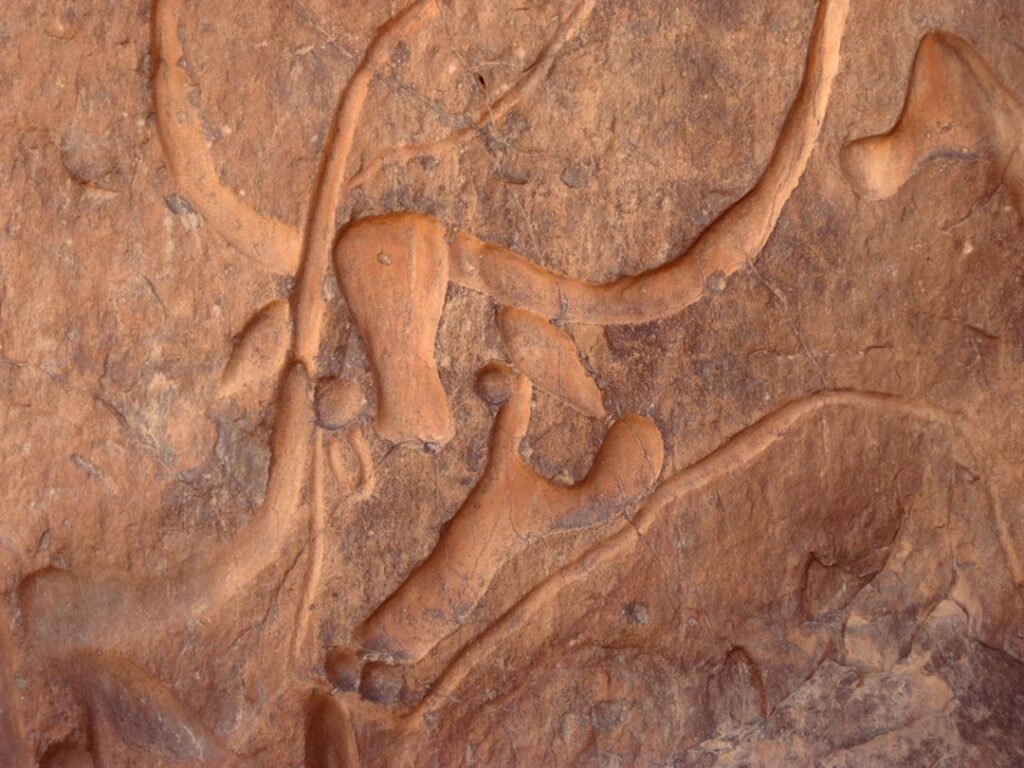
Just after dawn in the Tassili n’Ajjer, the first rays of sun ignite the sandstone pinnacles of the “Forest of Stone” into a blaze of ochre and crimson. The only sound is the wind whispering through millennia-old rock arches, carrying the scent of dry, ancient dust. This isn’t just a desert; it’s a 72,000-square-kilometer open-air museum, home to over 15,000 prehistoric engravings and paintings that tell a story 12,000 years in the making, making it one of the most significant rock art sites on the planet.
Why Tassili n’Ajjer, Algeria Stands Out

A road sign in the middle of a desert, Tassili n’Ajjer, Algeria
- Historic Architecture: The “Crying Cows” fresco at Sefar, dating to around 6,000 BCE, is a masterpiece of Neolithic art depicting pastoral life with stunning emotional detail.
- Cultural Scene: The annual Imzad music festival in Djanet celebrates the haunting, single-stringed violin music of the Tuareg people, a UNESCO-recognized intangible cultural heritage.
- Local Specialties: You must try Méchoui, a whole lamb slow-roasted in a sand pit, seasoned with local herbs and served communally—a true Saharan feast.
Pro Tip: The absolute best time to visit is during the shoulder months of October to November or March to April. Daytime temperatures are a manageable 25-30°C (77-86°F), and the nights, while cold, are not yet freezing. Avoid the scorching summer heat (45°C+/113°F+) and the bitterly cold winter nights that can plunge below zero in the desert.
Map of Tassili n’Ajjer, Algeria
Use these interactive maps to explore Tassili n’Ajjer, Algeria and plan your route:
📍 View Tassili n’Ajjer, Algeria on OpenStreetMap
🗺️ Open Tassili n’Ajjer, Algeria in Google Maps
Planning Your Trip: Practical Essentials
Getting There and Around
- By Air: The gateway is Djanet Inedbirene Airport (DJG). Air Algérie operates flights from Algiers (approx. 2.5 hours). Book flights at Skyscanner for best deals.
- By Train: No train service reaches this remote region. All journeys begin with a flight into Djanet.
- By Car: A 4×4 expedition from Djanet is the only way in. Self-driving is not recommended due to trackless desert and security protocols. All visits require a licensed guide and convoy. Compare car rentals for Algeria at RentalCars.com, but arrange the desert vehicle through your tour operator.
- Local Transport: Within the park, transport is by 4×4 and on foot. Your tour package includes all desert transport.
Best Time to Visit
Timing is everything in the Sahara. You’re balancing the desire for comfortable trekking temperatures with the reality of extreme desert climate shifts.
| Season | Weather | Highlights |
|---|---|---|
| Summer (Jun–Aug) | Extremely hot, 40-50°C (104-122°F). Intense sun. | Few visitors; clear, starry nights. Only for the most heat-tolerant. |
| Winter (Dec–Feb) | Cold days 15-20°C (59-68°F), freezing nights below 0°C (32°F). | Crisp, clear air perfect for photography. Requires serious cold-weather camping gear. |
| Shoulder (Mar–May/Oct–Nov) | Ideal. Days 25-30°C (77-86°F), nights cool but not freezing. | Perfect for hiking and camping. The most popular and recommended time to visit. |
Budgeting for Tassili n’Ajjer, Algeria

People walking on street during daytime, Tassili n’Ajjer, Algeria
| Category | Budget | Mid-range | Luxury |
|---|---|---|---|
| Accommodation | Basic guesthouse in Djanet: $25-40/night | Standard desert tour with tent camping: $150-250/day (all-inclusive) | Premium guided expedition with better vehicles/chef: $300+/day |
| Meals | Street food in Djanet: $3-5 per meal | Meals included in tour cost | Gourmet camp meals included |
| Transport | Shared taxi in Djanet: $2-3 | 4×4 & fuel included in tour | Private 4×4 & guide included |
| Activities | Park entry fee: ~$20 | Guided hikes, site visits included | Specialist photography/archaeology guides |
| Daily Total | $50-70 (Djanet only) | $150-250 (all-inclusive tour) | $300+ (all-inclusive) |
*Note: A visit to Tassili is almost exclusively done via multi-day, all-inclusive tours from Djanet. The “Budget” column reflects minimal time in Djanet only.
Top Attractions and Must-See Sights
| Attraction | Description | Hours | Entry Fee |
|---|---|---|---|
| The Plateau of Sefar | The heart of the rock art, featuring the famous “Crying Cows” and “Great God of Sefar” murals in natural rock shelters. | Daylight hours | Included in tour & park fee (~$20) |
| The Forest of Stone (Tassili) | A surreal labyrinth of eroded sandstone pillars, arches, and canyons that give the region its name (“Plateau of the Rivers”). | Daylight hours | Included in tour & park fee |
| Jabbaren Archeological Site | Known as “The Giants” for its large humanoid figures, this site contains some of the oldest and most enigmatic paintings. | Daylight hours | Included in tour & park fee |
| Djanet Oasis | The lush, palmeraie gateway town, with its traditional ksar (fortified village) and a vital stop for supplies and cultural immersion. | N/A | Free to explore |
3-Day Itinerary: Tassili n’Ajjer, Algeria’s Highlights & Hidden Gems
Day 1: Gateway to Antiquity in Djanet & First Camp
- Morning (7-9 AM): Arrive at Djanet airport. Meet your guide and team. Finalize supplies and visit the local market to see traditional Tuareg crafts like silver jewelry and leatherwork.
- Afternoon (12-3 PM): 4×4 transfer into the park outskirts. Stop at the Tamrit site for an introduction to the landscape and early rock engravings. Enjoy a picnic lunch of fresh bread, dates, and Algerian cheese.
- Evening (6-8 PM): Arrive at first campsite near the plateau base. Watch the sunset paint the cliffs, then gather for a dinner of Chorba (spicy soup) and couscous under an immense canopy of stars.
Day 2: Deep Immersion in the Rock Art Galleries
- Morning (6 AM): Early start to hike up to the Sefar plateau (2-3 hour ascent). The cool morning light is perfect for photography. Your guide will lead you directly to the “Crying Cows” fresco—seeing it in the soft dawn light is transformative.
- Afternoon (12-3 PM): Explore more rock shelters around Sefar, each a gallery of ancient giraffes, elephants, and pastoral scenes. Lunch is served in the shade of a towering rock arch.
- Evening (6-8 PM): Descend to a new campsite in a secluded canyon. As the fire is lit, your Tuareg guide might share stories of the “Jabbaren giants” and play a few notes on the Imzad.
Day 3: Stone Forests & Return to Civilization
- Morning (7 AM): 4×4 journey through the core of the “Forest of Stone.” Stop to hike through narrow canyons and marvel at natural rock bridges. The play of light and shadow here is a photographer’s dream.
- Afternoon (1 PM): Final picnic lunch in the desert before beginning the return drive to Djanet. Stop at a final, lesser-known engraving site often missed by larger groups.
- Evening (6 PM): Return to Djanet. Celebrate your journey with a proper Méchoui feast at a local restaurant in the oasis, a profound contrast to the silent desert you’ve just left.
Cultural Insights & Etiquette
- Language: Arabic and Tamahaq (Tuareg language) are spoken. Key phrases: “Salam alaykum” (hello), “Shukran” (thank you), “Yaishek” (informal thanks). French is widely understood in tourist contexts.
- Customs: The Tuareg are matrilineal and known as the “Blue People” for their indigo-dyed tagelmusts (veils). Always ask permission before photographing people. Hospitality (tea ceremony) is sacred; accept it graciously.
- Tipping: For guides and drivers, a tip of 1,000-2,000 DZD (approx. $7-$15) per day per person is a generous and appreciated gesture for good service.
- Dress Code: Modest, loose-fitting clothing is respectful. For the desert, long sleeves and pants protect from the sun. A shemagh (headscarf) is practical for sun and sand.
- Business Hours: Government offices and banks in Djanet typically operate Sunday-Thursday, 8 AM-3 PM. Shops may reopen in the cooler evening. Friday is the holy day.
Where to Eat: Tassili n’Ajjer, Algeria’s Best Bites
Dining in Tassili is defined by your tour: meals are prepared camp-side. In Djanet, you’ll find simple, hearty Saharan cuisine focused on grains, legumes, and meat, with flavors enhanced by spices like cumin, coriander, and harissa.
Must-Try Local Specialties
- Méchoui: The ultimate celebration dish. Whole lamb, slow-roasted until falling off the bone. Best experienced at a local family’s home or a festive gathering arranged by your guide.
- Couscous Targui: Lighter and finer than northern Algerian couscous, often served with a rich sauce of onions, tomatoes, and dried meat (leguma).
- Tagella: Traditional Tuareg bread, baked in the sand under hot coals. It’s unleavened, dense, and perfect for scooping up stews.
Restaurant Recommendations by Budget
| Type | Restaurant | Specialty | Price Range |
|---|---|---|---|
| Budget | Small cafes around Djanet market | Chorba Frik (lamb and freekeh soup), Merguez sandwiches | $3-5 per meal |
| Mid-range | Restaurant l’Oasis (Djanet) | Grilled meats, local couscous, simple salads | $8-15 per meal |
| Fine dining | Hotel Restaurant (e.g., Hotel Tahat) | Multi-course meals featuring Méchoui and French-Algerian fusion | $20-30+ per meal |
Where to Stay
Accommodation splits between basic hotels in Djanet and desert camping. Booking a tour is essential for the park visit. Compare prices and book Djanet hotels at Booking.com.
Best Neighborhoods for Accommodation
- Central Djanet: Close to the market and amenities. Hotels like Hotel Tahat offer basic comfort and are used to dealing with expedition groups. Perfect for pre- and post-tour nights.
- The Palmeraie (Oasis): Some smaller guesthouses are nestled in the date palm groves, offering more tranquility. You’ll need transport to reach the town center.
- The Desert Campsite: This is your main “neighborhood.” Tour operators set up comfortable tents with sleeping mats. The luxury is the billion-star view and profound silence.

A palm tree in front of a building, Tassili n’Ajjer, Algeria
FAQs: Your Tassili n’Ajjer, Algeria Questions Answered
1. Is Tassili n’Ajjer, Algeria safe at night?
Safety in the park is managed through mandatory guided tours and military checkpoints. In the desert, your guide ensures safety from environmental hazards. In Djanet, it is generally safe at night, but as in any remote town, it’s wise to stay in well-lit areas and avoid walking alone late. The main safety concern is the harsh desert environment—dehydration and getting lost.
2. What currency is used and are credit cards accepted?
The Algerian Dinar (DZD) is the currency. Cash is king, especially in Djanet and absolutely in the desert. Bring enough euros or USD to exchange in Algiers or at the bank in Djanet. Credit cards are rarely accepted outside major hotels in Algiers. ATMs in Djanet can be unreliable.
3. How do I get from the airport to the city center?
Djanet airport is small. Your tour operator will almost always include an airport pickup. If not, taxis are available for a fixed rate of about 500 DZD (~$3.50) for the 10-minute drive into Djanet. Book airport transfers at GetYourGuide for convenience, but confirm local operator availability.
4. Do I need to speak the local language?
No, but it helps. Your guide will speak French and often some English. Learning a few basic Arabic or Tamahaq greetings will earn you warm smiles. For independent travel in Djanet, French is far more useful than English.
5. What’s the appropriate dress code?
Modest, practical, and sun-smart. For both cultural respect and protection, wear loose, light-colored long sleeves and trousers. A wide-brimmed hat, sunglasses, and a shemagh are essential. For camping, bring a warm fleece and jacket for cold nights. Sturdy, broken-in hiking boots are non-negotiable.
Final Thoughts: Tassili n’Ajjer, Algeria Awaits
Tassili n’Ajjer is not a casual destination; it’s a pilgrimage for the curious soul. It demands preparation, respect, and a willingness to embrace elemental simplicity. The reward is unparalleled: standing in a silent canyon where humans expressed their world view thousands of years before the pyramids were built. You’ll return
Explore More Destinations
- Jozani, Tanzania on a Budget: an Ancient Forest for $35/Day (2026)
- Nsumbu, Zambia on a Budget: Wild Africa for $40/Day (2026)
- Semporna, Malaysia on a Budget: Paradise for $35/Day (2026)
- Khuzestan, Iran on a Budget: Ancient Empires for $30/Day (2026)
- Ngerulmud, Palau on a Budget: Island Majesty for $45/Day (2026)
Ready to Visit Tassili n’Ajjer?
Start planning your trip today. Compare hotels, find the best tours, and get insider tips.
Your adventure in Tassili n’Ajjer starts here →
{“@context”: “https://schema.org”, “@type”: “FAQPage”, “mainEntity”: [{“@type”: “Question”, “name”: “What is the best time to visit Tassili nu2019Ajjer?”, “acceptedAnswer”: {“@type”: “Answer”, “text”: “The best time to visit Tassili nu2019Ajjer depends on your preferences. Generally, the dry season offers the most pleasant weather for sightseeing and outdoor activities.”}}, {“@type”: “Question”, “name”: “How many days do I need in Tassili nu2019Ajjer?”, “acceptedAnswer”: {“@type”: “Answer”, “text”: “Most travelers spend 3-5 days in Tassili nu2019Ajjer to see the main attractions. A week allows for a more relaxed pace and day trips.”}}, {“@type”: “Question”, “name”: “Is Tassili nu2019Ajjer expensive to visit?”, “acceptedAnswer”: {“@type”: “Answer”, “text”: “Tassili nu2019Ajjer can be visited on various budgets. Accommodation ranges from hostels to luxury hotels, and local restaurants offer affordable dining.”}}]}
Related Guides
Explore more destinations similar to Tassili n’Ajjer:
- Bishop, USA’s Essential Granite Peaks, Hot Springs & High Desert Charm (2026)
- Fakarava, French Polynesia’s Hidden Diving, Seclusion & Untamed Atoll Life (2025)
- Duqm, Oman’s Ultimate Desert Landscapes, Marine Wonders & Futuristic Ambition (2026)
- Lake Como, Italy’s Best Villas, Vistas & Alpine Serenity (2026)

