
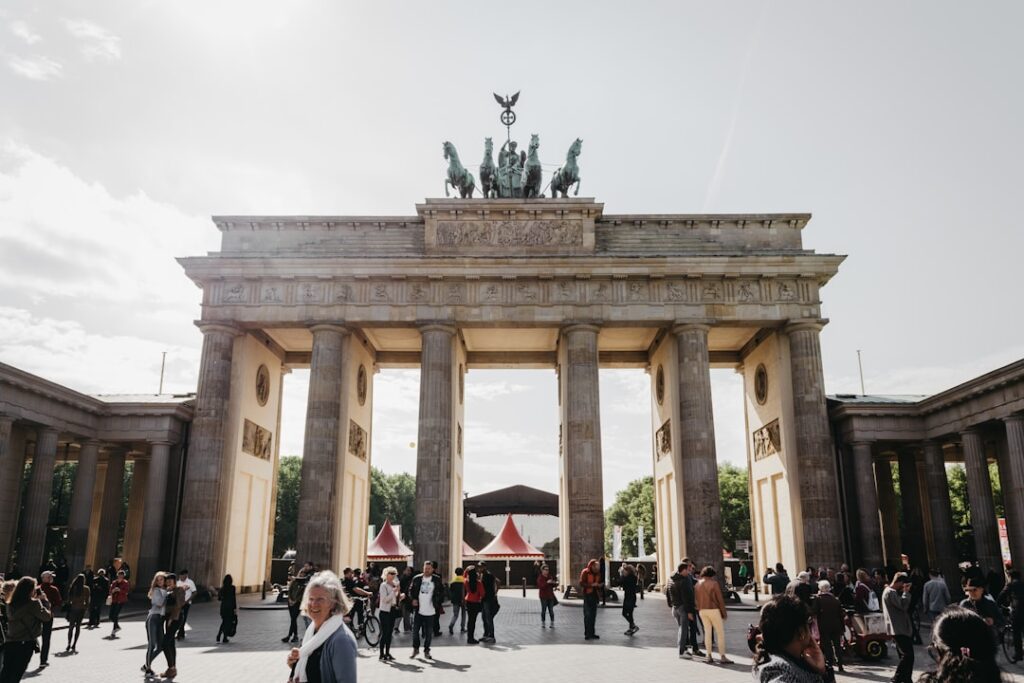
Brandenburg Gate, Germany’s Essential History, Unity & Urban Energy (2026)
Midnight in Berlin reveals the Brandenburg Gate in its most powerful state. The illuminated Quadriga chariot glows against the dark sky, while the hum of the city fades to a whisper. This is when you feel the weight of its 234-year history—from Prussian triumph to Cold War division to modern symbol of reunification. Most visitors snap photos and leave, but the savvy traveler knows its true magic unfolds when you linger and see it as the living heart of a nation.
Why Brandenburg Gate, Germany Stands Out

Woman standing near building, Brandenburg Gate, Germany
- Historic Architecture: The 1791 neoclassical gate, crowned by the Quadriga statue of Victory, is Berlin’s only surviving city gate and a UNESCO-listed icon of German unity.
- Cultural Scene: The annual Festival of Lights transforms the gate into a breathtaking canvas of projected art and stories each October.
- Local Specialties: Don’t miss a classic Currywurst from a nearby imbiss stand—the perfect savory snack after exploring the Pariser Platz.
Pro Tip: Visit at sunrise (around 5-6 AM in summer) for near-solitude and stunning golden-hour photos. Alternatively, come after 10 PM to see the gate majestically lit without the daytime tour bus crowds. Weekdays are always quieter than weekends.
Map of Brandenburg Gate, Germany
Use these interactive maps to explore Brandenburg Gate, Germany and plan your route:
📍 View Brandenburg Gate, Germany on OpenStreetMap
🗺️ Open Brandenburg Gate, Germany in Google Maps
Planning Your Trip: Practical Essentials
Getting There and Around
- By Air: Berlin Brandenburg Airport (BER) serves most international flights. The Airport Express (FEX) train takes 33 minutes to Berlin Hauptbahnhof, then a short S-Bahn ride to Brandenburger Tor station. Book flights at Skyscanner for best deals.
- By Train: Berlin’s Hauptbahnhof is a major European rail hub. High-speed ICE trains connect from Hamburg (1.75 hours), Munich (4 hours), and Frankfurt (4 hours). The Brandenburger Tor S-Bahn station is directly beneath the square. Reserve tickets at Trainline or the national railway website.
- By Car: Driving in central Berlin is complex; your best bet is to park at a Park & Ride like Potsdamer Platz (€2/hour) and use public transport. The gate itself is pedestrian-only. Compare car rentals at RentalCars.com.
- Local Transport: The U55 subway and S-Bahn lines S1, S2, S25, and S26 stop at ‘Brandenburger Tor’. A Berlin AB zone day ticket costs €9.50 and covers all buses, trams, and trains. Check official city transport websites for passes and schedules.
Best Time to Visit
Berlin is a year-round city, but each season offers a different vibe at the gate. Spring and fall provide the ideal balance of pleasant weather and manageable crowds for sightseeing.
| Season | Weather | Highlights |
|---|---|---|
| Summer (Jun–Aug) | 18–25°C (64–77°F), long days, occasional rain | Vibrant street life, outdoor festivals, but peak crowds; arrive early. |
| Winter (Dec–Feb) | -1–4°C (30–39°F), short days, potential snow | Magical Christmas markets nearby, dramatic lighting, fewest tourists. |
| Shoulder (Apr–May/Sep–Oct) | 10–18°C (50–64°F), mild and changeable | Best for photography, comfortable walking, and experiencing local daily life. |
Budgeting for Brandenburg Gate, Germany

Yellow concrete building, Brandenburg Gate, Germany
| Category | Budget | Mid-range | Luxury |
|---|---|---|---|
| Accommodation | Hostel dorm: €25-40/night | 3-star hotel: €90-140/night | 5-star (e.g., Hotel Adlon): €350+/night |
| Meals | Imbiss/street food: €5-10/meal | Restaurant meal: €15-25/meal | Fine dining: €60+/meal |
| Transport | Public transport day ticket: €9.50 | Taxi short trip: €10-15 | Private driver: €50+/hour |
| Activities | Free sights, walking tours (tip-based) | Museum entry: €10-15 each | Private guided history tour: €200+ |
| Daily Total | €50-70 | €120-180 | €500+ |
Top Attractions and Must-See Sights
| Attraction | Description | Hours | Entry Fee |
|---|---|---|---|
| Reichstag Building & Dome | Climb the Norman Foster glass dome for a 360° view of Berlin, directly overlooking the gate. | 8 AM–12 AM (book ahead) | Free (registration required) |
| Memorial to the Murdered Jews of Europe | A powerful, abstract field of 2,711 concrete stelae located one block south. | Field: 24/7; Info Centre: 10 AM–8 PM (Tue-Sun) | Free |
| Tiergarten Park | Berlin’s “green lung” stretching west from the gate, perfect for a peaceful stroll or bike ride. | Always open | Free |
| Potsdamer Platz | A 10-minute walk south to see Berlin’s modern architectural revival and remnants of the Wall. | Public square | Free |
3-Day Itinerary: Brandenburg Gate, Germany’s Highlights & Hidden Gems
Day 1: Icons of History & Power
- Morning (7-9 AM): Start at the Brandenburg Gate at sunrise for photos. Walk through the gate towards the Tiergarten, spotting the Soviet War Memorial. Grab a coffee and pastry from a nearby bakery like Bäckerei Siebert.
- Afternoon (12-3 PM): Visit the Reichstag Dome (pre-booked 1 PM slot). For lunch, walk to Zur letzten Instanz (Berlin’s oldest restaurant, 20-min walk) for hearty Eisbein (pork knuckle) for around €18.
- Evening (6-8 PM): Return to Pariser Platz to see the gate illuminated. Enjoy an early dinner at Lutter & Wegner on Gendarmenmarkt for classic German-Austrian cuisine and their famous sparkling wine.
Day 2: Memory, Division & Art
- Morning (9 AM): Visit the Memorial to the Murdered Jews of Europe and its underground information centre (free). Then, walk to the Topography of Terror museum (free), built on the former Gestapo headquarters.
- Afternoon (1 PM): Lunch at Curry 36 at Mehringdamm for the definitive Currywurst (€3). Take the U-Bahn to Checkpoint Charlie, then walk to the small but impactful “Black Box Cold War” exhibition (€5).
- Evening (7 PM): Experience Berlin’s vibrant art scene at the Piano Salon Christophori in Friedrichshain (a 20-min taxi ride) for an intimate concert in a quirky, historical setting.
Day 3: Royal Berlin & Local Life
- Morning (10 AM): Take the S-Bahn (€3.40) to Charlottenburg. Tour the opulent Charlottenburg Palace (€12 for Old Palace). Stroll through the palace gardens.
- Afternoon (1:30 PM): Lunch at Käfer im Reichstag – the restaurant in the Reichstag building (requires separate booking, €30-50 for lunch) for unparalleled views. Alternatively, try Schleusenkrug beer garden in Tiergarten.
- Evening (6 PM): Final visit to the Brandenburg Gate. Walk down Unter den Linden boulevard towards Museum Island. Enjoy a farewell drink at Weinbar Rutz, a Michelin-starred wine bar with an incredible German wine list.
Cultural Insights & Etiquette
- Language: German is official. Key phrases: “Guten Tag” (Hello), “Danke” (Thank you). English is widely spoken in tourist areas, but a “Sprechen Sie Englisch?” is polite.
- Customs: Punctuality is valued. At pedestrian crossings, wait for the green “Ampelmännchen” signal—jaywalking is frowned upon. Directness in conversation is normal, not rude.
- Tipping: Round up the bill or leave 5-10% in restaurants. Say the total amount you wish to pay when handing over cash (e.g., for a €18 bill, say “20” to leave a €2 tip).
- Dress Code: Smart-casual is fine for most places. Pack layers and comfortable walking shoes. Some upscale clubs and restaurants may require more formal attire.
- Business Hours: Shops generally open Mon-Sat 10 AM–8 PM, closed Sundays. Museums often close on Mondays. Banks close by 4 PM.
Where to Eat: Brandenburg Gate, Germany’s Best Bites
Berlin’s food scene is a thrilling mix of traditional German “hausmannskost” (home cooking) and innovative, international cuisine. Near the gate, you’ll find everything from quick street-food stands to some of the city’s most historic and upscale dining rooms.
Must-Try Local Specialties
- Currywurst: Steamed then fried pork sausage, sliced and smothered in a spiced ketchup-curry powder sauce. Best tried at a classic Imbiss (snack stand) like Curry 36 or Konnopke’s.
- Eisbein: A monumental, tender boiled pork knuckle, usually served with sauerkraut and mashed peas. Find it at traditional beer halls like Zur letzten Instanz or Max und Moritz.
- Berliner Pfannkuchen: A jam-filled doughnut without a hole, often dusted with sugar. Not just for Carnival! Pick one up from any reputable bakery like Brammibal’s Donuts for a vegan version.
Restaurant Recommendations by Budget
| Type | Restaurant | Specialty | Price Range |
|---|---|---|---|
| Budget | Curry 36 (Mehringdamm) | The city’s most famous Currywurst, served with crispy fries. | €3-6 |
| Mid-range | Brasserie Lamazère (Charlottenburg) | Classic French-German brasserie dishes in an elegant setting. | €20-35 per main |
| Fine dining | Lorenz Adlon Esszimmer (Hotel Adlon) | Two-Michelin-starred modern German cuisine with gate views. | €200+ tasting menu |
Where to Stay
Staying near the gate puts you at the epicenter of Berlin’s history, but adjacent districts like Mitte and Kreuzberg offer more local character and better value. Compare prices and book at Booking.com or Airbnb for apartments.
Best Neighborhoods for Accommodation
- Mitte: The historic central district. You’re steps from the gate, Museum Island, and shopping. Pros: ultimate convenience. Cons: can be touristy and expensive. Best for first-time visitors and history buffs.
- Kreuzberg: A 15-minute U-Bahn ride south. Vibrant, alternative, and packed with amazing street food, bars, and street art. Pros: great nightlife, authentic vibe. Cons: can be noisy. Best for younger travelers and foodies.
- Charlottenburg: A 15-minute S-Bahn ride west. Elegant, quieter, with beautiful pre-war architecture and high-end shopping on Kurfürstendamm. Pros: sophisticated, relaxed. Cons: less central. Best for travelers seeking a more refined stay.

Man riding on carriage statue, Brandenburg Gate, Germany
FAQs: Your Brandenburg Gate, Germany Questions Answered
1. Is Brandenburg Gate, Germany safe at night?
Yes, the Pariser Platz area around the Brandenburg Gate is very safe and well-lit at night, with a regular police presence. As in any major city, stay aware of your surroundings, especially in crowded areas where pickpockets might operate. The adjoining Tiergarten park is best avoided alone late at night.
2. What currency is used and are credit cards accepted?
Germany uses the Euro (€). Credit and debit cards (especially Visa and Mastercard) are widely accepted in hotels, restaurants, and shops. However, Germany has a strong cash culture—smaller cafes, markets, and some museums may only accept cash (Bargeld). It’s wise to always have €20-40 in cash on hand.
3. How do I get from the airport to the city center?
From Berlin Brandenburg Airport (BER), the quickest option is the Airport Express (FEX) train to Berlin Hauptbahnhof (33 mins, €3.80). From there, take any S-Bahn train heading east one stop to ‘Brandenburger Tor’. A taxi costs €50-60 and takes 30-45 minutes. Book airport transfers at GetYourGuide for convenience.
4. Do I need to speak the local language?
No. English is commonly spoken in tourist areas, hotels, and restaurants. Most signage is bilingual. Locals appreciate an attempt at basic German greetings (“Guten Tag,” “Danke”). Learning “Sprechen Sie Englisch?” (Do you speak English?) is a polite way to start a conversation.
5. What’s the appropriate dress code?
Berlin is famously casual and practical. Comfortable walking shoes are essential. For daytime sightseeing, jeans and layers work perfectly. For fine dining or opera, smart-casual attire (collared shirt, dress, blazer) is recommended. The weather can change quickly, so always carry a light jacket or umbrella.
Final Thoughts: Brandenburg Gate, Germany Awaits
The Brandenburg Gate is more than a photo stop; it’s a living textbook of European history and a powerful symbol of hope. You’ll discover that its true impact comes
Explore More Destinations
- Jozani, Tanzania on a Budget: an Ancient Forest for $35/Day (2026)
- Nsumbu, Zambia on a Budget: Wild Africa for $40/Day (2026)
- Semporna, Malaysia on a Budget: Paradise for $35/Day (2026)
- Khuzestan, Iran on a Budget: Ancient Empires for $30/Day (2026)
- Ngerulmud, Palau on a Budget: Island Majesty for $45/Day (2026)
Ready to Visit Brandenburg Gate?
Start planning your trip today. Compare hotels, find the best tours, and get insider tips.
Your adventure in Brandenburg Gate starts here →
Related Guides
Explore more destinations similar to Brandenburg Gate:
- San‘a’, Yemen: Hidden Ancient Architecture, Coffee Culture & Tower House Marvels (2025)
- Cheonan, South Korea’s Hidden Temples, Trails & Culinary Crossroads (2026)
- Santa Marta, Colombia’s Ultimate Beaches, Jungle & Colonial Soul (2025)
- Liwa Oasis, United Arab Emirates: Essential Dunes, Date Palms & Bedouin Heritage (2026)

