
Tsingy’s National Park, Madagascar: Ultimate Stone Forests, Rare Lemurs & Epic Adventure (2026)
At dawn, the sun strikes the Tsingy de Bemaraha, transforming a 600-square-kilometer labyrinth of limestone needles into a cathedral of golden light. The air is filled with the echoing calls of Decken’s sifakas and the rustle of leaves in the canyon forests 100 meters below your harness. This isn’t a hike; it’s a vertical expedition across a 200-million-year-old razor-sharp landscape that receives fewer visitors in a year than the Louvre sees in a single day.
Why Tsingy’s National Park, Madagascar Stands Out

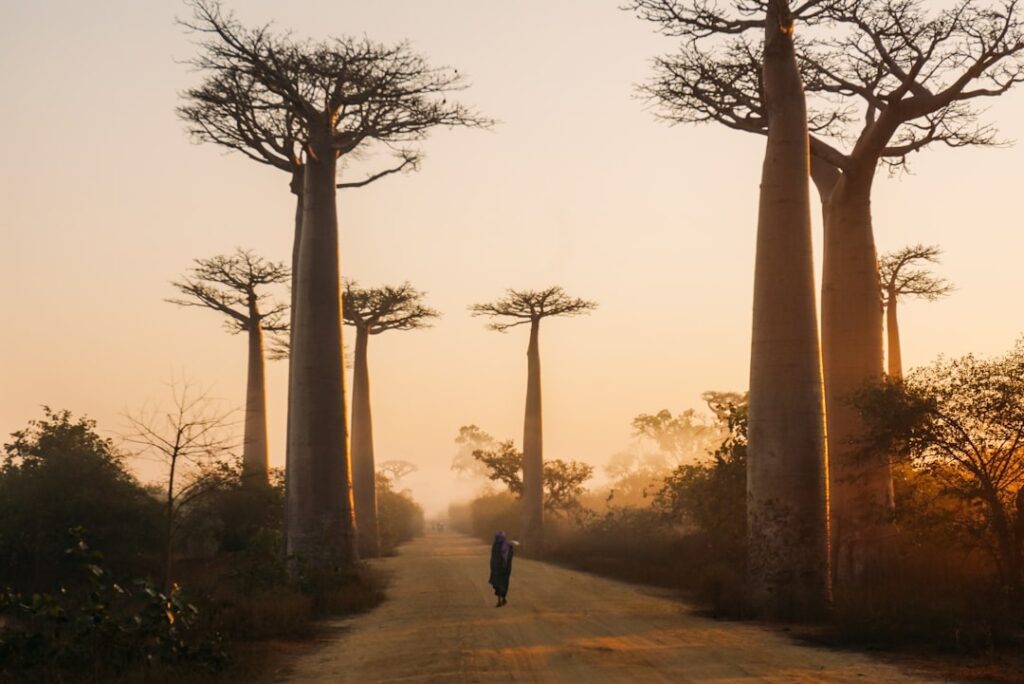
A group of people walking on a dirt road with tall trees with Avenue of the…, Tsingy’s National Park, Madagascar
- Historic Architecture: The Grand Tsingy itself, a 200-million-year-old Jurassic limestone formation sculpted by monsoon rains into a fortress of stone spires, is the park’s awe-inspiring, natural monument.
- Cultural Scene: Witness the ancestral traditions of the Sakalava people during the Fitampoha, or “bone-washing” ceremony, held every seven years to honor royal ancestors, a profound spiritual event tied to the land.
- Local Specialties: After a long day of climbing, seek out a hearty bowl of *romazava*, Madagascar’s national beef stew with leafy greens, best enjoyed in the nearby town of Bekopaka.
Pro Tip: The park is only accessible by road from Morondava between April and November. Aim for the shoulder months of May or October for the best combination of passable roads, manageable heat, and lush greenery, avoiding the peak July-August tourist rush and the impassable rainy season.
Map of Tsingy’s National Park, Madagascar
Use these interactive maps to explore Tsingy’s National Park, Madagascar and plan your route:
📍 View Tsingy’s National Park, Madagascar on OpenStreetMap
🗺️ Open Tsingy’s National Park, Madagascar in Google Maps
Planning Your Trip: Practical Essentials
Getting There and Around
- By Air: Fly into Antananarivo (Ivato Airport, TNR) or Morondava (MOQ). From there, you’ll need a 4×4. Book domestic flights on Air Madagascar or Tsaradia via Skyscanner for best deals.
- By Train: No direct train service exists to this remote park. All journeys culminate in a rugged overland adventure from Morondava.
- By Car: The only way in is a demanding 8-10 hour 4×4 journey from Morondava along the famous, bumpy “Route du Tsingy.” A rental with a driver is mandatory. Compare options at RentalCars.com but book locally for specialized vehicles.
- Local Transport: Within the park, your transport is your own two feet, a canoe, and via ferrata cables. All exploration is on guided tours arranged through your lodge or park office.
Best Time to Visit
The visiting window is narrow, dictated entirely by the weather and road conditions. The dry season is your only option for access and safe exploration.
| Season | Weather | Highlights |
|---|---|---|
| Dry Season (Apr–Nov) | Warm, sunny days (25-30°C/77-86°F), cool nights. Roads are open and passable. | All park circuits are accessible. Ideal for photography, wildlife spotting (lemurs are active), and the via ferrata climbs. Peak crowds in July-August. |
| Rainy Season (Dec–Mar) | Heavy monsoon rains, high humidity, and extreme heat. Roads are completely impassable. | The park is officially closed. Travel is not possible or advised due to flooding, mud, and leech-infested trails. |
| Shoulder (Apr–May/Oct–Nov) | Pleasant temperatures, occasional brief showers, landscapes are green and vibrant. | The sweet spot. Fewer visitors, lower prices, and the most beautiful, lush scenery. Your best bet for a balanced experience. |
Budgeting for Tsingy’s National Park, Madagascar

Trees near pathway during daytime, Tsingy’s National Park, Madagascar
| Category | Budget | Mid-range | Luxury |
|---|---|---|---|
| Accommodation | Camping or basic bungalow: $15-25/night | Comfortable lodge with en-suite: $60-100/night | Full-board eco-lodge: $150-250+/night |
| Meals | Local *hotely* meals: $3-5 | Lodge restaurant: $10-15 per meal | Included in luxury lodge rate |
| Transport | Shared 4×4 taxi-brousse: $50-80 (unreliable) | Private 4×4 with driver (2-3 days): $400-600 total | Private 4×4 + domestic flights: $800+ |
| Activities | Park fee & basic guide: $25/day | Guided circuits + canoe: $40-60/day | Private guide, all circuits: $80-100/day |
| Daily Total | $60-100/day* | $120-200/day* | $250+/day* |
*Excludes international flights and the significant cost of the multi-day 4×4 transfer from Morondava, which is a fixed cost shared across your trip duration.
Top Attractions and Must-See Sights
| Attraction | Description | Hours | Entry Fee |
|---|---|---|---|
| Grand Tsingy Circuit | The iconic via ferrata climb across razor-sharp pinnacles with suspension bridges and breathtaking canyon views. | 7am – 3pm (guided only) | ~$45 incl. guide & harness |
| Petit Tsingy Circuit | A less strenuous but equally stunning walk through a forest of smaller limestone formations, perfect for wildlife spotting. | 7am – 2pm (guided only) | ~$25 incl. guide |
| Manambolo River Gorge | A serene pirogue (canoe) trip through towering cliffs, visiting sacred Sakalava tombs and spotting crocodiles. | Mornings recommended | ~$20 for canoe/guide |
| Baobab Alley at Sunset | While not in the park itself, the legendary avenue of ancient baobabs on the road from Morondava is an unmissable prelude. | Always open | Free (small fee for parking) |
3-Day Itinerary: Tsingy’s National Park, Madagascar’s Highlights & Hidden Gems
Day 1: Arrival & Acclimatization to the Stone World
- Morning: Arrive at your lodge near Bekopaka after the long 4×4 journey. Settle in and enjoy a late breakfast of fresh fruit and Malagasy coffee.
- Afternoon: Ease into the landscape with the **Petit Tsingy Circuit** (3-4 hours). Your guide will point out the park’s star residents: the white Decken’s sifaka lemur and the rare, red-fronted brown lemur. Look for the unique elephant’s foot plant clinging to the rocks.
- Evening: Sunset views over the Manambolo River from your lodge, followed by dinner. Try the local specialty, *akoho sy voanio* (chicken in coconut sauce).
Day 2: Conquering the Grand Tsingy
- Morning: Early start (7:00 AM) for the **Grand Tsingy Circuit** (5-6 hours). You’ll be fitted with a harness for the via ferrata sections. The climb is physical but safe, culminating at “La Cathédrale,” a viewpoint 100m above the forest floor. Pack plenty of water and snacks.
- Afternoon: Return to the park entrance for a packed lunch. Spend the late afternoon recovering on a gentle **pirogue trip** on the Manambolo River, visiting the sacred *grotte des Portugais* (Portuguese cave).
- Evening: A well-earned hearty dinner at your lodge. Share stories with other travelers under a spectacular canopy of stars, completely free of light pollution.
Day 3: Canyons, Culture & Departure
- Morning: Opt for the **Andadoany Circuit**, a deeper exploration of the canyon forests, or visit a local Sakalava village with your guide to learn about traditions and crafts (always ask permission before taking photos).
- Afternoon: Final lunch in Bekopaka, perhaps a simple but delicious *mofo gasy* (rice cake) with zebu brochettes. Begin the long 4×4 journey back towards Morondava.
- Evening: Time your return trip to stop at **Baobab Alley for sunset** (around 5:30 PM). The silhouettes of these 800-year-old giants against a fiery sky is the perfect, unforgettable farewell to western Madagascar.
Cultural Insights & Etiquette
- Language: Malagasy and French are spoken. Key phrases: *Manao ahoana* (Hello), *Misaotra* (Thank you), *Azafady* (Please/Excuse me). Guides will speak French/English.
- Customs: The Sakalava revere ancestors (*razana*). Never point your feet at tombs, altars, or elders. Always ask before photographing people, villages, or sacred sites.
- Tipping: Not mandatory but greatly appreciated for good service. For guides, consider 5,000-10,000 MGA ($1-$2) per day. For drivers, a similar amount at the end of the trip.
- Dress Code: Practical, sturdy clothing is key: long pants, breathable shirts, and broken-in hiking boots are essential for protection against the sharp rocks. Modesty is respected in villages.
- Business Hours: Park offices operate from ~7am to 4pm. Shops in Bekopaka keep irregular hours. Always carry cash (Ariary) as ATMs are non-existent here.
Where to Eat: Tsingy’s National Park, Madagascar’s Best Bites
Dining revolves around your lodge or the simple *hotelys* (local eateries) in Bekopaka. Cuisine is hearty, rice-based, and features zebu (Malagasy beef), fresh river fish, and tropical fruits. Self-catering is not an option, so lodge meals are your mainstay.
Must-Try Local Specialties
- Romazava: The national stew of zebu meat with *brèdes* (leafy greens), often served with a massive mound of rice. Best tried at a lodge restaurant for consistency.
- Ravitoto sy Henakisoa: A rich, flavorful dish of shredded cassava leaves cooked with pork. A staple in western Madagascar.
- Fresh Fruit: Don’t miss the tiny, sweet pineapples, lychees (in season), and passion fruit (*grenadelle*), often served for breakfast.
Restaurant Recommendations by Budget
| Type | Restaurant | Specialty | Price Range |
|---|---|---|---|
| Budget | Hotelys in Bekopaka village | Simple plates of rice, *laoka* (side dish) like beans or stew. | $3-5 per meal |
| Mid-range | Le Soleil des Tsingy Lodge Restaurant | Well-prepared Malagasy and French dishes with a view. | $10-15 per meal |
| Fine dining | Olympe du Bemaraha Restaurant | The best upscale dining in the area, with creative takes on local ingredients. | $20-30 per meal |
Where to Stay
All accommodation is clustered near the park entrance in Bekopaka or along the Manambolo River. Options range from basic camping to comfortable eco-lodges. Book well in advance, especially in peak season. Compare prices and book at Booking.com for some lodges, but direct booking via email is often required for remote properties.
Best Areas for Accommodation
- Bekopaka Village: The most convenient location, right by the park office. You’ll find a mix of basic bungalows and mid-range lodges. It’s functional and puts you steps from your morning guide.
- Manambolo Riverbank: Lodges situated a few kilometers from Bekopaka offer stunning river views, more tranquility, and often better facilities. Requires short transport to the park gate.
- Camping Inside the Park: For the ultimate adventurer, basic camping sites are available. You must be fully self-sufficient and arrange this directly with the park office (ANGAP).

A couple of lemurs, Tsingy’s National Park, Madagascar
FAQs: Your Tsingy’s National Park, Madagascar Questions Answered
1. Is Tsingy’s National Park, Madagascar safe at night?
Within the park confines and at your lodge, yes. There is no dangerous wildlife to worry about. Standard precautions apply: stay within lodge grounds after dark, use a flashlight, and secure your valuables. The main safety concern is physical safety on the sharp rocks during the day, which is mitigated by using a guide and proper equipment.
2. What currency is used and are credit cards accepted?
The local currency is the Malagasy Ariary (MGA). Credit cards are **absolutely not accepted** in Bekopaka or for park fees. You must bring enough cash (Euros or USD to exchange, or preferably Ariary) for your entire stay, including park fees, guides, meals, souvenirs, and tips. Exchange money in Antananarivo or Morondava before heading to the park.
3. How do I get from the airport to the park?
You don’t fly directly to the park. You’ll fly to Morondava (MOQ) or Antananarivo (TNR). From Morondava, you must pre-arrange a private 4×4 with a driver for the 8-10 hour journey to Bekopaka. This is a fixed-cost transfer, not a daily rental. For seamless planning, book a full tour package that includes transfers, or arrange a trusted driver through your lodge. You can explore tour options at GetYourGuide for Madagascar adventures.
4. Do I need to speak the local language?
No, but it helps to know basic French phrases. Your guide will speak French, and many speak some English. Lodge staff typically speak French. Learning a few words of Malagasy (*Misaotra* for thank you) will earn you big smiles and show respect.
5. What’s the appropriate dress code?
This is purely functional. You need sturdy, closed-toe hiking boots with good grip, long, durable pants (like hiking trousers), long-sleeved shirts for sun and scratch protection, a hat, and a daypack. For evenings, lightweight long layers
Related Guides
Explore more destinations similar to Tsingy’s National Park:
- Majuli, India’s Hidden Riverine Serenity, Living Culture & Spiritual Heritage (2026)
- Mount Lavinia, Sri Lanka’s Best Sunsets, Colonial Romance & Urban Beach Bliss (2026)
- Travnik, Bosnia and Herzegovina’s Best Fortresses, Coffee & Ottoman Grandeur (2026)
- Fajã dos Cubres, Portugal: Best Coastal Serenity, Volcanic Ponds & Timeless Tradition (2026)
{“@context”: “https://schema.org”, “@type”: “FAQPage”, “mainEntity”: [{“@type”: “Question”, “name”: “What is the best time to visit Tsingyu2019s National Park?”, “acceptedAnswer”: {“@type”: “Answer”, “text”: “The best time to visit Tsingyu2019s National Park depends on your preferences. Generally, the dry season offers the most pleasant weather for sightseeing and outdoor activities.”}}, {“@type”: “Question”, “name”: “How many days do I need in Tsingyu2019s National Park?”, “acceptedAnswer”: {“@type”: “Answer”, “text”: “Most travelers spend 3-5 days in Tsingyu2019s National Park to see the main attractions. A week allows for a more relaxed pace and day trips.”}}, {“@type”: “Question”, “name”: “Is Tsingyu2019s National Park expensive to visit?”, “acceptedAnswer”: {“@type”: “Answer”, “text”: “Tsingyu2019s National Park can be visited on various budgets. Accommodation ranges from hostels to luxury hotels, and local restaurants offer affordable dining.”}}]}

