
Wonju, South Korea’s Incredible Mountains, Makgeolli & Modern Art (2026)
While crowds flock to Seoul’s palaces and Busan’s beaches, Wonju delivers authentic Korean culture, dramatic mountain scenery, and a thriving arts scene without the tourist premiums. Just 90 minutes east of the capital by high-speed rail, this city of 350,000 is where you’ll find locals hiking Chiaksan Mountain’s 1,288-meter peak, sipping artisanal rice wine in traditional *hanok* courtyards, and celebrating a film festival that rivals Busan’s. Here’s why savvy travelers are choosing differently.
Why Wonju, South Korea Stands Out

A building with a sign on it, Wonju, South Korea
- Historic Architecture: The 500-year-old Myeongjae House, a stunning example of late Joseon Dynasty *hanok* architecture, offers a serene glimpse into scholar life.
- Cultural Scene: The annual Wonju Dynamic Dancing Carnival transforms the city into a vibrant street performance stage every September.
- Local Specialties: You must try *Wonju Makgeolli*, a uniquely smooth, unfiltered rice wine with a 400-year-old brewing tradition.
Pro Tip: Visit in late September to early October. You’ll catch the vibrant autumn foliage on Chiaksan Mountain, enjoy perfect hiking weather (15-22°C), and can time your trip with the Dynamic Dancing Carnival. Weekdays are blissfully quiet compared to weekends when Seoulites descend for nature getaways.
Map of Wonju, South Korea
Use these interactive maps to explore Wonju, South Korea and plan your route:
📍 View Wonju, South Korea on OpenStreetMap
🗺️ Open Wonju, South Korea in Google Maps
Planning Your Trip: Practical Essentials
Getting There and Around
- By Air: Wonju has a regional airport (Wonju Airport, WJU) with limited domestic flights. Your best bet is flying into Incheon International Airport (ICN) in Seoul. From there, take the KTX high-speed train (90 minutes) or an express bus (2 hours). Book flights at Skyscanner for best deals.
- By Train: The KTX from Seoul’s Cheongnyangni Station to Wonju Station takes just 80-90 minutes and costs around ₩20,000 one-way. It’s efficient and scenic. Reserve tickets at Trainline or the national railway website.
- By Car: Driving from Seoul takes about 1.5 hours via the Yeongdong Expressway. Renting a car is excellent for exploring Chiaksan National Park. Compare car rentals at RentalCars.com.
- Local Transport: Wonju’s city buses are comprehensive and cheap (₩1,300 per ride). Taxis are affordable for short trips. For Chiaksan, take local bus #41 or #42 from Wonju Intercity Bus Terminal.
Best Time to Visit
Wonju shines brightest in the shoulder seasons, offering comfortable weather for its signature outdoor and cultural activities. Summers are lush but humid, while winters are cold and crisp, perfect for certain festivals.
| Season | Weather | Highlights |
|---|---|---|
| Summer (Jun–Aug) | Warm to hot, 22-30°C, humid with monsoon rains in July. | Lush green mountains, vibrant city festivals. Can be crowded on weekends. |
| Winter (Dec–Feb) | Cold, -5 to 5°C, occasional snow. | Stunning snowy scenes in Chiaksan, the Wonju Hanji Festival in January. Fewer crowds. |
| Shoulder (Apr–May/Sep–Oct) | Mild and pleasant, 10-22°C, low rainfall. | Ideal hiking weather, spring blossoms or autumn foliage, major cultural events. The perfect time to visit. |
Budgeting for Wonju, South Korea

A path through a forest with lots of trees, Wonju, South Korea
| Category | Budget | Mid-range | Luxury |
|---|---|---|---|
| Accommodation | ₩40,000-₩70,000 (hostel/guesthouse) | ₩80,000-₩150,000 (business hotel/design *hanok*) | ₩200,000+ (resort-style or premium hotel) |
| Meals | ₩5,000-₩10,000 (street food, casual meals) | ₩12,000-₩25,000 (sit-down restaurant) | ₩40,000+ (fine dining with *hanwoo* beef) |
| Transport | ₩5,000 (local buses) | ₩15,000 (taxis/car rental share) | ₩50,000+ (private driver) |
| Activities | Free (hiking, temples) | ₩10,000 (museum entries, makgeolli tasting) | ₩30,000+ (guided private tours) |
| Daily Total | ₩50,000-₩85,000 | ₩117,000-₩200,000 | ₩320,000+ |
Top Attractions and Must-See Sights
| Attraction | Description | Hours | Entry Fee |
|---|---|---|---|
| Chiaksan National Park | A hiker’s paradise with peaks over 1,200m, ancient temples like Guryongsa, and stunning valley trails. | Sunrise to Sunset | Free (Parking ₩2,000-₩5,000) |
| Wonju Hanji Culture Festival | An immersive January celebration of traditional Korean paper, with hands-on workshops and luminous lantern displays. | Varies by event (typically 10 AM-9 PM) | Most events free, workshops ₩5,000-₩15,000 |
| Myeongjae House & Wonju Museum | Step into a beautifully preserved 18th-century scholar’s home, then explore regional history in the adjacent modern museum. | 9 AM-6 PM (Closed Mon) | ₩2,000 |
| Gangwon Gamyeong Geojungmae | A historic government complex from the Joseon era, offering a quiet, educational stroll through restored buildings and gardens. | 9 AM-6 PM | ₩1,500 |
3-Day Itinerary: Wonju, South Korea’s Highlights & Hidden Gems
Day 1: Historic Heart & Culinary Introduction
- Morning (9 AM): Start at **Myeongjae House**. Wander the tranquil *hanok* complex for an hour, imagining scholarly life in the 1700s. Your best bet is to go early to have the serene gardens mostly to yourself.
- Afternoon (12:30 PM): Walk to **Yetnal Jip** for lunch, a famous spot for *Wonju-style dakgalbi* (spicy stir-fried chicken). After, visit the adjacent **Wonju Museum** to understand the region’s history.
- Evening (6 PM): Head to **Pungwon Rice Wine Brewery** for a *makgeolli* tasting (₩10,000). For dinner, try **Hanok Sikdang** for traditional meals served in a charming old house setting.
Day 2: Mountain Majesty & Local Life
- Morning (7:30 AM): Catch bus #41 from Wonju Terminal to **Chiaksan National Park** (₩1,500, 30 mins). Hike the popular **Guryongsa Valley** course (3-4 hours round trip) to the beautiful Guryongsa Temple nestled in the mountains.
- Afternoon (1 PM): Enjoy a simple, restorative lunch of *beoseot jeongol* (mushroom hotpot) at a restaurant near the park entrance. Return to the city and relax.
- Evening (6:30 PM): Explore the lively **Central Market**. Don’t miss the street food stalls, then have dinner at **Soseol Hwaro** for premium Korean barbecue, specializing in Gangwon-do’s famous *hanwoo* beef.
Day 3: Arts, Crafts & Departure
- Morning (10 AM): Visit the **Wonju Hanji Theme Park** (free entry) to see the traditional paper-making process. Savvy visitors often book a hands-on *hanji* craft workshop in advance (from ₩15,000).
- Afternoon (12:30 PM): For a final taste of Wonju, have lunch at **Makgeolli Salon**, which pairs modern Korean fusion dishes with an extensive selection of local rice wines.
- Evening (4 PM): If time allows, take a stroll through **Museum San** (requires a short taxi ride), a stunning James Turrell-featuring art museum set in the hills, before catching your train back to Seoul.
Cultural Insights & Etiquette
- Language: Basic Korean phrases go a long way. Learn “Annyeonghaseyo” (Hello), “Gamsahamnida” (Thank you), and “Juseyo” (Please give me). In restaurants and shops, you’ll find enough English to get by.
- Customs: Receive items and pour drinks with two hands as a sign of respect, especially when interacting with elders. Wait for the eldest to start eating before you begin your meal.
- Tipping: Tipping is not a standard practice in South Korea and can sometimes cause confusion. A simple thank you is sufficient.
- Dress Code: Casual and comfortable for hiking and city exploration. Modest attire (covering shoulders and knees) is appreciated when visiting temples.
- Business Hours: Most shops open 10 AM-8 PM. Restaurants typically run 11 AM-9 PM, though some close between 3-5 PM. Many museums are closed on Mondays.
Where to Eat: Wonju, South Korea’s Best Bites
Wonju’s food scene is a delightful mix of hearty mountain cuisine and refined local specialties. The city is famous for its own style of *dakgalbi* and, of course, its namesake *makgeolli*. Meals are social affairs, so don’t be surprised by the shared plates and lively atmosphere.
Must-Try Local Specialties
- Wonju Dakgalbi: Spicy stir-fried chicken with rice cakes, sweet potatoes, and cabbage, cooked on a large iron plate. It’s less saucy and more caramelized than the Chuncheon version. Try it at the legendary **Yetnal Jip**.
- Hanwoo Beef: Premium Korean beef from Gangwon-do province, known for its rich marbling and flavor. Grill it yourself at **Soseol Hwaro**.
- Makgeolli: Wonju’s unfiltered rice wine is slightly sweet, fizzy, and milky. Locals swear by pairing it with *pajeon* (savory pancake). Sample different varieties at **Pungwon Rice Wine Brewery** or **Makgeolli Salon**.
Restaurant Recommendations by Budget
| Type | Restaurant | Specialty | Price Range |
|---|---|---|---|
| Budget | Wonju Central Market Food Alley | Street food like *tteokbokki*, *hotteok*, and *mandu* | ₩2,000-₩7,000 per item |
| Mid-range | Hanok Sikdang (Near Myeongjae House) | Traditional *hanjeongsik* (set menu) served in a *hanok* | ₩15,000-₩25,000 per set |
| Fine dining | Soseol Hwaro (City Center) | Premium *hanwoo* beef barbecue and elegant side dishes | ₩40,000-₩80,000 per person |
Where to Stay
Accommodation in Wonju ranges from traditional *hanok* stays to modern business hotels. Staying near Wonju Station offers convenience for transport, while areas closer to Chiaksan provide a nature retreat. Compare prices and book at Booking.com or Airbnb for apartments.
Best Neighborhoods for Accommodation
- Near Wonju Station/Downtown: The most convenient for buses, trains, and restaurants. You’ll find standard business hotels and good transport links. Ideal for first-time visitors and those without a car.
- Chiaksan Mountain Area: Offers *pensions* (Korean B&Bs) and resorts with stunning views. Perfect for hikers and those seeking tranquility, but you’ll need a car or rely on taxis to get into the city.
- Hakgok Area (Near Myeongjae House): A quieter, more residential feel with some charming guesthouses. Good for travelers interested in history and a slower pace.
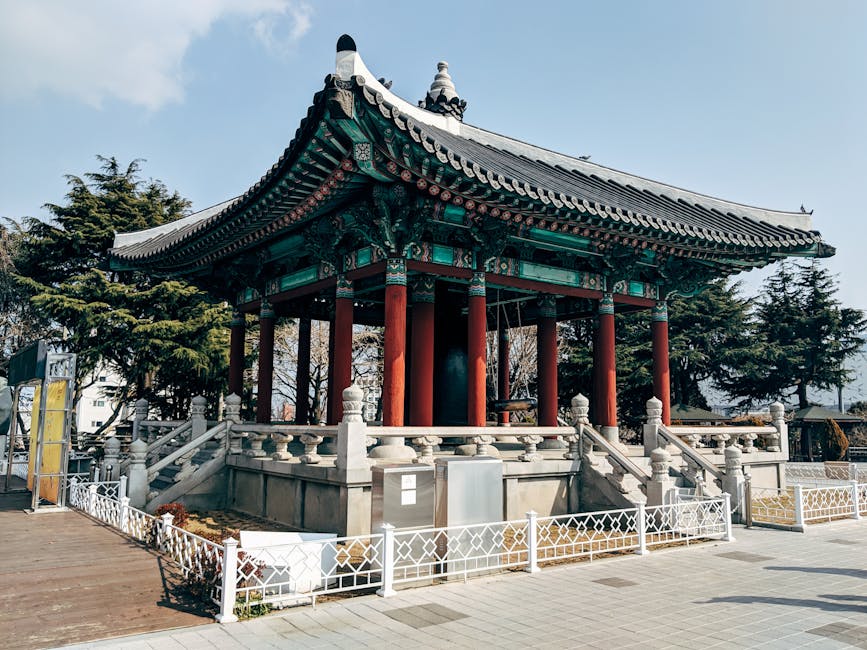
Beautiful traditional Korean pavilion architecture in Busan, Wonju, South Korea
FAQs: Your Wonju, South Korea Questions Answered
1. Is Wonju, South Korea safe at night?
Yes, Wonju is generally very safe at night. Violent crime is rare. As in any city, practice standard precautions: be aware of your surroundings in quieter areas and keep valuables secure. The central areas are well-lit and active into the evening.
2. What currency is used and are credit cards accepted?
The South Korean Won (₩) is the currency. Credit cards (Visa, Mastercard) are widely accepted in hotels, restaurants, and larger shops. However, it’s wise to carry some cash (₩30,000-₩50,000) for markets, street food, small family-run eateries, and bus fares.
3. How do I get from the airport to the city center?
From Incheon Airport (ICN), the most efficient route is taking the AREX train to Seoul Station, then transferring to the subway to Cheongnyangni Station, and finally catching the KTX to Wonju Station (total travel time: ~2.5 hours). A direct limousine bus also runs from Incheon to Wonju Intercity Bus Terminal (approx. 2.5 hours, ₩25,000). Book airport transfers at GetYourGuide for convenience.
4. Do I need to speak the local language?
No, but it helps. In tourist areas, hotels, and train stations, you’ll find some English speakers. Younger people are more likely to understand basic English. Having a translation app (like Papago) and learning a few key phrases will greatly enhance your experience and is appreciated by locals.
5. What’s the appropriate dress code?
Dress
Explore More Destinations
- Jozani, Tanzania on a Budget: an Ancient Forest for $35/Day (2026)
- Nsumbu, Zambia on a Budget: Wild Africa for $40/Day (2026)
- Semporna, Malaysia on a Budget: Paradise for $35/Day (2026)
- Khuzestan, Iran on a Budget: Ancient Empires for $30/Day (2026)
- Ngerulmud, Palau on a Budget: Island Majesty for $45/Day (2026)
Ready to Visit Wonju?
Start planning your trip today. Compare hotels, find the best tours, and get insider tips.
Your adventure in Wonju starts here →
Related Guides
Explore more destinations similar to Wonju:

