
Tsingy de Bemaraha: Madagascar’s Stone Forest
The Tsingy de Bemaraha Strict Nature Reserve is one of the most surreal landscapes on Earth. A UNESCO World Heritage Site since 1990, this 1,500-square-kilometer protected area in western Madagascar features towering limestone pinnacles — called tsingy in Malagasy, meaning “where one cannot walk barefoot.” These razor-sharp karst formations, some reaching 100 meters tall, create a labyrinth of canyons, caves, and underground rivers that have remained largely unexplored.
What Makes the Tsingy Extraordinary
The tsingy formed over 200 million years when a thick limestone bed was lifted by tectonic forces and then eroded by tropical rains into a forest of stone daggers. The result is a terrain so extreme that large portions remain inaccessible to humans — and therefore perfectly preserved. Within this hostile landscape thrives an ecosystem found nowhere else: 11 species of lemur, 100+ bird species, and endemic flora that has adapted to grow directly on the limestone.
Top Things to Do in Tsingy de Bemaraha
1. The Great Tsingy (Grand Tsingy)
The northern section of the reserve is the most dramatic. A network of suspension bridges, iron ladders, and narrow walkways allows visitors to navigate between the pinnacles safely. The Viewpoint of the Andamanoina River offers a breathtaking panorama of the stone forest stretching to the horizon. The full circuit takes 4–6 hours and requires a certified guide (5–35 including equipment rental).
2. The Little Tsingy (Petit Tsingy)
More accessible than its bigger sibling, the Petit Tsingy features shorter pinnacles (10–30 meters) and gentler trails. It is ideal for travelers with limited mobility or those short on time. A 2-hour guided walk costs 5–20 and includes visits to several caves used as burial sites by the ancient Vazimba people.
3. Manambolo River Gorge
The Manambolo River cuts a deep gorge through the tsingy, creating a habitat for crocodiles, Madagascar fish eagles, and the rare Decken’s sifaka lemur. Canoe trips (0–30 per person) navigate the gorge’s calm waters, passing beneath overhanging cliffs and into hidden caves adorned with stalactites and Vazimba tombs.
4. The Suspension Bridge
A 50-meter-long bridge strung between two pinnacles at 30 meters above ground offers the most adrenaline-pumping photo opportunity in the reserve. Not for the faint of heart — the bridge sways and the gaps between planks reveal the void below.
Wildlife of the Tsingy
Despite the harsh terrain, the tsingy supports remarkable biodiversity:
- Decken’s Sifaka — A white-and-gold lemur that leaps between stone pinnacles with astonishing agility.
- Red-fronted Brown Lemur — Often spotted in the forested areas between the karst formations.
- Madagascar Fish Eagle — One of the world’s rarest raptors, with fewer than 400 individuals remaining.
- Fossa — Madagascar’s apex predator, elusive but occasionally seen at dawn or dusk.
- Tsingy Gnarled Fig — A tree whose roots wrap around limestone like fingers, anchoring itself to bare rock.
Best Time to Visit Tsingy de Bemaraha
| Season | Months | Conditions |
|---|---|---|
| Dry Season | April–November | Ideal for hiking; roads from Morondava are passable |
| Wet Season | December–March | Reserve often closed due to impassable roads; lush vegetation |
| Peak Season | June–September | Cooler temperatures (20–28°C); busiest period |
Getting to Tsingy de Bemaraha
The reserve is remote. There are no airports nearby, and access depends entirely on road conditions:
- From Morondava: 200 kilometers of dirt track via the Avenue of the Baobabs. A 4×4 vehicle is mandatory. The journey takes 8–12 hours in the dry season and is impossible during heavy rains. Organized tours (50–250 per person including transport, guide, and 2 nights’ accommodation) are the practical option.
- From Antananarivo: Fly to Morondava (1 hour, 50–200 round-trip with Tsaradia/Air Madagascar) then proceed by road.
- Self-drive: Not recommended. The road requires expert off-road driving and river crossings.
Where to Stay Near the Tsingy
- Orchidée du Bemaraha Hotel — The closest accommodation, 2 kilometers from the park entrance. Simple bungalows with solar power (0–60/night).
- Camping — Basic campsites exist within the reserve perimeter. Bring all supplies from Morondava.
- Morondava: Baobab Café — a comfortable base for pre- and post-trip nights (0–50/night).
Practical Tips
- Guides are mandatory — The terrain is genuinely dangerous without local knowledge. Hire through the park office at the entrance.
- Footwear: Sturdy hiking boots with ankle support. The rock is razor-sharp.
- Gloves: Bring thin gloves for gripping the metal ladders and cables.
- Water: Carry at least 2 liters. There are no water sources on the trails.
- Photography: A wide-angle lens captures the scale of the pinnacles; a polarizing filter helps in the bright midday sun.
- Fitness: Moderate fitness required. The trails involve climbing, scrambling, and exposure to heights.
Combine With: Avenue of the Baobabs
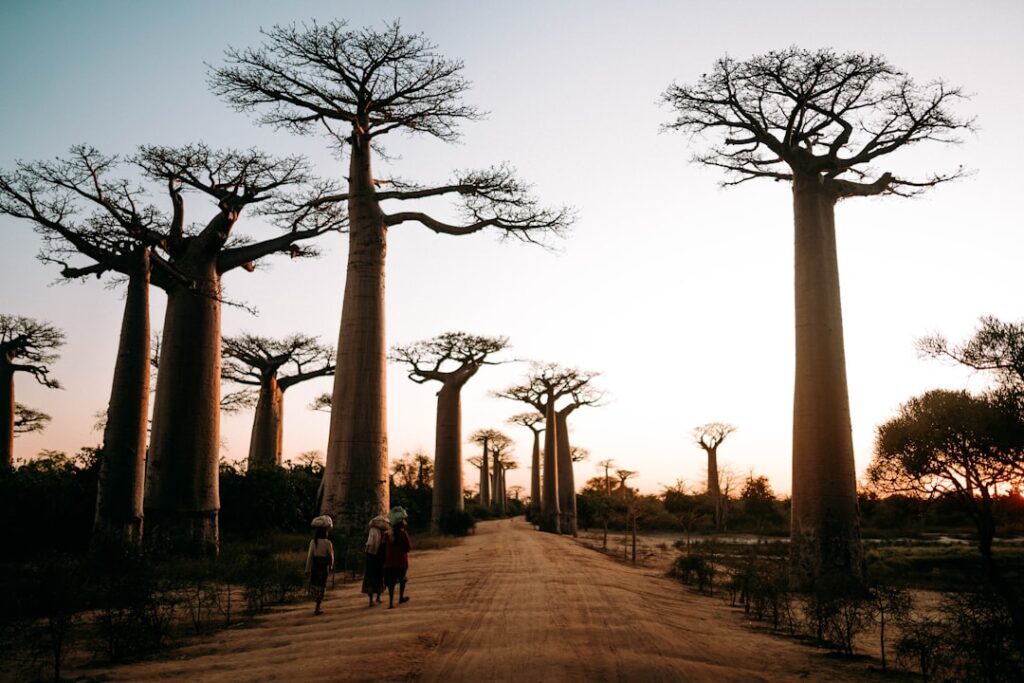
No trip to the Tsingy is complete without stopping at the Avenue of the Baobabs, a dirt road lined with 800-year-old Adansonia grandidieri trees. At sunset, the silhouettes against the red sky are Madagascar’s most photographed scene. Located 40 minutes from Morondava, it is easily visited en route to or from the tsingy.
Ready to Explore the Stone Forest?
Plan Your Madagascar Adventure
Find guided tours, 4×4 transport, and accommodations for Tsingy de Bemaraha and beyond.
Last updated: May 2026

