
Gansu Province, China’s Amazing Silk Road Echoes, Desert Colors & Buddhist Art (2026)
While crowds flock to Xi’an’s Terracotta Army, Gansu Province delivers the raw, untamed soul of the ancient Silk Road without the jostling queues. Here, you can trace a 1,600-year-old trade route past 735 Buddhist cave temples at Mogao, watch the sun set over a rainbow-striped mountain at Zhangye Danxia, and stand where the Great Wall meets the Gobi Desert at Jiayuguan Pass. This is where China’s history feels vast, tangible, and breathtakingly beautiful.
Why Gansu Province, China Stands Out

A scenic view of a temple at Echoing-Sand Mountain, Gansu Province, China
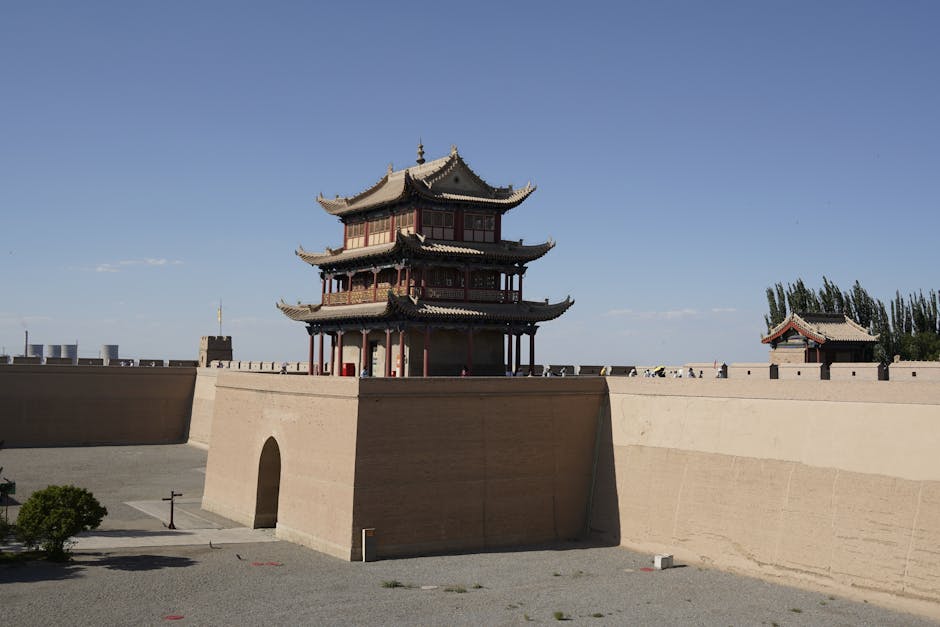
- Historic Architecture: The Jiayuguan Fortress, completed in 1372, is the formidable western terminus of the Ming Dynasty Great Wall, known as the “First and Greatest Pass Under Heaven.”
- Cultural Scene: The Labrang Monastery in Xiahe hosts the dramatic Cham Dance festival each January/February, where masked monks perform sacred rituals to dispel evil.
- Local Specialties: You must try Lanzhou Beef Noodle Soup (兰州牛肉拉面), a deceptively simple dish defined by its clear, aromatic broth, hand-pulled noodles, and tender beef slices.
Pro Tip: Visit in late September to early October. The summer crowds have thinned, the scorching desert heat has mellowed into pleasant warmth, and the poplar trees along the Hexi Corridor turn a stunning gold, creating perfect photography conditions.
Map of Gansu Province, China
Use these interactive maps to explore Gansu Province, China and plan your route:
📍 View Gansu Province, China on OpenStreetMap
🗺️ Open Gansu Province, China in Google Maps
Planning Your Trip: Practical Essentials
Getting There and Around
- By Air: Lanzhou Zhongchuan International Airport (LHW) is the main hub, with domestic flights from major cities. Dunhuang Airport (DNH) is ideal for the western circuit. Book flights at Skyscanner for best deals.
- By Train: The high-speed rail network connects Lanzhou to Xi’an (3 hours), Zhangye, and Jiayuguan. Overnight sleeper trains run to Dunhuang. Reserve tickets at Trainline or the national railway website.
- By Car: Renting a car with a driver is highly recommended for the long desert stretches between sights like Zhangye and Dunhuang. Compare car rentals at RentalCars.com.
- Local Transport: City buses and taxis are cheap in Lanzhou and Zhangye. For remote sites, joining a multi-day tour or hiring a private car is your best bet.
Best Time to Visit
Gansu’s climate varies dramatically from eastern highlands to western desert. The narrow window of spring and autumn offers the most comfortable conditions for exploring.
| Season | Weather | Highlights |
|---|---|---|
| Summer (Jun–Aug) | Hot & dry in west (25-38°C), cooler in east. Intense sun. | All sites accessible, vibrant green grasslands in Xiahe, but also peak tourist crowds at Mogao. |
| Winter (Dec–Feb) | Bitterly cold, especially in desert (-10 to 5°C). Snow possible. | Deeply atmospheric, empty sites, and the unique chance to see Labrang Monastery’s grand festivals. Bundle up. |
| Shoulder (Apr–May/Sep–Oct) | Mild, pleasant days (15-25°C) with cool nights. Low rainfall. | The absolute best time. Comfortable for hiking, fewer visitors, and stunning autumn foliage in the Hexi Corridor. |
Budgeting for Gansu Province, China
Explore the majestic architecture of a Chinese fortification under a clear …, Gansu Province, China
| Category | Budget | Mid-range | Luxury |
|---|---|---|---|
| Accommodation | Hostel/Guesthouse: 80-150 CNY/night | 3-4 Star Hotel: 300-600 CNY/night | 5-Star/Boutique: 800-1500+ CNY/night |
| Meals | Street food/local noodles: 15-30 CNY | Restaurant meals: 50-100 CNY/person | Fine dining/hotel restaurants: 150+ CNY/person |
| Transport | Long-distance buses/trains: 100-200 CNY/leg | Taxi day trips/private car hire: 400-800 CNY/day | Private driver & guide for entire itinerary |
| Activities | Free sights, temple walks | Major attraction tickets (Mogao: 238 CNY) | Premium Mogao tour tickets, helicopter tours over Danxia |
| Daily Total | 250-400 CNY | 600-1000 CNY | 1500+ CNY |
Top Attractions and Must-See Sights
| Attraction | Description | Hours | Entry Fee |
|---|---|---|---|
| Mogao Caves (Dunhuang) | A UNESCO site with 735 caves housing 1,600 years of Buddhist wall paintings and sculptures. | 8:00-18:00 (peak season), booking mandatory | 238 CNY (Standard Tour), 600 CNY (Premium Tour) |
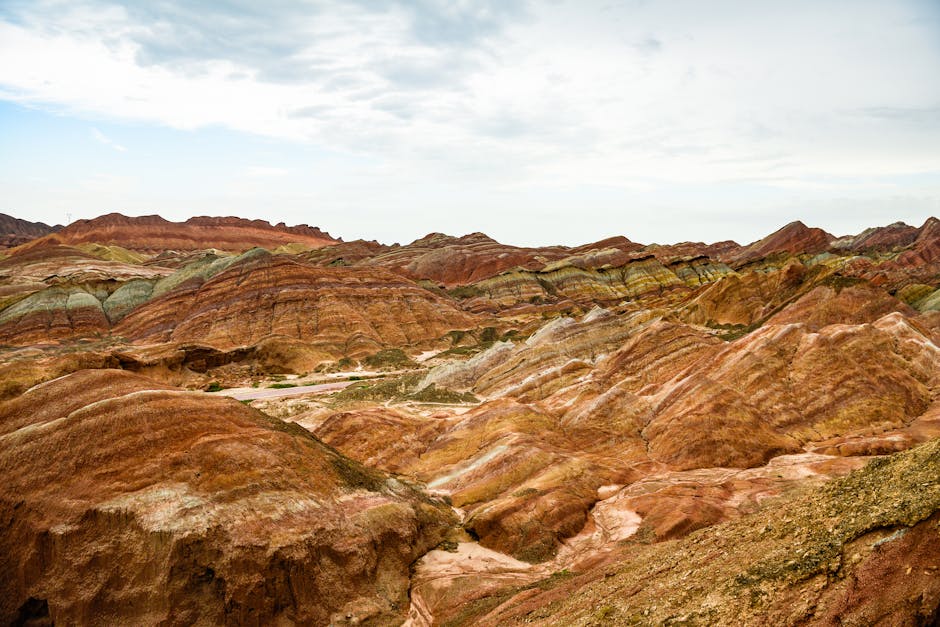
| Zhangye Danxia Landform | Otherworldly rainbow mountains with striated layers of mineral-rich rock in vivid reds, yellows, and blues. | Sunrise to sunset, best light at dawn/dusk | 74 CNY (includes park shuttle bus) |
| Jiayuguan Pass | The imposing western end of the Ming Great Wall, a fortress complex in the stark Gobi Desert. | 8:30-18:00 | 110 CNY (covers fortress & nearby sections) |
| Labrang Monastery (Xiahe) | One of Tibetan Buddhism’s six great monasteries, a living center of prayer with thousands of resident monks. | Monastery grounds always open; halls 8:30-17:00 | 40 CNY for main prayer hall circuit |
3-Day Itinerary: Gansu Province, China’s Highlights & Hidden Gems
Day 1: Dunhuang’s Desert Wonders
- Morning (7:30 AM): Secure your timed ticket for the Mogao Caves. The 238 CNY standard tour includes 8 caves with an expert guide. The stories in the murals, like the flying apsaras, are mesmerizing.
- Afternoon (1:00 PM): Head to **Yueyaquan (Crescent Lake)**, an oasis miraculously surviving amidst towering sand dunes. For lunch, try the local specialty, *Dunhuang Liangpi* (cold wheat noodles), at a stall near the entrance.
- Evening (6:00 PM): Climb the **Mingsha Sand Dunes** to watch the sunset paint the desert gold. Afterwards, feast on cumin-spiced lamb skewers at the vibrant **Shazhou Night Market**.
Day 2: The Rainbow Mountains & Great Wall Fortress
- Morning (6:00 AM – Travel Day): Take an early flight or a pre-booked car (approx. 5 hours drive, 600 CNY) from Dunhuang to Zhangye. Go directly to the **Zhangye Danxia Park**. The low morning light makes the colors pop. Use the shuttle bus between the four main viewing platforms.
- Afternoon (2:00 PM): Drive 2.5 hours to Jiayuguan. Explore the **Jiayuguan Fortress**, walking its ramparts and visiting the museum to understand its strategic “key to the empire” role.
- Evening (7:00 PM): Check into a Jiayuguan hotel and have dinner at **Guan Cheng Yan Yu Restaurant** for excellent local dishes like braised camel hump and *jiayuguan xiao mian* (hand-pulled noodles).
Day 3: Tibetan Culture in Xiahe
- Morning (7:00 AM – Travel): Take a morning flight from Jiayuguan/Jiuquan to Lanzhou, then a 3-hour pre-booked car (400 CNY) to **Xiahe**. The landscape transforms from desert to green Tibetan plateau.
- Afternoon (1:00 PM): After a lunch of *momo* (Tibetan dumplings) at a teahouse, join the pilgrims walking the 3km **kora** (circumambulation path) around Labrang Monastery, spinning prayer wheels.
- Evening (5:00 PM): Sit in on the hauntingly beautiful chanting ceremony in the main prayer hall. For your final dinner, enjoy yak meat hotpot at a family-run restaurant on Renmin East Street.
Cultural Insights & Etiquette
- Language: Mandarin is standard. In Tibetan areas like Xiahe, learn basic greetings: “Tashi Delek” (hello). Have your hotel name written in Chinese for taxi drivers.
- Customs: At monasteries, always walk clockwise around stupas and halls. Do not touch religious artifacts or point your feet at Buddha statues. Ask permission before photographing people, especially monks.
- Tipping: Not customary, but appreciated for exceptional service. For a private driver/guide, 50-100 CNY per day is a generous gesture.
- Dress Code: Modesty is key at religious sites—cover shoulders and knees. For the desert, wear sun-protective clothing, a wide-brimmed hat, and sturdy shoes.
- Business Hours: Government sites/museums typically open 8:30-17:30. Smaller shops may close for a long lunch. Major holidays like Chinese New Year see massive domestic travel.
Where to Eat: Gansu Province, China’s Best Bites
Gansu’s cuisine is a hearty reflection of its Silk Road history, blending Han, Hui (Muslim), and Tibetan influences. Expect wheat-based noodles, lamb and beef, warming spices, and robust flavors perfect for the climate.
Must-Try Local Specialties
- Lanzhou Beef Noodle Soup: The soul of Gansu. Seek out busy local shops with hand-pulling chefs in the window. The broth is everything.
- Yang Rou Chuan (Lamb Skewers): Ubiquitous at night markets, especially in Dunhuang and Zhangye. Marinated in cumin, chili, and salt, then grilled over charcoal.
- Gan Guo (Dry Pot): A sizzling shareable dish where you choose meats and vegetables cooked in a fragrant, mildly spicy sauce, served in the pan it’s cooked in.
Restaurant Recommendations by Budget
| Type | Restaurant | Specialty | Price Range |
|---|---|---|---|
| Budget | Mǎ Zǐ Lù (马子禄) (Lanzhou) | Arguably the most famous Lanzhou beef noodle chain, always packed. | 15-25 CNY |
| Mid-range | Dunhuang Jing Dian Sheng Hua (敦煌经典盛华) (Dunhuang) | Elegant setting for local Dunhuang dishes like *Shouzhua Fan* (rice with lamb). | 60-100 CNY/person |
| Fine dining | Yī Lù Shùn Fēng (一路顺风) Private Dining (Zhangye) | High-end interpretations of Hexi Corridor cuisine, often requiring reservation. | 150+ CNY/person |
Where to Stay
Accommodation ranges from basic guesthouses to comfortable business hotels. In Dunhuang and Zhangye, staying close to the main attractions saves time. In Xiahe, a guesthouse near the monastery offers an immersive experience. Compare prices and book at Booking.com or Airbnb for apartments.
Best Neighborhoods for Accommodation
- Dunhuang City Center: Close to the night market and transport hubs. Convenient for day trips to the caves and dunes. Can be touristy but has all amenities.
- Zhangye City Center: Practical base for visiting the Danxia park (a 40-minute drive). You’ll find a good selection of mid-range hotels and local restaurants.
- Xiahe Monastery Area: The only choice for atmosphere. Simple Tibetan-run guesthouses offer basic comfort and incredible access to the monastery’s daily rhythm of prayer.
Vibrant Danxia landform landscape in Gansu Province, Gansu Province, China
FAQs: Your Gansu Province, China Questions Answered
1. Is Gansu Province, China safe at night?
Yes, generally very safe. Violent crime against tourists is rare. Standard precautions apply: be aware of your belongings in crowded markets, and stick to well-lit areas. In remote desert areas, travel at night is not advised due to poor road conditions and lack of services.
2. What currency is used and are credit cards accepted?
The Chinese Yuan (CNY/RMB) is the currency. Cash is still king, especially in smaller towns, markets, and for taxi fares. Major hotels and some upscale restaurants in Lanzhou or Dunhuang will accept international credit cards (Visa/Mastercard), but always carry sufficient cash. ATMs are widely available in city centers.
3. How do I get from the airport to the city center?
From Lanzhou Zhongchuan Airport, the airport express train (20 CNY, 40 mins) is the fastest way to Lanzhou West Railway Station. Taxis cost 150-200 CNY. From Dunhuang Airport, a taxi to the city center is your only option and costs about 40 CNY. Book airport transfers at GetYourGuide for convenience.
4. Do I need to speak the local language?
Not necessarily, but it helps immensely. English is not widely spoken outside major hotel receptions and some tourist ticket offices. Have your destinations written in Chinese characters. Translation apps like Pleco or Google Translate (with offline packs downloaded) are essential tools for the savvy traveler.
5. What’s the appropriate dress code?
Dress in layers due to temperature swings. For cultural sites, conservative clothing is a must. In the desert, protect yourself from the sun with long sleeves, a hat, and sunglasses. In Tibetan areas like Xiahe, even in summer, evenings can be chilly, so a warm jacket is recommended.
Final Thoughts: Gansu Province, China Awaits
Gansu is not a destination of fleeting charm; it’s a place that etches itself into your memory. It’s the feeling of sand underfoot on a 1,000-year-old dune
Explore More Destinations
- Jozani, Tanzania on a Budget: an Ancient Forest for $35/Day (2026)
- Nsumbu, Zambia on a Budget: Wild Africa for $40/Day (2026)
- Semporna, Malaysia on a Budget: Paradise for $35/Day (2026)
- Khuzestan, Iran on a Budget: Ancient Empires for $30/Day (2026)
- Ngerulmud, Palau on a Budget: Island Majesty for $45/Day (2026)
Ready to Visit Gansu Province?
Start planning your trip today. Compare hotels, find the best tours, and get insider tips.
Your adventure in Gansu Province starts here →
Related Guides
Explore more destinations similar to Gansu Province:
- Lake Nasser, Egypt’s Essential Ancient Temples, Nile Cruises & Desert Solitude (2025)
- Nabatiyeh, Lebanon: Hidden Ancient Heritage, Mountain Views & Authentic Lebanese Culture (2025)
- Dhank, Oman’s Hidden Forts, Fossils & Mountain Serenity (2026)
- Saint Petersburg, Russia’s Ultimate Palaces, Art & White Nights (2026)
{“@context”: “https://schema.org”, “@type”: “FAQPage”, “mainEntity”: [{“@type”: “Question”, “name”: “What is the best time to visit Gansu Province?”, “acceptedAnswer”: {“@type”: “Answer”, “text”: “The best time to visit Gansu Province depends on your preferences. Generally, the dry season offers the most pleasant weather for sightseeing and outdoor activities.”}}, {“@type”: “Question”, “name”: “How many days do I need in Gansu Province?”, “acceptedAnswer”: {“@type”: “Answer”, “text”: “Most travelers spend 3-5 days in Gansu Province to see the main attractions. A week allows for a more relaxed pace and day trips.”}}, {“@type”: “Question”, “name”: “Is Gansu Province expensive to visit?”, “acceptedAnswer”: {“@type”: “Answer”, “text”: “Gansu Province can be visited on various budgets. Accommodation ranges from hostels to luxury hotels, and local restaurants offer affordable dining.”}}]}

