
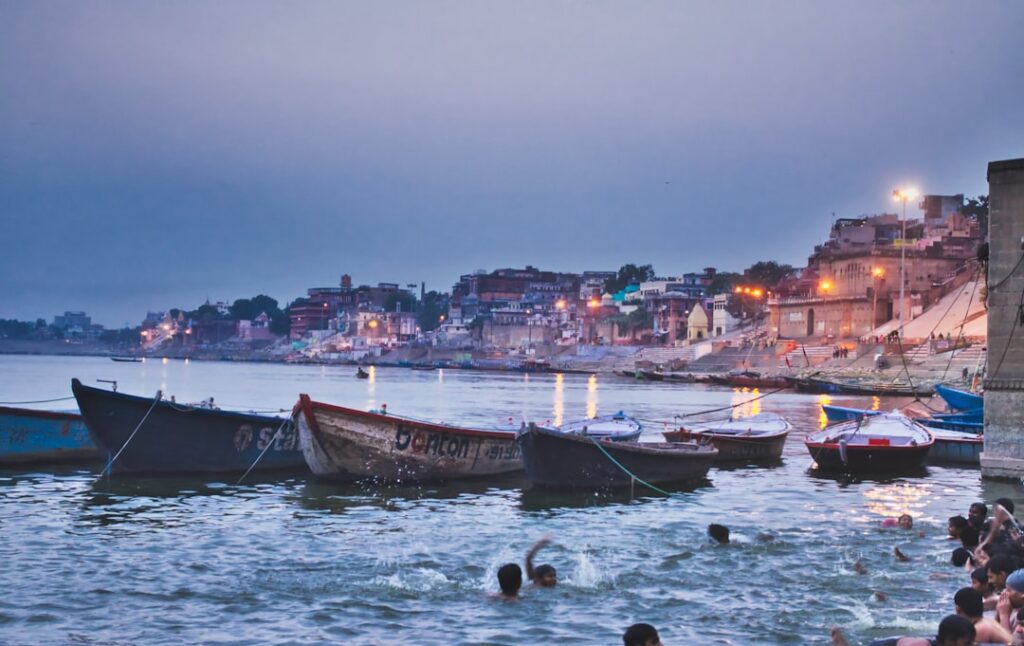
Ganges River, India’s Ultimate Spirituality, Ceremony & Timeless Flow (2026)
At 4:45 AM in Varanasi, the first sliver of dawn reveals a scene unchanged for millennia: saffron-robed priests descending the stone ghats, the scent of marigolds and sandalwood paste filling the air, and the low, rhythmic chant of ancient Sanskrit mantras. This is the Ganga Aarti, a daily ritual of fire and water that draws its power from the 2,525-kilometer lifeline of India. More than a river, the Ganges is a living deity, a cultural artery, and a journey into the very soul of a nation.
Why Ganges River, India Stands Out

Three person riding on boat surrounded by water during golden hour, Ganges River, India
- Historic Architecture: The 18th-century Manikarnika Ghat in Varanasi, a continuous cremation ground for over 3,500 years, represents the Hindu cycle of life and death in its most profound architectural form.
- Cultural Scene: The Ganga Aarti ceremony, performed nightly at Dashashwamedh Ghat in Varanasi and Har Ki Pauri in Haridwar, is a breathtaking symphony of synchronized fire, bells, and devotional song.
- Local Specialties: Sip a steaming clay cup of masala chai from a riverside chai wallah while watching the sunrise—the quintessential Ganges experience for under 20 rupees.
Pro Tip: For the most profound experience with manageable crowds, visit during the shoulder months of October-November or February-March. Avoid the peak pilgrimage months of April (for Kumbh Mela, when specific cities swell by millions) and the intense heat of May-June. The best time of day is always sunrise.
Map of Ganges River, India
Use these interactive maps to explore Ganges River, India and plan your route:
📍 View Ganges River, India on OpenStreetMap
🗺️ Open Ganges River, India in Google Maps
Planning Your Trip: Practical Essentials
Getting There and Around
- By Air: Major gateways include Indira Gandhi International Airport (DEL) in Delhi or Lal Bahadur Shastri Airport (VNS) in Varanasi. From Delhi, you can connect to Rishikesh (Dehradun Airport, DED) or Kolkata (CCU) for the delta. Book flights at Skyscanner for best deals.
- By Train: India’s rail network is the ideal way to trace the river. The overnight “Shiv Ganga Express” from Delhi to Varanasi takes about 14 hours. For Haridwar/Rishikesh, the “Shatabdi Express” is a faster daytime option. Reserve tickets at Trainline or the national railway website.
- By Car: Driving offers flexibility for the “Ganges Trail.” The route from Delhi to Rishikesh/Haridwar is a good 6-hour highway drive. Roads become more challenging in Uttarakhand. Compare car rentals at RentalCars.com.
- Local Transport: In river cities, cycle rickshaws and auto-rickshaws are best for short trips (50-150 INR). For ghat-hopping in Varanasi, a rowboat is essential (approx. 600-800 INR/hour). Trains and buses connect major towns along the river.
Best Time to Visit
The Ganges experience varies dramatically by season. Winter offers crisp, clear days perfect for exploration, while the post-monsoon period brings a swollen, powerful river. Summer is intensely hot and best avoided for leisurely travel.
| Season | Weather | Highlights |
|---|---|---|
| Summer (Jun–Aug) | Extremely hot (35-45°C/95-113°F), humid, pre-monsoon dust or monsoon rains. | Fewer foreign tourists, lush landscapes post-rain. Pilgrims still visit, but heat can be oppressive. |
| Winter (Dec–Feb) | Cool and pleasant (5-22°C/41-72°F), with foggy mornings, especially in the plains. | Ideal for sightseeing and ceremonies. Peak tourist season. Pack layers for chilly boat rides at dawn. |
| Shoulder (Apr–May/Sep–Oct) | Apr-May: Hot. Sep-Oct: Warm to pleasant (20-30°C/68-86°F), lower humidity. | Best balance. October offers post-monsoon freshness and major festivals like Diwali. Fewer crowds than winter. |
Budgeting for Ganges River, India

A group of people rowing boats, Ganges River, India
| Category | Budget | Mid-range | Luxury |
|---|---|---|---|
| Accommodation | 500-1200 INR/night (guesthouses, ashram stays) | 2500-6000 INR/night (heritage hotels, 3-4 star) | 10,000+ INR/night (5-star palaces, luxury riverfront resorts) |
| Meals | 200-400 INR/day (street food, dhabas, thali plates) | 800-1500 INR/day (restaurant meals, cafes) | 2500+ INR/day (fine dining, multi-course meals) |
| Transport | 200-500 INR/day (local buses, rickshaws, 2nd class train) | 800-2000 INR/day (auto-rickshaws, taxis, AC train) | 3000+ INR/day (private car with driver, 1st class AC train) |
| Activities | Free (ghat walks, ceremonies) to 600 INR (shared boat ride) | 1500-3000 INR (private boat, guided heritage walk) | 5000+ INR (private spiritual guide, helicopter tour in Rishikesh) |
| Daily Total | 900 – 2700 INR | 5600 – 12,500 INR | 20,500+ INR |
Top Attractions and Must-See Sights
| Attraction | Description | Hours | Entry Fee |
|---|---|---|---|
| Dashashwamedh Ghat (Varanasi) | The primary ghat for the spectacular nightly Ganga Aarti ceremony, a mesmerizing display of fire and faith. | 24/7; Aarti at 7:00 PM (summer), 6:00 PM (winter) | Free; Boat view 600-1000 INR |
| Har Ki Pauri (Haridwar) | The most sacred ghat in Haridwar, where thousands gather for the daily Ganga Aarti with floating diyas (lamps). | 24/7; Aarti at 5:45 PM (varies) | Free |
| The Beatles Ashram (Rishikesh) | Officially the Maharishi Mahesh Yogi Ashram, now a fascinating, graffiti-covered ruin where the Beatles meditated in 1968. | 9:00 AM – 5:00 PM | 600 INR for foreigners |
| Kashi Vishwanath Temple (Varanasi) | One of Hinduism’s 12 Jyotirlingas, this golden-spired temple dedicated to Shiva is the spiritual heart of Varanasi. | 4:00 AM – 11:00 PM (with breaks) | Free (long queues); cellphone deposit required |
3-Day Itinerary: Ganges River, India’s Highlights & Hidden Gems
Day 1: Varanasi – The Eternal City
- Morning (5:00 AM): Hire a rowboat (approx. 800 INR) for a sunrise ride along the ghats. Watch the city wake, see pilgrims performing puja, and glide past the Manikarnika Ghat. Your boatman will explain the rituals.
- Afternoon (12:00 PM): Wander the labyrinthine alleys behind the ghats. Find Blue Lassi Shop in Gowdolia for a legendary sweet or savory lassi (120 INR). Then, visit the serene Bharat Mata Mandir, a temple dedicated to Mother India.
- Evening (6:00 PM): Secure a spot on the steps of Dashashwamedh Ghat for the Ganga Aarti. Afterwards, enjoy a classic Banarasi thali dinner at Deena Chat Bhandar near Godowlia Crossing.
Day 2: Varanasi – Culture & Craft
- Morning (8:00 AM): Take a guided heritage walk (1500 INR) through the old city to discover hidden temples, bustling markets, and the famous silk weavers of Vishwanath Gali.
- Afternoon (1:00 PM): Have lunch at Bana Lassi or Dolphin Restaurant for rooftop views. Then, take a taxi to Sarnath (30 mins, 500 INR round-trip), where Buddha gave his first sermon. Visit the museum (500 INR) and Dhamek Stupa.
- Evening (7:00 PM): Attend the Subah-e-Banaras morning-style cultural show at Assi Ghat, or enjoy a peaceful dinner at the garden restaurant Bread of Life.
Day 3: Rishikesh – The Yoga Capital
- Morning (Travel): Take a morning flight from Varanasi to Dehradun (via Delhi), then a 1-hour taxi to Rishikesh (2000 INR total). Alternatively, the overnight train is an adventure.
- Afternoon (1:00 PM): Check into a guesthouse in Tapovan. Cross the iconic Lakshman Jhula bridge, visit the Triveni Ghat, and have lunch at Little Buddha Cafe with river views.
- Evening (5:30 PM): Experience the Ganga Aarti at Parmarth Niketan Ashram, a more intimate ceremony than Haridwar. Dine at Chotiwala Restaurant for a classic North Indian meal.
Cultural Insights & Etiquette
- Language: Hindi is primary. Key phrases: “Namaste” (hello), “Dhanyavaad” (thank you), “Ganga Maiya Ki Jai” (Hail Mother Ganges). English is widely understood in tourist areas.
- Customs: Remove shoes before entering temples or homes. Always use your right hand for giving/receiving and eating. Circumambulate temples and sacred objects clockwise.
- Tipping: Not mandatory but appreciated. 50-100 INR for boatmen/guides, 10% in sit-down restaurants if service charge isn’t included.
- Dress Code: Modesty is crucial. Cover shoulders and knees. For temple visits, women may be required to cover their heads. Loose, breathable cotton is ideal.
- Business Hours: Shops open 10 AM-8 PM, often closing 1-4 PM. Government sites close Mondays. Major festivals (Diwali, Holi) can shut everything down for days.
Where to Eat: Ganges River, India’s Best Bites
Dining along the Ganges ranges from humble street stalls serving pilgrims to international cafes in Rishikesh. Vegetarianism is predominant, especially in holy cities. Don’t drink the river water; stick to sealed bottled water.
Must-Try Local Specialties
- Kachori Sabzi: A spicy, flaky pastry served with potato curry, a classic Banarasi breakfast. Try it at Ram Bhandar in Varanasi.
- Aloo Puri: Deep-fried bread with spiced potato gravy, a popular pilgrim meal. Found at dhabas (roadside eateries) all along the river.
- Jalebi: Coils of deep-fried batter soaked in syrup, best enjoyed hot. Look for giant, fresh orange jalebis at sweet shops near any ghat.
Restaurant Recommendations by Budget
| Type | Restaurant | Specialty | Price Range |
|---|---|---|---|
| Budget | Deena Chat Bhandar (Varanasi) | Authentic Banarasi street food, chat, and thalis | 50-200 INR |
| Mid-range | Little Buddha Cafe (Rishikesh) | Global fare (Israeli, Italian, Indian) with stunning river views | 300-700 INR |
| Fine dining | Peshawri (ITC Mughal, Varanasi) | North-West Frontier cuisine, legendary dal bukhara | 2500+ INR |
Where to Stay
Your choice of stay defines your Ganges experience. In Varanasi, heritage havelis by the ghats offer immersion but can be noisy. Rishikesh has ashrams for seekers and resorts for relaxation. Haridwar is packed with pilgrim lodges. Compare prices and book at Booking.com or Airbnb for apartments.
Best Neighborhoods for Accommodation
- Varanasi – Near Dashashwamedh Ghat: The epicenter of action. You’re steps from the main Aarti and river life, but alleys are chaotic and noisy. Ideal for photographers and culture seekers.
- Rishikesh – Tapovan: Upriver from the main bridges, this area is quieter, greener, and packed with yoga schools and healthy cafes. Perfect for wellness-focused travelers.
- Haridwar – Near Har Ki Pauri: You’ll be in the thick of the pilgrim fervor, with easy access to ceremonies. Expect constant activity and sacred energy, but less tourist infrastructure than Rishikesh.

Boats at the market, Ganges River, India
FAQs: Your Ganges River, India Questions Answered
1. Is Ganges River, India safe at night?
The ghats and main areas of Varanasi, Rishikesh, and Haridwar are generally safe at night due to constant activity. However, the labyrinthine lanes of Varanasi can be disorienting and poorly lit. It’s wise to be with a guide or group after dark, and women should avoid isolated areas. Petty theft (like pickpocketing in crowds) is the main concern, so guard your valuables.
2. What currency is used and are credit cards accepted?
The Indian Rupee (INR) is the currency. Carry ample cash, especially in smaller denominations (50, 100, 200 notes), for rickshaws, boat rides, small shops, and temple offerings. Credit cards are accepted at larger hotels, upscale restaurants, and some shops in Rishikesh, but don’t rely on them. ATMs are
Related Guides
Explore more destinations similar to Ganges River:

