
Tassili n’Ajjer National Park, Algeria: Amazing Rock Art, Sandstone Forests & Saharan Silence (2026)
What if one of the world’s greatest art galleries wasn’t in a city, but sprawled across a Martian landscape under a billion stars? Tassili n’Ajjer National Park, a UNESCO World Heritage site in southeastern Algeria, proves this with over 15,000 prehistoric rock engravings and paintings dating back to 12,000 BC. This vast plateau, larger than Switzerland, is an open-air museum of human history, where ancient artists documented a Sahara that was once green with rivers and giraffes. Here, the silence is as profound as the history.
Why Tassili n’Ajjer National Park, Algeria Stands Out
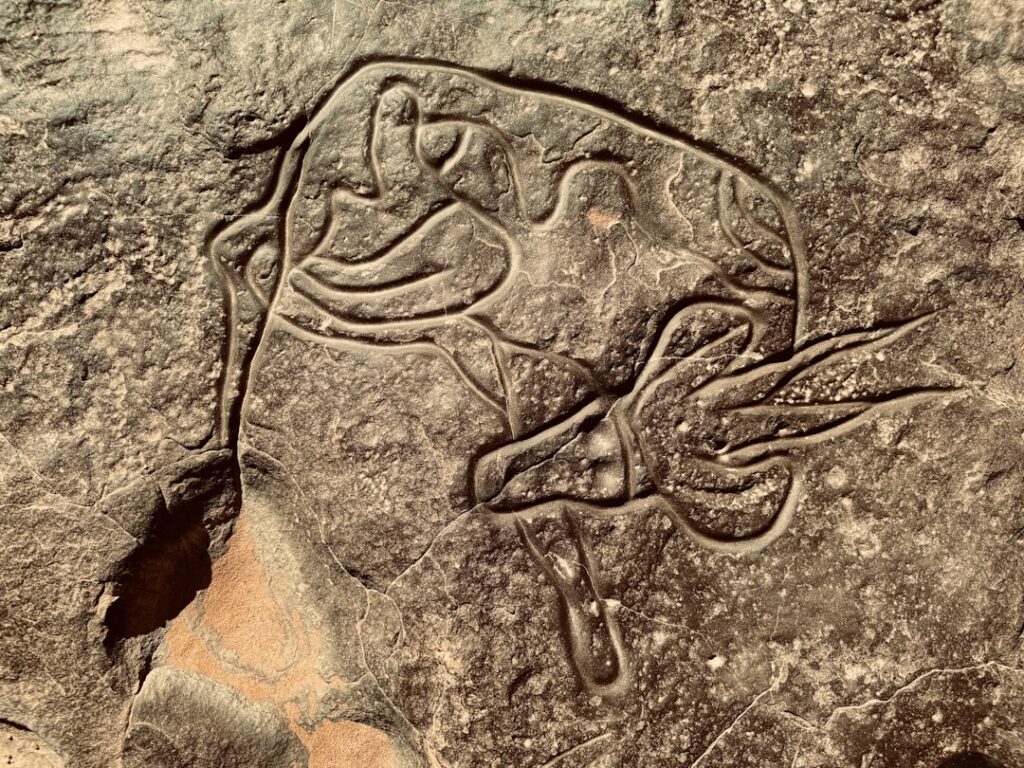
A rock with a carving of a bird on it, Tassili n’Ajjer National Park, Algeria
- Historic Architecture: The “Crying Cows” fresco at Jabbaren, painted around 6,000 BC, is a masterpiece of Neolithic art depicting a pastoral scene from a lost, verdant Sahara.
- Cultural Scene: The timeless tradition of Tuareg hospitality, where sharing sweet mint tea in a nomad’s tent under the stars is a profound cultural exchange.
- Local Specialties: Méchoui, whole lamb slow-roasted over an open desert pit, a celebratory dish you might share with a guide and camp crew after a long trek.
Pro Tip: The absolute best time to visit is during the shoulder months of October to November or March to April. Daytime temperatures are a manageable 25-30°C (77-86°F), while the brutal summer heat (exceeding 45°C/113°F) and cold winter nights have passed. This ensures comfortable trekking conditions.
Map of Tassili n’Ajjer National Park, Algeria
Use these interactive maps to explore Tassili n’Ajjer National Park, Algeria and plan your route:
📍 View Tassili n’Ajjer National Park, Algeria on OpenStreetMap
🗺️ Open Tassili n’Ajjer National Park, Algeria in Google Maps
Planning Your Trip: Practical Essentials
Getting There and Around
- By Air: The main gateway is Djanet Airport (DJG). Air Algérie operates flights from Algiers (approx. 3 hours). From Djanet, you must join a pre-arranged 4×4 convoy with a licensed guide to enter the park. Book flights at Skyscanner for best deals.
- By Train: No train service reaches this remote region. All travel within the Sahara requires road-based expeditions.
- By Car: Self-driving is strongly discouraged due to extreme desert conditions, lack of signage, and mandatory guide requirements. All transport is part of organized tours. Compare car rentals for Algeria at RentalCars.com only if planning extensive city travel beforehand.
- Local Transport: Your “local transport” is a rugged 4×4 Land Cruiser and your own feet. Movement within the park is exclusively via guided tour vehicles for long distances and on foot for exploring specific sites like canyons and rock art galleries.
Best Time to Visit
Timing is everything in the Sahara. Your experience hinges on avoiding extreme temperatures while maximizing daylight for exploration.
| Season | Weather | Highlights |
|---|---|---|
| Summer (Jun–Aug) | Extremely hot, 40-50°C (104-122°F). Harsh, blinding sun. | Virtually no tourism. Only for the most extreme desert adventurers. Tours are rarely operated. |
| Winter (Dec–Feb) | Cold days 15-20°C (59-68°F), freezing nights can drop below 0°C (32°F). | Crisp, clear air perfect for photography. Requires serious cold-weather camping gear. Fewer visitors. |
| Shoulder (Apr–May/Sep–Oct) | Ideal. Warm days 25-35°C (77-95°F), cool, pleasant nights. | The sweet spot. Perfect for trekking and camping. Most tour operators run schedules during these months. |
Budgeting for Tassili n’Ajjer National Park, Algeria

Explore ancient rock engravings of giraffes in Djanet, Algeria, Wilaya d’Illizi., Tassili n’Ajjer National Park, Algeria
| Category | Budget | Mid-range | Luxury |
|---|---|---|---|
| Accommodation | Basic desert camp (shared tent): €40-60/night (included in tour) | Comfortable private tent camp: €80-120/night (in tour) | Full-service luxury mobile camp: €200+/night (in tour) |
| Meals | All meals included in tour cost (simple camp food) | Better quality camp meals, fresh bread, more variety | Chef-prepared meals, possibly with French/Algerian fusion |
| Transport | Shared 4×4, basic vehicle | Smaller group, reliable 4×4 | Private 4×4, experienced driver-guide |
| Activities | Guided hikes to main sites | More in-depth archaeological guiding, extra site visits | Private archaeologist guide, bespoke itinerary, camel treks |
| Daily Total | €100-150/day (all-inclusive tour rate) | €180-250/day (all-inclusive) | €350+/day (all-inclusive) |
Note: Visiting Tassili n’Ajjer is almost exclusively done through multi-day, all-inclusive tours from Djanet. Prices are per day estimates based on standard 5-7 day tour packages. Flights to Djanet and park fees are extra.
Top Attractions and Must-See Sights
| Attraction | Description | Hours | Entry Fee |
|---|---|---|---|
| The Plateau of Jabbaren | A stunning “forest of rock” with some of the park’s most famous and well-preserved Neolithic paintings, including the iconic “Crying Cows.” | Daylight hours (access via guide only) | Included in tour + National Park fee (~€20) |
| Tamrit & Aroun Arch | A breathtaking natural sandstone arch and a valley of prehistoric cypress trees, survivors from the wet Sahara period over 2000 years old. | Daylight hours | Included in tour |
| Sefar Plateau | Considered the heart of Tassili rock art, featuring thousands of engravings and paintings scattered across a dramatic labyrinth of rock towers. | Daylight hours | Included in tour |
| Oued Djerat Canyon | A vast canyon system containing over 3,000 rock engravings of animals like elephants and rhinoceroses, dating back 10,000 years. | Daylight hours | Included in tour |
3-Day Itinerary: Tassili n’Ajjer National Park, Algeria’s Highlights & Hidden Gems
Note: A 3-day itinerary is a condensed version. Most tours are 5-7 days. This assumes a shorter, intensive expedition from Djanet.
Day 1: Arrival & The Gateway Arch
- Morning (7-9 AM): Early convoy departure from Djanet. Your 4×4 navigates the rocky piste (off-road track) towards the park boundary. Stop at a local checkpoint to finalize permits.
- Afternoon (12-3 PM): Arrive at the base of the Tamrit area. A 90-minute hike leads you to the awe-inspiring Aroun Natural Arch. Enjoy a packed lunch of baguettes, tuna, and dates with this monumental sandstone formation as your backdrop.
- Evening (6-8 PM): Set up camp in a sheltered spot. As the crew prepares a tagine dinner, watch the sunset paint the rocks in deep oranges and purples. Your first night under the profound silence of the Saharan stars begins.
Day 2: The Neolithic Masterpieces
- Morning (8 AM): Hike into the Jabbaren plateau. Your guide points out the first paintings—herds of cattle, human figures, and mystical “Martian” beings with round heads. The highlight is the serene “Crying Cows” fresco.
- Afternoon (1 PM): Descend for a late lunch at camp. Rest during the peak heat, perhaps learning to brew Tuareg tea—a strong, sweet ritual poured from a height.
- Evening (5 PM): A shorter hike to a lesser-known gallery near camp reveals exquisite engravings of antelopes. Dinner features méchoui if arranged, its smoky aroma filling the camp.
Day 3: Canyon Engravings & Return
- Morning (7 AM): Break camp early for the drive towards Oued Djerat. Trek into the canyon mouth, where the sheer scale of millennia-old elephant engravings, some life-sized, will leave you speechless.
- Afternoon (12 PM): Final picnic lunch in the canyon shade. Begin the long, bumpy return journey to Djanet, stopping at a final viewpoint for a farewell look at the sea of stone.
- Evening (6 PM): Arrive back in Djanet. Celebrate your journey with a proper restaurant meal at your hotel or a local spot like Restaurant l’Eden for a welcome shower and a soft bed.
Cultural Insights & Etiquette
- Language: Arabic and Tamahaq (Tuareg) are spoken. Key phrases: “Salam alaykum” (hello), “Shukran” (thank you). French is widely understood in tourist contexts.
- Customs: Always accept offers of tea—it’s a cornerstone of hospitality. Use your right hand for eating and greeting. Show respect to local guides and elders.
- Tipping: Expected for your guide, driver, and cook. A collective tip of €10-15 per person per day for the crew, given at the end, is standard practice.
- Dress Code: Modest, loose-fitting clothing is respectful. For the desert, long sleeves and trousers protect from the sun. A shemagh (headscarf) is incredibly practical for sand and sun.
- Business Hours: In Djanet, shops may close for a long afternoon break (12-4 PM). Friday is the Muslim holy day. Everything in the park runs on “expedition time.”
Where to Eat: Tassili n’Ajjer National Park, Algeria’s Best Bites
Dining in Tassili is about camp cuisine and the incredible flavors that emerge from a simple fire. In Djanet, you’ll find more variety, blending Algerian, Tuareg, and French influences.
Must-Try Local Specialties
- Méchoui: The ultimate desert feast. Whole lamb seasoned with wild herbs and slow-roasted for hours in a sand pit. Try it if your tour arranges a special dinner.
- Couscous Targui: A Tuareg version often prepared with camel meat or goat and a lighter broth than the northern Algerian style, cooked over campfires.
- Tagine: The ubiquitous stew of chicken or lamb with vegetables, dried fruits, and spices, cooked in a conical clay pot. Your camp cook’s version will be memorable.
Restaurant Recommendations by Budget
| Type | Restaurant | Specialty | Price Range |
|---|---|---|---|
| Budget | Small local eateries in Djanet market | Freshly baked flatbreads (kesra), merguez sausages, simple stews | €3-6 per meal |
| Mid-range | Restaurant l’Eden (Djanet) | Reliable mixed grills, salads, and local tagines in a simple setting | €8-15 per meal |
| Fine dining | Hotel Restaurant (e.g., Hotel Tahat) | The best option in town for a more refined multi-course meal, often with French flair | €20-30+ per meal |
Where to Stay
Accommodation is bifurcated: simple hotels in Djanet before/after your trek, and desert camps within the park. All park stays are organized through your tour operator. Compare prices and book Djanet hotels at Booking.com.
Best Neighborhoods for Accommodation
- Djanet Centre: Staying near the main market or airport road offers convenience for last-minute supplies and meeting your tour group. It’s basic but functional. Suits all travelers.
- The Desert Camp (Tassili): This is your real “neighborhood.” Locations vary nightly. A good operator chooses scenic, sheltered sites. You’re there for the isolation and the sky, not for amenities.

Discover ancient rock art depicting prehistoric life on Algerian cave walls., Tassili n’Ajjer National Park, Algeria
FAQs: Your Tassili n’Ajjer National Park, Algeria Questions Answered
1. Is Tassili n’Ajjer National Park, Algeria safe at night?
Within the park on an organized tour, yes. The primary concerns are environmental (extreme temperatures, getting lost). You are with experienced guides. In Djanet, standard precautions apply. The region is politically stable, but always check your government’s travel advisories before planning.
2. What currency is used and are credit cards accepted?
The Algerian Dinar (DZD) is the currency. Bring ample cash in Euros or USD to exchange in Algiers or Djanet. Credit cards are virtually useless in Djanet and completely useless in the desert. All tour payments are typically arranged in advance via bank transfer.
3. How do I get from the airport to the city center?
Djanet Airport is small. Most tour operators include an airport pickup. If not, taxis are available for a fixed fee of about 500 DZD (€3-4) to hotels in town. It’s a short drive. For seamless arrival, you can book airport transfers at GetYourGuide for convenience if offered, though pre-arranging with your tour is best.
4. Do I need to speak the local language?
No, but it helps. Your guide will speak French and possibly basic English. Learning a few Arabic or French greetings is greatly appreciated. Key phrases like “l’eau” (water), “merci” (thank you), and “c’est beau” (it’s beautiful) will go a long way.
5. What’s the appropriate dress code?
Modest, practical, and sun-smart. For both cultural respect and protection, wear loose, light-colored long trousers and long-sleeved shirts. A wide-brimmed hat, sunglasses, and a shemagh are essential. Sturdy, broken-in hiking boots are non-negotiable for the rocky terrain.
Final Thoughts: Tassili n’Ajjer National Park, Algeria Awaits
Tassili n’Ajjer
Related Guides
Explore more destinations similar to Tassili n’Ajjer National Park:

