
Taolagnaro, Madagascar’s Ultimate Lemurs, Baobabs & Pirate History (2026)
Sunrise over the Indian Ocean at Libanona Beach reveals a landscape unlike any other. The air smells of salt and vanilla, fishermen push their colorful wooden pirogues into the surf, and the silhouette of the Anosy Mountains frames a bay once frequented by 17th-century pirates. This is Taolagnaro, also known as Fort Dauphin, a town where French colonial architecture meets untamed rainforest, offering a gateway to some of Madagascar’s most iconic and accessible wilderness.
Why Taolagnaro, Madagascar Stands Out
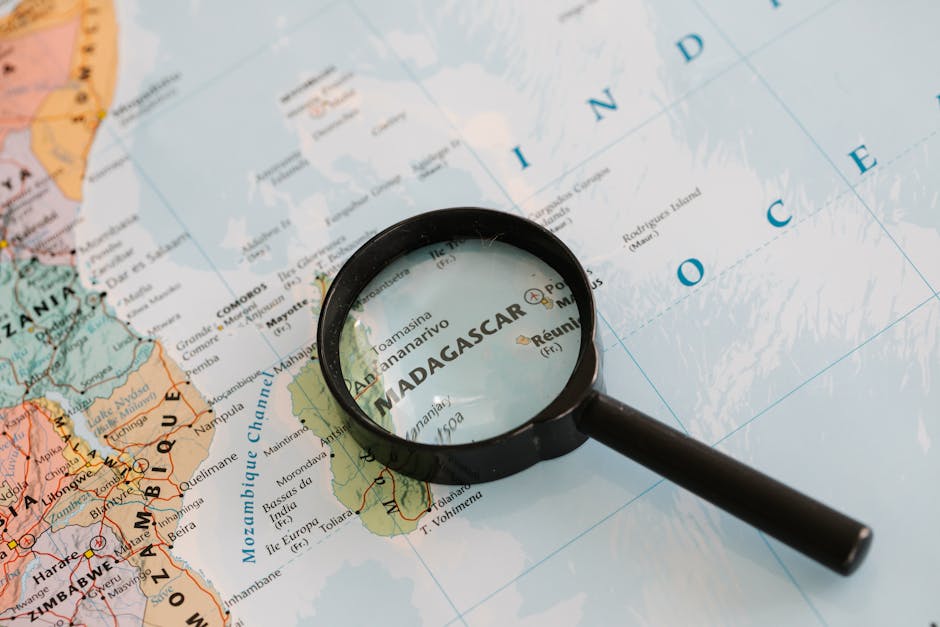
Close-up of Madagascar on a map with a magnifying glass highlighting the area., Taolagnaro, Madagascar
- Historic Architecture: The 17th-century Flacourt Fort, built by the French East India Company in 1643, offers a tangible link to the island’s colonial and pirate-era past.
- Cultural Scene: The annual Donia Music Festival in June transforms the town with Malagasy rhythms, drawing artists from across the Indian Ocean islands.
- Local Specialties: You must try *foza sy hena-kisoa*, a rich crab and pork stew slow-cooked with local greens and spices, best enjoyed with a mound of rice.
Pro Tip: Visit during the shoulder seasons of April-May or September-October. You’ll avoid the peak tourist rush of July-August and the heavy rains of January-March, securing better rates on guides for the national parks and enjoying pleasant, sunny days.
Map of Taolagnaro, Madagascar
Use these interactive maps to explore Taolagnaro, Madagascar and plan your route:
📍 View Taolagnaro, Madagascar on OpenStreetMap
🗺️ Open Taolagnaro, Madagascar in Google Maps
Planning Your Trip: Practical Essentials
Getting There and Around
- By Air: Taolagnaro is served by Marillac Airport (FTU), with regular flights from Antananarivo on Tsaradia (Air Madagascar). The airport is a 10-minute drive from town; your best bet is to arrange a pickup with your hotel or take a taxi for about 15,000 MGA. Book flights at Skyscanner for best deals.
- By Train: There are no passenger train services to Taolagnaro. Long-distance travel within Madagascar is primarily by air or the famous, though slow, RN7 and RN13 road routes.
- By Car: The drive from Antananarivo is an epic 2-3 day journey on the RN7 and RN13. In town, renting a 4×4 with a driver (around 120,000 MGA/day) is essential for visiting nearby parks. Compare car rentals at RentalCars.com for options in major cities.
- Local Transport: *Pousse-pousse* (rickshaws) are the charming and affordable way to navigate the town center (1,000-2,000 MGA per short trip). For longer trips, negotiate a taxi or use your pre-arranged 4×4.
Best Time to Visit
The climate is tropical, with a warm, wet season and a slightly cooler, dry season. The ideal window balances good weather, wildlife activity, and manageable visitor numbers.
| Season | Weather | Highlights |
|---|---|---|
| Dry Season (Apr–Oct) | Sunny, 20-28°C (68-82°F), low humidity, cool nights. | Best for hiking, wildlife spotting (lemurs are active), and beach days. Peak crowds in July-August. |
| Wet Season (Nov–Mar) | Hot, 25-30°C (77-86°F), frequent heavy afternoon rains, high humidity. | Lush, green landscapes, fewer tourists, but some roads may be impassable and cyclones are possible Jan-Feb. |
| Shoulder (Apr–May/Sep–Oct) | Pleasant, 22-27°C (72-81°F), minimal rain. | The sweet spot: perfect conditions, lower prices, and the parks are quiet. Locals recommend this time. |
Budgeting for Taolagnaro, Madagascar

Radiated tortoise on a grass field in Madagascar, Taolagnaro, Madagascar
| Category | Budget | Mid-range | Luxury |
|---|---|---|---|
| Accommodation | 30,000-60,000 MGA (basic bungalow or hostel) | 80,000-150,000 MGA (comfortable hotel with AC) | 200,000+ MGA (beachfront lodge or top hotel) |
| Meals | 5,000-10,000 MGA (street food, *hotely* local eateries) | 15,000-30,000 MGA (restaurant meal with drink) | 40,000+ MGA (fine dining, imported items) |
| Transport | 2,000 MGA/day (*pousse-pousse*) | 40,000 MGA/day (taxi for local trips) | 120,000+ MGA/day (private 4×4 with driver) |
| Activities | Free (beaches, town walk) to 55,000 MGA (park entry) | ~120,000 MGA (guided half-day park tour) | 250,000+ MGA (private multi-park safari) |
| Daily Total | 50,000-80,000 MGA ($11-$18) | 150,000-250,000 MGA ($34-$56) | 400,000+ MGA ($90+) |
Top Attractions and Must-See Sights
| Attraction | Description | Hours | Entry Fee |
|---|---|---|---|
| Andohahela National Park (Parcel 1) | Hike through spiny forest to see ring-tailed lemurs and over 120 bird species in a UNESCO Biosphere Reserve. | Guide tours start 7 AM & 2 PM | 55,000 MGA + mandatory guide (from 40,000 MGA) |
| Nahampoana Reserve | An easily accessible botanical garden and zoo where you’re guaranteed close encounters with lemurs, chameleons, and crocodiles. | 8 AM – 5 PM daily | 25,000 MGA |
| Libanona Beach & Peninsula | A stunning crescent of sand backed by dunes, perfect for swimming, surfing, and watching legendary sunrises. | Always open | Free |
| Pic St. Louis | Climb this 529m peak for a breathtaking 360-degree panoramic view over the town, ocean, and surrounding mountains. | Best climbed in the morning | Free (guide recommended, ~20,000 MGA) |
3-Day Itinerary: Taolagnaro, Madagascar’s Highlights & Hidden Gems
Day 1: Town, History & Coastal Vistas
- Morning (7-9 AM): Hike up Pic St. Louis with a local guide (20,000 MGA). The morning light is perfect for photos, and you’ll understand the town’s strategic layout.
- Afternoon (12-3 PM): Explore the colonial-era buildings around Place Flacourt and visit the market. For lunch, head to **Le Dauphin** near the port for their fresh *soupe de poisson* (fish soup) for about 12,000 MGA.
- Evening (6-8 PM): Watch the sunset from Libanona Beach, then enjoy dinner at **La Terrasse**, known for its grilled zebu steak and ocean views (meals from 18,000 MGA).
Day 2: Lemurs & The Spiny Forest
- Morning (7 AM): Take a 4×4 (45-min drive) to **Andohahela National Park (Parcel 1)**. A 3-hour guided walk (total cost ~95,000 MGA) reveals the surreal, cactus-like spiny forest and active troops of ring-tailed lemurs.
- Afternoon (1 PM): Return to town for a late lunch at a *hotely* like **Chez Maman** for authentic *ravitoto* (pork with mashed cassava leaves).
- Evening (6 PM): A more relaxed wildlife fix at the **Nahampoana Reserve**. The late afternoon is cooler, and the lemurs are playful. Follow it with pizza at **Le Capricorne**.
Day 3: Baobabs, Beaches & Local Life
- Morning (8 AM): Hire a 4×4 for the day (~120,000 MGA) to visit the **Mandena Conservation Zone**. Walk among flooded forests and see the critically endangered **Palmarium lemur**. On the way, stop to marvel at giant baobabs.
- Afternoon (12 PM): Have a picnic lunch at **Lokaro Beach**, a pristine, remote bay only accessible by boat or 4×4. Your driver can help arrange a simple packed meal.
- Evening (6 PM): Final dinner in town. Savvy visitors know to try **La Varangue** for their excellent interpretation of local seafood dishes. Enjoy a final *pousse-pousse* ride back to your hotel.
Cultural Insights & Etiquette
- Language: Malagasy is the official language. French is widely spoken in tourism. Learn a few phrases: *Manao ahoana* (Hello), *Misaotra* (Thank you), *Azafady* (Please/Excuse me).
- Customs: Always ask permission before taking photos of people. A gentle, respectful demeanor is valued over brusqueness. Elders are shown great respect.
- Tipping: Not mandatory but appreciated. For guides, 5-10% of the tour cost is standard. Round up taxi fares or leave small change at restaurants.
- Dress Code: Modesty is key. Cover shoulders and knees, especially when visiting villages or local markets. Swimwear is for the beach only.
- Business Hours: Shops typically open 8 AM – 12 PM and 2 PM – 6 PM. Many close on Sunday. Government offices keep shorter hours.
Where to Eat: Taolagnaro, Madagascar’s Best Bites
Dining here revolves around the “rice and *laoka*” (side dish) principle. Fresh seafood, zebu (Malagasy beef), and tropical fruits are staples. Don’t miss the chance to eat at a simple *hotely* for the most authentic experience.
Must-Try Local Specialties
- Foza sy hena-kisoa: The iconic crab and pork stew, slow-cooked to perfection. Find it at local *hotely* spots like **Chez Bernard** near the market.
- Romazava: Madagascar’s national dish: a hearty beef stew with leafy greens (brèdes). Best tried at a family-run guesthouse offering *table d’hôte*.
- Mofo gasy: Sweet rice flour pancakes cooked over charcoal, a popular and delicious street food breakfast for about 200 MGA each.
Restaurant Recommendations by Budget
| Type | Restaurant | Specialty | Price Range |
|---|---|---|---|
| Budget | **Market Stalls** (Central Market) | Fresh fruit, *mofo gasy*, simple grilled skewers | 500 – 5,000 MGA |
| Mid-range | **Le Dauphin** (Port Area) | Incredibly fresh seafood platters and daily catch | 12,000 – 25,000 MGA |
| Fine dining | **La Varangue** (Town Center) | Elegant French-Malagasy fusion with a wine list | 25,000 – 45,000 MGA |
Where to Stay
Accommodation ranges from basic backpacker bungalows to comfortable beachfront hotels. Most places are concentrated in the town center or along the Libanona Peninsula. Compare prices and book at Booking.com or Airbnb for apartments.
Best Neighborhoods for Accommodation
- Libanona Peninsula: The premier area for beach access and stunning views. You’ll find higher-end hotels and bungalows here. It’s a bit isolated, so you’ll rely on transport for town.
- Town Center (near Place Flacourt): The most convenient location for restaurants, markets, and *pousse-pousse* transport. Offers a mix of mid-range hotels and guesthouses. Can be noisier.
- Road to Nahampoana: A quieter, more residential area with several lovely garden hotels and lodges. It’s a short *pousse-pousse* ride into town and close to the Nahampoana Reserve.

A serene beach scene in Madagascar with a traditional fishing boat during s…, Taolagnaro, Madagascar
FAQs: Your Taolagnaro, Madagascar Questions Answered
1. Is Taolagnaro, Madagascar safe at night?
General precautions are advised. The town center is relatively safe in the early evening, but avoid walking alone in poorly lit areas or on deserted beaches after dark. Always use a *pousse-pousse* or taxi at night and keep valuables secure. Petty theft is the main concern.
2. What currency is used and are credit cards accepted?
The Malagasy Ariary (MGA) is the currency. Carry ample cash, as credit cards are only accepted at a handful of upscale hotels and restaurants. ATMs are available in town but can run out of cash, especially on weekends. Euros are the easiest foreign currency to exchange.
3. How do I get from the airport to the city center?
Marillac Airport is very close. Your best bet is to have your hotel arrange a pickup. Otherwise, official airport taxis charge a fixed rate of about 15,000-20,000 MGA for the 10-minute journey. Book airport transfers at GetYourGuide for convenience.
4. Do I need to speak the local language?
You can manage with French in most tourist situations. English is less widely spoken. Learning basic Malagasy greetings will earn you huge smiles and goodwill. A phrasebook or translation app is very useful for venturing beyond the main sites.
5. What’s the appropriate dress code?
Dress modestly and practically. Lightweight, breathable fabrics that cover shoulders and knees are essential for cultural respect and sun/insect protection. Sturdy walking shoes are a must for the parks. Don’t forget a rain jacket, swimwear, and a sun hat.
Final Thoughts: Taolagnaro, Madagascar Awaits
Taolagnaro offers a condensed, accessible version of Madagascar’s greatest hits: iconic wildlife, unique landscapes, and rich history, all with the Indian Ocean as a backdrop. It’s a place where you can watch ring-tailed lemurs bask
{“@context”: “https://schema.org”, “@type”: “FAQPage”, “mainEntity”: [{“@type”: “Question”, “name”: “What is the best time to visit Taolagnaro?”, “acceptedAnswer”: {“@type”: “Answer”, “text”: “The best time to visit Taolagnaro depends on your preferences. Generally, the dry season offers the most pleasant weather for sightseeing and outdoor activities.”}}, {“@type”: “Question”, “name”: “How many days do I need in Taolagnaro?”, “acceptedAnswer”: {“@type”: “Answer”, “text”: “Most travelers spend 3-5 days in Taolagnaro to see the main attractions. A week allows for a more relaxed pace and day trips.”}}, {“@type”: “Question”, “name”: “Is Taolagnaro expensive to visit?”, “acceptedAnswer”: {“@type”: “Answer”, “text”: “Taolagnaro can be visited on various budgets. Accommodation ranges from hostels to luxury hotels, and local restaurants offer affordable dining.”}}]}
Related Guides
Explore more destinations similar to Taolagnaro:
- Piran Bay, Slovenia’s Hidden Venetian Charm, Salt Pans & Adriatic Sunsets (2026)
- Otavalo, Ecuador’s Ultimate Textiles, Volcanoes & Indigenous Culture (2026)
- Tingo María, Peru’s Best Waterfalls, Caves & Amazonian Adventures (2025)
- Tagaytay, Philippines: Ultimate Cool Breezes, Volcanic Views & Farm-to-Table Feasts (2026)

