
Khao Sok National Park, Thailand’s Ultimate Jungles, Lakes & Ancient Caves (2026)
While crowds flock to the beaches of Phuket and Krabi, Khao Sok National Park, Thailand delivers a primordial, Jurassic Park-like immersion without the tourist throngs. Here, you’ll navigate a 165-square-kilometer rainforest older and more biodiverse than the Amazon, paddle across a turquoise lake dotted with 400-meter limestone karsts, and sleep in floating bungalows where the only sounds are gibbons calling and fish jumping. This is Thailand’s wild, beating heart, preserved and waiting.
Why Khao Sok National Park, Thailand Stands Out

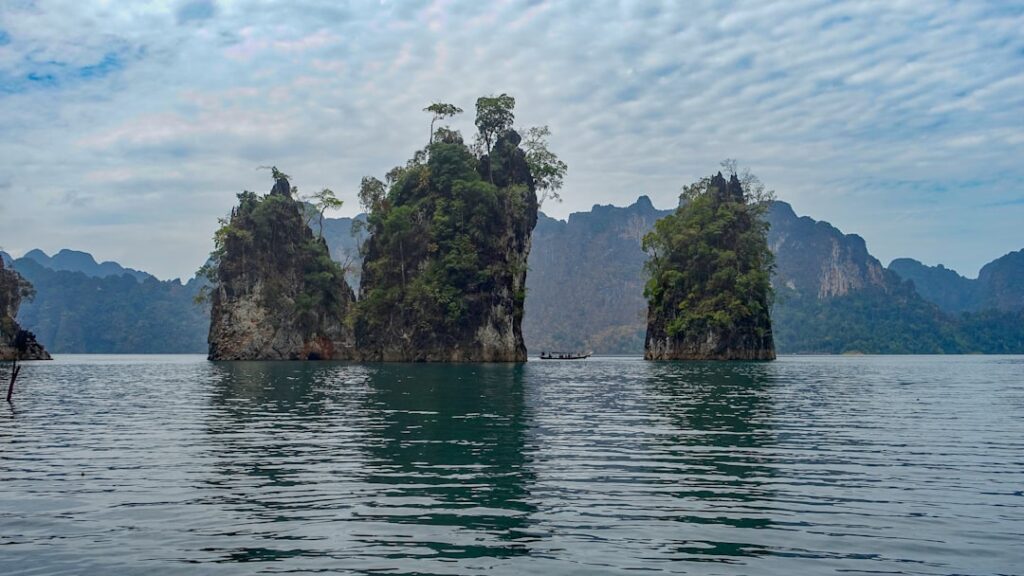
A body of water with trees and mountains in the background, Khao Sok National Park, Thailand
- Historic Architecture: The Rajjaprabha Dam, completed in 1987, created the stunning Cheow Lan Lake, a monumental feat of engineering that transformed the region and provides hydroelectric power to southern Thailand.
- Cultural Scene: The annual Loy Krathong festival, usually in November, sees locals and visitors float small, decorated baskets (krathongs) on the Sok River under a full moon, a magical tradition of letting go of negativity.
- Local Specialties: You must try Gaeng Som Pla Chon, a sour and spicy curry made with snakehead fish, wild bamboo shoots, and jungle herbs foraged from the surrounding forest.
Pro Tip: Visit during the dry season from December to April for the best trekking conditions and lake access, but for the most dramatic waterfalls and fewest visitors, target the shoulder months of late November or early May. Avoid September and October, the peak of the rainy season, when some trails close and lake tours may be canceled.
Map of Khao Sok National Park, Thailand
Use these interactive maps to explore Khao Sok National Park, Thailand and plan your route:
📍 View Khao Sok National Park, Thailand on OpenStreetMap
🗺️ Open Khao Sok National Park, Thailand in Google Maps
Planning Your Trip: Practical Essentials
Getting There and Around
- By Air: The nearest airports are Surat Thani (URT, 1.5-2 hours away) and Krabi (KBV, 2-2.5 hours away). From there, you’ll need a pre-booked minivan transfer. Book flights at Skyscanner for best deals.
- By Train: Overnight trains from Bangkok arrive at Surat Thani Railway Station, where you can connect via minivan. The scenic journey takes about 10-12 hours. Reserve tickets at Trainline or the national railway website.
- By Car: Driving from Phuket takes about 3 hours via Route 401. Parking is available at most resorts. Roads are well-signed. Compare car rentals at RentalCars.com.
- Local Transport: Within the park, transport is by organized tour, long-tail boat on the lake, or on foot. Songthaews (shared pickup trucks) run along the main road between the park entrance and nearby towns like Takun.
Best Time to Visit
The climate is tropical, with temperature dictated more by season than elevation. Your experience will vary dramatically based on when you visit, from perfect lake conditions to rushing waterfalls.
| Season | Weather | Highlights |
|---|---|---|
| Dry Season (Dec–Apr) | Sunny, hot (28-35°C), low humidity, minimal rain. | Ideal for trekking, cave exploration, and clear lake conditions; this is peak season with more visitors. |
| Wet Season (May–Nov) | Very humid, heavy afternoon showers (25-32°C), high water levels. | Lush, vibrant greenery, powerful waterfalls, and far fewer tourists; some trails may be muddy or closed. |
| Shoulder (Nov/May) | Transitional; warm with sporadic, short rains. | A sweet spot with decent weather, thinning crowds, and lower accommodation rates. |
Budgeting for Khao Sok National Park, Thailand

The sun is setting over a body of water, Khao Sok National Park, Thailand
| Category | Budget | Mid-range | Luxury |
|---|---|---|---|
| Accommodation | 300-800 THB (hostel/basic bungalow) | 1,500-3,500 THB (comfortable resort or floating bungalow) | 4,000+ THB (private jungle villa or premium lake lodge) |
| Meals | 50-150 THB (street food, market) | 200-400 THB (restaurant meal) | 500+ THB (resort dining) |
| Transport | Free (walking), 50 THB (shared songthaew) | 1,500-2,500 THB (private tour/transfer) | 3,000+ THB (private car & boat charter) |
| Activities | 200 THB (park entry), free hiking | 1,200-2,000 THB (guided day tour) | 3,500+ THB (multi-day private guided expedition) |
| Daily Total | 600-1,200 THB | 3,500-6,500 THB | 8,000+ THB |
Top Attractions and Must-See Sights
| Attraction | Description | Hours | Entry Fee |
|---|---|---|---|
| Cheow Lan Lake | A breathtaking man-made reservoir with emerald water, towering limestone karsts, and hidden coves, best explored by long-tail boat. | Dawn to Dusk (tour dependent) | 300 THB (Park Fee) + Tour Cost |
| Tham Nam Talu (Coral Cave) | A stunning 500-meter flooded cave system you can wade or tube through, famous for its coral-like limestone formations and bat colonies. | Daylight hours with guide | Included in lake tours |
| Ton Kloi Waterfall | A majestic multi-tiered waterfall deep in the jungle, accessible via a scenic 2-hour long-tail boat ride and a 30-minute hike from the lake. | Daylight hours | Included in lake tours |
| The Jungle Canopy Walkway | Experience the rainforest from above on this 200-meter suspended walkway, 15 meters high, offering unparalleled wildlife spotting opportunities. | 8:00 AM – 5:00 PM | 200 THB |
3-Day Itinerary: Khao Sok National Park, Thailand’s Highlights & Hidden Gems
Day 1: Immersion in the Ancient Rainforest
- Morning (7:00 AM): Start with an early guided jungle trek (1,500 THB) from the park headquarters. Your guide will point out rare flora like the Rafflesia kerrii (the world’s largest flower) and wildlife like dusky langurs. The morning cool offers the best chance to see active animals.
- Afternoon (12:30 PM): Enjoy a local lunch at Khao Sok River Restaurant near the entrance, trying their Massaman Curry. Afterwards, visit the Canopy Walkway (200 THB) for a bird’s-eye view of the forest.
- Evening (6:30 PM): Take a guided night safari walk (600 THB) to spot nocturnal creatures like slow lorises, tarantulas, and civets. For dinner, head to Pawn’s Restaurant for delicious and affordable Thai classics.
Day 2: Exploration of Cheow Lan Lake
- Morning (8:00 AM): Depart for a full-day lake tour (approx. 1,800 THB). The tour includes a scenic long-tail boat ride to your floating raft house, a swim in the pristine water, and a hike to Ton Kloi Waterfall for a refreshing dip.
- Afternoon (12:30 PM): A hearty Thai lunch is served at the raft house. Afterwards, paddle a kayak into quiet lagoons or simply relax on the deck, watching the dramatic karst landscape.
- Evening (5:00 PM): Return to shore by boat. For a special dinner, book a table at Khao Sok Tree House Restaurant, known for its atmospheric setting and excellent jungle-inspired dishes.
Day 3: Caves, Rivers & Local Life
- Morning (9:00 AM): Take a half-day river tubing or canoeing trip (800 THB) down the Sok River, a gentle way to spot birds and monkeys from the water. Your best bet is to go with a guide who can explain the ecosystem.
- Afternoon (1:00 PM): Have lunch at a local market stall in Takun town, sampling grilled meats and sticky rice. Then, visit a rubber plantation for a fascinating insight into a key local industry (often free, tip expected).
- Evening (7:00 PM): Enjoy a final, leisurely dinner at your resort or venture to Chiew Larn Lounge for cocktails with a view of the jungle, listening to the symphony of insects and frogs.
Cultural Insights & Etiquette
- Language: Basic Thai phrases go a long way. “Sawasdee” (hello), “Khop khun” (thank you), and “Aroy” (delicious) are appreciated. English is widely understood in tourist areas.
- Customs: The head is considered sacred and the feet unclean. Avoid touching anyone’s head and don’t point your feet at people or Buddha images. Always show respect to monks.
- Tipping: Not mandatory but appreciated. For guides, 100-200 THB per person per day is standard. In restaurants, rounding up the bill or leaving small change is common.
- Dress Code: Modest dress is respectful, especially when visiting local villages. For jungle trekking, wear lightweight, long sleeves and pants for protection from insects and sun.
- Business Hours: National Park offices are open 8:00 AM – 5:00 PM. Most shops and restaurants in the tourist village are open from early morning until 10:00 PM.
Where to Eat: Khao Sok National Park, Thailand’s Best Bites
Dining in Khao Sok is a rustic, flavorful affair centered on fresh river fish, jungle herbs, and southern Thai spices. You’ll find simple family-run restaurants along the main road and more elaborate resort dining. Don’t expect fine dining; the joy is in the authentic, powerful flavors.
Must-Try Local Specialties
- Gaeng Som Pla Chon: The signature sour curry of the region. The best versions use freshly caught snakehead fish and wild bamboo. Try it at Krua Khao Sok.
- Pla Pao (Salt-Crusted Grilled Fish): A whole fish stuffed with lemongrass and coated in salt, grilled over charcoal until the skin crackles. Ubiquitous and delicious at most roadside grills.
- Khao Yam Pak Tai: A southern Thai herb salad with rice, dried shrimp, coconut, and a pungent budu sauce. Find it at local markets for an authentic taste.
Restaurant Recommendations by Budget
| Type | Restaurant | Specialty | Price Range |
|---|---|---|---|
| Budget | Morning Market (Takun Town) | Fresh fruit, grilled skewers, noodle soups | 30-100 THB per item |
| Mid-range | Khao Sok River Restaurant | Homestyle Thai curries and stir-fries with river views | 150-300 THB per dish |
| Fine dining | Our Jungle House Restaurant | Creative Thai-fusion dishes in a beautiful jungle setting | 350-600 THB per dish |
Where to Stay
Accommodation ranges from basic backpacker hostels near the park entrance to unforgettable floating bungalows on Cheow Lan Lake and luxurious jungle treehouses. Your choice defines your experience. Compare prices and book at Booking.com or Airbnb for apartments.
Best Neighborhoods for Accommodation
- Khao Sok Village (Park Entrance): The main tourist hub with the most restaurants, tour operators, and budget to mid-range accommodations. It’s convenient but can feel busy. Ideal for first-time visitors and those without a car.
- Cheow Lan Lake (Raft Houses): For a truly unique experience, stay overnight on the lake itself. These floating bungalows offer serenity, stunning views, and direct access to water activities. Be prepared for basic amenities and generator-powered electricity.
- Jungle Resorts (Outskirts): Scattered along the roads leading into the park, these resorts offer more seclusion, often with private trails and pools. They suit travelers seeking tranquility and are usually mid-range to luxury.

Black mountain under cloudy sky, Khao Sok National Park, Thailand
FAQs: Your Khao Sok National Park, Thailand Questions Answered
1. Is Khao Sok National Park, Thailand safe at night?
Yes, it is generally very safe. The main risks are natural, not criminal. Always use a flashlight on jungle paths at night due to wildlife (snakes, insects). In the village, standard travel precautions apply. On the lake, listen to your guide’s safety briefing regarding the water and boats.
2. What currency is used and are credit cards accepted?
The Thai Baht (THB) is the currency. While some larger resorts and tour operators accept credit cards, cash is king in Khao Sok, especially for small restaurants, market stalls, songthaews, and park entry fees. There are a few ATMs in the main village, but it’s wise to bring enough cash with you.
3. How do I get from the airport to the park?
The most reliable method is a pre-booked shared minivan transfer. From Surat Thani Airport, it costs about 500-600 THB per person and takes 1.5-2 hours. From Krabi Airport, it’s 600-800 THB and takes 2-2.5 hours. You can book these through your accommodation or a travel agency. Book airport transfers at GetYourGuide for convenience.
4. Do I need to speak the local language?
No, but it helps. English is spoken at all tourist-facing businesses—hotels, tour operators, and main restaurants. Learning a few basic Thai phrases will earn you smiles and better service. For venturing off the beaten path, a guide is essential for both language and navigation.
5. What’s the appropriate dress code?
Lightweight, quick-dry clothing is essential. For jungle trekking, long pants and long-sleeved shirts
Related Guides
Explore more destinations similar to Khao Sok National Park:


Pingback: Fergana, Uzbekistan's Stunning Silk, Ceramics & Mountain Breezes (2026) - tangyOcean