
Vanuatu’s Volcanoes’s Amazing Lava Lakes, Kastom Culture & Island Adventure (2026)
At 3 AM on the rim of Mount Yasur, the world feels utterly primal. The ground shudders with a deep, guttural roar, and the inky black sky is violently painted orange as a fountain of molten rock arcs 300 meters into the air. This is Tanna Island’s “Lighthouse of the Pacific,” one of the world’s most accessible active volcanoes, where you can stand at the crater’s edge for about $115. While thousands queue for distant views of volcanoes in Hawaii or Iceland, here in Vanuatu, you get a front-row seat to the Earth’s raw power, followed by a kava ceremony in a traditional *nakamal* as the sun rises.
Why Vanuatu’s Volcanoes Stand Out

A very tall mountain with a very dark cloud in the sky, Vanuatu’s Volcanoes
- Historic Architecture: The 19th-century St. Joseph’s Catholic Mission on Tanna, built from local timber and coral limestone, stands as a testament to early missionary efforts amidst the volcanic landscape.
- Cultural Scene: The Naghol (land diving) ceremony on Pentecost Island, the ancient bungee-jumping ritual that inspired modern sport, performed from 30-meter towers during the yam harvest (April-June).
- Local Specialties: Lap Lap, the national dish of grated root vegetables pounded with coconut milk and meat or fish, then baked in banana leaves over hot stones.
Pro Tip: The absolute best time for volcano viewing is the dry season from April to October. For Mount Yasur, aim to visit in the late afternoon to witness the transition from daylight viewing to the spectacular nocturnal pyrotechnics. Book your 4WD transfer and guide through your accommodation at least a day in advance.
Map of Vanuatu’s Volcanoes
Use these interactive maps to explore Vanuatu’s Volcanoes and plan your route:
📍 View Vanuatu’s Volcanoes on OpenStreetMap
🗺️ Open Vanuatu’s Volcanoes in Google Maps
Planning Your Trip: Practical Essentials
Getting There and Around
- By Air: Fly into Bauerfield International Airport (VLI) in Port Vila. Connect to Tanna’s Whitegrass Airport (TAH) via Air Vanuatu or Unity Airlines (50-min flight). Book flights at Skyscanner for best deals.
- By Train: No train services exist in Vanuatu; travel between islands is by air or occasional passenger ship.
- By Car: On Tanna, 4WD rental is essential (approx. 8,000 VUV/day). Roads are rough, unsealed tracks. Compare car rentals at RentalCars.com for Port Vila options only.
- Local Transport: On islands, your best bet is pre-arranged 4WD transfers with your lodge or a local tour operator. Public transport is informal (shared trucks).
Best Time to Visit
Vanuatu has a tropical climate. The dry season offers the best conditions for trekking and clear volcano views, while the wet season brings lush greenery but challenging, muddy roads.
| Season | Weather | Highlights |
|---|---|---|
| Dry Season (May–Oct) | 22-28°C, lower humidity, minimal rain | Optimal volcano access, best road conditions, Naghol ceremonies on Pentecost (Apr-Jun), fewer mosquitoes. |
| Wet Season (Nov–Apr) | 25-30°C, high humidity, daily tropical showers, risk of cyclones | Lush landscapes, fewer tourists, lower accommodation rates, but volcanic views can be obscured by cloud. |
| Shoulder (Apr & Oct) | Pleasant temperatures, transitional weather | A good balance of decent weather and slightly smaller crowds, ideal for combining volcano and cultural trips. |
Budgeting for Vanuatu’s Volcanoes

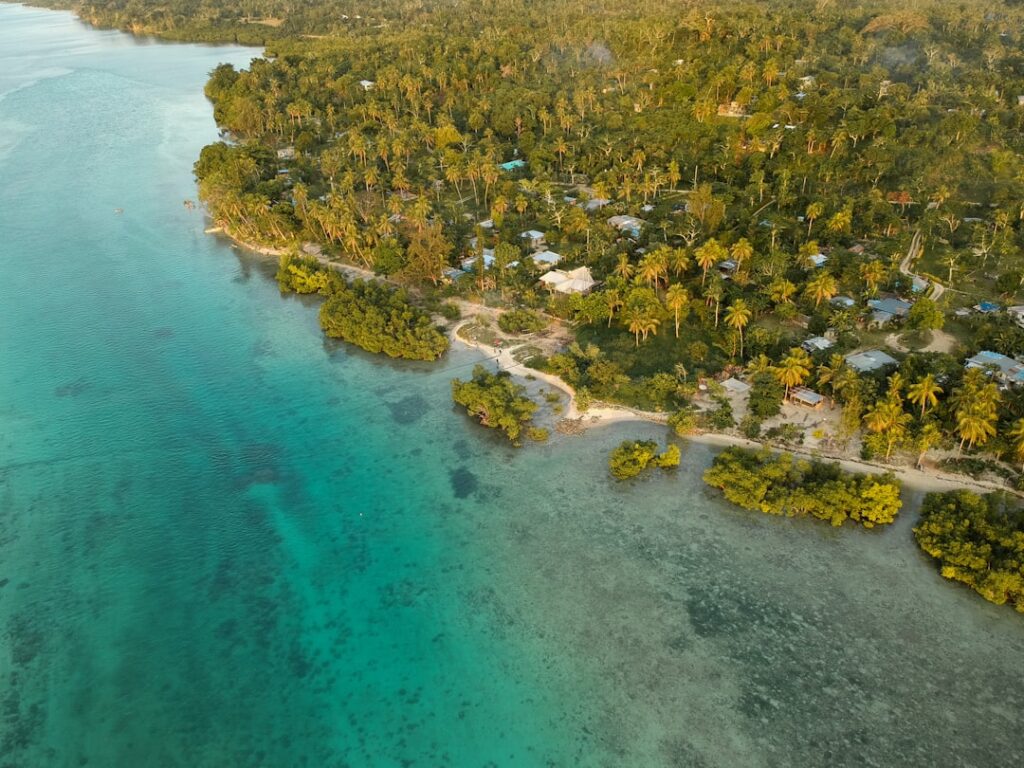
A beach with palm trees, Vanuatu’s Volcanoes
| Category | Budget | Mid-range | Luxury |
|---|---|---|---|
| Accommodation | 3,500-6,000 VUT/night (basic bungalow) | 10,000-18,000 VUT/night (comfortable lodge with meals) | 25,000+ VUT/night (exclusive eco-resort) |
| Meals | 1,000-1,500 VUT (market lap lap, fruit) | 2,500-4,000 VUT (lodge restaurant meal) | 5,000+ VUT (multi-course fine dining) |
| Transport | 500 VUT (shared truck ride) | 8,000-15,000 VUT (private 4WD transfer/tour) | Charter flights between islands |
| Activities | Free (village visit, beach) | 12,000 VUT (Mt. Yasur tour) | Private guided cultural & volcano tours (25,000+ VUT) |
| Daily Total | 5,000-8,000 VUT | 25,000-40,000 VUT | 60,000+ VUT |
Top Attractions and Must-See Sights
| Attraction | Description | Hours | Entry Fee |
|---|---|---|---|
| Mount Yasur (Tanna) | The world’s most accessible continuously active volcano, with guaranteed Strombolian eruptions you can witness from the crater rim. | Access 24/7 with guide; best at dawn/dusk | ~12,750 VUT (includes 4WD, guide, park fee) |
| Mount Marum & Benbow (Ambrym) | Trek to twin volcanic craters containing mesmerizing, persistent lava lakes—a challenging but unforgettable expedition. | Multi-day trek required | ~30,000-40,000 VUT (3-day guided trek) |
| John Frum Village (Tanna) | A unique cargo cult village where locals venerate an American WWII figure, offering a fascinating cultural counterpoint to the volcanic landscape. | Daylight hours; Fri night ceremony | ~2,000 VUT (village donation) |
| Blue Holes & Yasur Ash Plain (Tanna) | Brilliant blue freshwater springs for swimming, contrasted against the stark, moon-like desert of volcanic ash near Yasur. | Daylight hours | ~500 VUT (swimming fee) |
3-Day Itinerary: Tanna Island’s Volcanic Heart
Day 1: Arrival & Volcanic Prelude
- Morning: Fly from Port Vila to Whitegrass Airport (TAH) on the 7:30 AM Air Vanuatu flight. Your lodge will collect you for the 1.5-hour 4WD journey across the island.
- Afternoon: Settle into your bungalow at White Grass Ocean Resort or Rocky Ridge Bungalows. After lunch, visit the Port Resolution yacht club for a swim and a fresh coconut. Later, take a gentle walk to the nearby Sulphur Bay hot springs.
- Evening: Enjoy a welcome dinner at your lodge. Attend your first kava ceremony at a local *nakamal*—savvy visitors know to clap once before and three times after drinking the earthy, mildly sedative brew.
Day 2: The Fire Mountain
- Morning: After breakfast, a 4WD takes you to the John Frum Village. Learn about the fascinating cargo cult history for about 2,000 VUT donation. Continue to the stunning Port Resolution volcanic ash plain for photos.
- Afternoon: Lunch back at the lodge. Rest up for the evening’s main event. At 3:30 PM, your guide collects you for the bumpy ride to Mount Yasur’s base car park (about 90 mins).
- Evening: Hike 30-45 minutes to the crater rim (Alert Level 1-2 required). Witness the sunset and the volcano’s transformation into a roaring, incandescent spectacle. Return to the lodge around 8 PM for a late, well-earned dinner.
Day 3: Culture & Departure
- Morning: Visit a traditional *kastom* village like Yakel or Iankahi. Observe traditional life, from weaving to cooking in earth ovens ( *umus*). A small gift of school supplies or kava root is a respectful gesture.
- Afternoon: Cool off with a swim in the crystal-clear, spring-fed Blue Hole near Lenakel. Enjoy a final lunch of fresh local lobster or chicken lap lap. Transfer back to Whitegrass Airport for your afternoon flight to Port Vila.
- Evening: If staying in Port Vila, head to the Waterfront Bar & Grill for a sunset cocktail and reflect on the raw, elemental power you’ve just witnessed.
Cultural Insights & Etiquette
- Language: Bislama is the lingua franca (“Tank yu tumas” = Thank you very much; “Hemi naes” = It’s nice). English and French are also official. Learning a few Bislama phrases delights locals.
- Customs: Always ask permission before photographing people or villages. Modesty is key; avoid wearing revealing clothing away from resorts. Respect *kastom* (traditional) areas and taboos.
- Tipping: Not expected but appreciated for exceptional service. A small gift (kava root, school supplies for villages) is often more culturally appropriate than cash.
- Dress Code: Swimwear is for the beach/resort pool only. Cover shoulders and knees when visiting villages. Sturdy, closed-toe shoes are essential for volcano trekking.
- Business Hours: Shops in towns: 7:30 AM-4:30 PM, Mon-Fri, half-day Sat. “Island time” prevails; patience is a virtue. Most places are closed on Sunday.
Where to Eat: Vanuatu’s Volcanoes’s Best Bites
Dining revolves around your lodge or village visits. The focus is on fresh, local ingredients: reef fish, island-grown beef (known as “Tanna beef”), organic vegetables, tropical fruit, and coconut. Meals are often included in island accommodation packages.
Must-Try Local Specialties
- Lap Lap: The national dish. For an authentic version, see if your lodge can arrange a demonstration or visit a village during a *laplap* stone cooking.
- Tuluk: A special *lap lap* with meat wrapped in dough, then banana leaves. A celebratory dish often found at festivals.
- Nalot: Mashed breadfruit or taro mixed with coconut cream, a simple but delicious staple.
Restaurant Recommendations by Budget
| Type | Restaurant | Specialty | Price Range |
|---|---|---|---|
| Budget | Local Market (Lenakel, Tanna) | Fresh fruit, simple cooked meals, and lap lap parcels. | 200-800 VUT |
| Mid-range | White Grass Ocean Resort Restaurant (Tanna) | High-quality à la carte menu featuring local lobster and Tanna beef with stunning ocean views. | 2,500-4,500 VUT |
| Fine dining | Jill’s Cafe (Port Vila – for pre/post trip) | Innovative Pacific fusion cuisine using the finest local produce in an elegant garden setting. | 4,000-7,000 VUT |
Where to Stay
Accommodation on the volcanic islands is mostly in locally-owned bungalow lodges or eco-resorts, ranging from very basic to comfortable. Power is often solar, and hot water isn’t always guaranteed. Compare prices and book at Booking.com or Airbnb for apartments in Port Vila only.
Best Areas for Accommodation
- Port Resolution Area (Tanna): Closest to Mount Yasur, offering a range of bungalows (Rocky Ridge, Friendly Beach). Character: remote, authentic, stunning bay views. Best for serious volcano enthusiasts.
- Whitegrass Area (Tanna): Near the airport and the west coast. Character: home to the more upscale White Grass Ocean Resort, with easier beach access. Best for those wanting more comfort.
- Craig Cove Area (Ambrym): The jump-off point for treks to Mount Marum. Character: very basic guesthouses like Volcano Village. Best for hardcore trekkers aiming for the lava lakes.

Scenic landscape featuring the lush greenery and iconic Mayon Volcano under…, Vanuatu’s Volcanoes
FAQs: Your Vanuatu’s Volcanoes Questions Answered
1. Is it safe to visit an active volcano?
Yes, with a licensed guide. The Vanuatu Meteorology and Geo-hazards Department monitors activity levels (0-5). Tours only proceed at Levels 0-2. Guides are expert at reading the volcano and will keep you in safe zones. Always follow their instructions without exception.
2. What currency is used and are credit cards accepted?
The local currency is the Vanuatu Vatu (VUT). Carry ample cash, especially on outer islands like Tanna and Ambrym, as ATMs are scarce and credit cards are rarely accepted outside major resorts in Port Vila. Some lodges may accept AUD or NZD cash.
3. How do I get from the airport to my lodge on Tanna?
You must pre-arrange a transfer with your accommodation. Upon landing at Whitegrass Airport (TAH), a driver with your name on a sign will meet you. The transfer (1-2 hours by 4WD, included in most tour packages) is part of the adventure. Book airport transfers at GetYourGuide for Port Vila options.
4. Do I need to speak the local language?
No. English is widely spoken in the tourism industry. Learning a few phrases in Bislama, however, will earn you big smiles and is a sign of respect. Guides are fluent in English and often in French as well.
5. What should I pack for volcano trekking?
Sturdy, broken-in hiking boots, long pants, a warm layer (it can be windy/chilly on the rim), a headlamp or flashlight with extra batteries, a respirator or bandana for dust/ash, and a small backpack for water. Avoid synthetic fabrics that can melt from hot ash.
Final Thoughts: Vanuatu’s Volcanoes Awaits
Vanuatu’s volcanic islands offer more than a geological spectacle; they provide a profound connection to the dynamic forces that shape our planet, framed within a rich, living culture. This is where you trade curated safety for authentic awe, where the memory of the ground trembling beneath your feet stays with you long after you leave. Your best bet is to embrace the pace, respect the *kastom*, and prepare to be humbled. Don’t just watch a documentary about volcanoes—stand in their shadow, feel their
Explore More Destinations
- Jozani, Tanzania on a Budget: an Ancient Forest for $35/Day (2026)
- Nsumbu, Zambia on a Budget: Wild Africa for $40/Day (2026)
- Semporna, Malaysia on a Budget: Paradise for $35/Day (2026)
- Khuzestan, Iran on a Budget: Ancient Empires for $30/Day (2026)
- Ngerulmud, Palau on a Budget: Island Majesty for $45/Day (2026)
Ready to Visit Vanuatu’s Volcanoes’s Amazing Lava Lakes?
Start planning your trip today. Compare hotels, find the best tours, and get insider tips.
Your adventure in Vanuatu’s Volcanoes’s Amazing Lava Lakes starts here →
Related Guides
Explore more destinations similar to Vanuatu’s Volcanoes’s Amazing Lava Lakes:
- Khartoum, Sudan’s Essential Confluences, Culture & Ancient Kingdoms (2026)
- Kasane, Botswana: Essential River Safaris, Elephant Encounters & Four-Country Views (2025)
- Kotor’s Best Medieval Walls, Azure Bays & Venetian Charm (2025)
- Kérouané, Guinea’s Ultimate Kola Nuts, Colonial History & Fouta Djallon Vistas (2026)
{“@context”: “https://schema.org”, “@type”: “FAQPage”, “mainEntity”: [{“@type”: “Question”, “name”: “What is the best time to visit Vanuatuu2019s Volcanoesu2019s Amazing Lava Lakes?”, “acceptedAnswer”: {“@type”: “Answer”, “text”: “The best time to visit Vanuatuu2019s Volcanoesu2019s Amazing Lava Lakes depends on your preferences. Generally, the dry season offers the most pleasant weather for sightseeing and outdoor activities.”}}, {“@type”: “Question”, “name”: “How many days do I need in Vanuatuu2019s Volcanoesu2019s Amazing Lava Lakes?”, “acceptedAnswer”: {“@type”: “Answer”, “text”: “Most travelers spend 3-5 days in Vanuatuu2019s Volcanoesu2019s Amazing Lava Lakes to see the main attractions. A week allows for a more relaxed pace and day trips.”}}, {“@type”: “Question”, “name”: “Is Vanuatuu2019s Volcanoesu2019s Amazing Lava Lakes expensive to visit?”, “acceptedAnswer”: {“@type”: “Answer”, “text”: “Vanuatuu2019s Volcanoesu2019s Amazing Lava Lakes can be visited on various budgets. Accommodation ranges from hostels to luxury hotels, and local restaurants offer affordable dining.”}}]}

