
Mongolia’s Bayanzag, Mongolia: Stunning Dinosaurs, Desert Sunsets & Nomadic Spirit (2026)
Just after dawn, the silence of the Gobi Desert is broken only by the crunch of your boots on the 80-million-year-old red sandstone. The first rays of sun ignite the Flaming Cliffs, a 10-kilometer stretch of badlands that glow like embers, revealing the very spot where, in 1923, explorer Roy Chapman Andrews unearthed the first dinosaur eggs the world had ever seen. This isn’t just a landscape; it’s an open-air museum of prehistory, where every rust-colored ridge holds a secret.
Why Mongolia’s Bayanzag, Mongolia Stands Out

Man in black jacket holding eagle, Mongolia’s Bayanzag, Mongolia
- Historic Architecture: The landscape itself is the monument—the iconic, wind-sculpted red cliffs of Bayanzag, formed during the Late Cretaceous period, serve as a natural cathedral to Earth’s deep history.
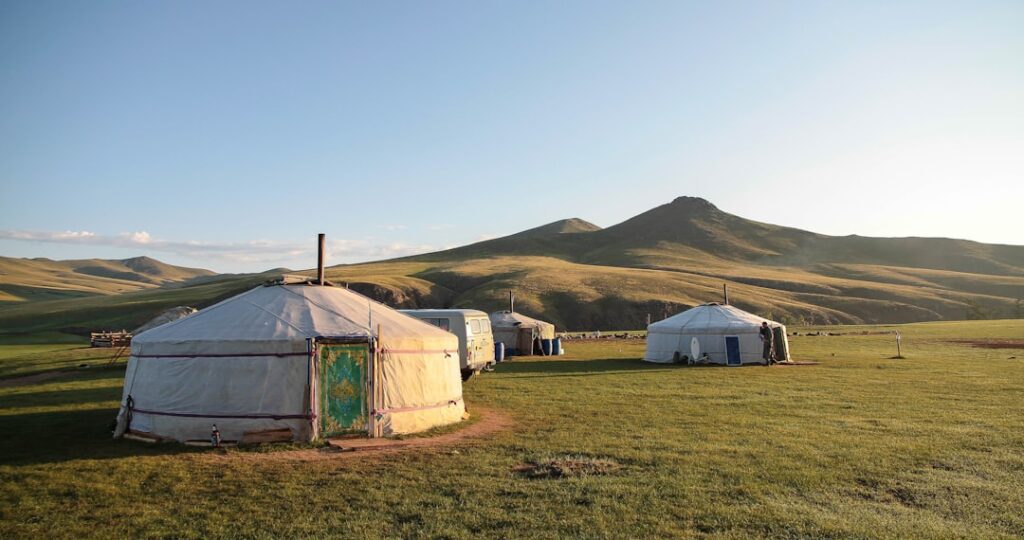
- Cultural Scene: Experiencing a night in a traditional Ger camp with a local nomadic family, sharing stories over airag (fermented mare’s milk) under a sky dense with stars.
- Local Specialties: Khorkhog, a hearty dish of mutton and vegetables slow-cooked with hot stones in a sealed container, often prepared by guides at the cliffs.
Pro Tip: The absolute best time for photography and to avoid the sparse but present midday tour groups is either at sunrise (around 5:30 AM in summer) or the two hours before sunset. The low angle of the sun makes the cliffs truly “flame,” and the shadows create incredible depth. Aim for the shoulder months of May or September for pleasant temperatures.
Map of Mongolia’s Bayanzag, Mongolia
Use these interactive maps to explore Mongolia’s Bayanzag, Mongolia and plan your route:
📍 View Mongolia’s Bayanzag, Mongolia on OpenStreetMap
🗺️ Open Mongolia’s Bayanzag, Mongolia in Google Maps
Planning Your Trip: Practical Essentials
Getting There and Around
- By Air: You’ll fly into Chinggis Khaan International Airport (ULN) in Ulaanbaatar. From there, you need to travel southwest to the Gobi. Book flights at Skyscanner for best deals.
- By Train: No direct train to Bayanzag. The classic route is a domestic flight from Ulaanbaatar to Dalanzadgad (DLZ), the provincial capital of Ömnögovi, which takes about 1.5 hours. From Dalanzadgad, it’s a 2-hour drive by 4×4.
- By Car: The adventurous (and bumpy) option is a multi-day 4×4 journey from Ulaanbaatar, covering roughly 550 km of paved and unpaved road. This is almost always done as part of an organized tour with a driver. Independent driving is not recommended due to the trackless terrain. Compare car rentals at RentalCars.com for Ulaanbaatar pick-up if you’re planning a larger road trip.
- Local Transport: There is no public transport to Bayanzag. Your options are a pre-arranged tour from Ulaanbaatar or Dalanzadgad, or hiring a private 4×4 vehicle with a driver/guide in Dalanzadgad. This is non-negotiable for accessing the site.
Best Time to Visit
Bayanzag is accessible year-round, but conditions vary dramatically. The sweet spot is late spring through early autumn, when the desert is most hospitable and the famous Gobi blue skies are almost guaranteed.
| Season | Weather | Highlights |
|---|---|---|
| Summer (Jun–Aug) | Warm to hot (20°C to 35°C / 68°F to 95°F), dry, sunny. Can be windy. | Ideal for all activities, clear night skies, Ger camps are fully operational. Peak season for tours. |
| Winter (Dec–Feb) | Extremely cold (-20°C to -35°C / -4°F to -31°F), harsh, with possible snow. | A stark, silent, and profoundly beautiful experience for the hardy traveler. Very few tourists. Access can be challenging. |
| Shoulder (Apr–May/Sep–Oct) | Pleasant and mild (5°C to 20°C / 41°F to 68°F). Cooler nights. | The best balance. Comfortable for hiking, excellent light for photography, and significantly fewer visitors than summer. |
Budgeting for Mongolia’s Bayanzag, Mongolia

Brown and blue wooden barn during daytime, Mongolia’s Bayanzag, Mongolia
| Category | Budget | Mid-range | Luxury |
|---|---|---|---|
| Accommodation | $15-30/night (Ger camp dorm bed) | $50-100/night (private Ger in a good camp) | $150+/night (premium eco-camp with ensuite) |
| Meals | $10-15/day (meals included in tour/camp) | $20-30/day (restaurant meals in Dalanzadgad) | $50+/day (fine dining in Ulaanbaatar only) |
| Transport | $50-100/day (shared tour cost) | $150-250/day (private 4×4 & driver) | $300+/day (private luxury tour vehicle) |
| Activities | Free (cliff exploration, hiking) | $10-30 (guided fossil site tour, camel riding) | $50+ (private paleontology guide) |
| Daily Total | $75-145/day | $230-380/day | $550+/day |
*Note: Costs are highly dependent on whether you book a multi-day packaged tour (most common and cost-effective) or arrange everything independently. The daily rates above assume a tour package for Budget/Mid-range.
Top Attractions and Must-See Sights
| Attraction | Description | Hours | Entry Fee |
|---|---|---|---|
| The Flaming Cliffs (Bayanzag) | The main event: hike the rim and descend into the canyon where the first dinosaur eggs were discovered. | 24/7, daylight recommended | ~5,000 MNT ($1.50) per person, often collected at a small checkpoint. |
| The Andrews Expedition Site | A specific, often-marked area within the cliffs where you can see replica dinosaur eggs and imagine the 1923 discovery. | Daylight hours | Included in main site fee |
| Gobi Desert Landscape Exploration | Venture beyond the cliffs into the vast steppe to spot wildlife like gazelles and marvel at the emptiness. | Daylight hours | Free (with transport) |
| Local Nomadic Family Visit | Arrange through your guide to visit a nearby herder family, an authentic cultural exchange. | By arrangement | Small gift or ~$5-10 per person is polite |
3-Day Itinerary: Mongolia’s Bayanzag, Mongolia’s Highlights & Hidden Gems
Day 1: Arrival & First Flames
- Morning: Fly from Ulaanbaatar to Dalanzadgad (DLZ) on Hunnu Air or Aero Mongolia (flight cost: ~$150-200 roundtrip). Meet your pre-booked driver/guide for the 2-hour transfer to your Ger camp near Bayanzag.
- Afternoon: Check into your Ger camp (like Gobi Discovery or similar). After a lunch of Tsuivan (stir-fried noodles) at the camp, take your first exploratory walk along the top of the Flaming Cliffs. Let the scale and color sink in.
- Evening: The main event: sunset at the cliffs. Your guide will know the perfect vantage point. Watch the landscape ignite. Return to camp for a hearty dinner of Buuz (steamed dumplings) and stargazing—the lack of light pollution is staggering.
Day 2: Deep Exploration & Nomadic Life
- Morning: Sunrise hike (~5:30 AM). The cool air and long shadows offer a completely different perspective and photo opportunity. After breakfast at camp, take a guided walk down into the canyon floor. Look for fossil fragments (but remember, removing them is illegal).
- Afternoon: Visit a nomadic camel herder family. You’ll be invited into their Ger for salted milk tea and dried curds. This is a genuine interaction, not a show. Your guide will translate. Later, enjoy a short camel ride (cost: ~$15 for 30 mins) on the steppe.
- Evening: Request your camp prepare a traditional Khorkhog for dinner. It’s an experience in itself. After dark, the Milky Way is often visible to the naked eye.
Day 3: Departure or Extension
- Morning: One last walk. Savvy visitors know to explore the less-visited western sections of the cliffs for solitude. Pack and have a final breakfast.
- Afternoon: Drive back to Dalanzadgad. If time allows before your flight, visit the local market or the small Ömnögovi Museum to contextualize your desert finds. Fly back to Ulaanbaatar.
- Evening: Alternatively, extend your Gobi adventure by road to Yolyn Am (Ice Valley) or the Khongoryn Els singing sand dunes, both a full day’s journey from Bayanzag.
Cultural Insights & Etiquette
- Language: Mongolian is the language. Key phrases: “Sain bain uu?” (Hello), “Bayarlalaa” (Thank you). English is limited; a guide is essential.
- Customs: Always receive items (a cup of tea, a gift) with your right hand, with your left hand touching your right elbow as a sign of respect. Never step on the threshold of a Ger. Pointing with your index finger is considered rude; use an open hand.
- Tipping: Not a deep tradition but greatly appreciated, especially for drivers and guides. For a multi-day tour, a tip of $5-10 per day for the guide and $3-5 for the driver is a good guideline.
- Dress Code: Modest, practical clothing. The desert demands layers—hot days, cold nights. Sturdy, closed-toe hiking shoes are mandatory for the rocky, uneven terrain. A hat and scarf for sun and wind protection are wise.
- Business Hours: In the desert, this is irrelevant. In Dalanzadgad, shops are generally open 9 AM-6 PM. Everything is closed during Tsagaan Sar (Lunar New Year, Jan/Feb).
Where to Eat: Mongolia’s Bayanzag, Mongolia’s Best Bites
Dining at Bayanzag means your Ger camp kitchen. This is authentic, hearty Mongolian fare designed to fuel a day in the elements. Don’t expect a choice of restaurants; expect nourishing, communal meals.
Must-Try Local Specialties
- Khorkhog: The definitive Mongolian celebration dish. Mutton, potatoes, carrots, and onions are cooked with hot stones in a metal container. The result is incredibly tender, smoky meat. Request it at your camp a day in advance.
- Airag: Fermented mare’s milk, the traditional nomadic beverage. It’s slightly sour, fizzy, and low in alcohol. It’s an honor to be offered some by a herder family—take a sip, even if just for politeness.
- Boodog: An even more dramatic dish than Khorkhog, where a whole goat or marmot is cooked from the inside using hot stones, with its skin serving as the pot. A rare treat if your camp offers it.
Restaurant Recommendations by Budget
| Type | Restaurant | Specialty | Price Range |
|---|---|---|---|
| Budget | Your Ger Camp Kitchen | Daily set meals of soup, noodles, and mutton dishes. | Included in camp stay/tour |
| Mid-range | Khan Buuz (in Dalanzadgad) | Excellent, freshly steamed Buuz (dumplings) and other Mongolian staples. | $5-10 per meal |
| Fine dining | Modern Nomads (Ulaanbaatar only) | Upscale, refined takes on traditional Mongolian cuisine in a contemporary setting. | $20-40 per meal |
Where to Stay
Accommodation is exclusively in Ger camps scattered across the desert near the cliffs. These are not primitive; most tourist camps have a central dining/ shower toilet block and comfortable, furnished Gers with beds and stoves. Compare prices and book at Booking.com (some camps are listed) or Airbnb for apartments in Ulaanbaatar only.
Best Neighborhoods for Accommodation
- Near the Flaming Cliffs: This is the only “neighborhood.” Staying within a 5-10 minute drive of the cliffs is ideal for sunrise/sunset access. Camps here, like Gobi Discovery or similar, offer the most convenience and immersive desert atmosphere.
- Dalanzadgad: The provincial capital has basic hotels. It’s a 2-hour drive from the cliffs, so not recommended for experiencing Bayanzag itself, but a potential stopover if arriving late.

A group of people riding on the backs of horses, Mongolia’s Bayanzag, Mongolia
FAQs: Your Mongolia’s Bayanzag, Mongolia Questions Answered
1. Is Mongolia’s Bayanzag, Mongolia safe at night?
Extremely safe in terms of crime. The primary considerations are environmental: always have a flashlight, watch your step on uneven ground, and be aware of the temperature drop. Stay within your camp area after dark unless with a guide. The vast, silent desert can be disorienting.
2. What currency is used and are credit cards accepted?
The Mongolian Tugrik (MNT) is the currency. In the desert Ger camps and for all local services, cash (MNT or sometimes USD) is king. Credit cards are not accepted at Bayanzag. Withdraw ample cash in Ulaanbaatar or Dalanzadgad before heading out.
3. How do I get from the airport to the city center?
From Dalanzadgad Airport (DLZ) to the “town center” (it’s small), it’s a 10-minute taxi ride costing about 10,000 MNT (~$3). Your pre-arranged tour driver will almost always meet you at the airport. For Ulaanbaatar transfers, book airport transfers at GetYourGuide for convenience.
4. Do I need to speak the local language?
No, but it helps to have a guide who does. English is not widely spoken outside Ulaanbaatar’s tourist sphere. Your driver/guide will be your essential translator and cultural bridge, especially when visiting nomadic families.
5. What’s the appropriate
Explore More Destinations
- Jozani, Tanzania on a Budget: an Ancient Forest for $35/Day (2026)
- Nsumbu, Zambia on a Budget: Wild Africa for $40/Day (2026)
- Semporna, Malaysia on a Budget: Paradise for $35/Day (2026)
- Khuzestan, Iran on a Budget: Ancient Empires for $30/Day (2026)
- Ngerulmud, Palau on a Budget: Island Majesty for $45/Day (2026)
Ready to Visit Mongolia’s Bayanzag?
Start planning your trip today. Compare hotels, find the best tours, and get insider tips.
Your adventure in Mongolia’s Bayanzag starts here →
Related Guides
Explore more destinations similar to Mongolia’s Bayanzag:
- Ningbo, China (Dongqian Lake): Hidden Lakeside Temples, Ancient Tea & Water Town Charm (2025)
- Darién Gap, Panama: Amazing Untamed Nature, Indigenous Culture & Ultimate Adventure (2026)
- Szeged, Hungary’s Best Paprika, Art Nouveau & Open-Air Magic (2026)
- Masaya, Nicaragua’s Hidden Volcanoes, Crafts & Living Culture (2026)

