
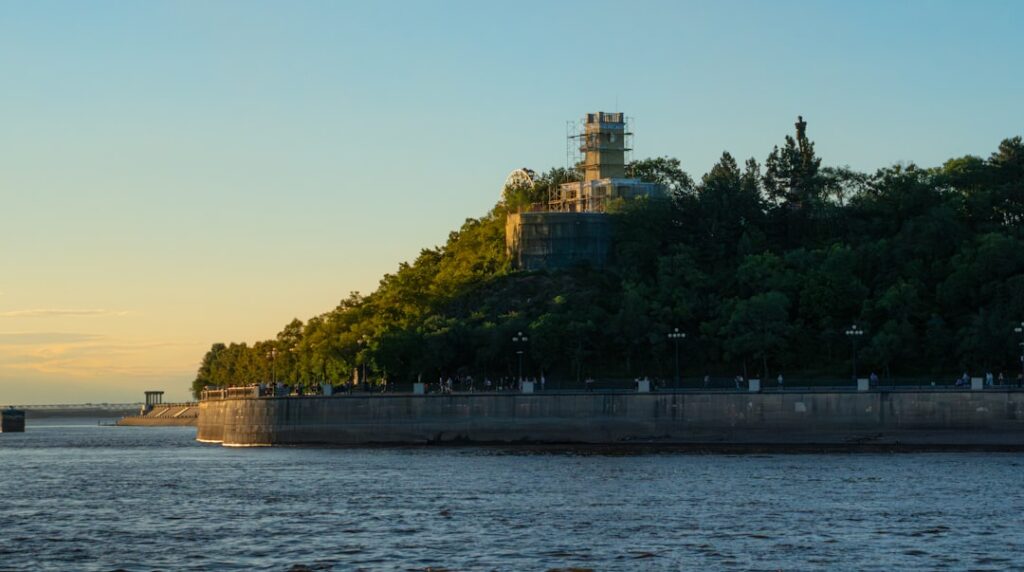
Amur River, Russia’s Epic Frontier Spirit, Epic Landscapes & Cossack Heritage (2026)
While crowds flock to the Golden Ring for a curated Russian history lesson, the Amur River region delivers a raw, living frontier experience without the tour buses. Stretching over 2,800 kilometers, forming the natural border with China, this is where Russia’s eastward expansion was forged. Here, you’ll find cities built by Cossacks, taiga forests that hide Siberian tigers, and a cultural tapestry woven from Russian, indigenous, and Chinese threads—all seen from the deck of a Soviet-era riverboat or a dusty 4×4 track.
Why Amur River, Russia Stands Out

A sailboat in the middle of a large body of water, Amur River, Russia
- Historic Architecture: The Blagoveshchensk Cathedral, completed in 1903, is a stunning red-brick example of Russian Revival architecture, built to symbolize Orthodox faith on the very edge of the empire.
- Cultural Scene: The annual City Day celebrations in Khabarovsk (late May) feature vibrant Cossack song and dance performances, a living tribute to the region’s founding settlers.
- Local Specialties: You must try *Amur fish soup* (*ukha*), made with giant kaluga or Amur sturgeon caught fresh from the river, offering a taste you simply cannot find elsewhere.
Pro Tip: For the perfect balance of comfortable weather and vibrant nature, target late August to mid-September. The oppressive summer humidity has passed, the taiga forests begin their fiery autumn display, and the mosquito swarms have significantly diminished, making riverbank hikes and boat trips far more pleasant.
Map of Amur River, Russia
Use these interactive maps to explore Amur River, Russia and plan your route:
📍 View Amur River, Russia on OpenStreetMap
🗺️ Open Amur River, Russia in Google Maps
Planning Your Trip: Practical Essentials
Getting There and Around
- By Air: Khabarovsk International Airport (KHV) is the main gateway, served by Aeroflot and S7 from Moscow (8-hour flight). From the airport, your best bet is a pre-booked taxi (approx. 800 RUB) for the 30-minute ride to the city center. Book flights at Skyscanner for best deals.
- By Train: The legendary Trans-Siberian Railway runs through the region. Key stops are Khabarovsk and Blagoveshchensk. The journey from Moscow to Khabarovsk takes about 6 days. Reserve tickets at Trainline or the national railway website.
- By Car: Driving is for the adventurous. The Amur Highway (R-297) connects Chita to Khabarovsk, but conditions can be rough. In cities, rent from major agencies; having a car is useful for visiting remote nature reserves. Compare car rentals at RentalCars.com.
- Local Transport: City buses and *marshrutkas* (fixed-route minivans) are cheap (25-40 RUB per ride). In Khabarovsk, trams are a scenic way to travel. For river exploration, passenger ferries and scheduled hydrofoils (like the *Meteor*) connect riverside towns from May to October.
Best Time to Visit
The Amur region experiences extreme continental climate, so timing is crucial. Summer offers lush greenery and river activities, while winter transforms the landscape into a silent, frozen wonderland perfect for hardy travelers.
| Season | Weather | Highlights |
|---|---|---|
| Summer (Jun–Aug) | Warm to hot (20°C to 30°C), humid with frequent rain and mosquitoes. | Ideal for river cruises, hiking in Komsomolsk Nature Reserve, and festivals. Peak tourist season for domestic travelers. |
| Winter (Dec–Feb) | Bitterly cold (-20°C to -35°C), dry with heavy snowfall. | Stunning ice-covered river landscapes, winter sports in Khabarovsk, and a truly authentic Siberian atmosphere. Very few tourists. |
| Shoulder (Apr–May/Sep–Oct) | Spring: 5°C to 15°C, muddy. Autumn: 10°C to 20°C, crisp and colorful. | Best for photography (autumn colors), comfortable hiking, and avoiding insects. May sees ice break-up on the river, a dramatic sight. |
Budgeting for Amur River, Russia

A bridge over a large body of water, Amur River, Russia
| Category | Budget | Mid-range | Luxury |
|---|---|---|---|
| Accommodation | Hostel dorm: 800-1200 RUB/night | 3-star hotel: 3500-5500 RUB/night | Boutique hotel/suite: 7000+ RUB/night |
| Meals | Stolovaya (cafeteria): 300-500 RUB | Local restaurant: 800-1500 RUB | Fine dining: 2500+ RUB |
| Transport | Public bus/tram: 30-40 RUB/ride | Taxi within city: 200-400 RUB, Car rental: 2500 RUB/day | Private driver/guide: 5000+ RUB/day |
| Activities | City parks, museums: 0-300 RUB | River boat tour: 1500 RUB, Museum complexes: 500 RUB | Multi-day guided taiga trek or fishing expedition: 15,000+ RUB |
| Daily Total | 2000-3000 RUB | 7000-10,000 RUB | 20,000+ RUB |
Top Attractions and Must-See Sights
| Attraction | Description | Hours | Entry Fee |
|---|---|---|---|
| Khabarovsk Cliff | A breathtaking promenade along the Amur riverbank offering panoramic views and the iconic Muravyov-Amursky statue. | 24/7 | Free |
| Khabarovsk Regional Museum | Houses an unparalleled collection on indigenous Nanai and Ulchi cultures, plus a stunning natural history section. | 10:00-18:00 (Closed Mon) | 300 RUB |
| Blagoveshchensk Embankment | Stroll this unique waterfront where you can literally see China (Heihe city) just 500 meters across the river. | 24/7 | Free |
| Bolshekhekhtsirsky Nature Reserve | A pristine taiga sanctuary near Khabarovsk with hiking trails where, with luck, you might spot tracks of the Amur tiger. | Daylight hours (Permit required) | Guide/Permit ~2000 RUB |
3-Day Itinerary: Amur River, Russia’s Highlights & Hidden Gems
Day 1: Khabarovsk – The Capital of the Russian Far East
- Morning (7-9 AM): Start with a walk along the **Khabarovsk Cliff**. The morning light over the 2-km wide Amur is spectacular. Find the statue of Governor-General Muravyov-Amursky, who secured this territory for Russia in 1858.
- Afternoon (12-3 PM): Dive into history at the **Khabarovsk Regional Museum**. Spend two hours, then head to **Restaurant Farsh** (Ulitsa Muravyova-Amurskogo, 13) for lunch. Order the *pelmeni* (Siberian dumplings) with sour cream.
- Evening (6-8 PM): Enjoy a 1.5-hour **Amur River boat tour** (departs from the River Station, 1500 RUB). Afterwards, dine at **Stereotip** (Ulitsa Dikopoltseva, 16), a stylish spot for modern Russian cuisine and excellent local fish.
Day 2: From City to Taiga
- Morning (8 AM): Hire a taxi (approx. 1500 RUB round-trip) to the edge of the **Bolshekhekhtsirsky Nature Reserve**. With a pre-arranged guide, take a 3-hour hike (2000 RUB per person). Listen for the call of the Blakiston’s fish owl.
- Afternoon (1 PM): Return to the city for a late lunch at **Pyany Bryus** (Ulitsa Zaparina, 65), a microbrewery with hearty pub food. Then, visit the **Art Museum** (Ulitsa Shevchenko, 7) to see works by Russian Far Eastern artists.
- Evening (7 PM): Experience local nightlife at a *cheburechnaya* (café serving chebureki, fried meat pies). **Cheburechnaya na Komsomolskoy** is a local favorite. It’s simple, delicious, and full of character.
Day 3: Blagoveshchensk – The Border City
- Morning (7 AM): Take the early morning *Elektricka* (local train) from Khabarovsk to Blagoveshchensk (approx. 8 hours, 1200 RUB). The journey through the Amur countryside is an attraction in itself.
- Afternoon (3 PM): Check into your hotel and head straight to the **Blagoveshchensk Embankment**. Visit the **Museum of the Amur River Region** (Ulitsa Lenina, 165) to understand the city’s Cossack founding in 1856.
- Evening (6 PM): For your final dinner, choose **Restaurant Tropikanka** (Ulitsa Lenina, 202). Try the *kaluga sturgeon steak*. As you eat, you can watch the lights of Heihe, China, twinkling directly across the dark water.
Cultural Insights & Etiquette
- Language: Russian is essential. Learn Cyrillic basics and key phrases: “Spasibo” (Thank you), “Zdravstvuyte” (Hello), “Skolko stoit?” (How much?). English is rarely spoken outside major hotel receptions.
- Customs: When invited to a local’s home, always bring a small gift. Discussions about the proximity to China and border history are common; listen respectfully. Toasting is a serious ritual during meals; wait for the host to initiate.
- Tipping: Not traditionally expected, but becoming more common in tourist-facing restaurants in cities. Rounding up the bill or leaving 5-10% for excellent service is appreciated.
- Dress Code: Practical and modest. For nature excursions, wear sturdy, waterproof boots and layered clothing. For Orthodox churches, women should cover their heads and shoulders; men should remove hats.
- Business Hours: Shops typically open 9:00/10:00-19:00/20:00. Many museums are closed on Mondays. Banks operate 9:00-18:00 on weekdays. Major holidays like New Year and Victory Day (May 9) see widespread closures.
Where to Eat: Amur River, Russia’s Best Bites
Dining here is defined by the river and the forest. The cuisine is hearty, designed for the climate, with a focus on freshwater fish, wild game, foraged berries, and robust Russian staples. Don’t expect delicate presentations; expect generous, flavorful sustenance.
Must-Try Local Specialties
- Ukha iz Amurskoy Ryby: A clear, aromatic fish soup made with several types of local fish (sturgeon, carp, catfish), root vegetables, and a final dash of vodka or a bunch of fresh dill. Best tried at riverside cafes or homestyle restaurants like **Stary Mayak** in Khabarovsk.
- Kholodets: A jellied meat terrine, often made with pork or beef. It’s a traditional winter and festival dish. It’s an acquired texture, but savory and rich. Find it in any traditional *stolovaya*.
- Patty s Brusnikoy: Venison or elk patties served with a tart brusnikoy (lingonberry) sauce. The sweet-sour berry cuts through the gamey richness perfectly. Look for it on menus at hunting-themed restaurants.
Restaurant Recommendations by Budget
| Type | Restaurant | Specialty | Price Range |
|---|---|---|---|
| Budget | Stolovaya No. 1 (Khabarovsk, multiple locations) | Authentic Soviet-style cafeteria with blini, salads, and mains. | 300-500 RUB |
| Mid-range | Zhar-Ptitsa (Khabarovsk, Ulitsa Muravyova-Amurskogo, 8) | Excellent grilled meats and Amur fish dishes in a cozy setting. | 800-1800 RUB |
| Fine dining | Melnitsa (Blagoveshchensk, Ulitsa Krasnoarmeyskaya, 125) | Upscale European and Russian cuisine with impeccable service and a superb wine list. | 2500+ RUB |
Where to Stay
Accommodation ranges from Soviet-era giants to modern business hotels. The key is location: in Khabarovsk, stay near the city center or the embankment; in Blagoveshchensk, proximity to the river is ideal. Compare prices and book at Booking.com or Airbnb for apartments.
Best Neighborhoods for Accommodation
- Khabarovsk City Center (Tsentralny District): The most convenient base. You’re within walking distance of the cliff, main museums, restaurants, and the train station. It’s bustling but can be noisy. Ideal for first-time visitors and those relying on public transport.
- Blagoveshchensk Embankment Area: For the unique border experience. Waking up to views of China is unforgettable. The area is quieter than a city center but has good dining options. Perfect for a more contemplative, scenery-focused stay.
- Khabarovsk’s Zhelyabova Street Area: A slightly more residential, quieter neighborhood still within a short tram ride of the center. You’ll find good value apartments and smaller hotels here, favored by seasoned travelers seeking a local feel.

A car parked on a muddy road next to a house, Amur River, Russia
FAQs: Your Amur River, Russia Questions Answered
1. Is Amur River, Russia safe at night?
Major cities like Khabarovsk and Blagoveshchensk are generally safe for travelers at night in central, well-lit areas. Exercise standard precautions: avoid poorly lit parks or deserted streets, don’t flash valuables, and be aware of your surroundings. Petty crime like pickpocketing can occur in crowded markets or on public transport. Rural areas are extremely safe but present different challenges like wildlife and remote terrain.
2. What currency
Explore More Destinations
- Jozani, Tanzania on a Budget: an Ancient Forest for $35/Day (2026)
- Nsumbu, Zambia on a Budget: Wild Africa for $40/Day (2026)
- Semporna, Malaysia on a Budget: Paradise for $35/Day (2026)
- Khuzestan, Iran on a Budget: Ancient Empires for $30/Day (2026)
- Ngerulmud, Palau on a Budget: Island Majesty for $45/Day (2026)
Ready to Visit Amur River?
Start planning your trip today. Compare hotels, find the best tours, and get insider tips.
Your adventure in Amur River starts here →
Related Guides
Explore more destinations similar to Amur River:
- Tripura, India’s Best Palaces, Bamboo Groves & Tribal Heritage (2026)
- Stunning Setenil (Spain) Secrets’s Essential Best Places to Visit (2025)
- Jeju City, South Korea’s Ultimate Volcanic Peaks, Black Pork & Coastal Markets (2026)
- Kefalonia, Greece’s Best Beaches, Caves & Captivating Coastlines (2026)
{“@context”: “https://schema.org”, “@type”: “FAQPage”, “mainEntity”: [{“@type”: “Question”, “name”: “What is the best time to visit Amur River?”, “acceptedAnswer”: {“@type”: “Answer”, “text”: “The best time to visit Amur River depends on your preferences. Generally, the dry season offers the most pleasant weather for sightseeing and outdoor activities.”}}, {“@type”: “Question”, “name”: “How many days do I need in Amur River?”, “acceptedAnswer”: {“@type”: “Answer”, “text”: “Most travelers spend 3-5 days in Amur River to see the main attractions. A week allows for a more relaxed pace and day trips.”}}, {“@type”: “Question”, “name”: “Is Amur River expensive to visit?”, “acceptedAnswer”: {“@type”: “Answer”, “text”: “Amur River can be visited on various budgets. Accommodation ranges from hostels to luxury hotels, and local restaurants offer affordable dining.”}}]}

